
Arizona Ultimate Grand Canyon by Raft or Dory
Legendary Rapids, Epic Hikes & Iconic Scenery
15-18 Days
Class IV—V
Flagstaff, AZ
From $9,199
Set out on the adventure of a lifetime as you run 225 to 280 miles of the Colorado River through the most iconic river canyon in the world. Traveling by oar-powered raft or classic dory, you’ll get to slow down and truly absorb everything the canyon has to offer. Your expert guides will lead you deep into the heart of Grand Canyon, through nearly two billion years of geological history and some of the most breathtaking scenery on the planet, as you explore Grand Canyon in a way few get the opportunity to do. You won’t just be “seeing the Grand Canyon” on this adventure; you’ll be living it.
Trip Highlights
- Run world-class whitewater as you take on the canyon’s most famous rapids, including Hermit, Crystal, and the legendary Lava Falls
- Explore magical side canyons and iconic landmarks like Nankoweap, Red Wall Cavern, Elves Chasm, Deer Creek Falls, and more
- Savor mouthwatering guide-prepared meals such as ahi tuna and filet mignon and camp under a sparkling starry sky

O.A.R.S. Grand Canyon, Inc. is an authorized concessioner of Grand Canyon National Park
Operated by OARS
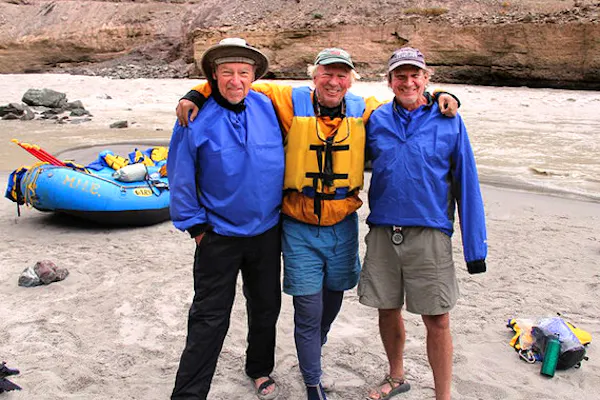

MT Sobek and OARS share bonds that stretch back to the earliest days of adventure travel—1969. We’ve always admired what they do on the water and we’re proud to showcase this expertly guided river journey through the Grand Canyon.
Why Travel with OARS
Brand: Founded in 1969 by river-running pioneer George Wendt and still led by his sons today, OARS brings over five decades of hands on river knowledge to every trip.
Trips: As the first oar-powered outfitter permitted to run trips in Grand Canyon National Park, OARS is set up to deliver the full Colorado River experience with unmatched expertise.
Guides: With over 400 guides and staff, some with the company for decades, you’re in the hands of seasoned professionals, not seasonal hires.
Trip Gallery
Route Map
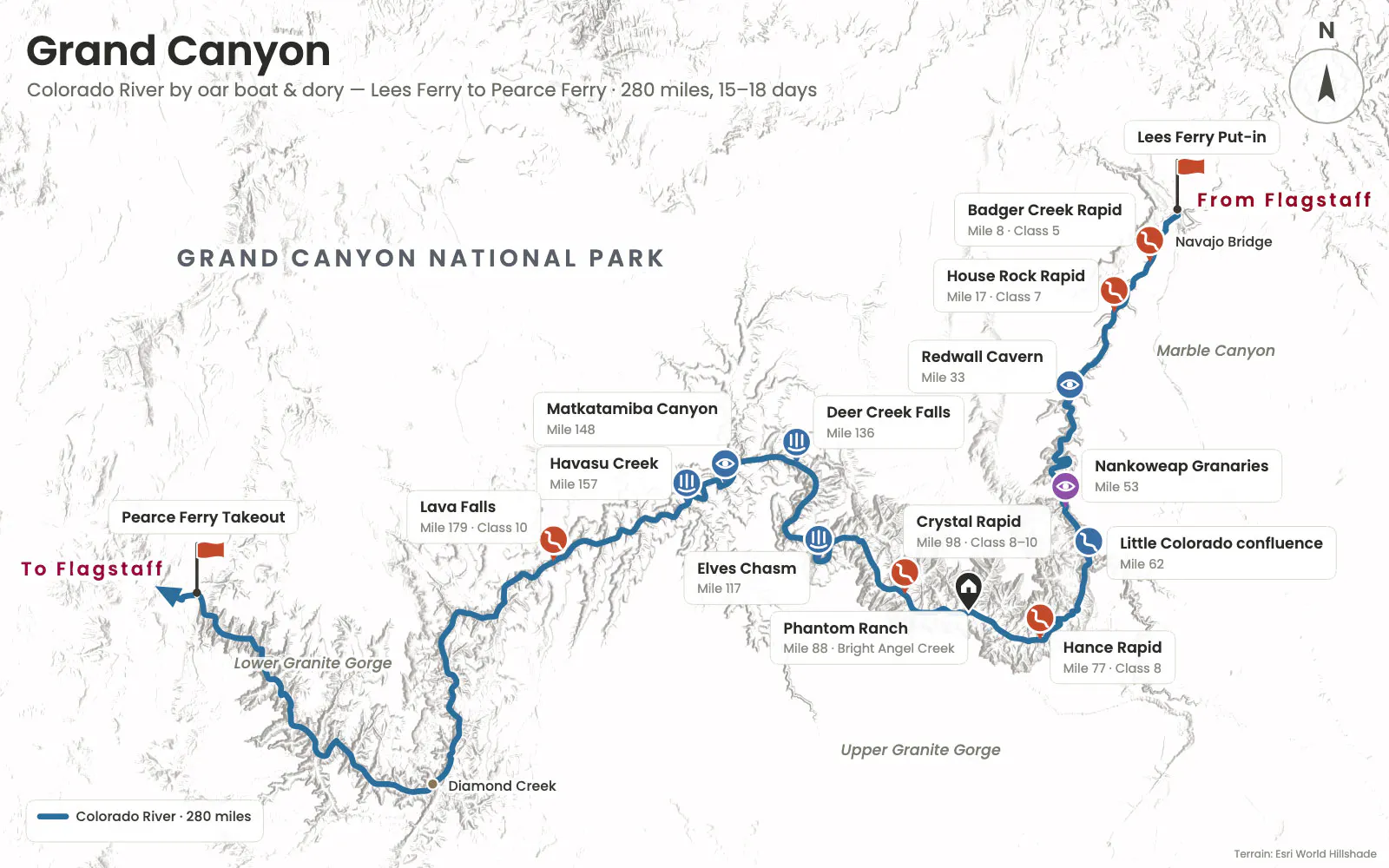
Itinerary

Day 0: Arrive in Flagstaff, AZ
The day before the trip, meet up with your group and guide in Flagstaff for an orientation and chance to ask questions before readying yourself for tomorrow’s adventure. Every trip is different and flexible. Your group, other boats on the water, camp locations, and sometimes the weather all may influence the exact timing and stops. What follows is a sample itinerary.
Day 1: Launch from Lees Ferry into Marble Canyon
Depart Flagstaff this morning for the scenic drive to Lees Ferry, where the Colorado River begins its legendary passage through Grand Canyon. Meet the river crew, load the boats, check safety gear, and push off beneath the colorful cliffs of Marble Canyon. Your first miles introduce both the remarkable geology and the whitewater ahead, with Badger and Soap Creek rapids delivering an exciting start. Set up camp while the guides prepare dinner, then settle in for your first star-filled night on the Colorado.
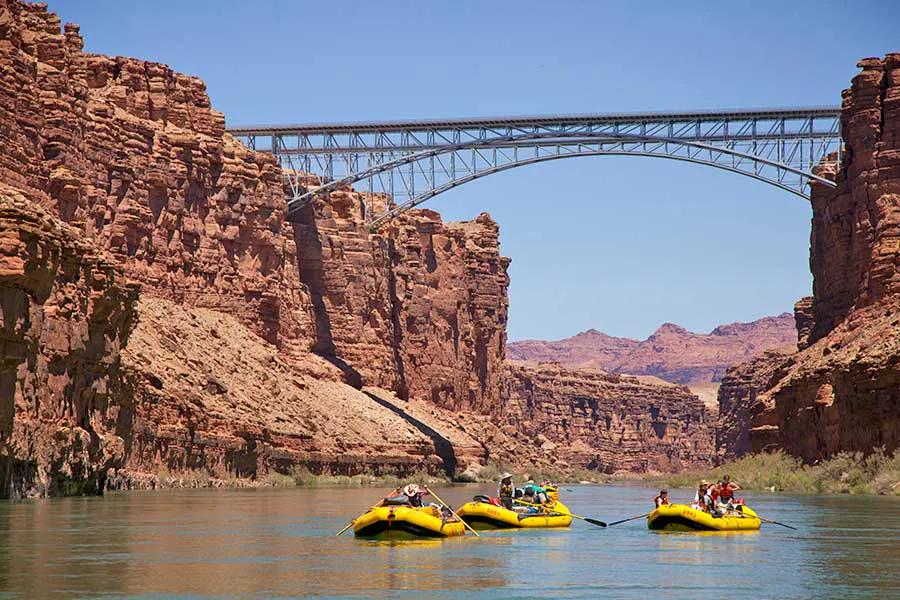
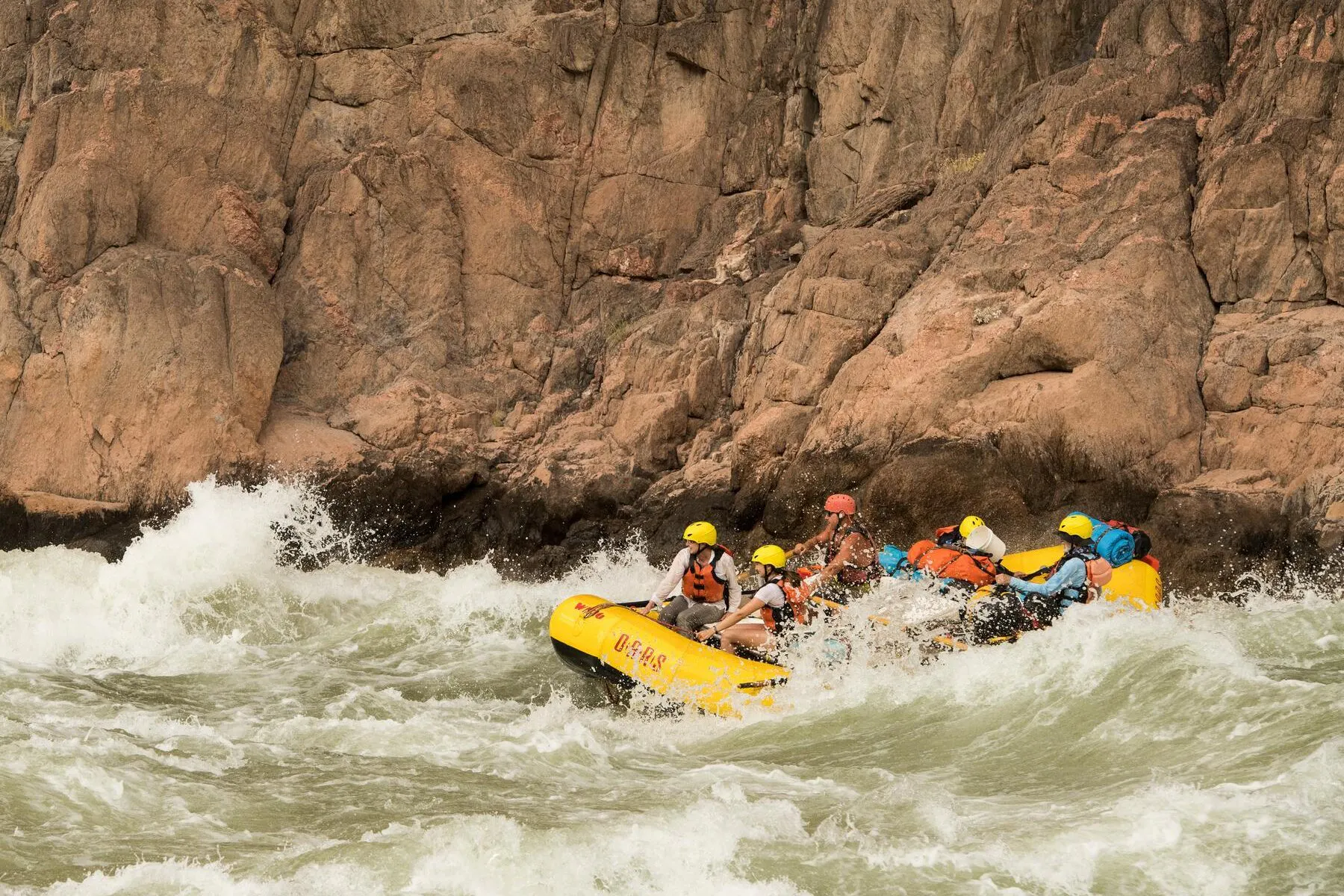
Days 2–6 or 7: Ride the Colorado River to the Inner Gorge
Wake to the sound of the river and settle into the rhythm that will define the days ahead: breakfast on the beach, breaking camp, loading the boats, and heading downstream as the canyon grows deeper and more dramatic with every mile.
Hike into North Canyon, following sculpted rock toward seasonal pools, then return to the boats for the lively succession of rapids known as the Roaring Twenties.
Ride the river deeper into Marble Canyon, where sheer walls of limestone in shades of rust, gold, and crimson line the water. Pass the greenery of spring-fed Vasey’s Paradise before pulling ashore at enormous Redwall Cavern, a river-carved chamber tucked beneath an overhanging cliff. Farther downstream, marine fossils reveal a time when this desert landscape lay beneath a shallow sea at Nautiloid Canyon.
Between splashy rapids, there is plenty of time to drift quietly and watch the ever-changing geology unfold. At Nankoweap, climb to centuries-old Ancestral Puebloan granaries perched high above the Colorado, with sweeping views over one of the river’s most iconic bends. Further downstream, the Little Colorado River flows over deep mineral springs, sometimes turning its waters milky aqua, beckoning for a stop to swim. Beyond the confluence, the South Rim comes into view high above the river.
The canyon narrows and the geology changes dramatically as you enter the Inner Gorge. Here, some of the river’s most exhilarating whitewater begins, with rapids including Unkar, Hance, Sockdolager, and Grapevine. Each mile carries you farther from roads and modern life, and nights beside the river make the outside world seem wonderfully distant.
Days 7-14 or 15, 16, 17: Ride to Lower Granite Gorge
The heart of the journey delivers a thrilling mix of legendary whitewater and side-canyon exploration. Run Granite and Hermit rapids before reaching the celebrated “Jewels”—Crystal, Sapphire, Turquoise, Ruby, and Serpentine. Cool off with a dip in Shinumo Creek’s pools and waterfall.
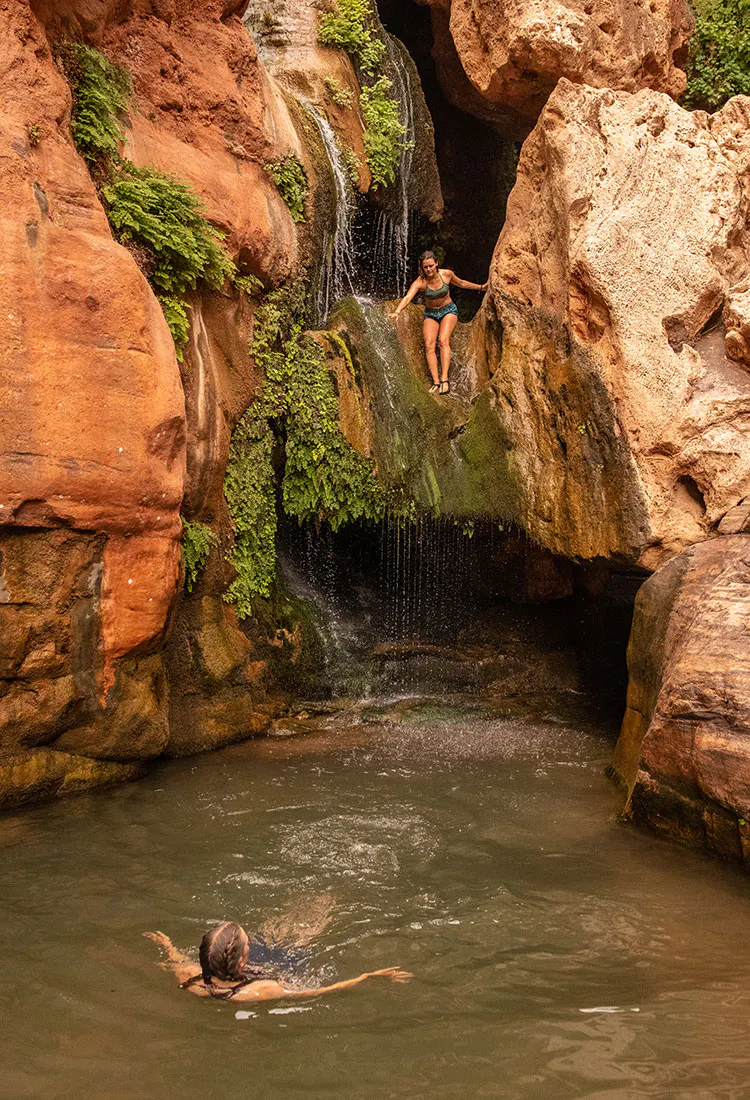
When the water flows quietly, scan the cliffs for bighorn sheep—there’s a good chance you’ll spot some! One of the canyon’s most enchanting side trips, Elves Chasm is a lush oasis of mossy rock, clear pools, and cascading water perfect for a refreshing swim. Check out Blacktail Canyon, a narrow slot where erosion created the Great Unconformity, a gap in Earth’s geologic record.
The canyon shifts to dramatic black schist, as the river carries you through Bedrock and Dubendorf rapids. After navigating the remarkably tight Granite Narrows, where the Colorado squeezes through one of the narrowest points of the entire journey, pause beneath spectacular 174-foot Deer Creek Falls.
Stretches of flat water invite hikes into places like Matkatamiba Canyon, which winds through a narrow slot before opening beneath striking overhangs and amphitheater-like walls. In Upset Rapid, the excitement builds for Lava Falls. Created by ancient volcanic activity that repeatedly dammed the Colorado, this legendary rapid is among the biggest challenges on the river.
Past Whitmore Wash, the canyon opens up, while 205, 209, and 217 Mile rapids keep the ride lively, with rolling waves and plenty of splashes. Your final full day brings you into the Lower Granite Gorge, and after exploring more than 200 miles of the Colorado, one last evening beside the river.
Day 15 or 16, 17, 18: Reach Pearce Ferry & Depart for Flagstaff
Rise early for your final breakfast beside the Colorado before beginning the journey out of the canyon. Board a jet boat for the approximately 40-mile ride downstream toward Pearce Ferry, watching the canyon walls gradually recede as you approach Lake Mead. At the take-out, transfer to vehicles for the drive back across northern Arizona. Arrive in Flagstaff in the afternoon, having completed a remarkable passage through Grand Canyon filled with legendary whitewater, hidden waterfalls, remote side canyons, and nights spent beneath some of the darkest skies in the Southwest.
Dates & Pricing
April 4 – 21, 2027
18 Days / 17 Nights
$9,499
Raft
April 15 – May 2, 2027
18 Days / 17 Nights
$9,999
Dory
April 18 – May 4, 2027
17 Days / 16 Nights
$9,899
Dory
April 25 – May 10, 2027
16 Days / 15 Nights
$9,299
Raft
May 2 – 16, 2027
15 Days / 14 Nights
$9,199
Raft
May 6 – 22, 2027
17 Days / 16 Nights
$9,899
Dory
May 20 – June 5, 2027
17 Days / 16 Nights
$9,899
Dory
May 27 – June 12, 2027
17 Days / 16 Nights
$9,899
Dory
June 20 – July 5, 2027
16 Days / 15 Nights
$9,299
Raft
September 2 – 18, 2027
17 Days / 16 Nights
$9,899
Dory
September 5 – 20, 2027
16 Days / 15 Nights
$9,299
Raft
September 9 – 27, 2027
17 Days / 16 Nights
$9,899
Dory
September 12 – 27, 2027
16 Days / 15 Nights
$9,299
Raft
OARS operates this trip and will respond to your inquiry directly. Their privacy policy applies on oars.com
Inclusions
Included
✓ Skilled professional guide service
✓ All meals from lunch on day 1 to lunch on your last day
✓ Expedition equipment, including highest-quality rafts or dories, personal flotation device (PFD), helmet, waterproof bags
✓ Essential camping equipment, including 2-person shared tent, camp chair, as well as eating utensils and plates
✓ Transportation by van from Flagstaff to put-in at Lees Ferry and return from Pearce Ferry to Flagstaff
Not Included
❌ Pre- and post-trip transportation, accommodations, and meals
❌ $20.00 Grand Canyon National Park Entrance Fee
❌ Sleeping bag and a deluxe 3-inch thick air-filled sleeping pad (available for rent from OARS for $50.00)
❌ Insurance of any kind, including a travel protection plan
❌ Alcoholic beverages
❌ Gratuities
Know Before You Book
Daily plans may vary depending on weather, river conditions, interests, and other circumstances. Flexibility is key for enjoying your time on the river.
What to Expect
Activities: Full days on the river with a mix of time on the water and exploration of side canyons and waterfalls.
Lodging: OARS’ comfortable riverside camps where you’ll set up your tent each evening while your guides prepare hearty meals.
Climate: Spring and fall expect daytime average temperatures in the 90s°F with cool evenings that can drop into the low 60s°F. Summer heats up with daytime averages over 100°F and evenings remaining in the 70s°F.
Guides: Passionate and knowledgeable, OARS river guides have earned the reputation of being some of the most experienced, professional, and customer-focused crews on the water, and the proof is the overwhelming number of positive reviews they receive after almost every single trip.
Trip Details
Boats & Watercraft
OARS offers two ways to run the Colorado River through the Grand Canyon. Choose the trip that's right for you.
Rafts: Inflatable rafts equipped with oars are the most steady of whitewater boats. The guides row from the center of the boat. Rafts have a maximum capacity of four guests and a river guide, plus group gear and supplies.
Dories: Seventeen-foot hard-hulled dories are graceful, expertly built boats that offer an exciting and responsive ride as well as unique visual appearance. They also have a maximum capacity of four guests.
With either boat option, you’ll travel in a larger multi-boat group with a maximum group size of 16 to 20 passengers.
Weather in the Grand Canyon
The first thing to know about weather in the Grand Canyon is that dramatic shifts can occur at any time, even over the course of one day. While the inner canyon is often hot and dry, clouds, wind and temperature swings can change conditions quickly, so it's important to be prepared for anything, no matter which month you travel.
April: Spring brings a sense of awakening to the canyon, highlighted by some of the most vibrant wildflower blooms of the year. The weather is notoriously fickle, so come prepared for anything. Daytime temperatures are generally cool and comfortable, while chilly evenings make it the perfect time of year to cozy up around a roaring campfire.
May: May is often considered the "sweet spot" for canyon weather. The days grow noticeably warmer, yet conditions remain generally agreeable. While afternoon winds are common, you'll be rewarded with stunningly clear, emerald-green waters, especially from the middle to the end of the month.
June: As summer rapidly approaches, the temperature rises. Expect intensely hot days that demand plenty of hydration, followed by pleasantly mild, balmy nights. June is one of the most popular and bustling times to be on the river, so expect a lively, high-energy atmosphere as you navigate the rapids.
July: The inner canyon becomes very hot. July's very high temperatures also mark the beginning of the summer monsoon season. Be prepared for rapid, dramatic shifts in the weather, as intense afternoon thunderstorms can build quickly, bringing sudden storms to the gorge.
August: The deep summer heat continues, but August is prime time for monsoon activity. Frequent thunderstorms and afternoon cloud cover are part of the river experience. When these storms break, they offer a thrilling and welcome quick drop in temperature from the midday sun.
September: The fierce heat begins to subside through the month, making for beautiful days on the water. River traffic drops off significantly in the latter half of the month, as September 15th marks the final launch date for motorized raft trips.
October: Fall is a favorite for hikers. The cooler, temperatures make exploring the canyon's countless side trails pleasant, however, autumn storms are always a possibility. Expect noticeably colder nights—perfect for enjoying late-season campfires.
| Day (°F) | Night (°F) | Rainfall | |
|---|---|---|---|
| April | 82 | 56 | .47″ |
| May | 92 | 63 | .36″ |
| June | 101 | 72 | .30″ |
| July | 106 | 78 | .84″ |
| August | 103 | 75 | 1.40″ |
| September | 97 | 69 | .97″ |
| October | 84 | 58 | .65″ |
Sumer Heat: From June through August, daytime heat at river level can surge over 110°F and sudden cloud cover and monsoon storms can trigger rapid temperature drops. Average temperatures don't paint the whole picture; you'll need to pack for the full range, from sun protection to rain gear.
Rim Temperatures: Sitting high at roughly 7,000 feet, the South Rim is a completely different environment, running 20°F to 30°F cooler than the river floor. This elevation contrast is especially sharp during spring and fall departures, when it can be quite chilly on the rim, but balmy on the river.
Water Conditions on the Colorado River
Flow of the Colorado River through the Grand Canyon is regulated by the Glen Canyon Dam, keeping it fairly consistent year over year, even during droughts. As the dam releases water, the river levels can rise and fall several feet in just one day. Flow also influences each rapid, shifting difficulty and character.
Water temperature has historically hovered around 48 to 55°F year-round but when water levels in the reservoir upstream are lower, you may get warmer water in the river.
Class IV-V rapids are what you can expect on this trip, but in the Grand Canyon they are rated on a scale of 1-10 with 1 marking gentle riffles and 10 representing maximum difficulty. There are 47 rapids rated 5 or higher on this route, including legendary Class 10 Crystal and Lava Falls.
Your guides are constantly reading the shifts in the water and making decisions in real time. Occasionally, guides will ask you to walk around the rapid for your safety, and that of the rafts with all the gear on board. Some situations require the use of helmets, while other time you may choose to wear them.
Camp & Meals
Each afternoon, camp is set after you pull ashore. You'll form a bucket brigade to unload the boats, then collect your dry bags and pitch your tent. Meanwhile your guides transform the beach into a comfortable riverside camp, complete with a kitchen, communal seating area, camp chairs, and a private portable toilet located away from the main camp.
A delicious dinner is prepared by your guides while you savor appetizers with your fellow travelers and share a drink, if you wish.
Wake up with a coffee and fresh fruit, pack your gear before breakfast, then break camp and load up the boats to push off for another day of adventure.
FAQs
Experience the Grand Canyon from end to end on an extraordinary journey down the Colorado River, operated by OARS, one of the most experienced rafting outfitters in the American West. Choose your craft—raft or dory—to ride legendary whitewater. Hike into remote side canyons, swim beneath waterfalls, and camp beneath towering canyon walls.
Full-Canyon Adventure: Travel the entire river corridor from Lees Ferry to Pearce Ferry, experiencing the changing landscapes of Marble Canyon, the Inner Gorge, and the remote lower canyon.
Legendary Whitewater: Take on dozens of major rapids, including renowned Crystal and Lava Falls, both rated 10 on the Grand Canyon's unique 1–10 whitewater scale.
Explore Beyond the River: Hike to the Nankoweap granaries, discover Elves Chasm and Blacktail Canyon, cool off at Deer Creek Falls, and explore other hidden places only reachable by the river.
Classic River Camping: Spend each night beside the Colorado, enjoying fresh guide-prepared meals and spectacular evenings beneath the stars.
OARS operates this full-canyon journey from spring into fall, and every season offers a different experience. Conditions in the canyon vary considerably, with hot summer temperatures, cooler spring and fall weather, and the possibility of rain or sudden temperature changes at any time.
April and May – Cooler Canyon Days: Spring typically offers moderate temperatures, with April often bringing peak wildflowers and May generally providing comfortable conditions. May can also offer especially clear Colorado River water.
June through August – Peak Summer: Expect hot days, warm nights, and plenty of opportunities to cool off in the river and side canyons. Temperatures can exceed 110°F, and July and August can bring summer thunderstorms and monsoon weather.
September and October – Cooler Fall Conditions: Temperatures are generally more moderate as fall progresses, with fewer river trips later in the season. October can offer excellent hiking temperatures, although cooler weather and storms are possible.
The typical group size for this trip is between 6 and 16 guests, creating an experience that feels personal, relaxed, and thoughtfully paced. Small group travel allows us to share moments that make a journey truly memorable.
The standard minimum age is 12 years old. This itinerary is designed with adults and older children in mind, based on daily activity levels, accommodations, and overall group experience.
This is an active wilderness adventure combining 15–18 days on the Colorado River with major whitewater, side-canyon hiking, and camping. You don't need previous rafting experience, but good fitness, mobility, and an adventurous mindset are important.
Big Whitewater: The route navigates rapids rated up to Class 5 (10 on the Grand Canyon's 1–10 scale), including Crystal and Lava Falls. Rapids can produce powerful-waves, and there is a moderate to high possibility of a raft flip.
Cold River Conditions: Colorado River water typically ranges from approximately 48–55°F, creating an additional challenge even when canyon air temperatures are hot.
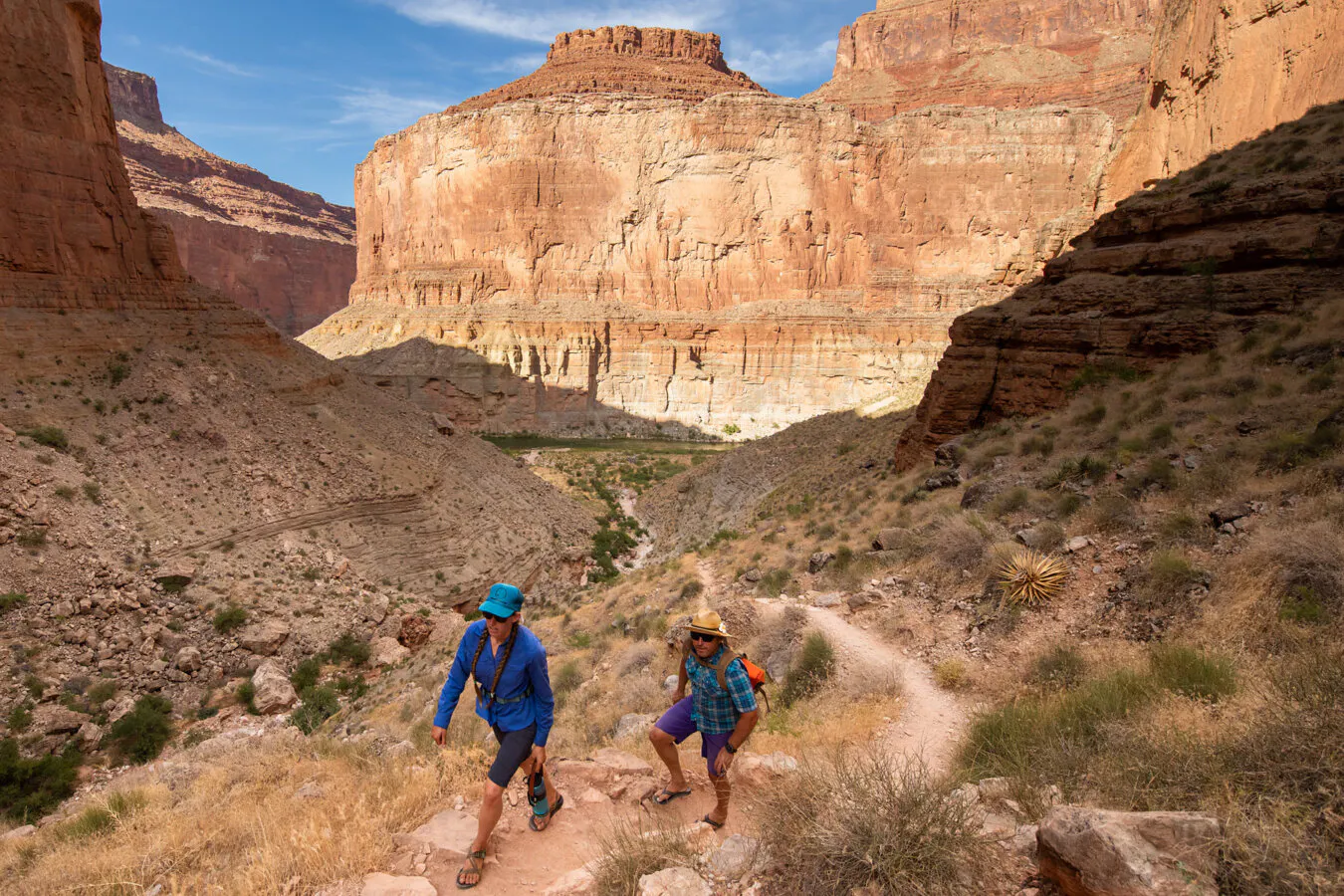
Moderate to Challenging Hiking: Optional side hikes may involve uneven terrain, rock scrambling, steep sections, narrow canyon passages, and exposure to heat.
Full Wilderness Days: You'll spend more than two weeks living outdoors, loading and unloading your personal camp gear, getting in and out of rafts, and adapting to changing weather-and river conditions.
Heat and Weather: Summer temperatures can rise above 110°F, while rain, wind, thunderstorms, and sudden temperature drops are possible throughout the rafting season.
It is possible the itinerary can change. OARS runs the Ultimate Grand Canyon trip on a relaxed and flexible schedule, so the published itinerary is a sample rather than a fixed day-by-day plan. The group, weather, other river trips, campsite availability, and river conditions can influence where you camp, which side hikes are possible, and how each day unfolds. All departures cover the same river mileage, but the longer 16-, 17-, and 18-day trips provide more time for hiking and exploring along the way.