

Portugal & Spain El Camino Portugues Hiking Tour
A Scenic Pilgrimage From Lisbon to Santiago de Compostela
- Available: April, May, June, September, October
- Activity: Level 4
- Accommodations: Comfortable Hotels, Luxury Hotels
Highlights
- Hike on a less-traveled and more rural Camino route with stops at three UNESCO World Heritage cities - Lisbon, Porto, and Santiago de Compostela
- Savor a traditional local dinner over sounds of fado in Porto, Portugal's foodie capital, and explore the Douro Port wine region
- Discover beautiful and historic villages on the way, including Ponte de Lima, Portugal's oldest village
Itinerary
Arrive in Lisbon, Portugal's Enchanting Capital
Day 1
Arrive in Lisbon in the afternoon, and transfer from the airport to the hotel. Relax and refresh, then meet your guides and group in the lobby for introductions. Venture out to the city's historic district. Roam the maze of alleyways in the ancient quarter of Alfama, see the cathedral, discover the elegant Chiado neighborhood, and take in the city panoramas from the iconic Santa Justa elevator. Return to the hotel for a welcome dinner.
Accommodation: The One Palacio da Anunciada
Activity: City walking tour
Meals: Dinner
Asseiceira and the Templar City of Tomar
Day 2
Enjoy a scenic bus ride from Lisbon, heading north. Reach sleepy Atalaia, a town with a rich farming history that sits between two rivers, Targus and Almonda. Visit the Igreja Matriz de Atalaia, then start your day's hike from this charming village. Along the way, enjoy spotting colorful wildflowers and marvel at eucalyptus plantations planted where oak forests used to be. Stop for lunch in Asseiceira, then transfer to Tomar, the city that grew out of the 12th-century Templar stronghold, and home to the Convent of Christ which today towers over the town. Stroll through the town with your guides, from the Castle of Tomar to various monuments, arriving at the Praca da Republica and our hotel for the night.
Accommodation: Hotel Republica
Activity: 5 hours/8 miles hiking with 650' elevation gain and 600' elevation loss
Transportation: 1.5-hours private transfer
Meals: Breakfast, Lunch, Dinner
Take in the Conimbriga Roman Ruins
Day 3
After a bus ride to Algorve, start off hiking through forests and small villages to the town of Conimbriga. Founded by the Celts, the town flourished in the 2nd century under Roman rule. Explore the wonderfully preserved Conimbriga Roman Ruins, including the fascinating villas and splendidly kept floor mosaics. Transfer from there to the historic university city of Coimbra.
Accommodation: Hotel Quinta das Lagrimas
Accommodation: Palace Hotel BussacoActivity: 6-7 hours/12.5 miles hiking with 620' elevation gain and 1,180' elevation loss
Transportation: 1-hour private transfer
Meals: Breakfast, Lunch, Dinner
University of Coimbra, the Land of Port, and Fado Music
Day 4
Visit Coimbra's landmark UNESCO-listed university, the oldest in Portugal, founded in 1290. Afterwards, transfer to the UNESCO World Heritage Site of Porto, capital of port wine and beloved by foodies for its wine, cheese, croquettes, and cod. Today's urban hike will include the Mosteiro da Serra do Pilar and its magnificent view of the Douro River, a walk along the river, a visit to a wine bodega, the Ponte Luis I bridge, the cathedral, Sao Bento station, the Clerigos Tower, and the Lello bookshop. After a rest at the hotel, enjoy dinner in a traditional restaurant accompanied by fado music.
Accommodation: InterContinental Porto Palacio das Cardosas
Activity: 4 hours/5 miles hiking with 590' elevation gain and 580' elevation loss
Transportation: 1.15-hours private transfer
Meals: Breakfast, Lunch, Dinner
Continue on to Beautiful Braga
Day 5
After breakfast, transfer to Sao Pedro de Rates, a wonderful Roman-style church, for a visit before starting your hike from there. Trek between small villages along quiet pathways and sections of peaceful roads. Take time for lunch on the trail, then end the day in Barcelinhos and its gorgeous church, Igreja Matriz de Santa Maria Maior. From here, transfer to elegant Braga, famous for it religious festivals and Barqoue churches.
Accommodation: Vila Gale Collection Braga
Activity: 6-7 hours/12 miles hiking with 660' elevation gain and 985' elevation loss
Transportation: 55-minute private transfer
Meals: Breakfast, Lunch, Dinner
Travel to Ponte de Lima
Day 6
Travel to Balugaes, the starting point of your hike to Ponte de Lima. As you walk this seven-mile section made up of dirt tracks, cobbled paths, and the occasional paved road, take in the vine-covered landscapes and small shrines along the way. On Rio Lima, you'll find the pretty Ponte de Lima, one of the oldest villages in the country with medieval houses, lovely flower gardens, pretty squares, and many ancient religious buildings.
Accommodation: Carmo’s Boutique Hotel
Activity: 6-7 hours/12 miles hiking with 660' feet elevation gain and 985' elevation loss
Transportation: 40-minute private transfer
Meals: Breakfast, Lunch, Dinner
Hike the "Queen's Stage"
Day 7
Start today's hike from Ponte de Lima, crossing the bridge over the Lima River. This is one of the most beautiful portions of the Portuguese Camino - the “Queen's Stage” - during which you will cross the hill of “the Witch” and hike up to Pilgrims Cross. Descend to the bus and return to Ponte de Lima for a second night.
Accommodation: Carmo’s Boutique Hotel
Activity: 7-8 hours/11 miles hiking with 1,800' feet elevation gain and 820' elevation loss
Transportation: 20-minute private transfer
Meals: Breakfast, Lunch, Dinner
Venture on to the Final Portuguese City, Valenca
Day 8
Transfer back to Rubiaes, where you ended yesterday's hike and start walking along an old Roman road, between forest and small villages. After lunch and more urban terrain, arrive in Valenca, the last Portuguese city on the route, with a wonderful citadel overlooking the Minho River, the natural border between Portugal and Spain. Once in Galicia in Spain, you will reach the hotel, where you will spend the night. If time and energy allow, visit the 12th-century Santa Maria Cathedral in the Old City of Tui.
Accommodation: Parador de Tui
Activity: 7 hours/13 miles hiking with 1,575' feet elevation gain and 1,050' elevation loss
Transportation: 20-minute private transfer
Meals: Breakfast, Lunch, Dinner
Cross the Verdugo River
Day 9
In the morning, transfer to Arcade, where you begin your hike across the Verdugo River via the Pontesampaio Bridge. Walk through narrow streets and beautiful forest along the way. Prepare to be amazed by your arrival into Pontevedra and its old town.
Accommodation: Parador de Pontevedra
Activity: 6 hours/9.5 miles hiking with 985' feet elevation gain and 1,150' elevation loss
Transportation: 40-minute private transfer
Meals: Breakfast, Lunch, Dinner
Travel Through Galicia to the Ultimate Goal, Santiago
Day 10
Transfer to Escravitude, near Padron, famous for Padron peppers, which you'll have opportunity to taste along the way, as well as for being the former Roman city where apostle Santiago's remains were brought from Jerusalem. As you hike along, notice the horreos, granaries built of wood or stone in Galicia and raised from the ground to keep out rodents. Finally, at long last, arrive in Santiago and visit the Cathedral in the wonderful town square. Spend the night in one of Spain's oldest hotels, the Parador de Santiago de Compostela.
Accommodation: Parador de Santiago de Compostela
Activity: 7 hours/13 miles hiking with 1,575' feet elevation gain and 1,050' elevation loss
Transportation: 35-minute private transfer
Meals: Breakfast, Lunch, Dinner
Bid Farewell to El Camino Portugues
Day 11
With your Camino passport stamped, and your heart full, bid farewell to your fellow travelers and tour leaders. After breakfast, transfer to the airport in Santiago de Compostela for departures home.
Meals: Breakfast
Why Travel With Us?
- MT Sobek brings over 50 years of unmatched expertise in European journeys, including decades leading travelers on the historic Camino pilgrimage routes.
- This 11-day journey along the classic Camino Portugues from Lisbon to Santiago de Compostela combines scenic trails, Roman paths, elegant accommodations, and exceptional regional cuisine.
- With vehicle support to shorten hikes as needed, this adventure also features enriching historical and cultural tours led by expert local guides through ancient towns along the route.
Dates & Prices
Price is per person, double occupancy in USD.
The earlier you book, the more choice of available dates you’ll have and once you book, your price is guaranteed.
Your Guides
The best people to immerse you in a destination are the ones who live there, which is why we feature local Adventure Guides on our trips. Here are a few that you might meet on this adventure.
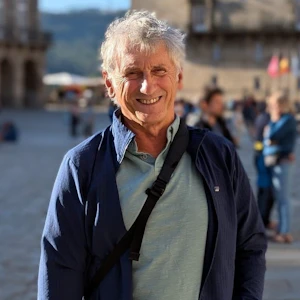
Leo S.
Leo was born in the mountains of Spain’s Basque Country and made his home in Jaca, in the heart of the Pyrenees, where he spends his winters on backcountry skis. He has been guiding in the Pyrenees for many years, as well as in Nepal, Morocco, Tanzania, Peru, Chile, Venezuela, Pakistan, India, and the French Alps. He has also taught skiing in Colorado. He is an International Certified Mountain Guide (UIAGM) and a professional ski instructor (ISIA). Leo is fluent in English, French, and Basque.

Fernando G.
Fernando is a IFMGA Mountain Guide with an extensive backgrouond in mountaneering and guiding. He has hiked the Great Himlayan Trail from India, Sikkim, Buthan, Nepal and Pakistán over a period of 6 months. Fernando was the first man to ever climb to the peak of Cho Oyu (26,906') solo and in Winter. He holds the world record of permanence in altitude, remaining at the summit of Aconcagua (22,841') for 66 days; and he has climbed Aconcagua 40 times. Fernando has been guiding in the Alpes, Andes, Himalaya and Pyrenees and other Mountains in Spain for more than 40 years.

David S.
David was born in Lisbon and is an expert walking guide and outdoor enthusiast. Having an academic background in anthropology, he's equally interested in the local history and rural culture of the region, where he has his family roots. David has also spent the last few years immersed in the study of the geography and flora of Northern Portugal. Married and father of three, David and his family now live between Barcelos and Ponte de Lima, right along the Portuguese Camino de Santiago.
Activity Level
This trip is rated activity level 4. Moderate hikes of up to 12 miles per day on well-marked trails and country roads with bus transfers to help shorten the hikes.
Learn more about activity levels here.
Activity Snapshot
Day 1
City walking tour
Day 2
5 hours/8 miles hiking with 650' elevation gain and 600' elevation loss
Day 3
6-7 hours/12.5 miles hiking with 620' elevation gain and 1,180' elevation loss
Day 4
4 hours/5 miles hiking with 590' elevation gain and 580' elevation loss
Day 5
6-7 hours/12 miles hiking with 660' elevation gain and 985' elevation loss
Day 6
6-7 hours/12 miles hiking with 660' feet elevation gain and 985' elevation loss
Day 7
7-8 hours/11 miles hiking with 1,800' feet elevation gain and 820' elevation loss
Day 8
7 hours/13 miles hiking with 1,575' feet elevation gain and 1,050' elevation loss
Day 9
6 hours/9.5 miles hiking with 985' feet elevation gain and 1,150' elevation loss
Day 10
7 hours/13 miles hiking with 1,575' feet elevation gain and 1,050' elevation loss
*Mileage and elevation change information is approximate and may vary slightly depending on trail conditions, weather, and route adjustments, and the guide’s discretion.
Accommodations
Comfortable and luxury historic hotels with modern conveniences, restaurants, and ideal locations.

Parador de Santiago de Compostela
Travel back in history with a stay in this grand hotel — originally a royal hospital built in the 15th century — in the center of Obradoiro Square. Four-poster beds, brocade linens, warm woods, and rich velvets adorn the comfortable rooms. The restaurant serves a delicious menu of Galician-style food, although endless culinary delights await outside the hotel.

Hotel Republica
Designed and built entirely by Portuguese companies, this five-star boutique hotel oozes local vibes. Its 19 rooms come complete with many comforts, from marble bathrooms with walk-in showers to plush bathrobes. Right in the heart of town, the hotel places you perfectly for easy exploration of Tomar and its sights.

InterContinental Porto Palacio das Cardosas
This elegant, five-star, city center hotel was created from the 18th-century Palacio das Cardosas and boasts an enviable view of the emblematic Avenida dos Aliados and the Belle Epoque-era Praca da Liberdade. Surround yourself in old-world luxury, beneath crystal chandeliers and in the English library-esque bar, with its grand piano and extensive selection of local port wines. Rooms are surprisingly spacious with a contemporary feel and period accents, from the detailed crown molding to the ceiling-height mirrors.

Parador de Tui
A replica of a traditional Galician country house, Parador de Tui enjoys a central position in Tui, surrounded by mountains and overlooking the river. Its airy rooms feature traditional decor, and come complete with WiFi, minibars, and flat-screen TVs. The hotel's restaurant serves regional specialties, while its outdoor facilities include a lush garden, a tennis court, and a seasonal pool.

Parador de Pontevedra
Occupying a beautiful 16th-century Renaissance palace, this four-star hotel bedazzles with elegant details like the marble staircase in the lobby and the exposed beams in the bar. The rooms feature vintage furnishings, flat-screen TVs, and mini refrigerators. The ambiance pairs perfectly with the convenient location, just minutes away from Basilica de Santa Maria a Maior.

Vila Gale Collection Braga
With its peaceful garden and indoor and outdoor swimming pools, Vila Gale Collection Braga feels reminiscent of a regal estate. The former Sao Marcos hospital, which dates back to 1508, now offers comfortable guest rooms with modern amenities such as free WiFi, room service, and available spa treatments. It's all conveniently close to Braga's dining, shops, and attractions, including the notable Braga Cathedral.

The One Palacio da Anunciada
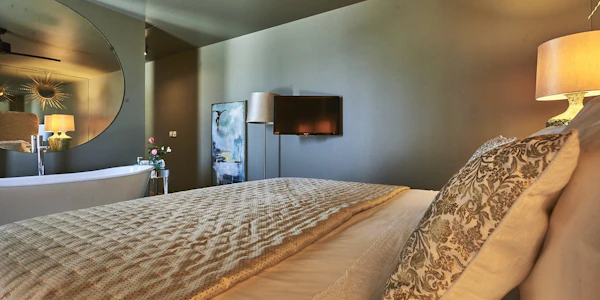
Carmo’s Boutique Hotel

Hotel Quinta das Lagrimas

Palace Hotel Bussaco
Weather
Spring and fall mornings are cool but warm up to 70F at midday, cooling back down to about 50F in late afternoon.
FAQs
Trip Overview
This 11-day journey offers an authentic pilgrimage from Lisbon to Santiago de Compostela along the traditional Central Camino. Tracing historic inland Roman roads and ancient pilgrimage paths, it pairs the spirit of this legendary route with elegant 4- and 5-star accommodations—including three exceptional Spanish Paradores—along with outstanding regional cuisine and expert-led cultural insights.
Legacy of Expertise: Since 1969, MT Sobek has offered unmatched experience in adventure travel including decades leading travelers on the historic Camino pilgrimage routes.
Goal-Oriented Journey: Travel the historic route through Northern Portugal and Galician Spain, culminating in a triumphant arrival at the Cathedral of Santiago de Compostela.
Historic Stays: Enjoy luxury lodging in unique properties such as the renovated 15th-century royal hospital, Parador de Santiago de Compostela, and the 16th-century Renaissance palace, Parador de Pontevedra.
Seamless Support: Travel with expert guides from both Spain and Portugal, who handle all logistics and vehicle support.
April through June and September through October take advantage of the most comfortable hiking conditions on the Iberian Peninsula. We specifically avoid July and August due to the extremely high temperatures found in some areas along the Camino route, choosing spring and fall dates for the best experience.
April to May - Vibrant Spring: Expect colorful wildflowers and fresh landscapes, with cool mornings that typically warm up to 70°F by midday.
June & September - Warm & Bright: These months tend to be very warm with long daylight hours ideal for full days of walking.
October - Crisp Autumn: Autumn brings cooler conditions and fewer fellow pilgrims, with a higher chance of rain.
The standard minimum age for this trip is 18. This itinerary is designed with adult travelers in mind, based on daily activity levels, accommodations, and overall group experience. Families or groups with young children please check out our private departures .
This trip is rated Level 4 primarily due to the cumulative physical demand of walking up to 13 miles daily on hard, often paved surfaces. While elevation changes are generally moderate, the repetitive impact of walking on cobblestones and Roman roads requires significant stamina and physical preparation.
Endurance Walking: Guests typically hike between 8 and 13 miles daily for consecutive days, requiring excellent cardiovascular health and conditioning.
Hard-Surface Impact: Significant portions of the trail involve walking on pavement, cobblestones, and ancient Roman roads, which is harder on the body than soft trails.
Elevation Gain: While many sections are flat, specific stages like the "Queen's Stage" on Day 7 of the trip feature up to 1,800 feet of elevation gain.
Sustained Activity: Daily trail time often ranges from 6 to 8 hours, leaving muscles little time to rest between active days.
Arriving and Departing
The trip starts in Lisbon, Portugal, and ends in Santiago de Compostela, Spain.
You should fly into Lisbon Airport (LIS) and depart from Santiago de Compostela Airport (SCQ).
Some guests choose to depart via Madrid’s Adolfo Suarez Madrid-Barajas Airport (MAD) and connect via train. If you choose to route out of Madrid, you’ll need to book your train connection accordingly. Many guests use Trainline.com or Renfe.com to make these arrangements.
You might also choose to arrive and depart via Lisbon Airport (LIS), requiring a short post-trip connecting flight from Santiago de Compostela Airport (SCQ) to Lisbon Airport (LIS).
Once your reservation with MT Sobek is finalized, we'll notify you of your trip's status. After your departure is confirmed to operate, flights and travel arrangements may be purchased. While we can often confirm departures in advance, some decisions may be finalized closer to final payment. We strongly advise checking directly with your Adventure Coordinator before purchasing any non-refundable air arrangements. For expert assistance with your flight plans, we recommend reaching out to Exito Travel at 800-655-4053 or via email at mtsobek@exitotravel.com.
Once your booking is finalized with MT Sobek and your trip has been confirmed to operate, flights may be purchased. If you are unsure of the status of your trip, be sure to check with your Adventure Coordinator prior to booking non-refundable flights.
Some guests prefer to arrive at least one day early to adjust to the time change and ensure they are rested for Day 1.
Arrival: Please arrive at Lisbon Airport (LIS) no later than 2:00 pm on Day 1.
Departure: You may depart from Santiago de Compostela Airport (SCQ) anytime on Day 11.
We recommend staying at our group hotels: The One Palacio da Anunciada in Lisbon and the Parador de Santiago de Compostela in Spain.
Please book your extra nights with the hotel directly. Our groups stay in rooms of varying (but comparable) styles, and we will not know which room you will be assigned until the final participant list is sent to the hotel 30 days prior. Therefore, it will not be possible to guarantee you will not need to switch rooms on Day 1 of the trip. Your guides will review pre-trip details when confirming room assignments with the hotel and will make every effort to keep you in the same room. Please do not book a non-refundable rate, as hotels are subject to change.
A valid passport is required to enter Portugal and Spain. Most countries require that passports be valid for at least six months beyond the end of your trip and contain at least one blank page for entry stamps.
US citizens do not need a visa for stays under 90 days in Spain and Portugal. If you’re planning extended travel in other European countries, check individual country visa requirements accordingly.
Non-citizens should consult their local embassy or consulate to confirm current entry requirements.
Transportation and Transfer
Transfers on this trip are generally short. The longest scheduled transfer is around 1.5 hours on Day 2.
Fitness, Terrain and Trail Expectations
This is a Level 4 hiking trip designed for fit walkers who enjoy sustained, point-to-point days on the trail and can comfortably cover up to 13 miles a day for 9 consecutive days.
The Camino Portugues is less about steep mountain ascents and more about endurance—maintaining a steady pace day after day. The primary challenge is walking long distances on hard surfaces like cobblestones and paved roads, which can be taxing on the joints and feet.
Proper footwear, conditioning, and resilience are key to fully enjoying this rewarding journey.
Terrain: The Camino weaves through northern Portugal and Spain on dirt tracks, forest paths, ancient cobbled lanes, Roman roads, and paved country roads, along with occasional town and village walking. You will need to be comfortable walking on all types of terrain, but particularly cobblestones and paved surfaces.
Daily Duration: Plan for 6-8 hours of walking most days, with brief pauses at cafes, historic landmarks, and scenic viewpoints along the way. Days are full but well-paced, with a rhythm that reflects the Camino experience.
Elevation: The route is generally flat, with some rolling hills and gradual climbs. The most notable challenge is the “Queen’s Stage,” with an approximately 1,800-foot ascent, rewarded by sweeping views and a strong sense of accomplishment.
To prepare for the Camino, focus on building a solid aerobic base and endurance through consistent walking and hiking at least six months in advance. You'll want to get outside multiple times a week with back-to-back days of activity to simulate the trip's daily nature. Start out gradually and increase your training to 4 to 5 times each week, for 40 to 60 minutes at a time, while making sure to go for full-day walks at least once a week to build your baseline stamina.
Because much of the trail involves paved or hard-packed surfaces, it is essential to train on similar terrain to condition your joints and feet for the daily mileage. You should aim to build up to hiking 10 to 12 miles comfortably on varied surfaces to ensure you are ready for the longer stretches of the journey. It is also vital to train in the footwear you plan to wear on the trip to prevent blisters, and practice hiking with a light daypack to get accustomed to the weight you will carry for 6 to 8 hours daily.
There is no technical climbing or significant exposure on this trip. The trails consist of well-marked country roads, forest paths and historic Roman ways. Your guides manage all logistics and pacing to ensure a safe and steady experience.
Guests hike as a group, led by expert guides who manage the pace with regular breaks. This approach ensures that everyone can hike comfortably while maintaining safety and group cohesion throughout the journey.
This certificate is issued by the Cathedral of Santiago at their discretion and not by MT Sobek. Official church rules stipulate that pilgrims walk at least 100 kms (~62 miles) consecutively, without any breaks or jumps, in order to qualify for the Compostela (Pilgrimage Certificate). While we do not walk 100 km consecutively on this trip, guests on our Camino trips usually do end up obtaining the Compostela. Please note that this cannot be guaranteed, as it ultimately depends on the determination of the cathedral’s Pilgrim’s Reception Office.
You will be provided a Pilgrim’s Passport (Credencial) to carry with you throughout the journey. Collecting unique stamps at various hotels, cafes, and churches along the route creates a wonderful booklet of mementos from the places you visited. You will also receive a traditional scallop shell to carry on the trek.
This trip follows the historic Camino de Santiago, a centuries-old pilgrimage path. While the route has deep religious roots, this is a rewarding journey for travelers of all backgrounds—whether you’re drawn by history, culture, landscape, or personal reflection.
There are opportunities in Santiago de Compostela to attend mass. Depending on schedules, you may also be able to attend some services along the route. Your guide can help determine what opportunities are available.
Accommodations and Meals
You will stay in a hand-picked selection of charming 4- and 5-star hotels and historic Spanish Paradores, which are a unique collection of historic hotels owned by the Spanish government. These properties are almost exclusively restored National Heritage sites, including ancient castles, monasteries, and fortresses that can date back as far as the ninth century.
These properties are chosen for their regional character and provide a restful environment to recharge, featuring commonly requested amenities such as Wi-Fi, air conditioning, minibars, and safes.
In each destination we select the best available choice, but please note that both rooms and beds may be smaller than you are accustomed to. Twin rooms in Portugal and Spain are often configured with two single beds placed side-by-side and joined by a shared headboard or bedframe; these beds cannot be moved apart from each other.
Keep in mind that while your hotels will usually have a safe in your room, they often are not big enough to store a laptop or tablet.
The foods of Portugal and Spain share some similarities due to their proximity on the Iberian Peninsula. Fish, shellfish and pork figure prominently, as do regional cheeses and tapas (called petiscos in Portugal).
All breakfasts are buffets at the hotel, perhaps featuring ham, cheese, quince jam and fresh bread, or savory sandwiches and Spanish tortilla (a thick potato omelet), along with cereals, yogurt, fruit, eggs, and cold cuts. Juices, coffee, and tea are included.
Lunches will be a combination of both restaurants and picnic lunches in scenic settings, depending on the day's activities. Typically, a variety of fresh and pickled vegetables, fresh baked breads, local cheeses, fruit and tomatoes, salads, and a variety of cured meats will be available to choose from for picnic lunches. Restaurant meals will offer local specialties. Popular choices include grilled sardines and bifanas (pork sandwiches) in Portugal, or jamon iberico and tapas in Spain, among many other dishes.
Dinners are served at the hotel or a nearby restaurant and are usually three courses. Some are set meals. Northern Portugal is famous for its bacalhau (cod) dishes and fresh shellfish. In Spain, dinner might include fresh fish or seafood or roast chicken or lamb with fried potatoes or rice. An omelet or soup with a green salad on the side is also quite common.
A limited amount of beer and wine selected by your guides is included with dinners. Additional alcohol is available for purchase.
Dinner is served later in Portugal and Spain than you may be accustomed to, with locals often dining after 9:00 pm. Most restaurants open between 7:00 and 8:00 pm.
We can successfully accommodate many common dietary restrictions, such as vegetarian, vegan, gluten-free and dairy-free, but due to regional limitations or cooking facilities, please be aware that we may not be able to fulfill every request.
Let us know about your dietary restrictions and food allergies as soon as possible, so we can coordinate with guides, hotels, and restaurants. Please also list these on your Participant Information Form.
Yes, a limited number of single rooms are available on this trip. About a third of our travelers go solo, and single room inventory often books up quickly! You can find more information on solo traveler options here .
Packing and Gear
Dressing in layers is the key to staying comfortable throughout the day.
Reliable rain protection is essential for the Camino. A waterproof, breathable rain jacket and rain pants will keep you dry during the spring and fall showers typical of Northern Portugal and Spain.
Your mid layer should keep you warm, such as a wool pullover or fleece sweater/vest, and hiking pants. Your inner layer should wick moisture, and also act as your warm-weather layer, such as synthetic T-shirts and shorts.
We suggest that you layer with synthetic clothing. Synthetic fabrics are the most effective barriers against cold and wet weather conditions. They provide the best insulation, are light in weight, wick away perspiration, and dry quickly if wet. Wool and wool/synthetic blends are also suitable. We strongly discourage the use of cotton garments in cold or wet conditions. On hot, sunny days cotton is perfectly acceptable, but you should always have synthetic or wool/synthetic layers with you, in case the weather changes.
A hat and sun protection, including good sunglasses and sunscreen, are important for full days of hiking in the sun. A bandana or Buff are helpful for sun protection.
It is acceptable to wear clean hiking pants and a dress shirt to dinner in the evenings, along with a clean pair of shoes.
Sturdy, properly fitting footwear is the most important gear choice you will make, and a comprehensive Packing List will be provided to guide your preparations.
While you may not need every item every day, having the right gear ensures you can focus on the beauty of the pilgrimage rather than the elements.
A daypack with a 15- to 20-liter capacity is ideal. It should be large enough to carry your rain gear, extra warm layers, water, snacks, sunscreen, and personal medical basics. You'll carry your water for the day, and there are several opportunities each day to refill your water bottles.
On-the-Ground Travel Tips
Weather along the Iberian Peninsula is typically mild and well-suited to hiking, but it remains dynamic—shifting between sun, cloud cover, and occasional rain as you move from Portugal into Galicia. Expect a mix of conditions throughout the day, with noticeable changes between morning and afternoon.
Temperatures: Daytime highs generally range from 60°F to 75°F, aligning with the region’s mild, ocean-influenced climate. April, May, September, and October often start with cool mornings before warming into comfortable hiking conditions by midday.
Sun & Heat: Many walking days include extended stretches under open sky, where the sun can feel strong—especially in late spring and early fall. Even outside peak summer, midday heat can build, so sun protection and hydration are important.
Rain & Changing Conditions: Rain is a regular part of the landscape, particularly in northern Portugal and Galicia, where passing showers and cloudy periods are common. Expect a mix of sun and rain—even within the same day—and be prepared for damp trails and slick cobblestones. This is especially true in early April, May and October. As you progress north, the climate becomes greener and more humid, contributing to lush scenery but also increasing the likelihood of muddy or wet sections underfoot. Light drizzle is not uncommon, especially closer to Santiago.
Variability: Weather patterns can shift quickly, with unexpected rain or warmer-than-expected afternoons possible even in ideal months—making flexibility and layering essential for comfort on the trail.
Spain and Portugal operate on a 220-240V system and use "Type F" outlets. Many guests use a universal plug adapter. A good resource to see images of plug types is www.power-plugs-sockets.com . Check the voltage on your personal electronics chargers to determine if you need a voltage converter. You will have access to electrical outlets at every accommodation to charge your devices nightly.
Your land cost includes most major expenses of the trip. We recommend budgeting for personal expenses such as meals on your own (although all meals are included on this trip), souvenirs, laundry, and optional tips to your guides. The local currency is the euro (EUR). Check out www.xe.com for current exchange rates.
Tipping your adventure guides is a common practice to show appreciation for their hard work, care, and expertise. The amount we recommend that you tip may vary based on factors such as the length of the trip, the expectations and level of service, as well as cultural considerations. What you decide to tip should be based on your overall satisfaction.
Your trip is supported by one MT Sobek Guide for every 8 guests and a Trip Driver. Tips for additional taxi/transfer drivers, guides, restaurant and hotel staff are included in your trip price.
We recommend tipping each of your Guides the equivalent of $150 to $250 per guide, per participant, in cash (euros).
We recommend tipping your Trip Driver $75-125 per participant, in cash (euros).
Our local team is unable to accept gratuities paid by apps (Venmo, Zelle, PayPal, etc.), checks, or credit card.
We recommend bringing local currency with you or obtaining cash from an ATM machine at the airport, or upon arrival in town.
Remember that tipping is always optional and is sincerely appreciated.
Health and Safety
Yes, we strongly recommend purchasing travel insurance for all trips. Travel insurance can help cover trip cancellations or interruptions, medical expenses, emergency evacuation, travel delays, and other unexpected situations.
We offer travel insurance with Arch RoamRight and will be happy to provide you with a quote. Please see our Travel Resources page for more information.
Trail Support and Emergencies
Extensions and Local Exploration
If you have extra time in Lisbon, many guests enjoy exploring nearby Sintra, a resort town in the foothills of Portugal’s Sintra Mountains, near the capital.
In Santiago de Compostela, many guests choose to add another night in order to visit the coastal village of Finisterre the following day. Camino routes technically end in Santiago de Compostela, but many pilgrims extend their journey to Finisterre because it is historically considered the "end of the world" (Finis Terrae). This offers a symbolic, quiet conclusion to the pilgrimage, allowing travelers to reach the Atlantic Ocean, watch the sunset, and reflect on their journey's completion.
You may also choose to link this trip with our Spain El Camino de Santiago Hiking trip on select departures, based on timing and availability.trip on select departures, based on timing and availability.