Zimbabwe’s Community Rhino Conservation Initiative
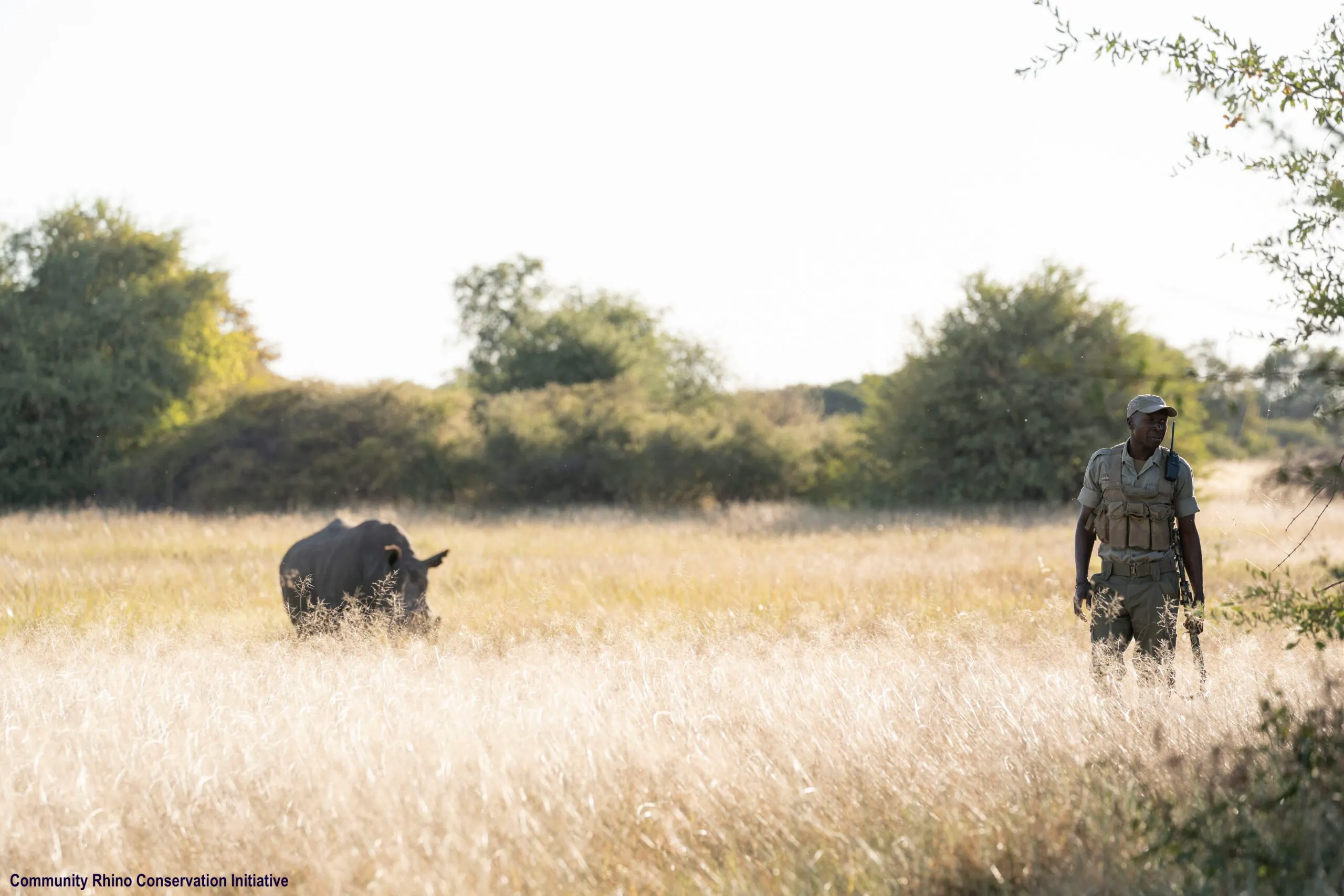
Bringing White Rhinos Back to Hwange National Park
Guest Blog Writer, Hannah Tranter from Imvelo Safari Lodges
Welcome to Hwange, Zimbabwe’s largest national park and one of Africa’s great treasures.
Spanning an extraordinary 5,800 square miles, Hwange is celebrated for its vast elephant herds, powerful lion prides, sweeping grasslands, and the network of life-sustaining waterholes and pumps scattered across its immense landscape. The stories of Hwange’s wild beauty have travelled across the globe, drawing travellers eager to experience one of southern Africa’s most iconic safari destinations. Yet among Hwange’s many stories lies one less often told: the story of the white rhino.
White Rhinos at Hwange

Once present on Hwange’s open plains, white rhinos disappeared from this ecosystem by the early 2000s, driven to local extinction by relentless poaching for their horns. For conservationists and safari operators deeply connected to this landscape, it was a devastating loss. For Imvelo Safari Lodges, it became a call to action.
Today, along Hwange’s southern boundary, Imvelo Safari Lodges is helping to write a remarkable new chapter through its Community Rhino Conservation Initiative, an ambitious project that is not only bringing white rhinos back to the Hwange area but reimagining how conservation itself can work.

The Initiative is built on a bold and innovative idea: place rhinos not inside a traditional protected area, but on communal grazing lands belonging to local villages.
Here, the rhinos are protected by community members themselves, and in return, the conservation benefits and tourism revenue they generate directly profits those same communities. It is a powerful model and one that places local people at the heart of wildlife conservation while inviting travellers from around the world to play an active role in restoring a white rhino population to the Hwange ecosystem.
A Complicated Landscape
The Initiative is set within the southern reaches of Kavango-Zambezi Transfrontier Conservation Area (KAZA), one of the largest transfrontier (multi-national) conservation areas on Earth and a landscape of superlatives: vast river systems, extraordinary biodiversity, and the largest population of elephants left on the continent.
But in southern Hwange, that abundance comes with tension as local communities live with wildlife in their gardens: elephants raiding crops overnight, predators like lions, cheetahs and wild dogs taking livestock, and water resources stretched between people and wildlife. Local people suffer from poverty, isolation from social services, few employment opportunities, and prolonged droughts and wildlife makes these already vulnerable livelihoods even more fragile.
Against this backdrop, the idea of reintroducing rhinos onto communal lands might seem almost unthinkable. Why would communities already burdened by wildlife choose to accommodate white rhinos?
The answer lay in groundwork that had been quietly developing for years.
Imvelo Safari Lodges’ Ecotourism Model: Connecting Community
Imvelo Safari Lodges has been operating in southern Hwange, building a model that links eco-tourism and wildlife conservation to tangible community benefit.
Local employment is central to this model. Rather than bringing in staff from outside, the company recruits from surrounding villages, training young people as guides, trackers, chefs, and camp staff. For many, this has been their first formal paycheck.
Tourism revenue is reinvested into community development: waterwells for clean water, food support for vulnerable households, educational programmes, and improved access to healthcare.
Visitors, too, play a significant role in the model, supporting sales of locally-made crafts, visiting local schools and projects, and engaging in philanthropy.
Over time, Imvelo Safari Lodges has managed to shift local mindsets: wildlife is no longer seen only as a source of conflict. In some communities, it has become a pathway to opportunity.
First Steps: Cobras Community Wildlife Protection
Around five years before the first rhinos arrived, the idea took shape to bring rhinos back to those communities who want to engage in the Initiative. The first communities allocated some of their grazing lands to the project and Imvelo was busy establishing the groundwork: erecting fencing, recruiting local villagers as rhino protection scouts, building camps, drilling for water, and installing solar power.
In 2018, the very first Cobras Community Wildlife Protection scouts were recruited from the local villages, and today the Initiative has 57 scouts, including three women, employed by the Initiative. After months of the scouts practicing their skills guarding donkeys, the first rhinos finally arrived in May 2022 on land adjacent to Hwange National Park. Their new electrically-fenced home serves as an important buffer zone between Hwange National Park and the village lands, alleviating human-wildlife conflicts considerably.

White Rhinos Return & Hwange Communities Benefit

The first two rhinos, Thuza and Kusasa, were translocated from the Malilangwe Trust and after 466 miles of travel, they finally arrived at their new home, followed by a convoy of 22 vehicles. Scouts, veterinarians, traditional leaders, and government representatives moved together with the rhinos across the country.

Since their arrival, travelers from around the world have been coming to visit them, learn about the Initiative and spend time with the scouts. Their visits generate revenue for the Initiative directly, with a community levy going directly to the local communities for them to spend as they wish. One of the most significant investments from rhino generated funds is the development of Ngamo Clinic, a rural healthcare facility designed to serve surrounding communities. Funds support the clinic’s operations, covering salaries, medicines, and supplies. The Ngamo Clinic, since becoming operational in September 2022, has treated over 9,300 patients. Wildlife is no longer just something to protect. It is helping fund healthcare.
Expanding Reach & Increasing Rhino Population
Given the success of the first rhinos, other villages have allocated land for rhino conservation, proactively championing the expansion of the Initiative. Another two rhinos have been translocated and more land along Hwange’s southern boundary is being allocated by local people to rhino conservation. Eventually a founding population of 30 animals will help establish a protected and breeding population of rhinos back to the Hwange ecosystem.
The long-term vision is ambitious: a network of community-supported conservation areas that eventually link into a larger conservancy, where rhinos generate income from eco-tourism, fencing helps buffer human-wildlife conflicts, and communities directly benefit from these conservation efforts.
At its core, the Community Rhino Conservation Initiative aims to align three outcomes:
- thriving wildlife
- empowered communities
- meaningful eco-tourism
When these reinforce one another, conservation becomes more sustainable—and the landscape becomes more resilient for both people and wildlife.
Find out more about the Community Rhino Conservation Initiative here: www.hwangecommunityrhino.com and support the project here: https://www.hwangecommunityrhino.com/how-to-donate
Enjoying our content? Add MT Sobek as a Google Preferred Source.


