MT Sobek Galapagos Adventure Travel Webinar
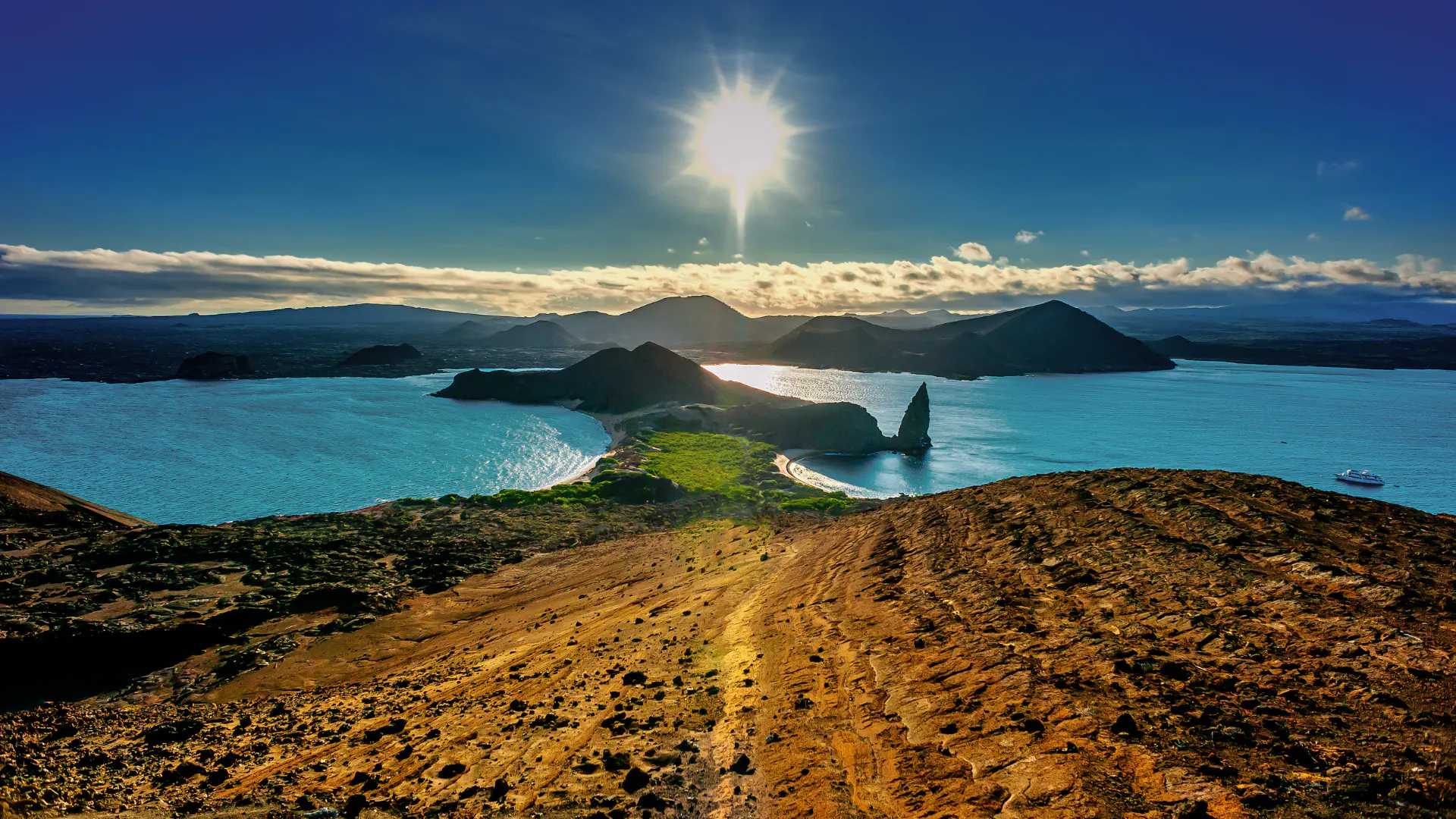
Watch a lively webinar from our MT Sobek guiding legend, Luis Die! Luis will share expert tips, stories from the field, and insider knowledge to help you experience these islands the way few travelers ever do. Discover our line-up of Galapagos trips, with both cruise- and land-based options, all with a maximum of just 16 guests.
Don’t miss your chance to learn from Luis and start planning your Galapagos adventure!
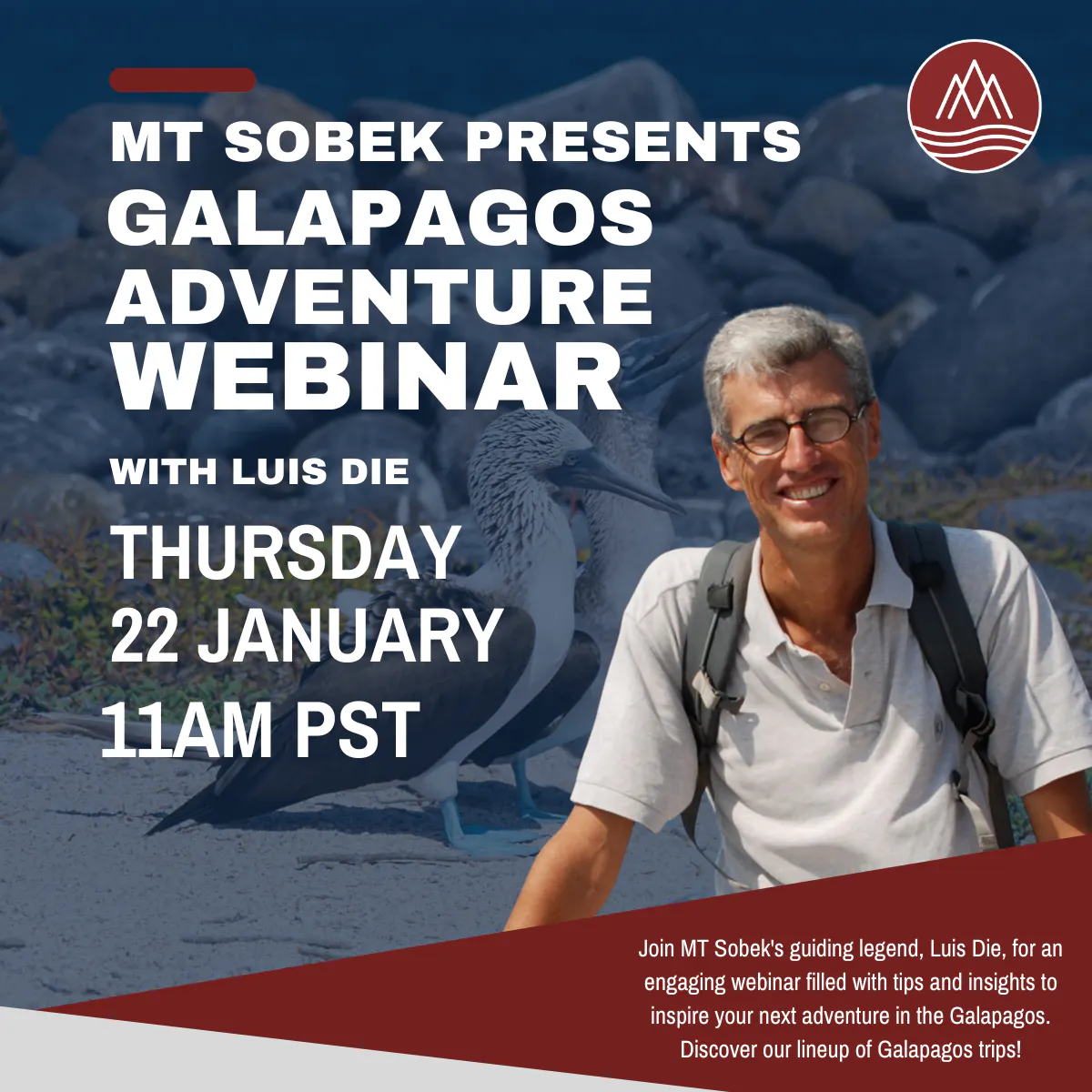

Galapagos Adventure Travel Webinar Overview
He’s here to explain why the Galapagos are so special and what truly sets the MT Sobek experience apart from other companies!
My connection to Ecuador goes back years. I once spent a summer living in Quito, volunteering on public health projects in small communities in the Andean highlands north of the city. But my first trip to the Galapagos was a family adventure with my two sons, who were eight and eleven at the time.
That journey remains, hands down, the best family vacation we’ve ever taken. It was magical in every sense, and not an easy thing to top. Since then, I’ve returned many times with our travelers and alongside Luis, and every visit reaffirms that the Galapagos delivers an experience unlike anywhere else in the world.
Roadmap of Today’s Galapagos Webinar
During the webinar, we walked through a clear roadmap of what travelers often want to know:
- Where exactly the Galapagos Islands are located
- What makes the Galapagos so unique
- When the best time to visit the Galapagos is
- Why traveling with MT Sobek makes a difference
- The pros and cons of cruise-based vs. land-based trips
- How active the experience really is
- The different itineraries and private options we offer
- Extension opportunities in Ecuador, Peru, and Machu Picchu
Most of the deep expertise will come from Luis, who has been guiding in the Galapagos since 1999.
Introducing Luis Die, our Head Naturalist Guide
Luis is our head naturalist guide in the Galapagos and part of our Ecuador operations team, alongside his wife, Irene. Originally from Spain, Luis earned degrees in environmental biology and ecology before arriving in the Galapagos more than two decades ago.
He now lives in Quito and owns land on Santa Cruz Island. His knowledge is vast, but what truly sets him apart is his warmth, enthusiasm, and deep love for the islands.
Our travelers consistently tell us the same thing: Luis is one of the best guides they’ve ever had! Guests describe him as reassuring, endlessly patient, deeply knowledgeable, and genuinely invested in making sure every single person has an incredible experience, whether hiking, snorkeling, or simply learning.
Many even say he was the highlight of their trip. I couldn’t agree more.
Now I’ll hand it off to Luis to talk about the Galapagos Islands!
Where Are the Galapagos Islands Located?
The Galapagos Islands belong to Ecuador, but they feel worlds away. They sit roughly 600 miles off the west coast of mainland Ecuador, out in the eastern Pacific Ocean. You always access the islands via Quito or Guayaquil.
The archipelago includes 13 main islands and many smaller islets, all entirely volcanic. While the landmass itself covers about 3,000 square miles, it is surrounded by a massive marine reserve spanning roughly 66,000 square miles, one of the largest in the world.
Even more impressive, this reserve connects with protected marine corridors reaching Costa Rica and Colombia, allowing whales, dolphins, and sharks to migrate more safely through the region.
Why Is Galapagos Considered a Volcanic Wonderland?
Everything in the Galapagos is volcanic, much like Hawaii. In fact, the islands share a similar type of volcanology and are the second most volcanically active island group on the planet.
Visitors encounter dramatic lava fields, towering volcanic formations, and landscapes that range from stark and barren to lush highland forests dotted with giant cacti. Some lucky travelers even witness volcanic eruptions—gentle rivers of lava flowing into the sea, a phenomenon that occurs roughly every three to five years.
These eruptions are a marvel to witness rather than dangerous, and seeing one is a once-in-a-lifetime natural spectacle.
Why Do the Galapagos Look So Dry?
Despite sitting directly on the equator, much of the Galapagos is surprisingly arid. Rain is scarce, especially at lower elevations, which is why many of the lava landscapes look frozen in time.
Only the highlands of certain islands receive enough moisture to support greener forests. Elsewhere, you’ll see dry shrublands, lava fields, and desert-like terrain, yet these seemingly harsh environments are full of life.
What Makes the Galapagos Ecosystem So Unique?
The magic of the Galapagos lies in a rare collision of worlds. Three major ocean currents converge here: the cold Humboldt Current, the cold Cromwell Current, and the warm Panama Current.
Because of this, the islands host an extraordinary mix of species. Penguins, sea lions, and fur seals—typically found in colder climates—share the water with tropical fish like angelfish, parrotfish, and butterflyfish. You can literally snorkel alongside a penguin and then turn to see tropical reef fish moments later.
This cold-water influence also explains why the Galapagos lacks traditional coral reefs and instead boasts incredibly nutrient-rich waters that support whales, dolphins, orcas, and vast marine life.
How Did the Galapagos Stay So Wild?
One of the most important reasons the Galapagos remain so pristine is simple: humans never truly colonized them until very recently. The islands are dry, remote, and lacked fresh water, making long-term settlement nearly impossible for centuries.
When permanent human presence did begin, Ecuador wisely protected the islands. Today, 97% of the Galapagos is designated as national park land, with only 3% allocated to towns and private use.
This early protection preserved ecosystems that have changed very little over thousands of years.
Why Are the Animals So Fearless?
Because humans were absent for so long, Galapagos wildlife never learned to fear us. Animals behave naturally: sea lions nap beside trails, marine iguanas ignore passersby, and birds nest openly.
While snorkeling, sea lions often swim right up to visitors, curious and playful. It’s one of the few places on Earth where wildlife interactions feel this raw, authentic, and respectful.
What Is Snorkeling Like in the Galapagos?
Snorkeling is consistently one of our travelers’ favorite experiences. We snorkel almost every day, sometimes twice, depending on conditions and group interest.
Even first-time snorkelers are amazed. On their very first outing, guests often swim with sea lions, turtles, reef sharks, colorful fish, and occasionally even penguins. The water is rich, alive, and endlessly surprising.
What Wildlife Can You Expect to See?
The Galapagos is a wildlife lover’s dream. Iconic species include:
- Giant tortoises
- Marine and land iguanas
- Blue-footed boobies
- Galapagos penguins (the only penguins found at the equator)
- Frigatebirds, albatrosses, flamingos, and countless seabirds
Seeing animals from completely different ecological worlds coexist is part of what makes the islands so surreal.
When Is the Best Time to Visit the Galapagos?
The Galapagos has two main seasons: warm and rainy (January–May) and cool and dry (June–December). Neither is extreme.
The warm season brings calmer seas, warmer water, and lush landscapes. The cool season brings more wind, cooler water, and increased marine activity. Wildlife viewing is excellent year-round, and guests often leave convinced they visited at the perfect time regardless of season.
Because conditions are stable and food availability drives animal behavior more than strict seasons, something incredible is always happening.
Why Does the Galapagos Feel So Timeless?
Isolation, protection, and evolutionary history have combined to preserve one of the most intact ecosystems on the planet. Species evolved here in isolation, inspiring Charles Darwin to question how life adapts and changes.
When you visit the Galapagos, you’re not just traveling! You’re stepping into a living laboratory that looks much like it did centuries ago.
And that is what makes the Galapagos truly unforgettable.
What Makes MT Sobek Galapagos Trips Different?
What truly sets MT Sobek Galapagos trips apart starts with experience. I’ve been involved with Galapagos travel for more than 55 years, and our first sailing to the islands dates back to 1970 in partnership with the Sierra Club. That depth of history matters. It shapes how thoughtfully our trips are designed and how confidently they’re operated.
Just as important, many of our staff have spent extensive time in the Galapagos themselves. We’re genuinely passionate about this place, and that shows in the way we plan, guide, and support every journey.
The Pros of Small Group Travel
One of the most important decisions we’ve made is keeping our groups small—never more than 16 guests, whether on a cruise or a land-based program. I can’t overstate how much of a difference this makes.
On smaller boats, we have more access, more flexibility, and significantly more time on shore. While large ships unload waves of guests by Zodiac, often cutting visits short, we move together as one group with our guide. That means unhurried landings, longer wildlife encounters, and a far more personal experience.
Guests consistently tell me this is one of the highlights of their trip, especially when they realize they’re not one of 50 or 100 people competing for space and attention.
On MT Sobek trips, you’re with the same guide the entire time. You’re not switching guides day to day. Your guide, someone like Luis, travels with you, hikes with you, and even snorkels alongside you.
Our guides are exceptional. They bring decades of experience and advanced degrees in biology, and they know the Galapagos intimately. That continuity builds trust and deepens the experience. You’re learning from someone who understands both the wildlife and your interests.
How Does MT Sobek Operate Galapagos Trips?
Many people are surprised to learn that we operate our own Galapagos trips directly. Our on-the-ground operations are led by Luis and his wife, Irene, who are dedicated exclusively to our travelers.
When you join one of our trips, you’re treated like family. You’re never one of hundreds of guests passing through. Our team focuses on one group at a time, taking care of every detail so you can fully immerse yourself in the experience.
How Does MT Sobek Support Conservation in the Galapagos?
Conservation is a core part of what we do. We actively support organizations like the Galapagos Conservancy through annual company contributions, and we also donate per guest when travelers book with us.
Protecting this fragile ecosystem isn’t optional, it’s essential. The Galapagos is unlike anywhere else on Earth, and preserving it for future generations is a responsibility we take seriously.
Frequently Asked Questions
Should I Choose a Galapagos Cruise or a Land-Based Trip?
This is one of the most common questions we hear. The answer depends on your comfort level and travel style.
Why Do I Recommend Small-Ship Galapagos Cruises?
Despite the word “cruise,” these trips are anything but passive. Our days are active and immersive. We start early with hikes, snorkel in pristine waters, kayak along volcanic coastlines, and constantly look for wildlife.
Cruising allows access to remote islands like Española and Genovesa—places you simply can’t reach from a hotel. We travel at night while you sleep, so each morning you wake up somewhere new, ready to explore. Daytime navigation also offers incredible opportunities to spot whales and dolphins from the deck.
You can be as active as you like, or take time to relax onboard and enjoy sunsets and sea life. The choice is always yours.
Who Are Land-Based Galapagos Trips Best For?
Land-based trips are ideal if you’re uncomfortable sleeping on a boat or prone to seasickness. We stay in beautiful waterfront hotels and visit multiple islands, traveling by day and never navigating rough waters overnight.
These are private departures, often for just two to six people, which allows even more flexibility. Some travelers want more snorkeling, others prefer longer hikes, photography-focused days, or a mix of everything. While all activities are regulated by the Galapagos National Park, land-based programs allow us to tailor the experience more closely to your preferences.
What Activities Can I Expect in the Galapagos?
Whether cruising or land-based, my trips are centered around exploration and wildlife. We hike, snorkel, kayak, and constantly observe animals: from sea lions and marine iguanas to seabirds, dolphins, and whales.
Snorkeling is a major highlight. It’s something we do as often as possible because the underwater world of the Galapagos is just as extraordinary as what’s above the surface.
What Galapagos Cruise Itineraries Does MT Sobek Offer?
We offer three primary small-ship cruise itineraries aboard 16-passenger yachts and catamarans:
- A 7-night eastern loop cruise, paired with time in Quito
- A 5-night western loop cruise, also paired with Quito
- A 4-night cruise combined with a stay in the Ecuadorian Amazon
We also offer private charters for any of these itineraries, as well as a luxury option aboard the Endemic catamaran, which features private balconies and high-end service.
Which Galapagos Itinerary Is Best for First-Time Visitors?
There’s truly no wrong choice. If there’s a specific species you’re hoping to see like albatrosses on Española or penguins in the western islands that can help guide your decision. Otherwise, both eastern and western itineraries offer incredible biodiversity and unforgettable wildlife encounters.
Many travelers return to experience the itinerary they didn’t do the first time, which says a lot about how compelling the Galapagos really is.
Why Do We Love Combining the Amazon and the Galapagos?
One of my favorite options is pairing the Galapagos with the Ecuadorian Amazon. These are two completely different ecosystems, both iconic and wildly diverse.
In the Amazon, we stay at a comfortable lodge, explore rainforest trails and canopy towers, look for monkeys and sloths, and visit local communities. Then, just days later, you’re snorkeling with sea lions and watching marine iguanas in the Galapagos. The contrast is extraordinary and surprisingly, the Amazon is far safer and more comfortable than many people expect.
Can I Extend My Trip Beyond the Galapagos?
Absolutely. Ecuador is one of the most biodiverse countries in the world, and I strongly encourage spending extra time there. Extensions can include the Amazon, the Andean highlands, historic haciendas, cloud forests rich with hummingbirds, or even a visit to Machu Picchu in Peru.
If you’ve come all this way, it’s worth taking the time to experience more of what this region has to offer.
Final Thoughts: Why Is the Galapagos Truly a Once-in-a-Lifetime Destination?
The Galapagos is unlike anywhere else on Earth. Its wildlife, landscapes, and sense of remoteness are genuinely unique. There is only one Galapagos in the world, and experiencing it thoughtfully, responsibly, and in small groups makes all the difference.
I hope to welcome you there someday and share what makes this place so incredibly special.
If any of this has inspired you—we’d love to host you in the Galapagos. Our 2026 dates are already open, and you can book online or call us directly. If you want a private departure, a custom itinerary, or a date that doesn’t exist yet, just let us know. We’re incredibly flexible, especially with advance notice.
We’re always happy to help you choose the perfect trip.
Enjoying our content? Add MT Sobek as a Google Preferred Source.


