Everything You Need to Know to Hike Angels Landing
A Complete Guide to Hiking Zion's Most Famous Trail
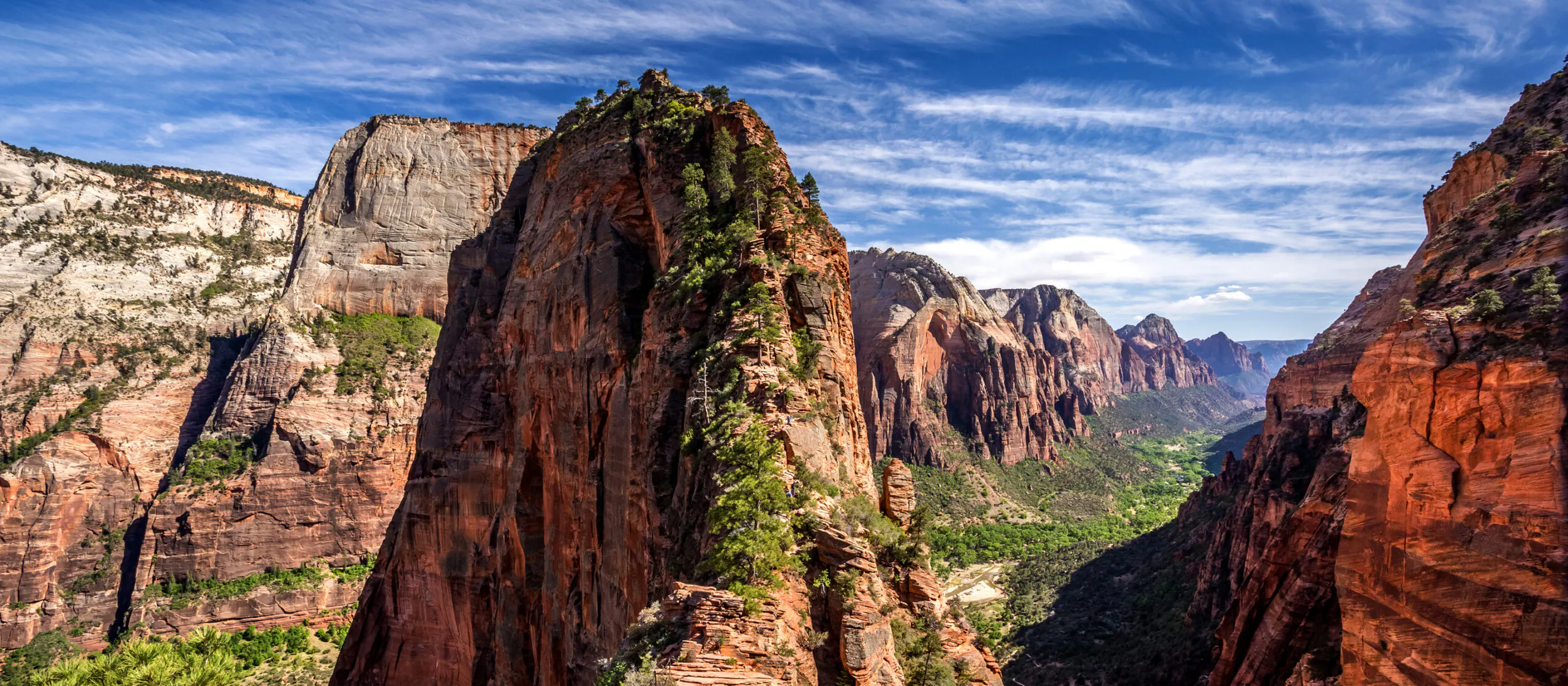
Few hikes in the United States capture the imagination of adventurous visitors quite like Angels Landing in Zion National Park. Rising dramatically above Zion Canyon and Utah’s famous Virgin River, the trail ascends a desert tower and then follows a narrow fin of Navajo Sandstone that offers one of the most thrilling hiking experiences in the American Southwest. The Angels Landing hike blends physical challenge with harrowing exposure and stunning natural beauty.
If you’ve ever seen photos or videos of hikers gripping chains along a thin ridgeline with thousand-foot drop-offs on either side, you likely understand a little bit about Angels Landing. However, there is far more to this trail than the final, most famous, section of exposed hiking. From the shaded switchbacks of Refrigerator Canyon to the iconic switchbacks of Walter’s Wiggles and the permit-controlled chain section, Angels Landing is a hike that unfolds in stages, each one building toward a spectacularly unique summit view. This trail is without question the most dramatic hike in Zion National Park!
When it comes to tackling iconic hikes like Angels Landing, experience matters, and that’s where the MT Sobek team stands apart. Since 1969, we have been designing and guiding expertly crafted hiking adventures around the world, with a reputation built on intimate destination knowledge, exceptional safety standards, and refined logistics.
This trail guide leverages over 5 decades of adventure travel experience to walk you through everything you need to know to hike Angels Landing safely and confidently. We cover logistics, permits, route details, physical demands, mental preparation, a recommended packing list and the seemingly small but crucial decisions that can make or break your hike.
Why Angels Landing Is So Special
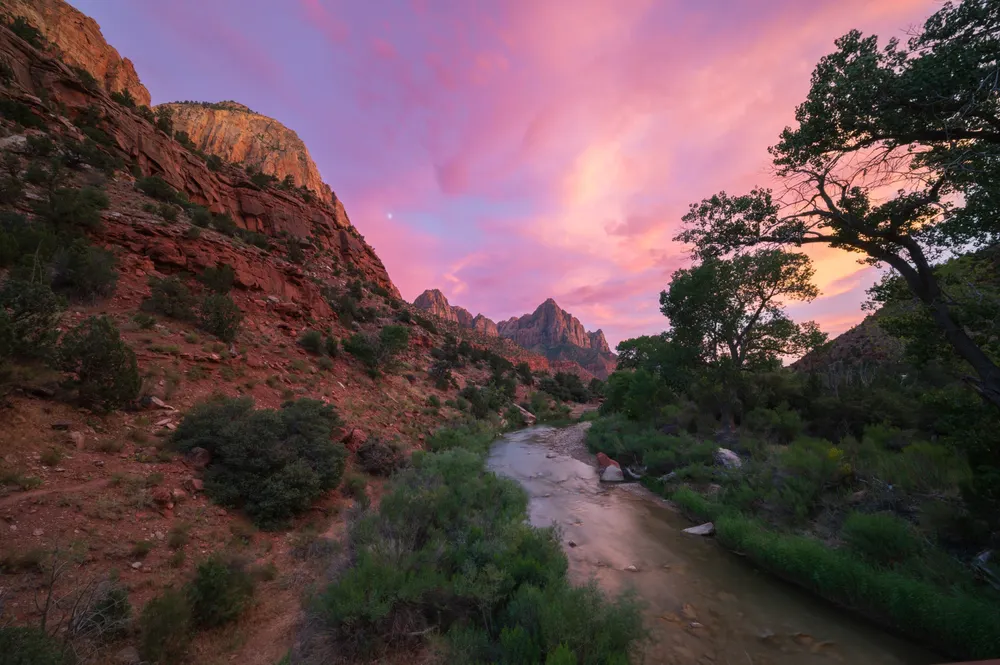
There are many great hikes in Zion, but Angels Landing is the most iconic for many reasons. To be clear, it’s not only the views, though they are absolutely spectacular. It’s the all-around experience and adventure that makes this hike epic. It demands your attention, especially at the top, where every step past Scout Lookout requires focus, intention and presence.
The trail climbs approximately 1,500 feet from the floor of Zion Canyon, culminating in a harrowing walk along a narrow ridge with sheer drop-offs of 1,000+ feet on both sides. And yet, for visitors who are prepared and in good physical condition, it is not at all a reckless endeavor. It’s an unforgettable Utah adventure made safer by chains bolted into the rock, carved steps, and decades of meticulous trail design by the National Park Service.
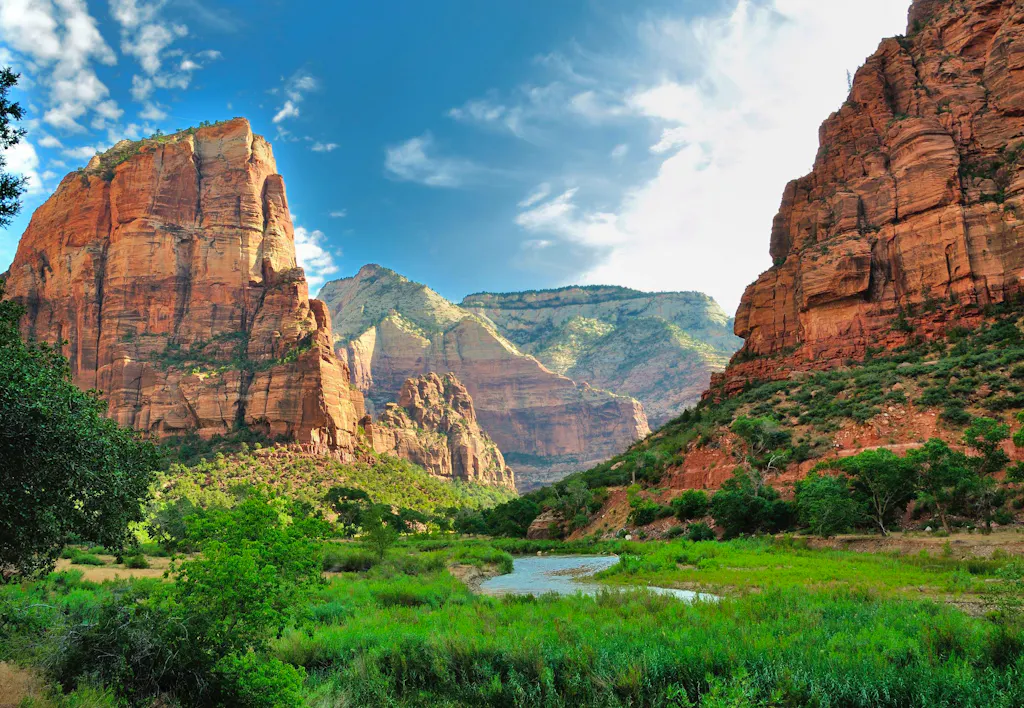
At the top of Angels Landing, the reward is a sweeping panorama of Zion Canyon: the Virgin River—lined with Cottonwood trees—winding below, towering sandstone cliffs glowing red and gold, and the strong sense that you’ve earned this breathtaking moment.
Angels Landing Trail Overview
Before we dig into the hike itself, it’s vital to understand the technical aspects and details of the trail.
- Distance: 5.4 miles round trip
- Elevation Gain: ~1,500 feet
- Difficulty: Strenuous
- Height Exposure: Extreme
- Trailhead: The Grotto (accessible via Zion Canyon Shuttle)
- Time Required: 3–5 hours for most hikers
- Permit Required: Yes (for the chain section to the summit)
While the mileage may seem relatively short, the elevation gain, exposure, and technical sections make this one of the most physically and mentally demanding hikes in Utah.
The Hike: Section by Section
The Angels Landing hike in Zion National Park can be broken down into 7 distinct sections: 1) shuttle to the trailhead, 2) the Grotto to Refrigerator Canyon, 3) the switchbacks of Walter’s Wiggles, 4) Scout Lookout, 5) the chains section, 6) the summit and 7) finally the descent. Understanding the nature of each chapter of this hike will help you be as prepared as possible to have a successful adventure.
Below is a detailed description of each section of the Angels Landing hike.
1. Shuttle to the Trailhead
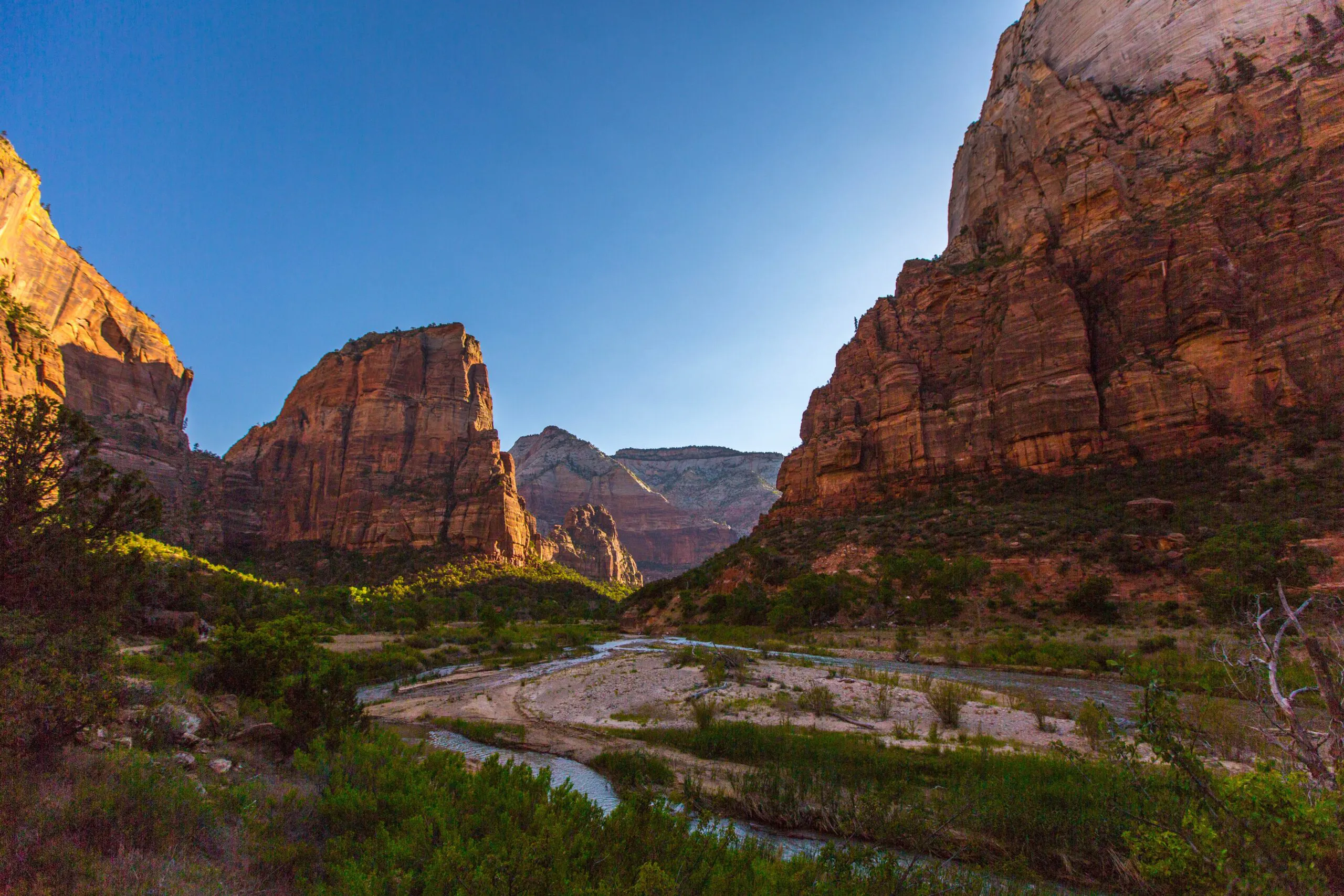
Before you even set foot on the trail, getting to the trailhead requires some planning and logistics. Angels Landing begins at The Grotto, which is accessed via the mandatory shuttle system inside Zion National Park for most of the year. Private vehicles are not allowed on Zion Canyon Scenic Drive when the shuttle is running (typically spring through fall), so you’ll need to park in Springdale or at the Zion Visitor Center and board the park shuttle.
The Grotto is one of the main stops, and it’s where you’ll disembark to start the hike. If you’re visiting during the off-season when the shuttle is not in operation, you can drive directly to the trailhead—but parking is limited and fills up very early. Either way, plan to start early (6:00 am or earlier) in the day to secure parking, catch one of the first shuttles, and avoid both the heat and the crowds.
2. The Grotto to Refrigerator Canyon
The Angels Landing hike officially begins at The Grotto, where you cross the Virgin River and immediately start a steady climb. The trail is well-graded, very well maintained and paved in sections, making the walking very manageable as you gradually ascend along the canyon wall.
This early portion of the hike can be a bit deceptive because it feels casual, even relaxed. But it’s important to pace yourself because the much more serious challenges lie ahead.
As you enter the famous Refrigerator Canyon, the walls narrow, shade increases, and temperatures become noticeably cooler. It’s a welcome break from the sun, especially on hot days.
3. Walter’s Wiggles
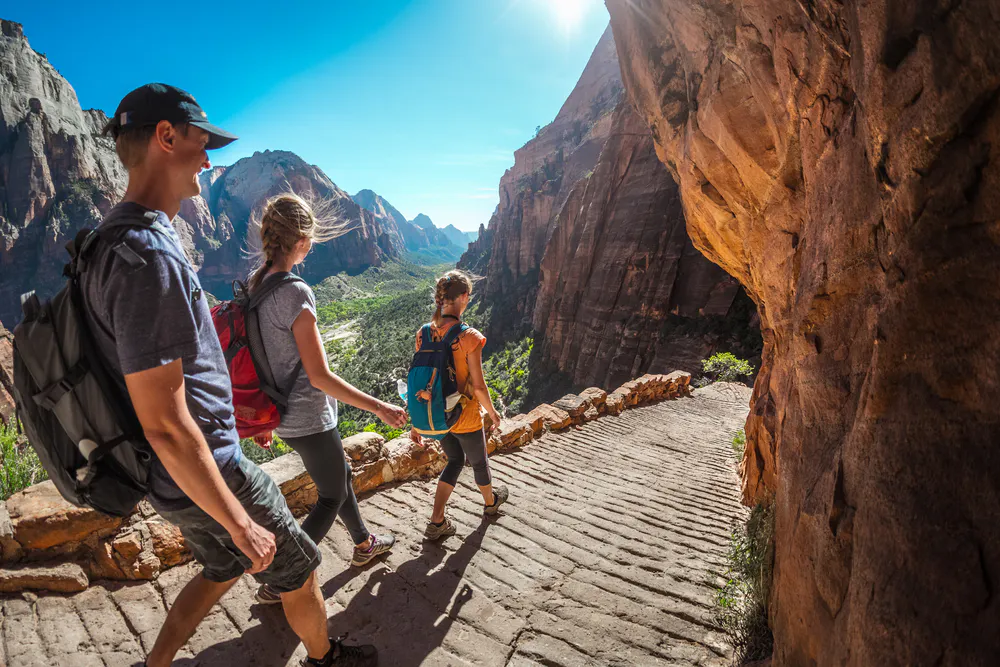
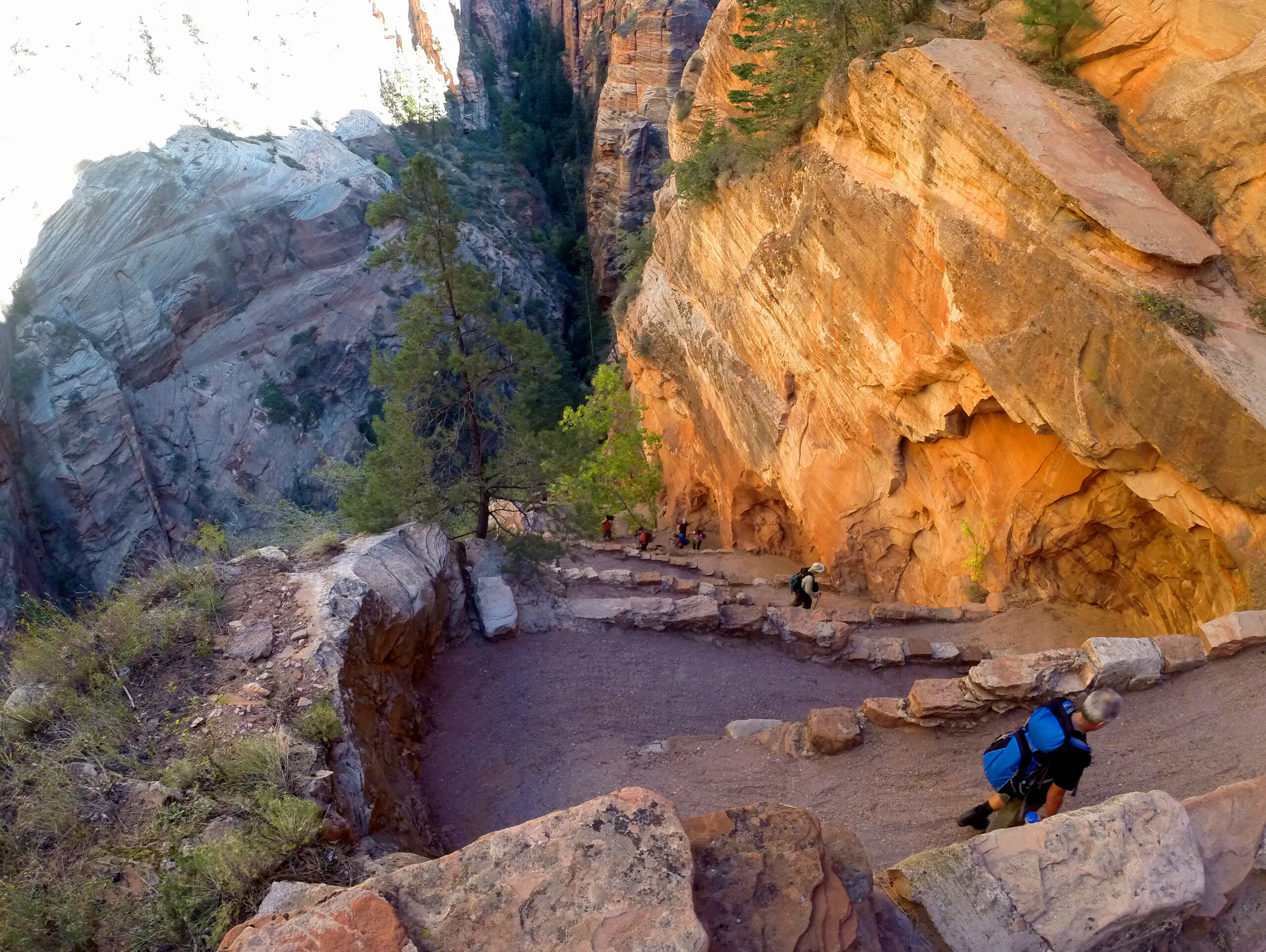
Emerging from Refrigerator Canyon, you’re immediately confronted with one of the most notorious features of the hike: Walter’s Wiggles.
This series of 21 tight switchbacks climbs steeply up the canyon wall, gaining significant elevation in a very short distance. This section is physically demanding but on a very well-constructed trail, allowing for a steady, paced ascent.
At this point, many hikers begin to feel the effects of the climb, breathing much harder and needing more breaks. Rest as needed, hydrate frequently, and pay attention to what your body is telling you. Don’t forget to appreciate where you are, to take a moment here and there to look up, take in the view and feel the majesty of this place.
4. Scout Lookout
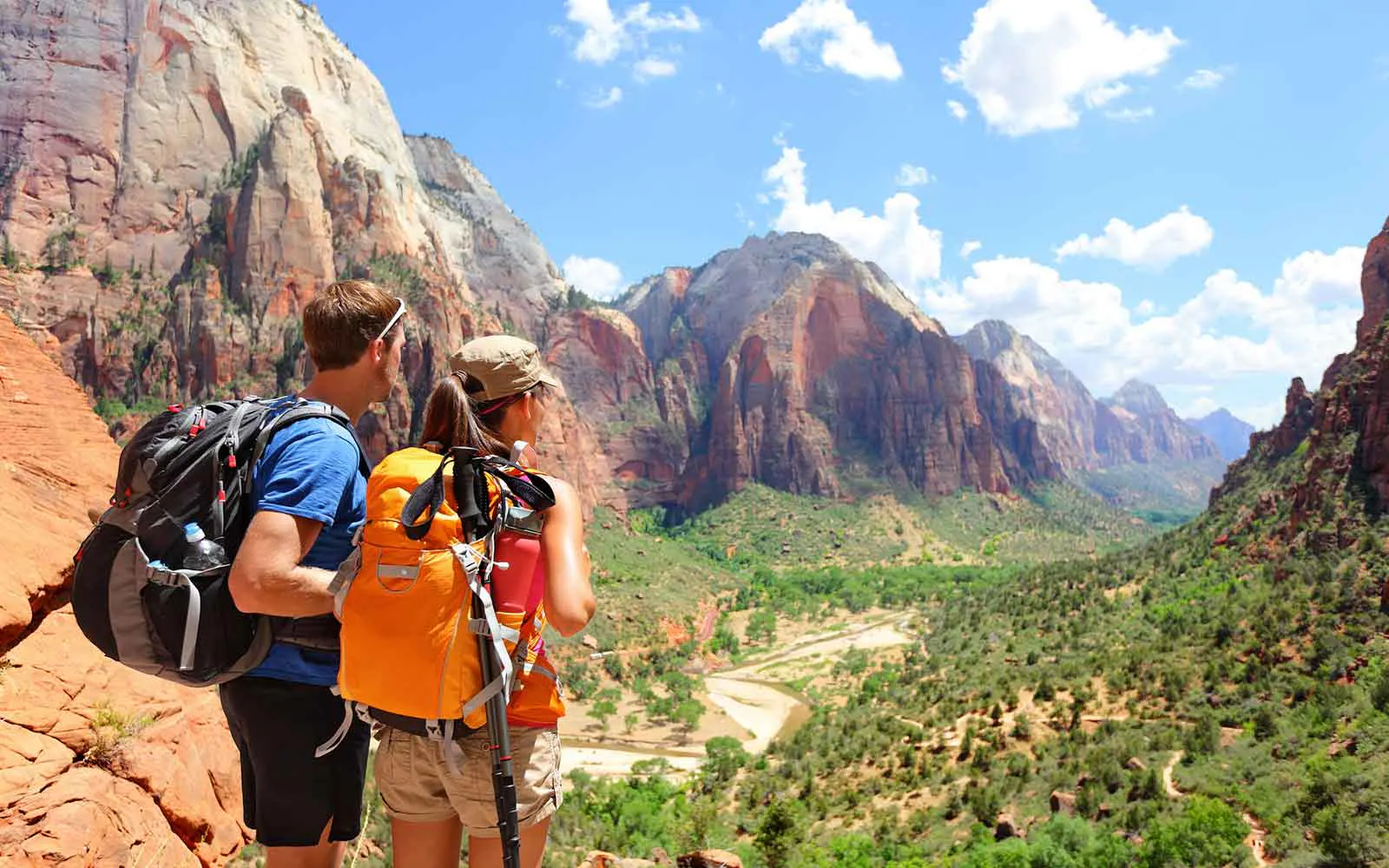
At the top of Walter’s Wiggles switchbacks, you reach Scout Lookout—a wide, relatively flat area with incredible views. For many hikers (especially those with a fear of heights or without an Angels Landing permit), this is the turnaround point, and it’s a worthwhile destination in its own right.
From here, you can see the final stretch of the trail: the narrow ridge leading to Angels Landing. It looks intimidating for many people. This is the moment to decide if you want to continue to the top or stop at Scout Lookout. Take the time to assess what lies ahead and make the best decision for you.
This is also where a national park ranger is likely to check your Angels Landing permit. If you don’t have a permit, this is your endpoint—and a spectacular one at that.
5. The Chain Section
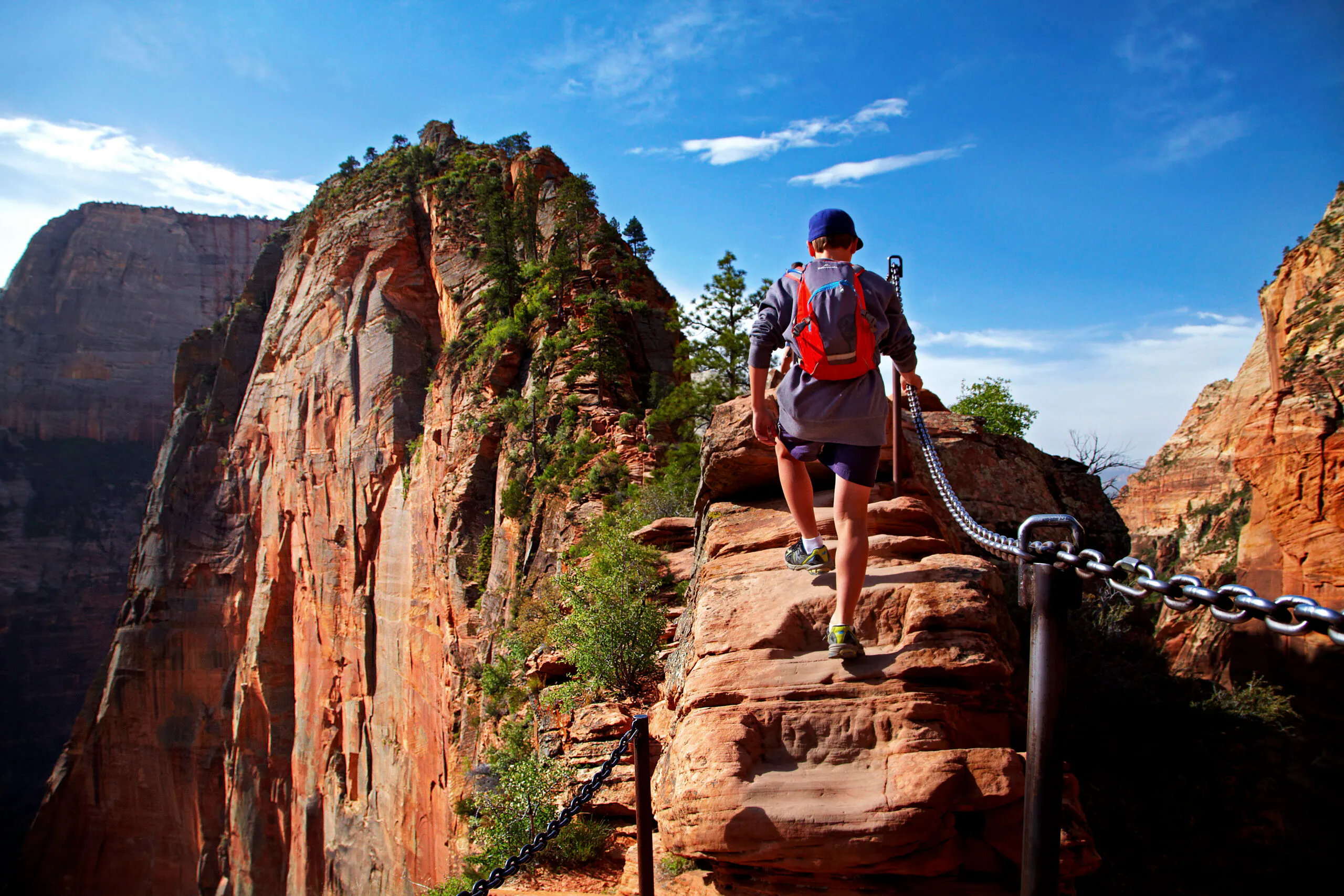
The chain section is the defining feature of Angels Landing.
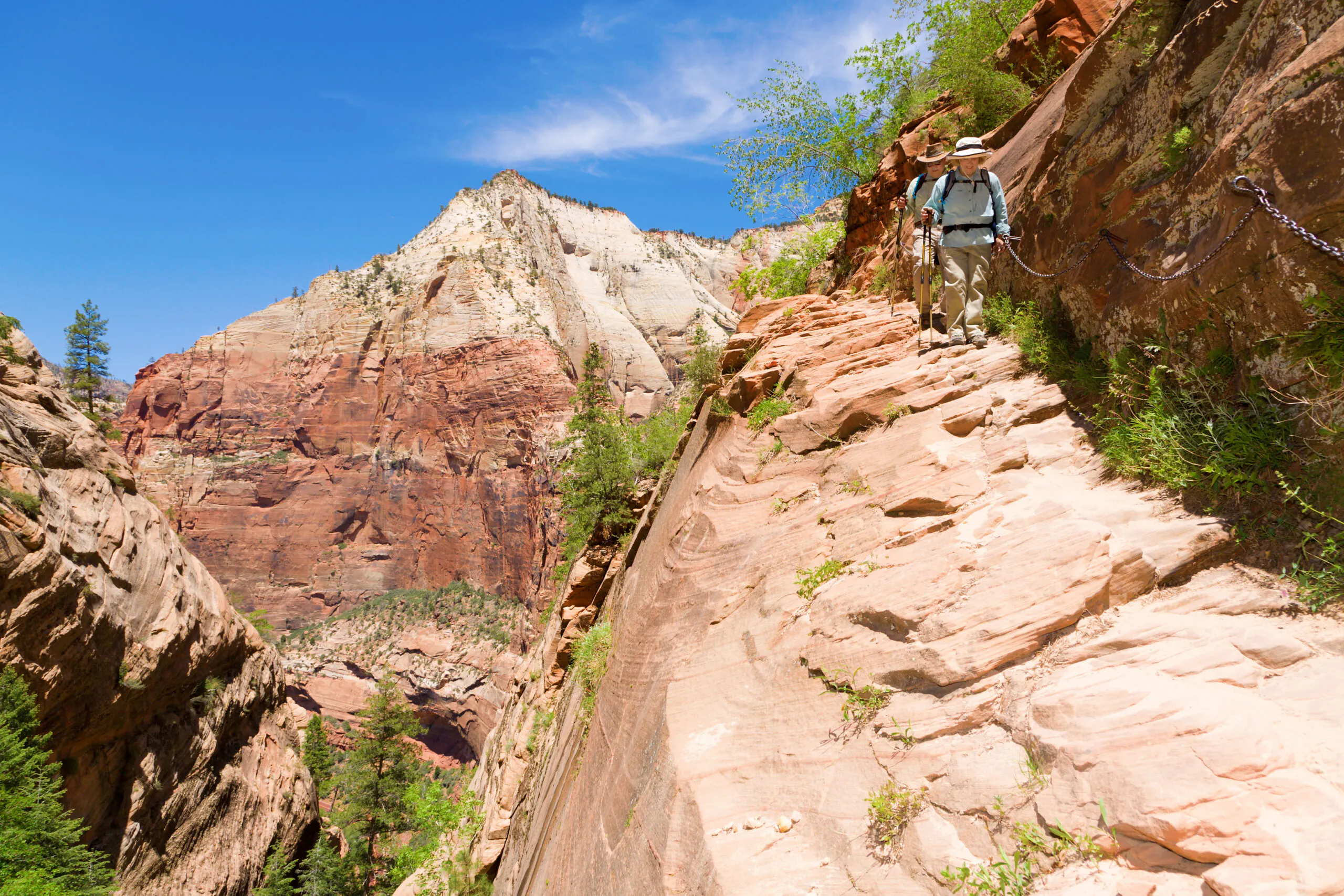
The trail narrows dramatically, with sheer, 1000′ drop-offs on both sides. Chains are anchored into the rock to provide stability and support, allowing hikers to navigate the steep slabs, narrow steps and extreme exposure.
This portion requires focus, balance, and presence. While it’s not technical climbing, it is exposed hiking, and there is no margin for error.
Key characteristics of the chain section include:
- Narrow ridgelines with extreme heights exposure
- Steep sandstone slabs with carved steps
- Chains for hand support along critical sections
- Occasional two-way traffic requiring patience and communication to pass one another on the chains
The chains are not a place to rush. Move with intention, maintain three points of contact (two hands + one foot or vice versa) at all times, and yield to other hikers in a composed, patient manner.
6. The Summit Experience
Reaching the top of Angels Landing is a moment that stays with you long afterward.
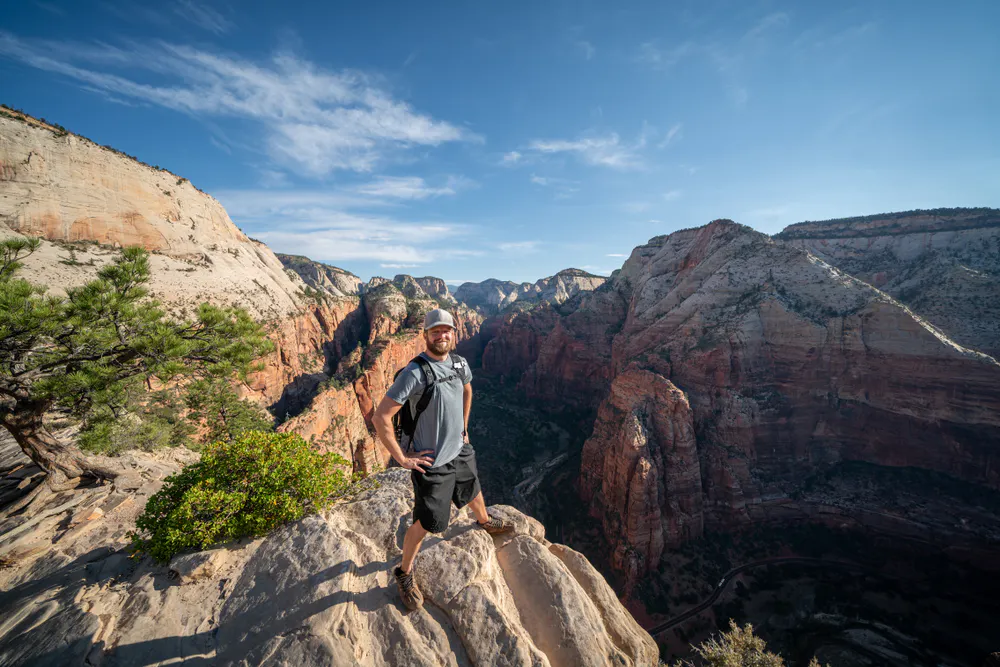
The summit is surprisingly broad compared to the ridge leading up to it, offering space to rest, snap photos, reflect, and soak up the view. Zion Canyon stretches out below, framed by towering sandstone cliffs and a vast, Southwestern sky. Standing here, taking in the view of Zion Canyon’s towering cliffs, you will understand why this is one of the most famous and celebrated hikes in the United States.
Take your time on the summit. Absorb every element of the experience.
7. The Descent
There’s a saying in mountaineering that “getting to the top is optional, getting down is mandatory.” The descent of nearly every hike or climb is the most dangerous part for several reasons:
- Instead of resisting gravity on the way up, now you’re going with it, which means any slip or falter can be more difficult to recover from.
- Your legs may be fatigued from the climb, leading to less certainty as you descend.
- Often people feel like the worst is done, and they let down their guards, becoming less focused or even casual, which can lead to mistakes.
To ensure a safe hike down, follow these guidelines:
- Always maintain 3 points of contact: two hands + one foot or vice versa.
- Face the rock when stepping down steep sections: treat it like climbing down a ladder.
- Take your time at bottlenecks: don’t rush, even if someone behind or in front of you is impatient.
- Communicate clearly with uphill hikers: someone must yield at narrow spots (etiquette is to give the uphill hiker the right-of-way).
- Avoid looking straight down: especially if exposure makes you uneasy. Focus on your next step.

Is the Angels Landing Hike Dangerous?
Absolutely. Hiking Angels Landing carries actual risk. The exposure is extreme, and accidents have occurred in the past. Most were due to slips, poor judgment, or attempting the hike in unsafe (icy, snowy, stormy…etc.) conditions. More than a dozen people have fallen off Angels Landing and died since 2000.
However, the other side of the coin is that hundreds of thousands of people have safely hiked this trail since 2000. for prepared hikers who respect the environment and understand their own limits, Angels Landing offers a level of risk that can be well managed for an enjoyable, memorable experience.
Risk increases significantly in the following situations:
- Wet, icy or stormy conditions
- High winds
- Crowded conditions that can lead to rushed movement
- Hikers with inadequate footwear or hydration
- Overconfidence, fatigue or lack of good health/fitness
The key to this hike is not to eliminate risk entirely, which is impossible. It’s to be prepared and manage it wisely.
Physical and Mental Preparation
Angels Landing is as much a mental challenge as a physical one. You don’t need to be an elite athlete, but you do need a solid foundation of fitness, good health and comfort-level with heights exposure.
Physically, you should be able to:
- Hiking 5–6 miles with sustained elevation gain
- Climbing steep switchbacks
- Maintaining balance on uneven or rugged terrain
Mentally, you should be prepared for:
- Extreme heights exposure
- Focused, deliberate movement
- Navigating around other hikers
What to Bring
Packing properly is an essential part of being prepared for both safety and enjoyment. Zion’s desert environment can be unforgiving, especially in the heat of summer (mid May through mid September). It’s recommended to have the following items:
- Water: At least 2–3 liters per person (more in hot weather)
- Footwear: Sturdy hiking shoes with excellent grip
- Sun Protection: Hat, sunglasses, sunscreen and sun hoody (cotton is recommended for hot weather)
- Snacks: High-energy, easy-to-eat food
- Layers: Light fleece or wool top for early mornings or cooler seasons
- Rain Gear: waterproof, breathable rain jacket
- Permit: Required for the chain section
- Headlamp: If starting early or finishing late
Best Time to Hike Angels Landing
Hiking Angels Landing at the right time or the wrong time can dramatically affect the enjoyment and safety of your experience.
Spring (March-May) and fall (September-November) are the best times to hike Angels Landing. These months offer the best combination of moderate temperatures and ice-free trails. Summer can be extremely hot, with temperatures exceeding 100°F (38°C) in th shade, making early starts essential for safety and enjoyment. Winter brings much colder weather but also the potential for snow or ice on the trail, especially in shaded sections, which makes the hike significantly more dangerous.
Regardless of when you choose to visit Zion and hike Angels Landing, be aware of the forecast. If hot temperatures (90°F or higher) or afternoon thunderstorms are projected, begin your hike very early (6:00 am at the latest). If it’s going to be below freezing at night or during the day, then start later in the day (9 am or after). If full-day rain is in the forecast, it has snowed recently or you know there is ice on the trail, consider doing it another time.
Tips for enjoying Angles Landing in each season:
- Spring (March-May): secure permits at the earliest opportunity, which is often in February. Check the weather forecast and time your start based on conditions. Learn more about permits.
- Summer (June-August): start very early and hike by headlamp, carry 3+ liters of water per person, eat plenty of sweet, salty snacks.
- Fall (September-November): enter the permit lottery months in advance, plan to start early (around 6:00 AM), be off the trail before afternoon thunderstorms, especially in early fall.
- Winter (December-February): start later in the day but be sure to be off before dark. Watch for icy and snowy sections. Do not hike in a winter storm, or if there has recently been snow and ice on the trail.
Permits: What You Need to Know
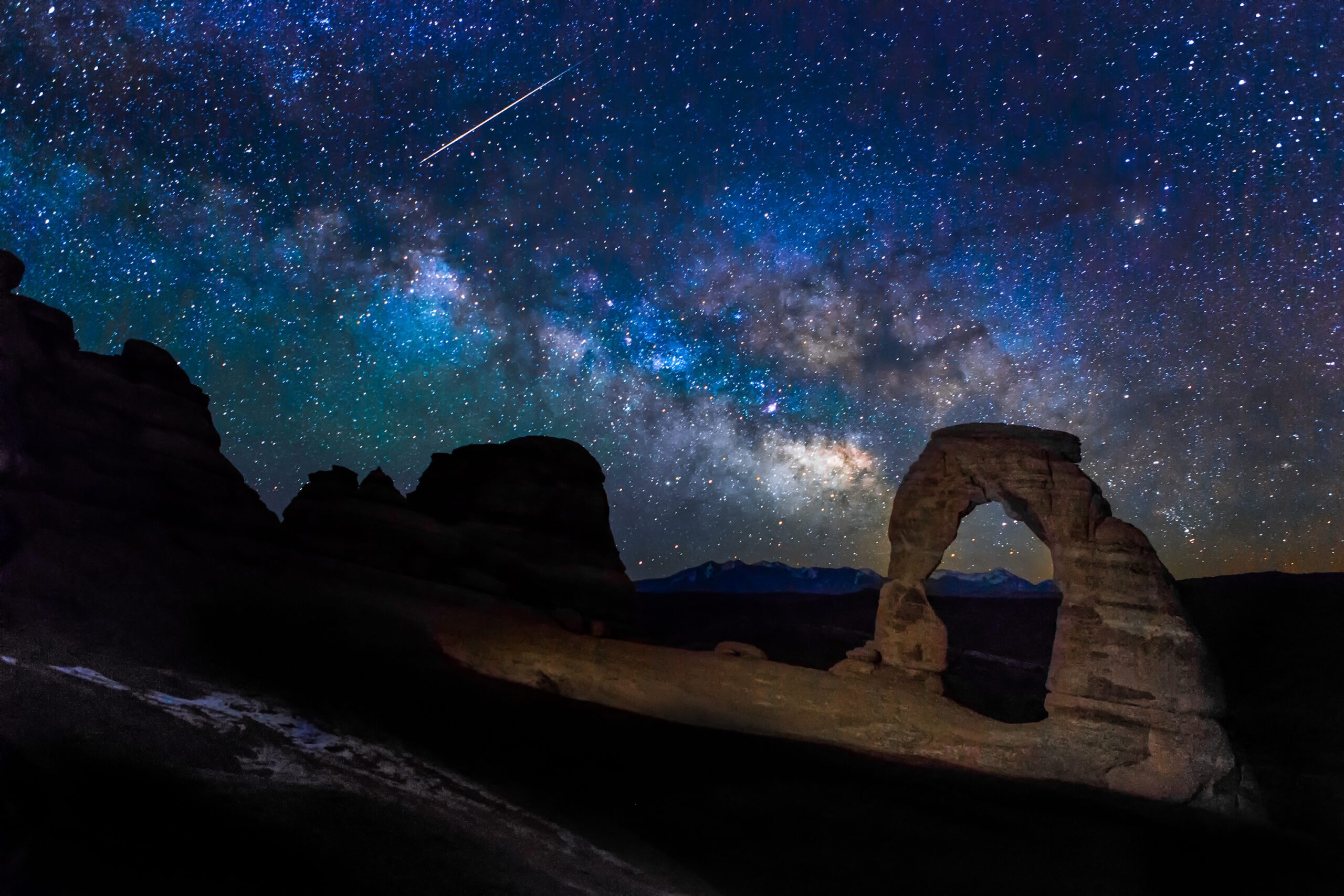
In recent years, Zion National Park has implemented a permit system for Angels Landing. The reason was to reduce crowding and improve safety. If you plan to hike beyond Scout Lookout (the point where the technical chain section begins), you are required to have a permit.
Permits are issued through a lottery system via recration.gov. Permits are issued based on two different timeframes: months in advance for the entire quarter, and permits issued the day before you plan to hike. The application deadlines and all details are outlined at https://www.recreation.gov/permits/4675310.
Important points about Angels Landing permits:
- You do not need a permit to hike to Scout Lookout
- You do need a permit for the final ridge and summit (the chains section)
- Rangers check permits at Scout Lookout
- Permits are issued via recreation.gov
- You can apply months in advance or the day before
The reservation system has significantly improved the hiking experience by reducing bottlenecks along the chains, but it also means planning ahead and being prepared are essential.
Alternatives If You Don’t Get a Permit
If you’re unable to secure a permit, you still have excellent options for hiking in Zion.
Scout Lookout offers incredible views and a rewarding hike. Beyond that, Zion has no shortage of world-class trails, including:
- The West Rim Trail beyond Scout Lookout goes to spectacular views and eventually Cabin Spring
- Observation Point offer an even higher vantage point looking down on Angels Landing
- The Narrows provide a completely different experience hiking in the Virgin River through a slot canyon

Crowds and Strategy
Even with the national park’s permit system, Angels Landing remains extremely popular. Managing your timing and expectations is key to having a fun and stress-free experience.
To improve your experience:
- Start with one of the first shuttles of the day
- Move efficiently through crowded sections
- Be patient and courteous on the chains
- Take breaks at wider sections, not narrow ridgelines
Remember, this is a shared experience. Respect for others enhances safety for everyone.
The Ultimate Bryce and Zion 6-day Hiking Tour
MT Sobek’s Bryce Canyon and Zion National Parks Hiking Tour offers a 6-day immersion into the dramatic scenery of Southern Utah. You will Marvel at the incredible hoodoos and geological wonders that make Bryce Canyon so unique. In Zion, we explore towering cliffs, cascading waterfalls, and slot canyons. You will ascend a series of dramatic switchbacks to Scout Lookout and savor a memorable hike through the Virgin River Narrows. We’ll also explore the lesser-known lava flows, sand dunes, and geologic marvels of Kodachrome Basin and Snow Canyon.

Day 1: Hike Snow Canyon State Park & Scenic Transfer to Bryce Canyon
We will hit the trails of Snow Canyon State Park (known affectionately as the “Mini Zion”). This is a place of striking beauty, with sandstone cliffs, red rock formations, and lava fields. After traversing Snow Canyon, we shuttle to Bryce Canyon National Park in the late afternoon for a welcome dinner and a scenic sunset walk.
Day 2: Hike Bryce Canyon & Kodachrome Basin
Today we descend below the rim on an unforgettable hiking adventure through the stunning Queen’s Garden and Navajo Loop Trails in Bryce Canyon National Park. These two trails combine to create a 3-mile loop that winds through Bryce Canyon’s iconic hoodoos and stunning natural landscapes. After lunch, you will discover the miraculous landscapes of Kodachrome Basin State Park, with over 70 monolithic stone spires.

Day 3: Hike Fairy Land Loop
Day 3 is a full day of exploration. We start with an extraordinary hike on the Fairyland Loop in Bryce. This 8-mile trail winds through some of the most stunning natural landscapes in the park and offers panoramic views of hoodoos, rock formations, and lush forests. Highlights of the trail include the Tower Bridge, a natural arch formed by the elements, and Fairyland Canyon, which is home to some of the park’s most dramatic hoodoos.
Day 4: Hike the Zion’s Virgin River Narrows
On day 4 we journey to Zion National Park through the iconic Zion tunnel. Today takes you through the heart of Zion Canyon, following the Virgin River as it winds through towering canyon walls that reach heights of up to 1,000 feet. The Narrows hike is unique in that we wade through the Virgin River for most of the journey, with the water sometimes reaching thigh or waist height.
Day 5: Hike to Scout Lookout & Emerald Pools in Zion National Park
If you’re looking for an exciting hike, then today is for you! We’re tackling the West Rim Trail to Scout Lookout. Ascend sheer canyon walls through a series of tight switchbacks carved into the canyon wall. Gaze down onto the dramatic scenery of Zion Canyon and the cottonwood-lined Virgin River. To round out the day, our next hike is to the aptly-named Emerald Pools, a refreshing oasis in the Utah canyon country.
Day 6: Hike Watchman Trail
Our final hike is a sunrise hike on Watchman Trail for panoramic views of Zion Canyon and the Virgin River. Our destination is Watchman Overlook, an especially stunning viewpoint, as the first light of day illuminates the canyon walls and casts a warm glow over the national park.
Why Explore Utah with MT Sobek?
Exploring Utah with MT Sobek means hiking some of the state’s most spectacular landscapes with a company that has been pioneering adventure travel since 1969. From the narrow slot canyons of Zion to the geological wonders of Capitol Reef, MT Sobek designs journeys that combine iconic destinations with lesser-known trails. With expert guides, small groups, and thoughtfully crafted itineraries, travelers can focus on the experience of the hike while the logistics are handled seamlessly.
Why hike Utah with MT Sobek:
- Decades of expertise: A pioneer in adventure travel since 1969 with a long legacy of leading exceptional hiking and rafting journeys across Utah, the United States and the world.
- Expert guides: Knowledgeable leaders share insights into local ecology, geology, wildlife, and cultural history, and ensure a commitment to safety and enjoyment throughout the journey.
- Carefully designed itineraries: A balance of iconic trails and hidden gems for a deeper experience of each destination. MT Sobek’s hiking adventures immerse travelers in the natural beauty and cultural heritage of Utah.
- Seamless travel logistics: Permits, transportation, and accommodations are expertly arranged so you can focus on the adventure.
Comfort and immersion: Rewarding hikes paired with premier lodging and memorable meals create a rewarding and relaxing experience.
Enjoying our content? Add MT Sobek as a Google Preferred Source.

FAQs
Do you need a permit to hike Angels Landing?
Yes. A permit is required to hike beyond Scout Lookout and into the chains section of Angels Landing. Permits are issued through a lottery system managed by the National Park Service on recreation.gov. You can hike to Scout Lookout without a permit.
How hard is the Angels Landing hike?
Angels Landing is widely considered to be a strenuous hike. It has:
– steep and significant elevation gain (1500′)
– narrow ridgelines, slab sections and carved steps
– extreme heights exposure.
The chains section requires upper body strength, balance, and confidence with heights.
How long does it take to hike Angels Landing?
For most hikers, it takes 3 to 5 hours round trip, depending on fitness, pace, number of other hikers, and how long they spend on the chains and on the summit.
When is the best time to hike Angels Landing?
The best time to hike Angels Landing is spring and fall for the moderate temperatures. In summer, start early to avoid heat. Winter hikes can involve ice and require traction gear like microspike crampons.
Is Angels Landing dangerous?
Yes. Angels Landing is one of the most exposed hikes in the United States. The final ridge has sheer drop-offs on both sides. However, most hikers complete it safely by moving carefully and using the chains installed by the National Park Service.
How many people have died on Angels Landing?
There have been a small number of fatalities over the years, typically due to falls. Since 2000, more than a dozen people have fallen and died on Angels Landing. While statistically rare, the risk is real, especially for those unprepared, uncomfortable with heights, or hiking in dangerous conditions (wet, icy or stormy).
Yes. Beginners can hike Angels Landing. For people who are physically fit and have good balance, it is a very feasible hike. However, it’s even more important that beginners are mentally and physically prepared with the right expectations, gear, food and water.
Where does the Angels Landing hike start?
The Angels Landing hike begins at The Grotto Trailhead in Zion National Park, usually accessed via the park shuttle system.
Do you need to take a shuttle to Angels Landing?
Yes, for most of the year private vehicles are not allowed in Zion Canyon. You’ll need to take the shuttle to The Grotto stop.
Are there bathrooms on the Angels Landing Trail?
Restrooms are available at The Grotto Trailhead, but there are none once you’re on the trail to Angels Landing. Because this is a heavily trafficked route with limited places to step away for privacy, it’s best to use the facilities before you start to reduce the chances of needing to go during the hike.
What are the best alternatives to Angels Landing?
Great alternatives in Zion include:
– Scout Lookout (no permit required)
– Observation Point (less crowded, equally stunning views)
– Canyon Overlook Trail (short and scenic)
Is it better to hike Angels Landing with a guide?
A guide can enhance safety, help time the hike well, and share insights about geology and park history. This is especially valuable for less experienced hikers.
Are there guided hiking tours in Zion National Park?
Yes, several outfitters, including MT Sobek, offer guided hikes in Zion National Park. Tours often combine Angels Landing, Scout Lookout or Observation Point with other top trails for a complete experience.
Learn More About Adventure Travel in Utah


