When to Hike: A Seasonal Guide to Trekking in North America
A Month by Month Guide for Hiking in the USA and Canada
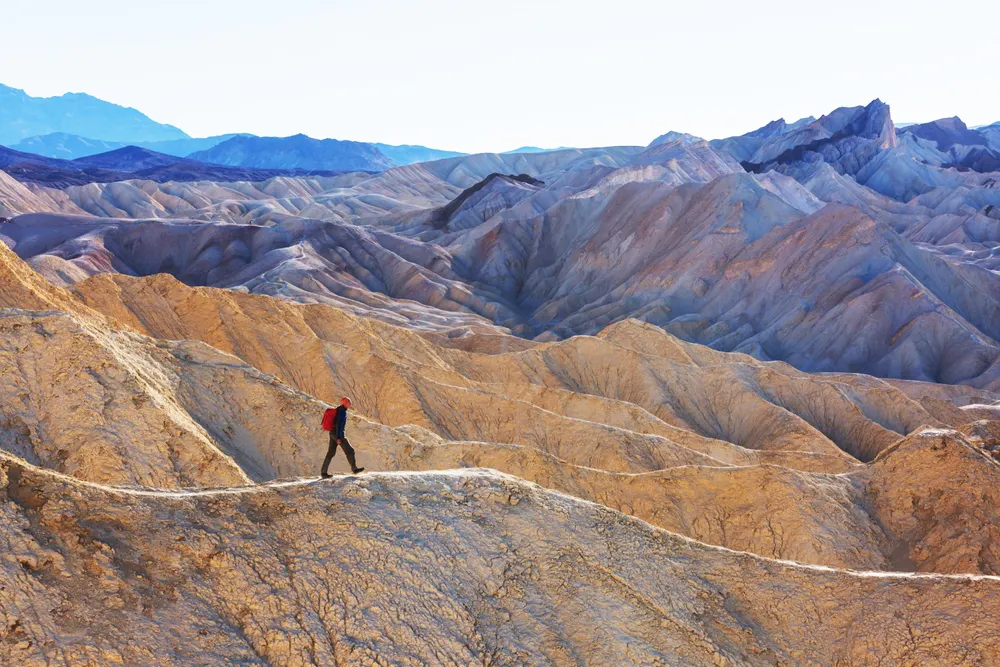
Hiking in North America is represents one of the most diverse and spectacular categories of outdoor adventure in the world. When the mountains are buried in snow in the winter, desert trails are perfect for hiking. When summer heat descends upon the Southwest, alpine regions in Alaska, the Sierra Nevada Mountains and the Rockies are just entering their prime season. This natural, largely predictable rhythm allows adventurous travelers to plan exceptional hiking vacations in North America literally every month of the year.
For more than five decades, MT Sobek has been guiding small group adventures on North America’s most extraordinary hiking trails—from the glaciers of Alaska to the canyon country of Utah and the alpine trails of the Canadian Rockies. This month-by-month guide highlights the best destinations for hiking for each time of year, along with the advantages for each season.
January: Winter Desert Adventures
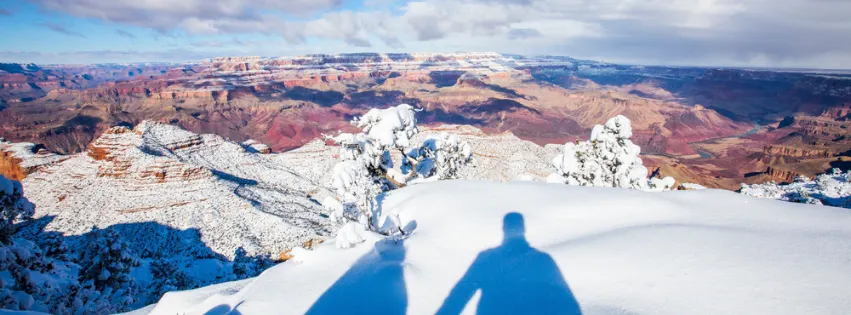
January is one of the best months for hiking in the hiking in the American Southwest, particularly in lower elevation desert regions. While the mountains are covered in snow, the desert landscapes of Arizona, New Mexico, Utah and Southern California offer cool, sunny days perfect for exploring canyon trails.
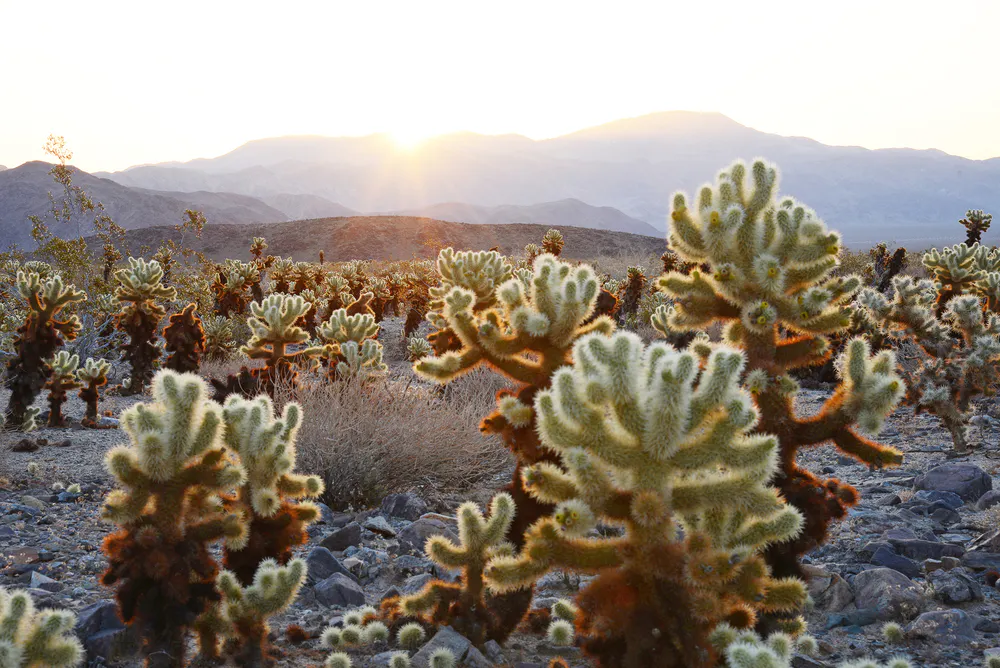
Southern California is a standout destination this time of year due to its very low elevation national parks, which maintain moderate temperatures throughout the winter months. Death Valley National Park and Joshua Tree National Park are both in their prime season in January, when mild winter climates make hiking the Mojave Desert’s badlands, desert peaks, sand dunes, and rocky canyons far more comfortable and safer than later in the year.
Southern Utah is also an excellent option this time of year. Parks like Zion National Park and Bryce Canyon National Park reveal a quieter side of their famous landscapes in winter, with just 2-3% of their annual visitation occurring in January. Temperatures can be chilly but mild and occasional snow dusts the red rock formations, creating stunning contrasts of color that photographers tend to love. Many people find January too cold for camping in Southern Utah, but it is great for hotel-based hiking.
Weather in January
| High | Low | Precip | |
|---|---|---|---|
| Death Valley | 66°F | 39°F | 0 days |
| Joshua Tree | 60°F | 36°F | 2 days |
| Zion | 49°F | 24°F | 4-5 days |
| Bryce | 35°F | 11°F | 4 days |
Benefits of January Hiking
- Cool hiking temperatures in desert landscapes
- Smaller crowds compared to spring
- Dramatic winter scenery in canyon country
Drawbacks of January Hiking
- Winter storms can close roads and trails, even in the desert
- Mountains are buried in snow, so only accessible by ski and snowshoe
- Short days make for more narrow hiking windows
Top Recommended Destinations for January
February: Desert & Canyon Hiking
February continues the prime season for desert trekking in the Southwest.
One of the most rewarding adventures this month is hiking into Grand Canyon National Park. The South Rim is at an elevation of approximately 7,000 feet and experiences more of a mountain winter with snow, wind and freezing temperatures. However, descending below the rim reveals much warmer temperatures, where the snow disappears and colorful rock formations decorate vast canyon vistas. Guided hiking trips often explore classic trails like the South Kaibab Trail while overnight stays at historic Phantom Ranch provide a once-in-a-lifetime experience.
Arizona’s red rock landscapes in and around Sedona also stand out in February, offering scenic trails among gorgeous sandstone formations and desert creeks.
January’s highlighted destinations (Joshua Tree, Death Valley, and Southern Utah) continue to be excellent in February as well.
Weather in February
| High | Low | Precip | |
|---|---|---|---|
| Grand Canyon (Bottom) | 64°F | 40°F | 5 days |
| Sedona | 61°F | 34°F | 4 days |
| Death Valley | 74°F | 47°F | 1 day |
| Joshua Tree | 63°F | 38°F | 1 day |
| Zion | 49°F | 24°F | 5 days |
| Bryce | 37°F | 13°F | 5 days |
Benefits of February Hiking
- Often ideal temperatures for canyon hiking
- Fewer visitors than spring break season
- Snow dusting the upper canyon walls and desert towers
Drawbacks of February Hiking
- Canyons and deserts can be chilly, especially in the mornings and evenings
- Trails are sometimes muddy from melting snow or winter rain storms
- Like January, short days limit hiking options
Top Recommended Destinations for February
March: Spring in the Desert Parks
March marks the beginning of the transition from winter to spring in the Southwest. Wildflowers and leafing trees start blossoming in warmer areas, and longer daylight hours open the door to a much greater range of hikes.
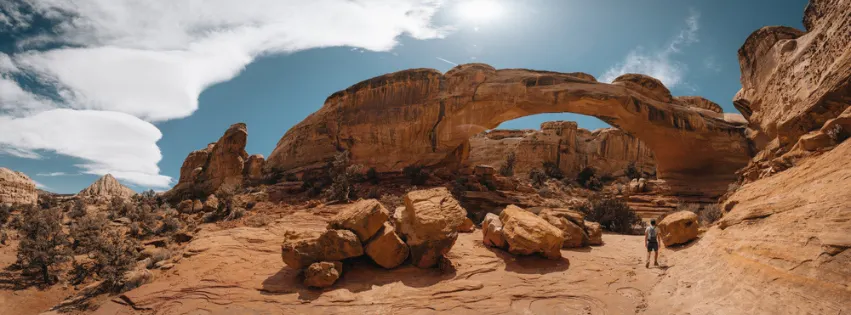
Moab, Utah’s nearby parks—Arches National Park and Canyonlands National Park—offer exceptional scenery with perfect hiking temperatures in March. Hiking trails wind past colossal sandstone formations, a myriad of different types of arches, narrow slot canyons, spring-fed creeks, and dramatic viewpoints.
March is also a perfect time of year for Grand Canyon National Park and Sedona, Arizona. In Grand Canyon, you can hike far below the rim on the Bright Angel Trail or Grandview Trail or explore the views from the easier Rim Trail. In Sedona, trek the famous West Fork Trail for a shaded canyon adventure along a crystal-clear creek, or hike to Devils’ Bridge for a sunnier walk and impressive geological feature. For an all-around fantastic Arizona adventure, you can combine Grand Canyon and Sedona over three to five days of hotel-based or camping-based hiking.
Weather in March
| High | Low | Precip | |
|---|---|---|---|
| Grand Canyon (bottom) | 71°F | 48°F | 6 days |
| Sedona | 66°F | 38°F | 5 days |
| Zion | 55°F | 30°F | 7 days |
| Bryce | 43°F | 19°F | 5 days |
| Arches | 61°F | 35°F | 3 days |
| Canyonlands | 59°F | 30°F | 4 days |
Benefits of March Hiking
- Pleasant daytime temperatures
- Spring wildflowers in some areas
- Longer daylight hours
Drawbacks of March Hiking
- Mountains remain closed to actual hiking due to spring snowpack
- By mid to late March, spring break can spike visitation at desert parks like Grand Canyon and Zion
- It is often still quite cold at night, which can limit backcountry comfort
Top Recommended Destinations for March

April: Wildflowers & Ideal Canyon Hiking
April is widely considered one of the best months for hiking in the American Southwest, particularly higher elevation deserts. Temperatures are warmer, days are longer, creeks are funning full from snowmelt at higher elevations, wildflowers bloom in many regions, and desert landscapes are at their most vibrant and colorful.
This is prime season for exploring Utah’s famous Mighty Five national parks:
- Zion National Park
- Bryce Canyon National Park
- Arches National Park
- Canyonlands National Park
- Capitol Reef National Park
Exploring all five Utah parks on a multi-day hiking journey is a true bucket list experience, and April is one of the best times to do it.
April is also a fantastic time of year to hike in North Arizona. Trekking to the bottom of the Grand Canyon and visiting Phantom Ranch is a perfect adventure in April. With average lows between 26°F and 32°F, temperatures can still be chilly at the rim. However, as you descend the canyon warms dramatically. At Phantom Ranch the average highs in April hover between 80°F and 95°F. Sedona is also fantastic in April, with warm days and cool nights.
Weather in April
| High | Low | Precip | |
|---|---|---|---|
| Grand Canyon (Bottom) | 82°F | 53°F | 4-5 days |
| Zion | 59°F | 36°F | 5 days |
| Bryce | 52°F | 24°F | 3 days |
| Capitol Reef | 74°F | 44°F | 5-6 days |
| Arches | 70°F | 42°F | 2 days |
| Canyonlands | 71°F | 42°F | 4-5 days |
| Sedona | 74°F | 43°F | 3 days |
Benefits of April Hiking
- Ideal desert hiking temperatures
- Wildflowers and blooming desert plants
- Long daylight hours for exploration
Drawbacks of April Hiking
- This is the peak spring month for visitation at desert national parks, partly due to spring break, so it can be busy
- April—especially later in the month—is often too hot for lower elevation parks like Joshua Tree and Death Valley
- Lower mountain areas—like Yosemite Valley—may start to open but can be muddy or snowy still
Top Recommended Destinations for April
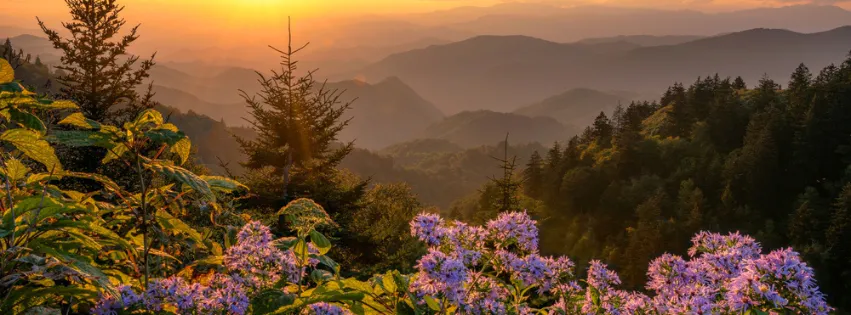
May: Waterfalls & Early Mountain Hiking
May marks the beginning of the mountain hiking season in parts of California and the East Coast.
In California, spring runoff transforms Yosemite National Park into a wonderland of gushing waterfalls and swollen rivers. Snowmelt sends water thundering over granite cliffs, creating some of the park’s most dramatic scenes of the entire year. Yosemite Falls, one of the tallest in the world, drops a staggering 2,425 feet and is often a roaring torrent in May. Lower-elevation hikes in Yosemite Valley and surrounding areas are typically snow-free by May, making this a fantastic time to explore before peak summer crowds arrive.
On the East Coast, Great Smoky Mountains National Park is entering its prime hiking season in May. The moist winter chill has moved on, the trees are leafing out and the humid summer has not yet taken hold.
In the Grand Canyon, Rim to Rim season starts on May 15, when the North Rim opens up after its winter closure. Rim to Rim is a world famous hike that connects the South Rim to the North Rim (or vice versa) across 21-24 miles. Because June is too hot, May is the best time to hike Rim to Rim outside of the fall months of October and November.
Although temperatures are increasing in May, Utah’s Mighty 5 national parks are still excellent this time of year, particularly in the first half of the month. See below for average temperatures.
Weather in May
| High | Low | Precip | |
|---|---|---|---|
| Yosemite Valley | 72°F | 44°F | 4 days |
| Great Smoky Mountains | 71°F | 45°F | 11 days |
| Grand Canyon (Bottom) | 90°F | 60°F | 3 days |
| Zion | 69°F | 43°F | 3-4 days |
| Bryce | 62°F | 32°F | 3 days |
| Capitol Reef | 74°F | 44°F | 4-5 days |
| Arches | 80°F | 50°F | 2 days |
| Canyonlands | 82°F | 51°F | 3-4 days |
Benefits of May Hiking
- Spectacular waterfalls
- Comfortable spring temperatures
- Early access to some mountain areas
Drawbacks of May Hiking
- The high country is still impassable due to snow
- Deserts and canyons become very hot, especially by late May
- May is one of the driest months of the year in the Southwest
Top Recommended Destinations for May
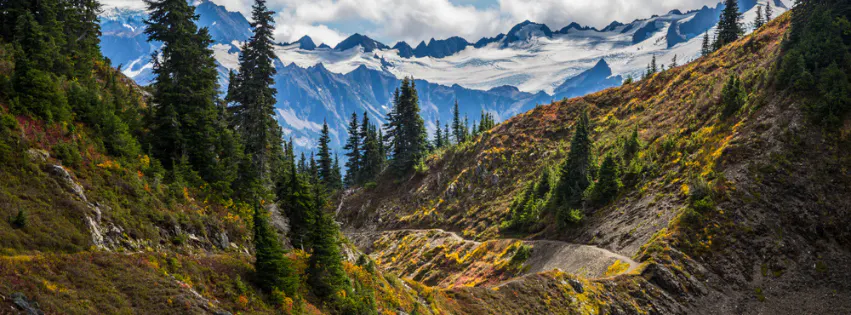
June: The Pacific Northwest Awakens
By June, trails across the Pacific Northwest begin opening as snow melts out from the high mountain passes.
Olympic National Park offers one of the most varied and spectacular hiking environments in North America. In a single trip to Olympic, you can explore lush temperate rainforests, alpine ridges, and wild Pacific coastlines.
June is also the start of the season for trekking around Mount Rainier, where wildflower meadows begin to bloom. The mountain sheds its snowpack in the form of thousands of creeks and rivulets draining into major rivers.
By mid to late June, more of Yosemite National Park opens up, and other mountain destinations like Yellowstone, Glacier, and Rocky Mountain National Parks enter the start of their summer hiking seasons. Rocky Mountain National Park especially is spectacular in June, as its high country becomes accessible and the waterfalls are running strong.
Weather in June
| High | Low | Precip | |
|---|---|---|---|
| Olympic National Park | 59°F | 43°F | 6 days |
| Mount Rainier | 48°F | 31°F | 12-14 days |
| Yosemite Valley | 82°F | 51°F | 1 day |
| Yellowstone | 61°F | 33°F | 8 days |
| Glacier National Park | 59°F | 38°F | 13 days |
| Rocky Mountain Nat’l Park | 63°F | 39°F | 7 days |
| Great Smoky Mountains | 77°F | 53°F | 11 days |
Benefits of June Hiking
- Lush green landscapes
- Early alpine wildflowers
- Long daylight hours
Drawbacks of June Hiking
- Mountains are open, but high passes and swollen rivers may be impassable
- By mid to late June, peak summer crowds are flooding the national parks
- Deserts are officially in their dangerously hot season
Top Recommended Destinations for June
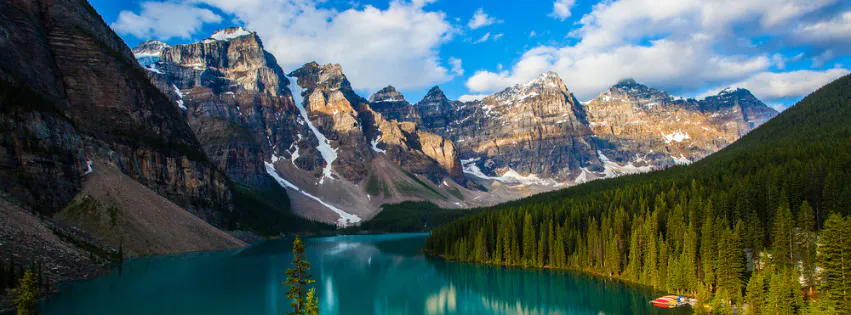
July: Peak Season in the Rockies
July brings the start of prime hiking conditions in the Canadian Rockies.
The alpine trails of Banff National Park and Jasper National Park become accessible, revealing turquoise lakes, glacier views, and boundless mountain landscapes. Classic hikes such as the hike to Helen Lake, or more off-the-beaten-path trails such as the one to Paget Lookout in Yoho National Park offer unforgettable scenery during this time.
July is also the beginning of the peak trekking season in the American Rockies, including Yellowstone, Glacier National Park, and Rocky Mountain National Park. As the last of the winter snowpacks melts, it fully gives way to lush, wildflower-filled meadows, crystal clear creeks and active wildlife.
Additional destinations in June include the Pacific Northwest, California’s Sierra Nevada, Alaska and the Appalachian Range in the Eastern United States.
Weather in July
| High | Low | Precip | |
|---|---|---|---|
| Canadian Rockies | 72°F | 45°F | 9-16 days |
| Yosemite High Country | 72°F | 37°F | 3 days |
| Yellowstone | 72°F | 39°F | 5 days |
| Glacier National Park | 69°F | 44°F | 7 days |
| Rocky Mountain Nat’l Park | 69°F | 45°F | 8 days |
| Olympic National Park | 68°F | 50°F | 2 days |
| Mount Rainier | 56°F | 37°F | 3-8 days |
| Alaska | 66°F | 53°F | 7 days |
| Great Smoky Mountains | 79°F | 57°F | 12 days |
Benefits of July Hiking
- Access to high-elevation trails
- Peak wildflower season in alpine meadows
- Clear mountain views
Drawbacks of July Hiking
- July is the busiest month of the year for North America’s national parks
- Mosquitoes can be annoying in places like Yellowstone and the Canadian Rockies
- Wildfire season begins, which can lead to smoke and closures
Top Recommended Destinations for July
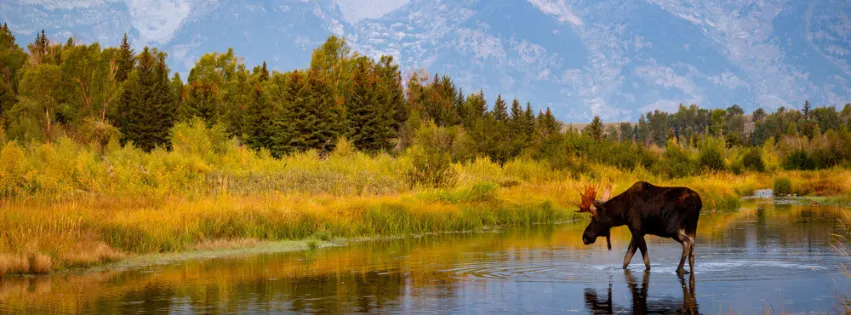
August: Alaska’s Wilderness Season
August is one of the best months to explore the vast wilderness of the Great North on an Alaska hiking vacation. The prime season in Alaska is a narrow window of only about weeks. June can remain quite snowy, and the rains come back in earnest in mid September. In August, hikes in Denali National Park and Preserve and Kenai Fjords National Park offer spectacular views of glaciers, imposing and vast mountain ranges, and wildlife habitats. Long daylight hours allow for extended hikes, and wildlife sightings are common.
August also continues the peak season for all mountain destinations, including Yosemite, the Pacific Northwest, Yellowstone, Grand Teton, Glacier, Rocky Mountain National Park, the Canadian Rockies and the Great Smoky Mountains. In all of these destinations, the days are long, the temperatures are mild, and the trekking is at its best.
Weather in August
| High | Low | Precip | |
|---|---|---|---|
| Alaska | 64°F | 51°F | 10 days |
| Yosemite High Country | 71°F | 35°F | 3 days |
| Olympic National Park | 68°F | 51°F | 4 days |
| Yellowstone | 70°F | 37°F | 5 days |
| Grand Teton Nat’l Park | 76°F | 39°F | 6 days |
| Glacier National Park | 68°F | 44°F | 7 days |
| Rocky Mountain Nat’l Park | 67°F | 44°F | 9 days |
| Canadian Rockies | 70°F | 43°F | 11-15 days |
| Great Smoky Mountains | 78°F | 56°F | 10 days |
Benefits of August Hiking
- Peak access to Alaska’s wilderness and other mountain destinations
- Exceptional wildlife viewing opportunities
- Warm temperatures and long days
Drawbacks of August Hiking
- Summer crowds persist well into mid or late August in the mountain destinations
- Rivers, waterfalls and creeks are often at their lowest levels
- Mosquitoes can persist into mid August
Top Recommended Destinations for August
September: Perfect Mountain Conditions
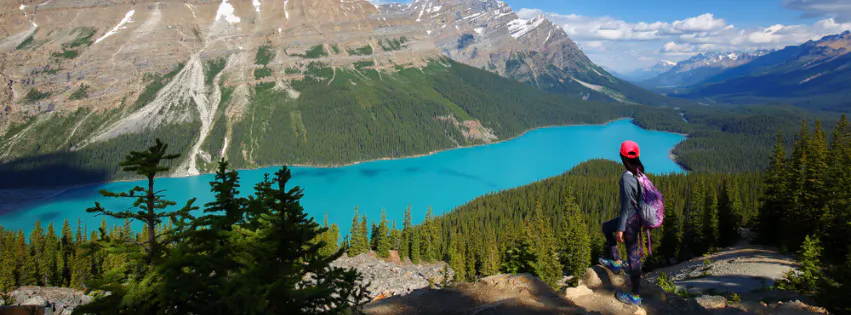
September may be the best overall month for hiking in North America!
The Canadian Rockies remain open into mid-September, yet crowds begin to diminish and cooler temperatures make long hikes more comfortable. The Canadian Rockies also experience a long transition into autumn, extending the prime hiking season well into September, and sometimes even October. September is also the time when golden trees turn the alpine slopes of Banff and Jasper bright yellow, creating one of the most beautiful hiking seasons of the year in the Canadian Rockies.
Yellowstone, Glacier, and Rocky Mountain National Park are fantastic in early September, as the transition to fall temperatures in the Northern Rockies is slow to take hold. Yosemite’s high country and Yosemite Valley are both wonderful in September, with cooler temperatures in the Valley and warm days in the high country. The Pacific Northwest’s gorgeous summer season extends well into this month, and Alaska tends to be great for the first two weeks of September, at which point autumn rains often begin.
Weather in September
| High | Low | Precip | |
|---|---|---|---|
| Canadian Rockies | 61°F | 36°F | 10-12 days |
| Yellowstone | 60°F | 30°F | 5 days |
| Grand Teton Nat’l Park | 67°F | 32°F | 6 days |
| Glacier National Park | 58°F | 37°F | 9 days |
| Rocky Mountain Nat’l Park | 60°F | 38°F | 8 days |
| Yosemite High Country | 66°F | 30°F | 4 days |
| Yosemite Valley | 83°F | 51°F | 2 days |
| Olympic National Park | 60°F | 46°F | 9 days |
| Alaska | 56°F | 43°F | 10 days |
Benefits of September Hiking
- Fewer summer crowds
- Crisp mountain air and clear skies
- Stunning fall colors in alpine areas and active wildlife
Drawbacks of September Hiking
- The mountain temps ebb toward autumn’s chill, making mornings and evenings much cooler
- In the deserts, summer heat often persists well into September
- It is still quite busy in the parks—over 10% of the annual national park visitation happens in September
Top Recommended Destinations for September
October: Fall Colors & Desert Trails
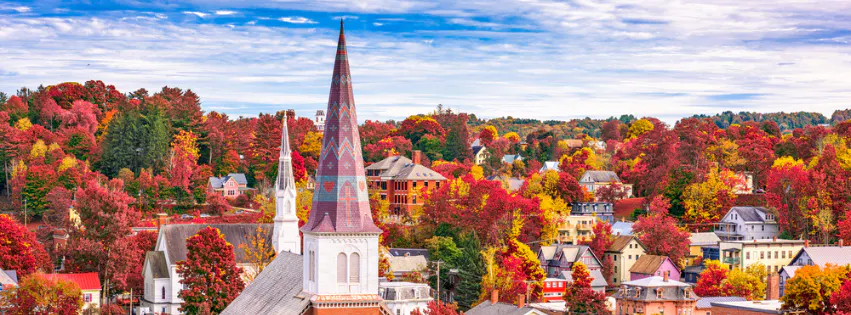
October brings spectacular autumn foliage to the eastern United States and reveals one of the best hiking seasons in the desert canyons of the Southwestern USA.
Hiking a section of the Appalachian Trail through the Smoky Mountains or New England offers unforgettable views of red, orange, purple, yellow, and gold forests. Hiking Appalachia during the October fall color change is a bucket list experience for many adventurous travelers, and justifiably so.
Meanwhile, the desert hiking season returns in the Southwest as temperatures begin to cool again below the mountains. Southern Utah’s national parks, Sedona and Grand Canyon National Park enter their magical autumn hiking season. Cooling daytime temperatures make hiking in the canyons much more comfortable and safer than just weeks earlier.
Weather in October
| High | Low | Precip | |
|---|---|---|---|
| Great Smoky Mountains | 64°F | 38°F | 6 days |
| Zion | 66°F | 39°F | 3 days |
| Bryce | 57°F | 28°F | 3 days |
| Capitol Reef | 68°F | 42°F | 5-6 days |
| Arches | 72°F | 42°F | 3 days |
| Canyonlands | 74°F | 42°F | 4-6 days |
| Sedona | 78°F | 49°F | 2 days |
| Grand Canyon (Bottom) | 83°F | 57°F | 3-4 days |
Benefits of October Hiking
- Peak fall foliage in eastern forests
- Cooler desert temperatures returning
- Quiet hiking trails
Drawbacks of October Hiking
- Fall is officially here, which means the mountains become uncomfortably cold and often snowy
- Some national park roads like the North Rim Road, Trail Ridge Road and Tioga Pass Road commonly close in October
- Shorter days mean increasingly restricted hiking windows
Top Recommended Destinations for October
November: Canyon Country Desert Hiking
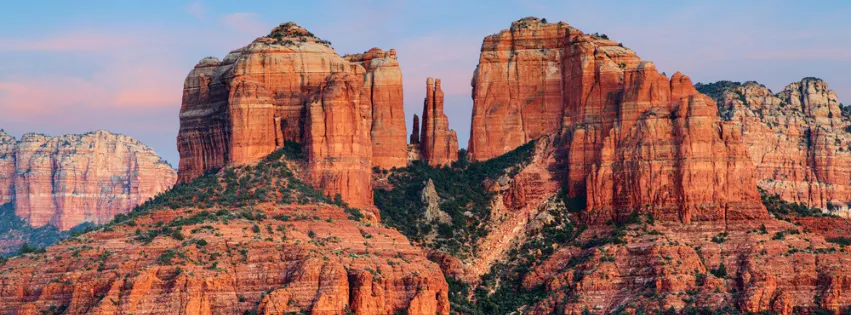
By November, desert landscapes once again become the best places to hike in North America. In the fall, America’s deserts take on a peaceful allure that draws visitors in, quiets the mind and inspires contemplation.
The red rock areas of Utah and Arizona offer comfortable temperatures and quieter trails. Hiking through the towering sandstone cliffs of Zion National Park or the hoodoo-filled amphitheaters of Bryce Canyon National Park can be especially beautiful during this time. Grand Canyon, Sedona, Moab, and all of Utah’s “Mighty 5” national parks feature cooler daytime hiking temperatures but not yet full winter conditions. Early November is an ideal time to tackle some of the more ambitious hikes in the Grand Canyon, including Rim to Rim.
Weather in November
| High | Low | Precip | |
|---|---|---|---|
| Grand Canyon (Bottom) | 67°F | 45°F | 3-4 days |
| Sedona | 66°F | 38°F | 2 days |
| Zion | 56°F | 30°F | 3-4 days |
| Bryce | 44°F | 19°F | 3 days |
| Capitol Reef | 53°F | 29°F | 4-5 days |
| Arches | 56°F | 30°F | 2 days |
| Canyonlands | 55°F | 30°F | 3-4 days |
Benefits of November Hiking
- Mild temperatures for desert hiking
- Fewer crowds than spring
- Clear skies and excellent visibility
Drawbacks of November Hiking
- The mountains are closed unless you want to snowshoe or ski
- Some desert hikes—like Rim to Rim in the Grand Canyon—shut down due to snow at higher elevations
- Much shorter days mean long, cold nights and limited hikes
Top Recommended Destinations for November
December: Winter Desert Adventures
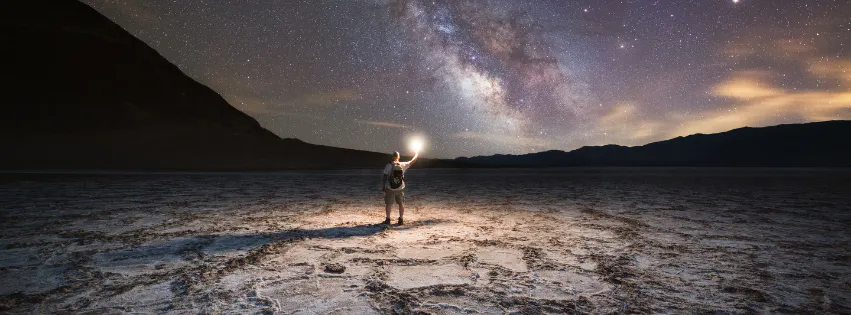
December returns hikers to the peaceful beauty of the Mojave and Sonoran deserts, and especially the lower elevation areas of Grand Canyon, Sedona, Death Valley, and Joshua Tree National Parks. December is also a good time to hike Southern Utah’s parks like Zion and Bryce. Winter light casts dramatic shadows across canyon walls, and cooler temperatures make long hikes possible again.
For travelers seeking an active holiday season adventure, December is an excellent time for desert trekking.
Weather in December
| High | Low | Precip | |
|---|---|---|---|
| Grand Canyon (Bottom) | 56°F | 37°F | 5 days |
| Sedona | 58°F | 32°F | 3 days |
| Death Valley | 66°F | 39°F | 0 days |
| Joshua Tree | 59°F | 35°F | 1 day |
| Zion | 42°F | 28°F | 5-6 days |
| Bryce | 36°F | 12°F | 3 days |
Benefits of December Hiking
- Quiet winter landscapes
- Comfortable daytime temperatures
- Unique seasonal scenery
Drawbacks of December Hiking
- Very short days limit hiking options
- Cold, wet mornings and evenings, sometimes even in the desert
- Mountains are closed to hiking
Top Recommended Destinations for December
How Climate Change Is Affecting the Hiking Season in North America
Climate change is increasingly influencing when and where it is best to hike throughout North America. Traditional hiking seasons are shifting as temperatures rise and weather patterns become less predictable. In many regions, cooler seasons are becoming shorter while warmer conditions are lasting longer into the year.
In mountain destinations, snow is often melting earlier in the spring and returning later in the fall, allowing hiking trails to open earlier and remain accessible longer. At the same time, desert landscapes are experiencing longer and hotter summers, which can push the ideal hiking season later into the fall and shorten the comfortable window for spring trekking.
Hiking North America Year-Round
One of the greatest advantages of hiking in North America is that every season offers a perfect destination somewhere on the continent. Desert landscapes dominate the winter months, while mountain regions stand out in summer and early fall.
With its vast protected lands and extraordinary diversity of landscapes, North America offers endless opportunities for exploration. From glacier-carved valleys in Alaska to red rock canyons in Utah and alpine lakes in the Canadian Rockies, every month presents a new adventure waiting to be discovered.
Why Hike North America with MT Sobek?
Hiking North America with MT Sobek means exploring some of the continent’s most spectacular landscapes with a company that has been pioneering adventure travel since 1969. From the alpine peaks of the Canadian Rockies to Alaska’s vast wilderness and the canyonlands of the American Southwest, MT Sobek designs journeys that combine iconic destinations with lesser-known trails. With expert guides, small groups, and thoughtfully crafted itineraries, travelers can focus on the experience of the hike while the logistics are handled seamlessly.
What Makes MT Sobek Trips Truly Exceptional
- Decades of expertise: A pioneer in adventure travel since 1969 with a long legacy of leading exceptional hiking and rafting journeys across North America and the world.
- Expert guides: Knowledgeable leaders share insights into local ecology, geology, wildlife, and cultural history, and ensure a commitment to safety and enjoyment throughout the journey.
- Carefully designed itineraries: A balance of iconic trails and hidden gems for a deeper experience of each destination. MT Sobek’s hiking adventures immerse travelers in the natural beauty and cultural heritage of each destination.
- Seamless travel logistics: Permits, transportation, and accommodations are expertly arranged so you can focus on the adventure.
- Comfort and immersion: Rewarding hikes paired with premier lodging and memorable meals create a rewarding and relaxing experience.
Enjoying our content? Add MT Sobek as a Google Preferred Source.

FAQs
Winter is prime time for the desert Southwest. Think Grand Canyon rim-to-river adventures, Joshua Tree’s surreal rockscapes, and Utah’s red rock canyons dusted with snow. Cooler temps, quieter trails, and dramatic light make it one of the most underrated hiking seasons on the continent.
You can hike somewhere incredible every month of the year—deserts dominate winter (Utah, Arizona, California), alpine mountains shine in summer (Rockies, Alaska), and shoulder seasons unlock fewer crowds across many national parks. It’s all about chasing the season.
Top national parks for hiking include Yosemite, Glacier, Grand Canyon, Zion, Bryce, Arches, Banff, Jasper, Rocky Mountain, Olympic, and Denali. Each park offers a distinct landscape and iconic hikes that define the region.
The best time to hike depends on the region. Summer (June through September) is ideal for mountain hiking in places like the Rockies and Sierra Nevada, while spring and fall are better for desert destinations like Zion and the Grand Canyon. Alaska and the Canadian Rockies have shorter peak seasons, typically July through early September.
Guided hiking tours can significantly enhance your experience by taking care of logistics, reservations, permits, and safety while providing a professional guide with local expertise. Guides can also bring more color to destinations by providing fascinating knowledge about the ecology, geology, and history of the area.
National parks like Great Smoky Mountains, Yosemite Valley, Zion, and Sedona offer accessible trails with incredible scenery. These are perfect entry points into hiking—big views without extreme difficulty.
Learn More About Adventure Travel in North America


