7 Interesting Facts About the Galapagos Islands You May Not Know
What We Love About the Galapagos Islands
Published: November 26, 2023 | Updated: May 14, 2026
Rising from the Pacific Ocean roughly 600 miles off the coast of Ecuador, the Galapagos Islands feel like a living, breathing time capsule where wildlife outnumbers humans and evolution unfolds in real time.
Few places on Earth offer such raw, uncrowded encounters with nature. Here, you can snorkel alongside playful sea lions, walk among giant tortoises, and witness species found nowhere else on the planet.
Whether you’re planning a once-in-a-lifetime family adventure or an immersive wildlife expedition, the Galapagos deliver an experience that is as educational as it is unforgettable.
Here are seven fascinating facts that reveal what makes the Galapagos Islands truly extraordinary.


Table of Contents
- How Many Islands Are in the Galapagos?
- When Were the Galapagos Islands Discovered?
- A Protected Natural Park & Marine Reserve
- When Tourism Began
- Best Time to Visit the Galapagos
- Unique Wildlife Found Nowhere Else
- Volcanic Origins & Landscapes
Nestled 600 miles off Ecuador’s coast in the Pacific Ocean, the Galapagos Islands beckon adventurers and nature enthusiasts worldwide.
The Galapagos Islands offer a glimpse into the world before human existence, showcasing an impressive diversity of flora and fauna, breathtaking geological formations, pristine waters, and spectacular beaches.
MT Sobek offers great hiking and trekking trips to the Galapagos islands, with abundant wildlife sightings for tourists!
In 2026, a Galapagos Adventure Tour is gaining popularity among travelers who enjoy adventure, hiking, or wildlife viewing!
Thinking about taking a trip with your family? The Galapagos Islands are a great choice, offering a 3D educational and fun experience for children. Look at the top 5 interesting facts about the Galapagos Islands.

1. The Galapagos Have About 19 Islands
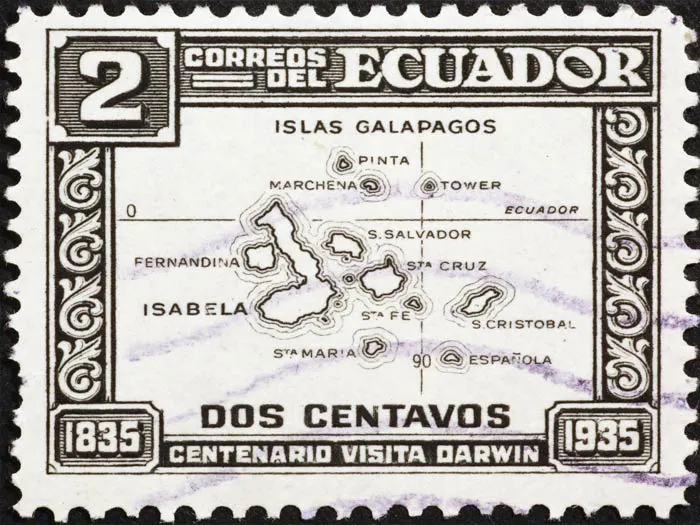
The Galapagos is a known archipelago, which is a chain or cluster of islands in the Pacific 600 miles west of mainland Ecuador. And while the number of actual islands or islets is always changing because of volcanic activity the number of islands has been static for thousands of years at around 19 main islands and more than 100 smaller islets and rocks.
Major Islands:
- Baltra
- Bartolome
- Darwin
- Espanola
- Fernandina
- Floreana
- Genovesa
- Isabela
- Marchena
- North Seymour Island
- Pinzon
- Pinta
- Rabida
- San Crisobal
- Santa Cruz
- Santa Fe
- Santiago
- Wolf
Even though there are upwards of 19 major islands that make up the Galapagos, only two of them cater to inbound air travel, San Cristobal and Baltra. To visit neighboring Galapagos islands, the main mode of transportation is by boat, however there is an airport on Puerto Villamil (Isabela) that caters to local flights.
If you really want to experience all that the Galapagos Islands have to offer, we highly suggest booking a small cruise adventure that will take you through the islands. It’s the best way to explore the incredible environment as well as the amazing wildlife. The best time to visit the Galapagos Islands is anytime!
However, if you’re not looking to spend your vacation on a boat, there are plenty of incredible land-based programs that will allow you to experience the islands as well.
2. The Galapagos Islands Were Discovered in 1535
The Galapagos Islands are a part of the neighboring country of Ecuador, located in South America. A Spanish explorer named Fray Tomas de Berlanga initially uncovered the Galapagos, emerging from the Pacific Ocean approximately 600 miles away from Ecuador’s coast, in 1535.
Fray Tomas de Berlanga discovered the islands as he sailed to Peru, his target country, but the winds carried his ships off course when they could no longer support their travels. He would land on the Galapagos Islands on March 10, 1535.
The Spanish would eventually give up on the islands due to the harsh landscape and isolation from other land masses. Later, in 1832, Ecuador sent a crew to survey the land and eventually annexed the land in 1832 naming them the Archipelago of Ecuador.
The name “Galapagos” comes from the original Spanish empire that dubbed the island “Insulae de los Galopegos” (Islands of the Tortoises).
For centuries, coming to the Galapagos was a risky business: currents and winds made the navigation easy to the Galapagos and the lack of fresh water and the great difficulty to return to the mainland kept people away from the islands. Thankfully, it is much easier to reach the Galapagos islands thanks to more modern methods of travel technology.
3. The Majority of the Galapagos is a National Park
In an effort to conserve and protect the ecosystems within the islands, in 1959, for the 100th anniversary of the appearance of “On the Origin of Species”, the Ecuadorian government declared 97% of land a National Park. Following that, UNESCO named the surrounding waters a UNESCO Biosphere Reserve in 1998. The Marine reserve is one of the largest marine parks in the world covering 51,000 sq. miles, and even today the Ecuadorian government protects the island, preserving the natural landscape as well as the wildlife that call the islands home.
One increasingly big issue is that invasive plant species and animals, introduced to the Galapagos Islands, threaten the environment. Outside of humans themselves, these plants and animals overrun the native plants and animals and cause issues. An increasingly bigger issue is that many of the introduced animals have begun to cause problems with the native species, and since there are no natural predators for these new animals, it’s hard to keep their population in check. And the same goes for the plant life.
As of today there are officially 500 native plant species on the islands, compared to over 700 introduced species. As more people visit the Galapagos islands, invasive species become a problem, highlighting the need to protect these lands.
Until now, people consider these Galapagos islands as the best conserved marine life globally.
Because of the large numbers in tourism, and money, to the islands, conservation efforts have increased throughout the years.
So while tourists and locals do bring with them their own set of problems for the land and animals, in many ways the islands are better now than they were 40 years ago.
4. The First Tourists Came to the Galapagos in 1934
It may sound like tourism on the Galapagos islands has been around for centuries, but in fact, the first tourists to the islands visited in 1934—less than 100 years ago.
The first tourist visitors to the Galapagos islands began arriving for day trips as part of their cruise experiences. In those days, prior to air travel, to access the islands you would have to charter a boat or use a private vessel.
MT Sobek was among the earliest pioneers of guided travel to the islands, launching trips here in 1970.
Since then, tourism to the islands has been booming with over 200,000 people visiting the island each year, over the course of the last few years. But when compared to other major tourist destinations, like Hawaii (which accommodates up to 10,000,000 visitors per year), the Galapagos still maintains that intimate and nature-centric island feel.
To meet the demand of trips to the Galapagos islands and preserve the landscape and environment of the islands, the islands see limited number of tourists every year and conservation efforts have been very successful and active over the years.
5. The Galapagos are a True Year-Round Destination
The truth is, anytime is a good time to visit the Galapagos Islands! If you’re looking to book a scenic trip to the Galapagos islands, you won’t have to worry about the weather or temperature, or have any concerns about daylight. Since the islands are located on the equator, partly in the northern hemisphere and partly in the southern, the temperature remains fairly consistent—ranging from high 70’s to the mid 80’s.
The Galapagos Islands have quickly become a popular destination to visit, and for good reason. Between the incredible weather, and amazing plants and wildlife, it has something for almost everyone. And no matter what time of year you decide to visit, the sights will always amaze you.
Warm Wet Season, January to May:
- Warmer, calmer seas
- Water temps in upper 70’s
- Wetsuits rarely needed
- Good underwater visibility
- Avg land/air temps 77-83 F (occasionally up to 90 F)
- Avg 4” rain per month
Cool Dry Season, June to December:
- Water temps in low 70’s
- Wetsuits recommended
- Water is choppiest in Sept
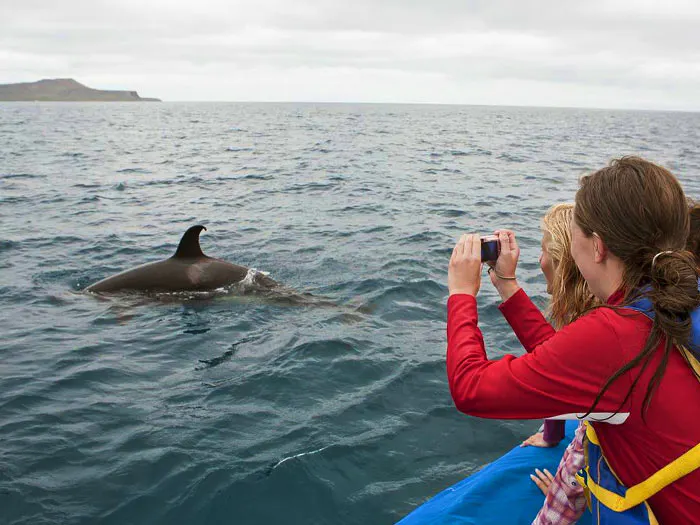
- Migratory humpback whales & whale sharks around northwestern islands
- Avg land/air temps 70-75 F (occasionally up to 80 F)
- Avg 0.2” rain per month
Explore our Galapagos Islands itineraries.
6. The Wildlife in the Galapagos Islands Are Endemic
The Galapagos is home to an extraordinary number of endemic species, meaning that wildlife here exists nowhere else, including:
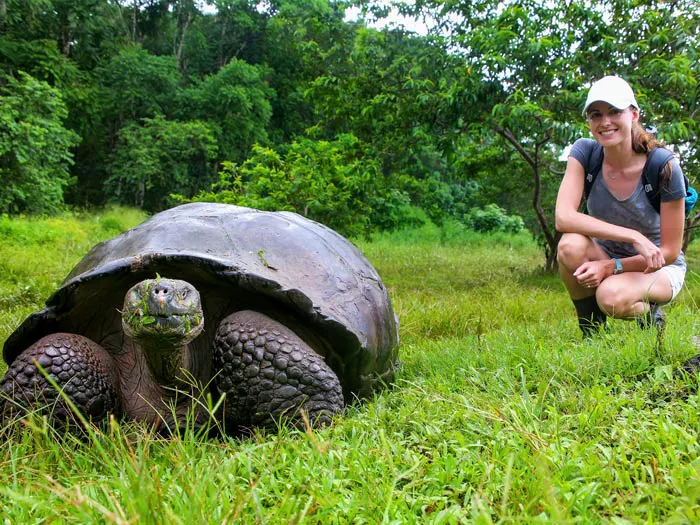
- Giant Galapagos tortoises
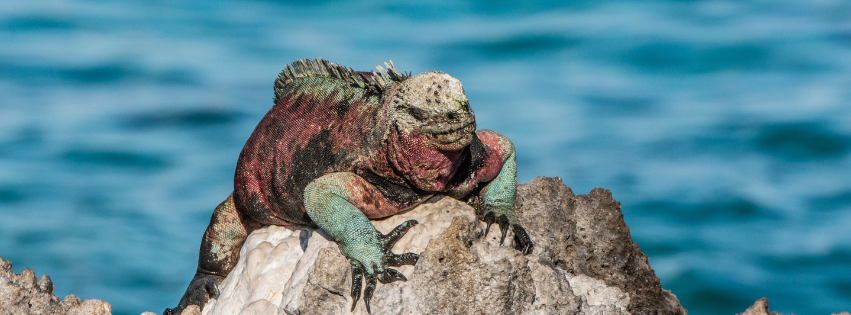
- Marine iguanas (the only sea-swimming lizards on Earth)
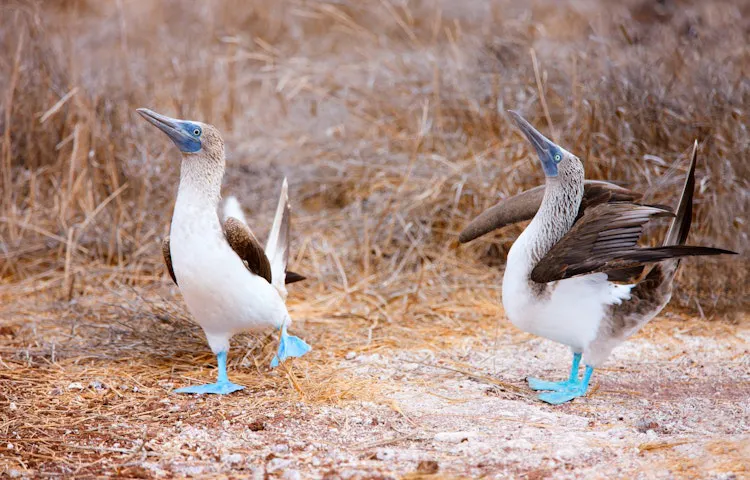
- Blue-footed boobies
- Galapagos penguins (the only penguins north of the equator)
Wildlife here evolved without fear of humans since the Galapagos Islands were not colonized by humans until recently. Wildlife are easy to observe at close range – both on land and in the water – with no fear of people. Small guided group tours like MT Sobek create small expeditions that allow rare, close-up encounters.
7. Volcanic Origins & Landscapes
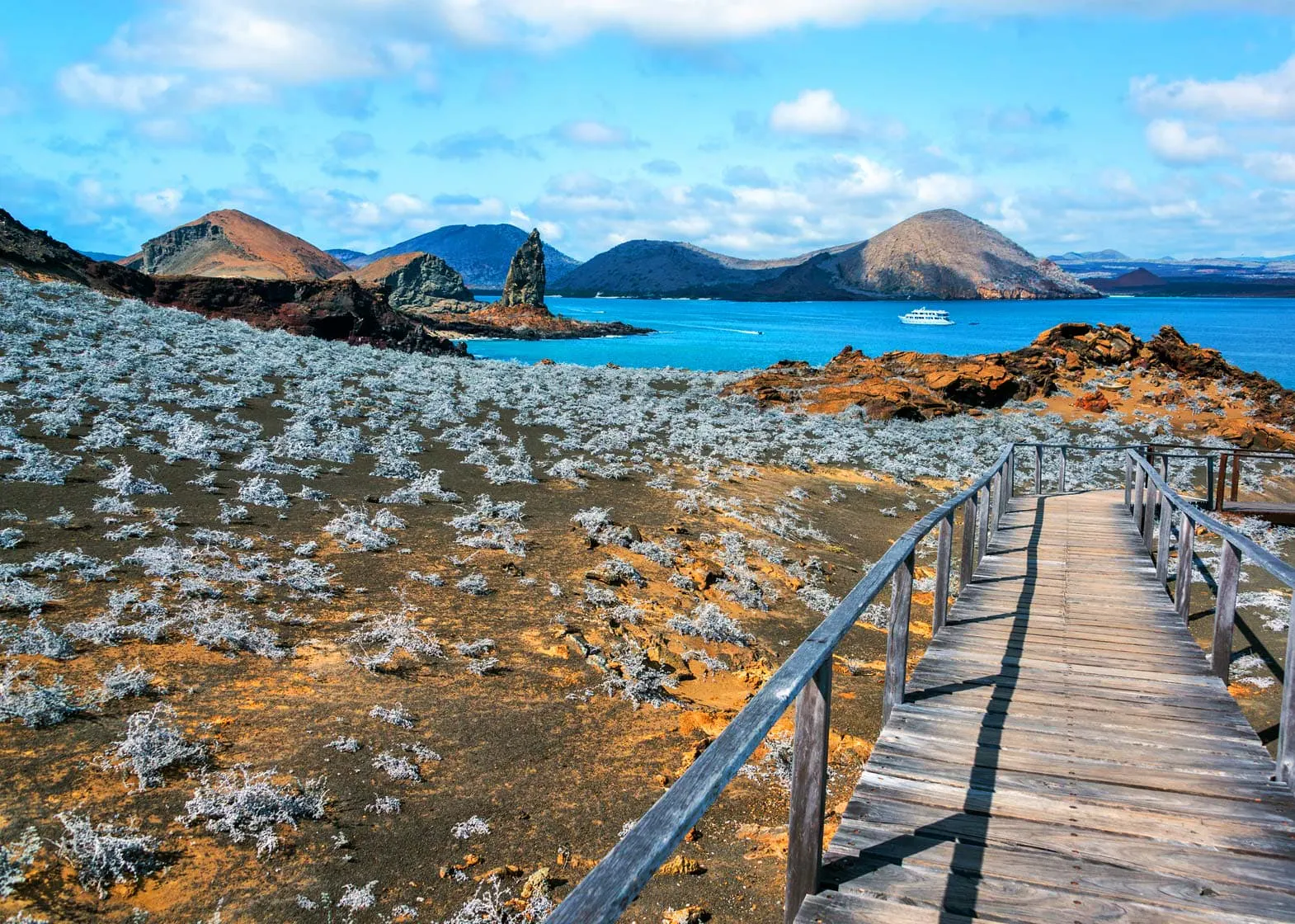
The Galapagos Islands are volcanic in origin and continue to evolve today. In fact, they are the second-most volcanically active island group in the world, with eruptions occurring roughly every few years, continually reshaping the terrain and ecosystems.
Active volcanoes—particularly on Isabela and Fernandina—regularly transform the landscape, creating a dynamic environment unlike anywhere else on Earth. This ongoing geological activity is what gives rise to the islands’ extraordinary diversity of habitats.
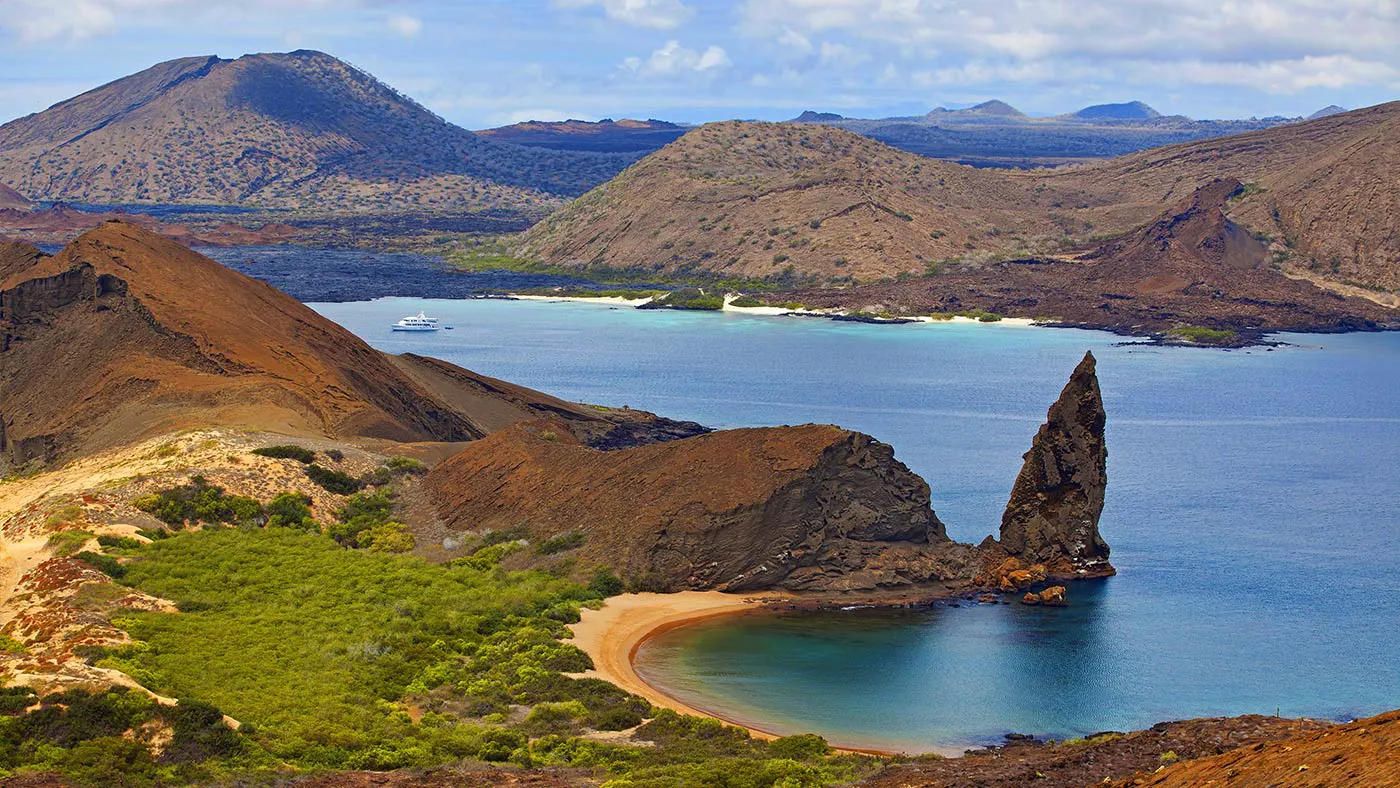
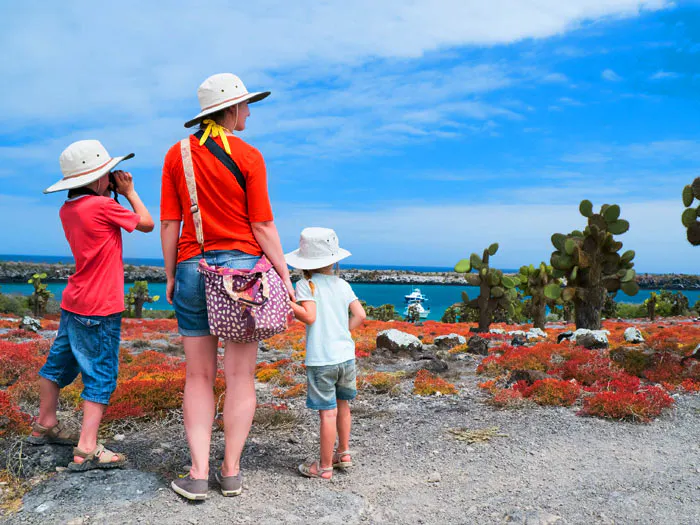
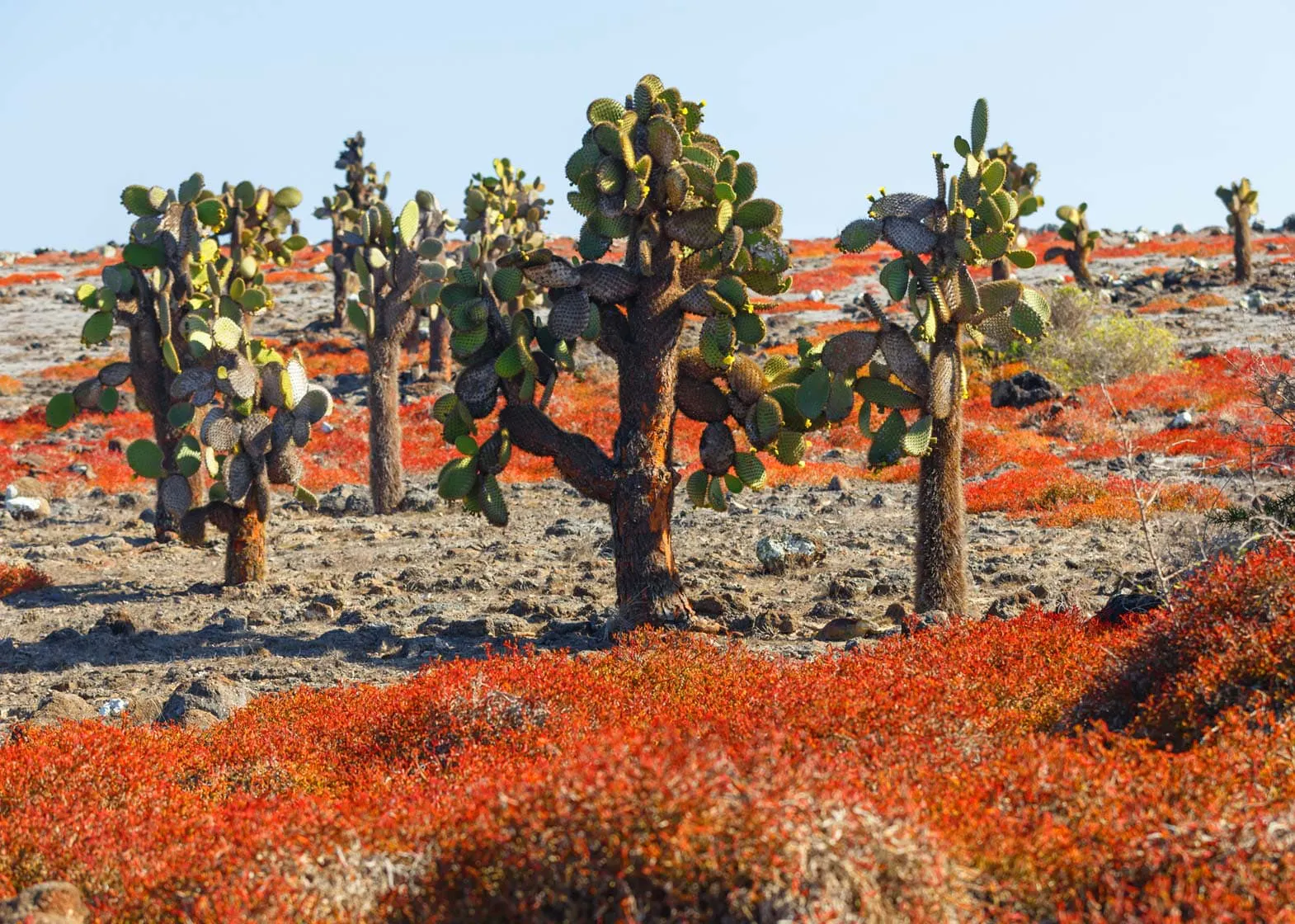
Across the archipelago, each island offers its own distinct character—from barren lava flows and dramatic cliffs to white-sand beaches, towering prickly pear cacti, arid Palo Santo forests, mangrove-lined coves, and lush highland cloud forests.
These ever-changing landscapes are not only visually striking but also play a critical role in shaping the unique ecosystems and wildlife the Galapagos are known for.
How to Enjoy the Galapagos Every Season: Wildlife Sightings
The Galapagos has two primary seasons: a warm, wetter season from January to May, with air temperatures in the high 70s to low 80s and warmer ocean waters ideal for snorkeling, and a cooler, drier season from June to December, with slightly lower temperatures, minimal rainfall, and nutrient-rich waters that attract abundant marine life.
Warm Season (Jan-May)
| January | Marine iguanas turn vibrant colors to attract mates; green sea turtles mate and nest; land birds begin nesting; giant tortoise eggs hatch. |
| February | Flamingoes nest on Floreana; penguins move to cooler waters off Isabela & Fernandina; Nazca boobies and marine iguanas enter nesting season. |
| March | Waved albatross arrive on Española; marine iguanas nest; frigatebirds begin mating displays (inflating red throat pouches); finches and flycatchers peak nesting. |
| April | Nesting season for sea turtles, marine and land iguanas; waved albatross begin elaborate courtship rituals on Española. |
| May | Waved albatross lay eggs; blue-footed boobies begin courtship dances; Galapagos sea lions enter mating season. |
Cool Season (Jun-Dec)
| June | Whale sharks and humpback whales appear near northwestern islands; frigatebird mating continues; giant tortoises migrate to Santa Cruz highlands. |
| July | Blue-footed boobies and flightless cormorants nest; sea lions breed; flamingoes begin courtship; seabird colonies grow active with first chicks. |
| August | Sea lions give birth (pups visible); Galapagos hawks court; Nazca boobies and swallow-tailed gulls nest; frigatebird chicks hatch; tortoises return to highlands. |
| September | Galapagos penguins begin courtship; baby sea lions are widespread; seabird colonies fill with chicks. |
| October | Blue-footed booby chicks visible; lava herons nest; Galapagos fur seals begin mating season. |
| November | Green sea turtles mate; sea lion pups are born—ideal for snorkeling encounters. |
| December | Giant tortoise eggs hatch; young albatross depart; iguanas begin mating; sea lions and fur seals breed; excellent land bird activity. |
Ready to see this in real life? Explore our Galapagos small-ship adventures.
Why Go with MT Sobek?
- Over 55 years of experience – When it comes to exploring the islands, experience matters, and that’s where the MT Sobek team stands apart. We’ve been designing and guiding expertly crafted Galapagos adventure cruises since 1970, when we operated our first Galapagos sailing cruise for the Sierra Club. We charter small and luxurious yachts and catamarans, intentionally keeping our groups small, in order to maximize Galapagos’ wildlife encounters in one of the most extraordinary ecosystems on Earth.
- Small group experiences – Traveling in a small group means greater access to remote landing sites, more flexibility throughout each day, and maximum opportunities to see wildlife—whether you’re hiking volcanic trails or while snorkeling alongside sea lions.
- Our guides are the best – Our expert naturalist guides, many with advanced degrees in biology or related fields, bring the islands to life with insight and storytelling that goes far beyond the surface.
- We operate our own trips – Our guide Luis and his wife Irene are our dedicated local MT Sobek team and we charter private boats directly from local owners. We work with local crews, making sure that the benefits go to local communities, and contribute financially to conservation groups.
Ready to Experience the Galapagos?
This is a multi-adventure destination that the whole family can enjoy and here at MT Sobek we’ve got a variety of great Galapagos adventure trips that cater to all people. Visit our Galapagos Islands Adventure Tours page for more information about the islands, the experiences you can have, and the amazing cruising adventures that MT Sobek offers.
Enjoying our content? Add MT Sobek as a Google Preferred Source.
FAQs
The Galapagos is a true year-round destination, but understanding its two distinct seasons can help you choose the experience that’s right for you—whether you’re prioritizing calm seas, warmer water, or peak wildlife viewing.
Warm Wet Season, January to May:
Average air temps 77-83 F (occ. up to 90F)
Average water temps in upper 70s (76-77 F)
Avg 4” rain per month
Cool Dry Season, June to December :
Average air temps 70-75 F (occ. up to 80F)
Average water temps in low 70s (70-74 F)
Avg 0.2” rain per month
No, U.S. travelers do not need a visa for short visits to Ecuador (up to 90 days). However, you will need a valid passport and must obtain a Galapagos Transit Control Card (TCT) before your flight, along with paying the Galapagos National Park entry fee upon arrival.
The best way to experience the Galapagos is by small-ship expedition cruise. This allows access to multiple remote islands, daily guided excursions, and more opportunities to see wildlife both on land and in the water.
Most trips are moderately active, with daily activities like hiking, snorkeling, and zodiac excursions. Travelers should be comfortable walking on uneven terrain and getting in and out of small boats, but activities are typically customizable to different ability levels.
Very close! This is one of the most unique aspects of the Galapagos Islands. Wildlife evolved with little fear of humans, so you can often observe animals just a few feet away. However, strict regulations require maintaining a respectful distance and following your guide’s instructions at all times.
On our MT Sobek Galapagos trips, you can enjoy an immersive blend of land and sea activities—from expertly guided nature walks and moderate hikes across otherworldly volcanic landscapes, where wildlife roams freely at close range, to snorkeling once or twice per day on most days, in turquoise waters surrounded by sea turtles, penguins, sea lions, and tropical fish – an interactive underwater experience like no other! You can also explore by kayak or paddleboard in serene mangrove lagoons and picturesque bays, looking out for rays, white-tipped reef sharks, and Galapagos penguins.
Yes! Snorkeling is one of the highlights of any Galapagos trip. You can swim alongside sea lions, marine iguanas, sea turtles, rays, and colorful fish in crystal-clear waters. Most cruises provide equipment and guidance for all experience levels.
Absolutely. Guided hikes take you across volcanic landscapes, lava fields, coastal cliffs, and lush highlands. Trails are generally moderate and designed to showcase wildlife and unique geological features rather than strenuous trekking.
Yes, several outfitters, including MT Sobek, offer guided Galapagos adventure cruises in the Galapagos Islands.
A small-ship cruise on a yacht or catamaran is widely considered the best way to experience the Galapagos because it allows access to remote islands and secluded snorkeling sites that few travelers reach. With small groups (often 16 guests or fewer), you’ll enjoy more intimate wildlife encounters, fewer crowds, and the ability to explore multiple destinations each day with minimal travel time. Plus, expert crews handle all logistics while you relax and spot dolphins, seabirds, and even whales between islands, making the journey just as memorable as the destination.
Learn More about the Galapagos Islands


