Utah Escalante & Coyote Gulch Hiking Tour
From Canyonlands to Remote Canyon Country
- Available: April, May, September, October
- Activity: Level 4
- Accommodations: Comfortable Hotels
Highlights
- Hike some of Utah's most remote and stunning regions including legendary Coyote Gulch
- Experience Canyonlands National Park on foot and by air, touching down at Capitol Reef
- Spend nights in boutique wilderness lodgings and enjoy delicious, farm-to-table meals
Itinerary
Hike in Canyon Country & Travel to Moab
Day 1
Meet up with your guides this morning in Grand Junction, CO for the scenic canyon country drive toward Moab, UT. Stretch your legs beneath the soaring, sandstone monoliths of Fisher Towers, hiking over slickrock and through red rock canyon. Savor a riverside picnic lunch, then head for your next hike at Grandstaff Canyon. Follow the trail through willow and cottonwood beneath towering rock walls and over creek crossings to magnificent Morning Glory Natural Bridge, one of the largest natural rock spans in the country. Return to the vehicle and continue to Moab where you’ll settle into your accommodations and enjoy a well-earned dinner with your fellow adventurers and guides.
Accommodation: Red Cliffs Lodge
Activity: 3 hours/6.2 miles hiking on multiple trails with 800' elevation gain and 800' elevation loss
Transportation: 2-hour private van transfer with stops
Meals: Lunch, Dinner
Fly Between Walks in Canyonlands & Capitol Reef National Parks
Day 2
Drive to Canyonlands National Park for a hike on the Lathrop Trail. Cross the Island in the Sky mesa through desert grasslands for impressive views of the Colorado and Green Rivers at the rim of the canyon. After a picnic lunch, transfer to Canyonlands Field Airport and board a scenic flight over canyon country and a different perspective of the region’s geology and scale. Land in Hanksville, meet up with your guides, and transfer to Capitol Reef National Park’s historic Fruita for a walk amid the old groves below red rock cliffs and a look at the iconic barn. Continue to Teasdale in the foothills of Boulder Mountain.
Accommodation: Cougar Ridge
Accommodation: Lodge at Red River RanchActivity: 2 hours/6 miles hiking on multiple trails with 335' elevation gain and 335' elevation loss
Transportation: 3-hour private van transfer; 45-minute small plane air transfer
Meals: Breakfast, Lunch, Dinner
Hike the Boulder Mail Trail in Grand Staircase-Escalante National Monument
Day 3
One of the most remote towns in the continental United States, Boulder, UT was once accessed by pack-horse mail route and didn’t have electricity until 1947. Today starts with a drive to Boulder and an out-and-back hike along the Boulder-Escalante Mail Trail. The route takes you across slickrock dotted with juniper and pine, over benches and sandstone domes through Sand Creek to reach the rim of Death Hollow, but not before you’ve enjoyed a guide-prepared picnic in superb wide-open scenery along the way. Back in Boulder, enjoy a farm to table meal at nationally acclaimed Hell’s Backbone Grill.
Accommodation: Boulder Mountain Lodge
Activity: 7 hours/11 miles hiking with 2,545' elevation gain and 2,545' elevation loss
Transportation: 20-minute private van transfer
Meals: Breakfast, Lunch, Dinner
Follow Slickrock Trails to Phipps Arch
Day 4
Drive into the wild sandstone country of Grand Staircase-Escalante National Monument, where sculpted cliffs, slickrock domes, and desert washes reveal the raw beauty of southern Utah. Today’s hike leads to Phipps Arch, a striking natural span tucked deep in a remote canyon landscape near the Escalante River. Follow sandy paths and slickrock benches through a quiet world of juniper, cottonwoods, and warm-toned Navajo sandstone, with ever-changing views across the desert. This backcountry adventure includes some scrambling and multiple river crossings through shallow water—great challenges for experienced hikers. Spend a little time exploring or relaxing by the beautiful Escalante River before returning to Boulder.
Accommodation: Boulder Mountain Lodge
Activity: 5 hours/8 miles hiking with 600' elevation gain and 600' elevation loss
Transportation: 2-hour private van transfer
Meals: Breakfast, Lunch, Dinner
Descend to Remote Coyote Gulch
Day 5
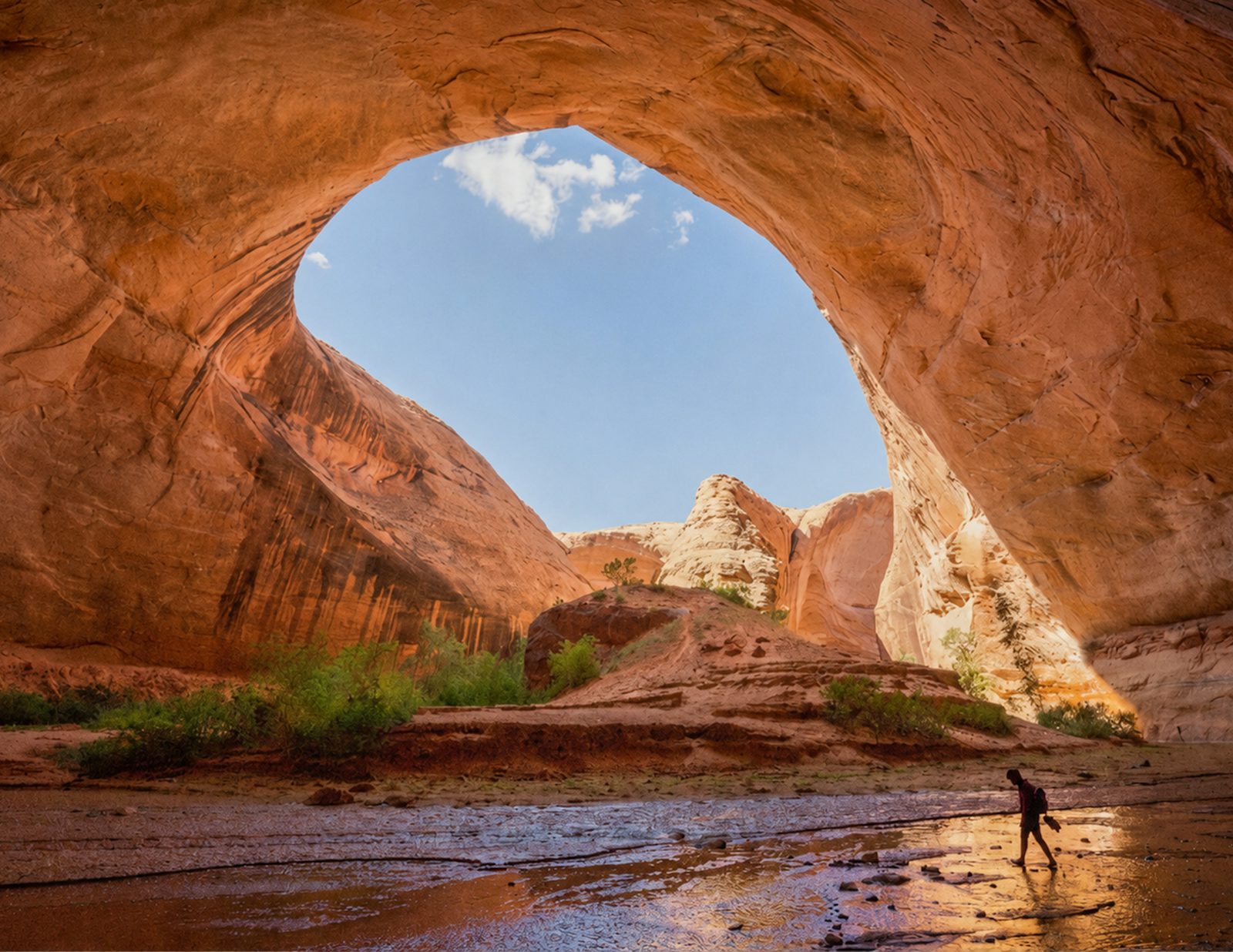
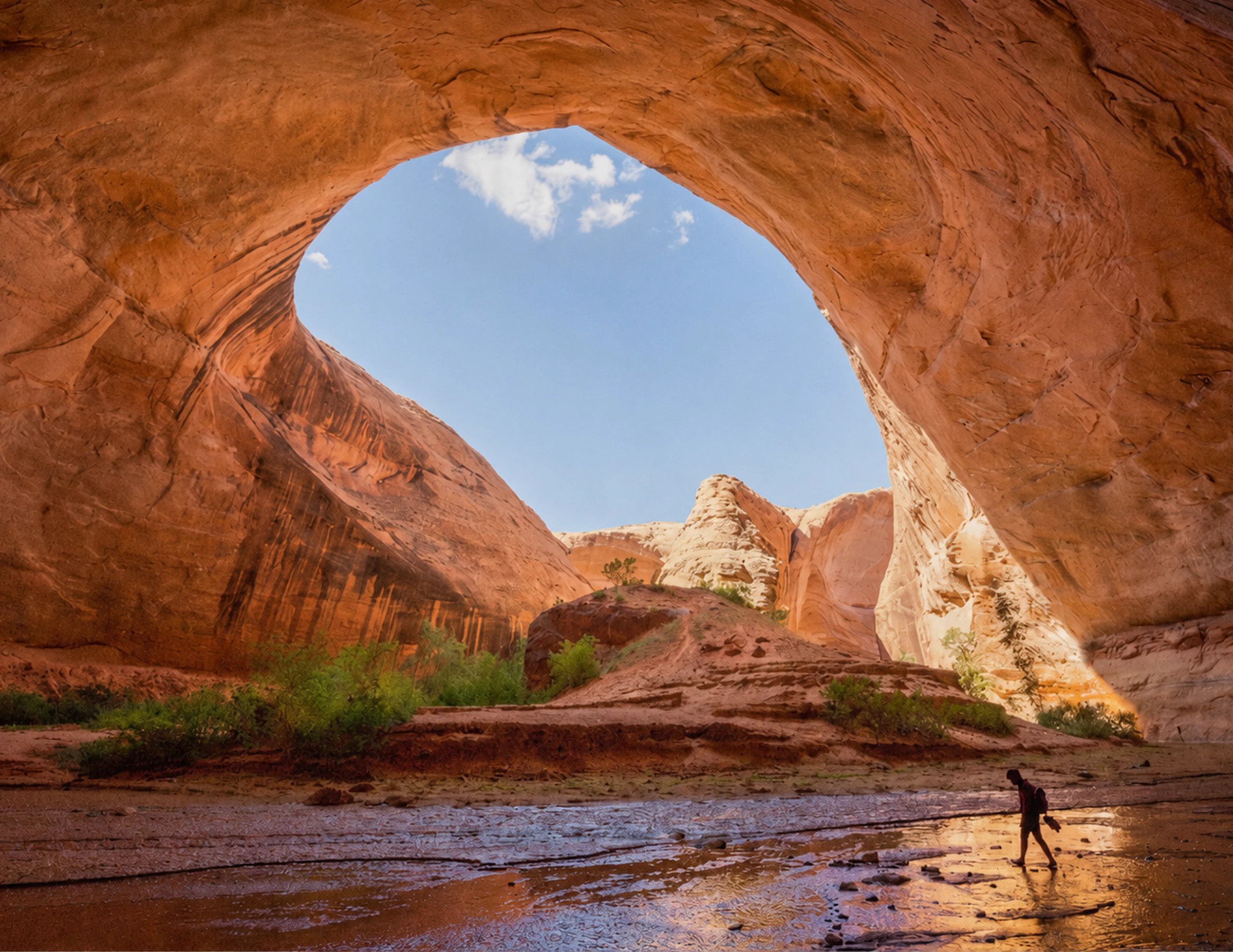
Begin at the Chimney Rock Trailhead and set out across open desert and slickrock, keeping an eye out for wildlife and desert flora. Then drop into a world where Navajo sandstone walls rise on either side and water flows on the sandy canyon floor. Hike downstream through sandy bends, cottonwoods, and sculpted alcoves, wading through shallow water to magnificent Jacob Hamblin Arch, bathed in golden light. Retrace your steps to Hurricane Wash and follow its sandy corridor back toward the desert rim to complete the loop. This evening, celebrate the day and last evening of the journey with your fellow adventures at Hell's Backbone Grill.
Accommodation: Boulder Mountain Lodge
Activity: 7 hours/12 miles hiking with 3,280' elevation gain and 3,280' elevation loss
Transportation: 4-hour private 4 x 4 transfer on slow dirt roads
Meals: Breakfast, Lunch, Dinner
Marvel at Goblin Valley Hoodoos & Depart
Day 6
Spend the morning exploring the surreal formations of Goblin Valley State Park, where thousands of whimsical hoodoos rise from the desert floor and there are no marked trails. Hike through the Valley of Goblins, wandering among mushroom-shaped towers and sculpted sandstone figures that invite imagination. After your hike, gather for a final picnic lunch in the heart of canyon country, surrounded by the colors and forms of the Colorado Plateau. Then transfer to Grand Junction, where your Utah adventure comes to an end with memories of glowing arches, river crossings, and wild desert beauty.
Activity: 1.5 hours/3 miles hiking with 150' elevation gain and 150' elevation loss
Transportation: 4-hour private van transfer
Meals: Breakfast, Lunch
Why Travel With Us?
- MT Sobek has been exploring US outdoor landscapes for over 50 years, placing a strong emphasis on responsible travel practices that protect the natural environment.
- This adventure pairs some of the most wild and beautiful canyon country hiking with lovely, well-located lodging and delicious meals.
- Experience the region's incredible geology and diverse flora and fauna as you go deep into Utah's backcountry with expert local guides.
Dates & Prices
Price is per person, double occupancy in USD.
The earlier you book, the more choice of available dates you’ll have and once you book, your price is guaranteed.
Your Guides
The best people to immerse you in a destination are the ones who live there, which is why we feature local Adventure Guides on our trips. Here are a few that you might meet on this adventure.

Jeff G.
Jeff is a wilderness guide, musician, teacher, and composer living in Moab, UT. He combined his master’s degree in music education and jazz studies with his love for sharing adventures in beautiful natural places, developing a curriculum for playing and teaching music outdoors! Both passions contribute to guests’ experience when Jeff guides backpacking, whitewater rafting, and hiking adventures locally in the southwest United States and further afield in Alaska.

Chris K.
Chris grew up splitting time between coastal Massachusetts and Northern California, finding a deep appreciation for both the ocean and mountains. Guiding since 2010, Chris has enjoyed travels around the world but thinks some of the best adventures can be found closer to home in the Western United States. He is grateful to have the unusual opportunity through guiding to share his love of this region with guests.

Ashley K.
Ashley is an adventurous spirit with a passion for the great outdoors. She has extensive experience guiding trips in breathtaking landscapes, including Alaska, Zion, Canyonlands, Arches, Yosemite, and Death Valley. Her journey into the outdoors began with a college wilderness survival course, sparking a curiosity that led her to become a Wilderness-EMT, blending her medical expertise with her love for adventure. Ashley's love for nature knows no bounds!
Activity Level
This trip is rated activity level 4. You should be capable of hiking up to 12 miles (up to 7 hours) while carrying a daypack. Hiking is both on- and off-trail; terrain includes dirt and sand trails, open sandstone slickrock, and some steep inclines/declines. Light scrambling (using your hands for balance and support while climbing over uneven rock or navigating short, steep sections of trail) may be required in a few sections.
Learn more about activity levels here.
Activity Snapshot
Day 1
3 hours/6.2 miles hiking on multiple trails with 800' elevation gain and 800' elevation loss
Day 2
2 hours/6 miles hiking on multiple trails with 335' elevation gain and 335' elevation loss
Day 3
7 hours/11 miles hiking with 2,545' elevation gain and 2,545' elevation loss
Day 4
5 hours/8 miles hiking with 600' elevation gain and 600' elevation loss
Day 5
7 hours/12 miles hiking with 3,280' elevation gain and 3,280' elevation loss
Day 6
1.5 hours/3 miles hiking with 150' elevation gain and 150' elevation loss
*Mileage and elevation change information is approximate and may vary slightly depending on trail conditions, weather, and route adjustments, and the guide’s discretion.
Accommodations
Comfortable desert lodges and ranch-style retreats chosen for their proximity to trailheads and Old West charm.

Red Cliffs Lodge
Red Cliffs Lodge is nestled along the banks of the Colorado River, surrounded by the deep-cut Canyonlands and steep cliff walls. This rugged Western landscape is worthy of Hollywood and has been the site of numerous films which are highlighted in the on-property Moab Movie Museum. The Cowboy Grill serves hearty cuisine paired with fabulous views of the Colorado River. Red Cliffs Lodge is also home to the Castle Creek Winery, the largest winery in Utah.

Cougar Ridge
The spectacular, family owned and operated Cougar Ridge, is a true oasis just five miles from Capitol Reef National Park. The unique 44 acre property is nestled into the red-rock cliffs, and features a sandstone lodge and several private villas. Here you can truly relax in the luxury accommodations and soak in the serenity and natural beauty of Southern Utah.

Boulder Mountain Lodge
Boulder Mountain Lodge, nestled amid the cottonwoods in the tiny town of Boulder, is a comfortable ranch-style lodge with a nationally acclaimed restaurant, Hell's Backbone Grill. Set on a farm that supplies much of the restaurant's produce, the lodge combines modern comforts with a strong sense of place, offering spacious rooms, quiet views, a 10-acre bird sanctuary, and easy access to some of southern Utah's most remote hiking terrain.

Lodge at Red River Ranch
Weather
Daytime highs of 60s-70sF in spring and 70s-80sF in early fall with canyon interiors 10?20 degrees cooler.
FAQs
Trip Overview
This Level 4 adventure is built for hikers who want to go beyond the classic roadside overlooks and popular national parks into the wilder, lesser-known reaches of southern Utah's canyon country. The itinerary connects Moab's sculpted red-rock trails, Canyonlands by air and land, Capitol Reef's historic Fruita, Grand Staircase-Escalante's remote slickrock routes, spectacular Coyote Gulch, and the whimsical hoodoos of Goblin Valley. Each day brings a different expression of the Colorado Plateau, from towering wind-sculpted spires and natural bridges to flowing desert streams, hidden arches, and vast open stretches of sandstone.
Off-the-Beaten-Path Hiking: This trip is designed to cover adventurous routes that many travelers miss, including the historic Boulder Mail Trail, Phipps Arch, and the spellbinding hike into Coyote Gulch. Expect quiet trails, river crossings, slickrock traverses, and canyon landscapes that feel removed from the busiest Utah trails.
Magical Coyote Gulch: The centerpiece of the journey is an exploration of Coyote Gulch, one of the Southwest's most extraordinary canyon systems. Descend by the lesser-known Chimney Rock Trail, then hike through a lush canyon oasis of shallow water, sandy bends, and glowing Navajo sandstone walls to iconic Jacob Hamblin Arch, returning by Hurricane Wash to make a loop.
Canyonlands by Air and Land: Experience the scale of canyon country from two phenomenal perspectives. First, hike the Lathrop Trail across the Island in the Sky mesa toward views of the Colorado and Green Rivers. Then board a scenic flight for an aerial look at the carved sandstone labyrinth below.
Rugged Days, Comfortable Nights: This is a true hiking adventure, but not a backcountry camping trip. After full days on desert trails, retreat to comfortable regional lodges in Moab, Teasdale, and Boulder, with memorable dining that includes farm-to-table meals at nationally acclaimed Hell's Backbone Grill.
Spring and fall are the best times to hike Utah's canyon country, when temperatures are better suited to long days on exposed slickrock, in sandy washes, and along canyon corridors. These shoulder seasons bring the most comfortable balance of daylight, trail conditions, and desert beauty. Spring offers fresh greenery, blooming desert plants, and flowing water in canyons and washes, while fall brings crisp mornings, golden cottonwoods, warm sandstone colors, and often clearer, more stable weather.
April to May - Spring Color and Flowing Water: Spring is a beautiful time for canyon hiking, with cooler mornings, mild afternoons, and a lively desert landscape. Cottonwoods begin to leaf out in a brilliant green contrast to red rock, wildflowers may bloom depending on winter moisture, and routes with streams—such as Coyote Gulch—are especially vibrant. Spring weather can still be variable, with wind, cool mornings, or occasional storms, so layers are essential.
September to October - Golden Light and Cottonwoods: Fall is another excellent choice, especially for hikers who enjoy cooler air, rich desert colors, and golden cottonwoods in canyon bottoms. By autumn, summer heat has eased, making longer exposed hikes more comfortable. The light on the sandstone can be spectacular, and canyon country is atmospheric in the shorter, softer days of the season.
Why Not Summer or Deep Winter?: Summer can be extremely hot in southern Utah, particularly on exposed slickrock and sandy approaches with limited shade. Winter can be beautiful and quiet, but shorter daylight hours, cold mornings, icy patches, and occasional snow can complicate travel and hiking. For a Level 4 itinerary with full hiking days, river crossings, slickrock, and remote canyon routes, spring and fall offer the best overall experience.
The typical group size for this trip is between 4 and 10 guests, creating an experience that feels personal, relaxed, and thoughtfully paced. Small group travel allows us to share moments that make a journey truly memorable.
The standard minimum age for this trip is 18. This itinerary is designed with adult travelers in mind, based on daily activity levels, accommodations, and overall group experience. Families or groups with children as young as 16 should check out our private departures.
This trip combines long hiking days, remote sun-exposed canyon terrain, and several sections that require sure-footed walking on uneven surfaces. While the trip does not involve technical climbing, hikers should be comfortable with full days on trail, including routes of up to 11 or 12 miles and up to 3,280 feet of elevation gain and loss, sustained walking on slickrock and sand, and hiking through desert washes where the path may be faint or unmarked.
Varied Desert Terrain: Expect sandstone benches, slickrock domes, sandy washes, creek crossings, dry-stream beds, and rocky canyon routes. Some days include light scrambling, especially on backcountry hikes in Grand Staircase-Escalante.
Longer Hiking Days: Several hikes are substantial, including the Boulder Mail Trail and the descent into Coyote Gulch. These days require strong endurance, good balance, and the ability to stay energized through several hours of steady hiking in exposed desert conditions.
Coyote Gulch Descent: The route into Coyote Gulch requires careful footing and confidence on sloping sandstone. You will need to be comfortable wading through shallow water, walking on sand, and navigating uneven canyon terrain below high sandstone walls.
Remote Canyon Setting: Many hikes take place far from developed trailheads and quick-responding services, with slow dirt-road transfers, rugged approaches, and limited shade. Guides help manage route-finding, pacing, and safety, but guests should arrive prepared for active days in a remote desert environment.
This trip is best for fit, experienced hikers who enjoy adventurous trails, off-the-beaten-path landscapes, and the challenge of reaching some of southern Utah's most spectacular hidden canyon country.
We plan the itinerary carefully, but adjustments may be needed due to weather, trail conditions, or other factors. MT Sobek and our guides make thoughtful decisions when needed in real time to keep the experience safe and enjoyable, and any significant changes will be communicated as early and as clearly as possible.
Arriving and Departing
You should fly into and out of Grand Junction Regional Airport (GJT).
Once your booking is finalized with MT Sobek and your trip has been confirmed to operate, flights may be purchased. If you are unsure of the status of your trip, be sure to check with your Adventure Coordinator prior to booking non-refundable flights.
Arrival: You will need to arrive at Grand Junction Regional Airport (GJT) by 9:00 am on Day 1 to meet your guide(s) and the group at the baggage claim for the transfer to Moab. For the best experience, we strongly recommend arriving at least one day early, when possible, to allow for travel delays and to start the tour feeling rested.
Departure: On Day 6, schedule your departure from Grand Junction Regional Airport (GJT) after 7:00 pm, allowing for the approximate 4-hour transfer back from Moab and an afternoon arrival at the airport around 5:00 pm.
You will meet your MT Sobek guide(s) and fellow travelers at the Grand Junction Regional Airport (GJT) in Colorado at the baggage claim at 9:00 am on Day 1. After the group has gathered, you will set out on a scenic drive toward Moab to begin the adventure. Please refer to your Final Details document for airport meeting instructions specific to your departure and the name of your guide(s).
We recommend booking a hotel near the airport to ensure a seamless meet-up on the morning of Day 1. If you stay in town after the tour, you can arrange an independent transfer to a hotel of your choice. Lodging and dining information can be found on the Grand Junction Tourism website.
Transportation and Transfer
Yes, airport transfers are included as part of your trip. Meet the group at the Grand Junction Regional Airport (GJT) baggage claim at 9:00 am on Day 1 for the transfer to Moab. On Day 6, we provide a group transfer back to the Grand Junction airport, arriving at approximately 5:00 pm. Please note that these are scheduled group transfers; if you arrive or depart outside of these times, you will be responsible for your own transportation.
No, MT Sobek does not arrange private transfers for this itinerary. However, taxis and rideshare options are readily available in Grand Junction for the short trip between the airport and your hotel. Guests who do not plan to use the provided MT Sobek transfers and who require a private transfer can make advance shuttle arrangements at Moabexpress.com .
For guests who choose to drive to the trip start, we recommend parking at the Grand Junction Airport (GJT) and meeting your group at the baggage claim to participate fully in all planned activities on Day 1.
Fitness, Terrain and Trail Expectations
This is a challenging Level 4 trip featuring multiple consecutive days of hiking for 5 to 7+ hours daily. You will cover 6 to 12 miles per day with elevation changes of up to 3,280 feet, requiring a solid base of physical fitness.
Hiking and Light Scrambling: Be prepared for varied terrain including soft sand, dirt trails, and open sandstone slickrock. These uneven surfaces require good balance and surefootedness, especially when navigating steep sandstone inclines, scrambling with your hands for balance, and on downhill hiking sections.
Desert Climate: The dry desert air and sun-exposed environment make physical exertion feel more strenuous. Constant hydration is critical as you manage the effects of the arid climate, heat, and limited shade on the trail.
Vertical Intensity: Daily hikes involve significant elevation gain and loss, ranging from 800 to 3,280 feet. Navigating these changes in elevation on sandstone requires good conditioning and endurance.
Back-to-Back Days: This is a demanding Level 4 hiking trip with 6 consecutive days hiking in desert terrain, where trails can be rocky, steep, and sun exposed. Expect long rewarding days with sustained ascents and descents over the course of the trip.
We recommend giving yourself several months to prepare so you arrive feeling confident and strong. Start by building a solid cardio base with activities like hiking, brisk walking, stair climbing, cycling, or running. Aim for consistent workouts four times per week, gradually increasing duration to 40 to 60 minutes.
Hiking is the most effective training. Try to include at least one hike per week, ideally on hilly terrain, keeping a 2-mile-per-hour pace. If hills are not available, stair workouts or a stair machine are excellent substitutes. Practice hiking with a daypack and gradually add weight—starting light and working up in small increments—to simulate the conditions you’ll experience on the trail.
Downhill conditioning is just as important as climbing. Long descents are common in canyon country and can be tough on knees and joints, so training both up and down will pay off. Trekking poles can significantly reduce strain, and we strongly encourage training with and bringing your own trekking poles on the trip. Trekking poles are provided for guests who do not want to travel with their own.
Finally, use your training hikes to break in all your gear—footwear, socks, pack, and layers—and to get comfortable with your hydration set up. Consistent, steady preparation matters more than intensity and arriving well trained will help you fully enjoy the scenery, culture, and long canyon days.
Accommodations and Meals
Accommodations on this trip are an important part of the overall experience and are thoughtfully chosen to support the hiking route through canyon country. You will stay in comfortable desert lodges and ranch-style retreats that combine regional character with modern comfort. These properties are selected for their proximity to trailheads and Old West charm, and each provides a restful place to recharge after full hiking days. Rooms are comfortable and well appointed, but size, layout, and amenities can vary from property to property, especially in smaller remote towns.
Yes, we can accommodate many common restrictions like vegetarian, vegan, and gluten-free diets on this trip with advance notice.
Let us know about your dietary restrictions and food allergies as soon as possible, so we can coordinate with guides, hotels, and restaurants. Please also list these on your Participant Information Form.
Yes, a limited number of single rooms are available on this trip. About a third of our travelers go solo, and single room inventory often books up quickly! You can find more information on solo traveler options here .
Packing and Gear
The key to desert comfort is layering and sun protection. Essential items include moisture-wicking hiking clothes, a wide-brimmed sun hat, UPF-rated clothing and high-SPF sunscreen, and a high-quality daypack.
Hiking Footwear: Supportive hiking shoes or boots with solid soles, good traction, and ankle support are key to your enjoyment of this trip. We recommend non-waterproof footwear for the best breathability and comfort when hiking in the desert. We also recommend a suitable pair of river sandals such as Chacos or Tevas.
Layering for Variable Weather: Spring and fall temperatures can range from near freezing in the morning to 70F or higher during the day. UPF-rated clothing is helpful in the desert sun. Pack a fleece or wool sweater/jacket, a down jacket, and a waterproof rain jacket with a hood to stay prepared for shifting conditions.
Hydration Essentials: Staying hydrated is critical in the arid Utah climate. You should bring reusable water bottles or a backpack hydration system with a total capacity of at least 3 liters. Consider bringing powdered electrolytes to replenish minerals lost to sweat in the heat.
Daypack Requirements: You will need a daypack with a 20- to 30-liter capacity to carry your daily essentials, including your lunch/snacks, drinking water, sunscreen, rain shell, and personal items.
Trail Gear: Trekking poles are provided by MT Sobek, though you are welcome to bring your own preferred hiking poles if you choose. Other important accessories include sunglasses, spare prescription lenses, and a personal medical kit.
Supportive hiking shoes or boots with solid soles, good traction, and support to handle uneven trails, slickrock and variable terrain are key to your enjoyment of this trip. We recommend non-waterproof footwear for the best breathability and comfort when hiking in the desert.
Trail runners, light hiking shoes, or boots with ankle support are all acceptable. Whatever footwear you choose, it is critical that it fits well and is fully broken in before the trip. Hiking in unfamiliar terrain for multiple days in a row puts added stress on feet and ankles, and reliable, well-tested footwear makes a meaningful difference in comfort and safety.
On Day 4 and 5, we recommend having a suitable pair of river sandals such as Chacos or Tevas for multiple knee-height river crossings.
On-the-Ground Travel Tips
Desert weather is defined by its dramatic range. While days are often warm and sunny, temperatures can drop rapidly once the sun sets.
Average Temperatures: Daytime highs typically range from 60 to 80+F, while evening lows can dip to 40 or 50F.
Intense Sun: Even on cooler days, the desert sun is very strong; high-SPF protection, sunglasses, and a hat are needed year-round.
Arid Climate: The air is extremely dry, making constant hydration a top priority throughout the day.
Seasonal Variations: April and October tend to be milder, while May and September can see highs reaching low 80'sF.
For international guests, US electricity operates at 120 volts and has Type A two-pin or Type B three-prong outlets. Check to see if your electronics are dual voltage, or if you need a converter.
Specific tipping recommendations for your departure will be outlined in your Final Details, which are sent about three weeks before the trip.
Health and Safety
Yes, we strongly recommend purchasing travel insurance for all trips. Travel insurance can help cover trip cancellations or interruptions, medical expenses, emergency evacuation, travel delays, and other unexpected situations. We offer travel insurance with Arch RoamRight and will be happy to provide you with a quote. Please see our Travel Resources page for more information.
On Day 5, be prepared for a 4-hour roundtrip private 4x4 transfer on slow, rough roads to and from Coyote Gulch.
Staying healthy on this trip starts with good pre-trip preparation and daily habits. Hydrate consistently throughout the day, especially during long hikes, and eat regularly to keep your energy levels steady. On warmer days, using powdered electrolytes can help replenish minerals lost through sweat. Daily sun protection with UPF-rated clothing is essential.
Foot care is especially important. Wear well-fitting, broken-in footwear, keep your feet dry when possible, and address hot spots or blisters early using moleskin or hydrocolloid patches. Liner socks can also help reduce friction. Simple steps like trimming toenails before the trip and changing socks as needed can make a big difference over consecutive hiking days.
Hand hygiene matters as well. Wash or sanitize your hands frequently, particularly before meals. Prioritize rest and recovery in the evenings, and don't hesitate to talk with your guide about pacing, layering, or minor concerns as they arise. Addressing small issues early is one of the best ways to stay comfortable and enjoy the full experience.
Trail Support and Emergencies
Extensions and Local Exploration
If you have extra time in the area, we recommend exploring these local highlights:
Colorado National Monument: Located just outside Grand Junction, it offers stunning rim drives and short hikes among red-rock monoliths.
Downtown Moab: Spend an afternoon browsing local galleries, outdoor gear shops, and enjoying the vibrant cafe scene.
Dead Horse Point State Park: Famous for its dramatic overlook of a gooseneck in the Colorado River, it is a short drive from Moab.
Wine Tasting: Grand Junction and nearby Palisade are home to several excellent Colorado wineries and orchards.
Similar Trips to Utah Escalante & Coyote Gulch Hiking Tour
Inspiration to Explore Tour
Guest Reviews
I would highly recommend Mt Sobek. Every detail was taken care of- transport, luggage, meals, and of course hiking trails and accommodations. It made for a stress free trip and one where you can truly enjoy the beauty and culture around you.
Kristin W.
MT Sobek Guest
Mt Sobek is an excellent travel company that stops at nothing to ensure you have a wonderful vacation experience.
Stuart L.
MT Sobek Guest