
Discover Torres del Paine National Park
There are few places better to enjoy the full experience of a Patagonia trekking adventure than Torres del Paine. MT Sobek’s Torres del Paine hiking tours take you right into the heart of Chile’s most celebrated national park, following trails beneath the granite towers and across a landscape of glacial lakes, windswept valleys, and the vast Southern Patagonian Ice Field. Hike the legendary W Trek, take on the more remote O Circuit, or experience the park on a carefully designed itinerary that pairs exceptional day hikes with comfortable lodging. The weather can be wild, the trails demanding, and the distances significant—that’s part of what makes hiking Torres del Paine so memorable. With more than five decades of experience in Patagonia and expert local guides leading the way, MT Sobek takes care of the complicated logistics so you can spend your days where you came to be: out on the trails, exploring Patagonia’s breathtaking landscapes.
MT Sobek Torres del Paine Hiking Tours




What to Do
Torres del Paine is world famous as the signature Patagonia trekking destination, but treating it purely as a place to hike misses a good chunk of what makes this corner of Patagonia so special. We’ve been exploring Patagonia for decades, and our advice is to mix long days on the trail with time on its lakes and rivers, wildlife outings, and a taste of the old estancia culture. You will experience a much bigger Torres del Paine this way.


Hiking & Trekking
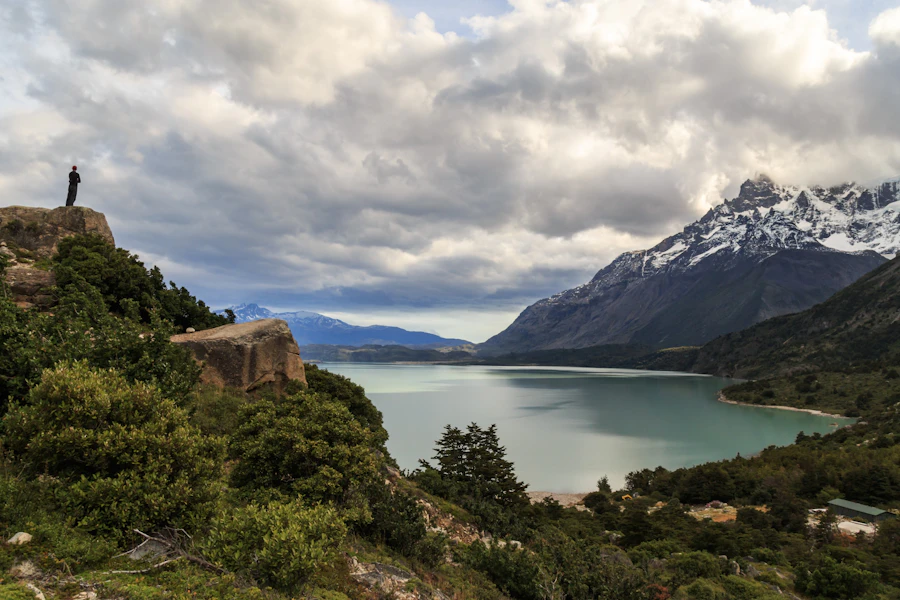
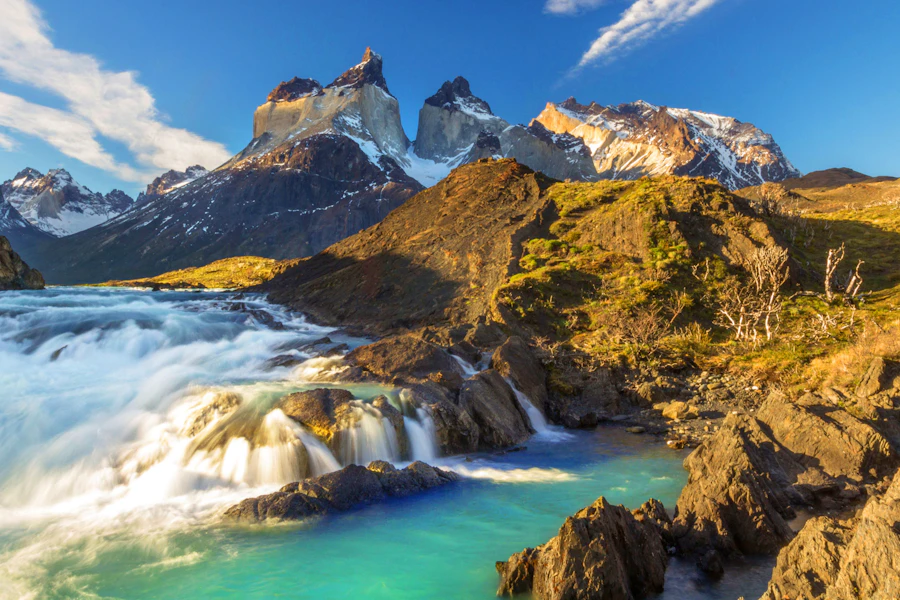
Hiking is still the heart of Torres del Paine. What separates this national park is the amount of variety packed into a relatively compact landscape: lenga and coigue forest, tawny steppe, glacial lakes, granite towers, and vast rivers of ice can all turn up over the course of a trek.
The W Trek is the most popular hiking trip, connecting the four most significant highlights of Torres del Paine into one route: Grey Glacier, the French Valley, Los Cuernos, and the Base of the Towers. For more ambitious travelers with more time, the O Circuit forms a complete loop around the Paine Massif and ventures into the much lonelier and wilder-feeling northern part of the park. As original pioneers of both these hikes in the 1980s, we have been taking travelers into this country since long before Patagonia became a fixture on anyone’s hiking bucket list—and we still think trekking is the best way to experience it.
- Base of the Towers: A demanding full-day hike. On MT Sobek’s W Trek, the day covers about 11.5 miles with 3,400 feet of climbing and descent.
- French Valley: One of the great interior valleys of the W, enclosed by an extraordinary formation of granite peaks.
- Los Cuernos: The trail skirts Lago Nordenskjold beneath the unmistakable dark-capped Horns of Paine.
- Grey Glacier: Reach it as part of the W Trek or combine hiking with a boat journey across Lago Grey.
- O Circuit: The full circuit includes the W plus the park’s more remote northern section including a crossing of John Gardner Pass, with one-of-a-kind views of Grey Glacier.
- Shorter hikes: Don’t assume you need to commit to the W. Laguna Azul, Salto Grande, the Pingo River, and other trails deliver terrific half- and full-day outings with fewer people.


Kayaking
Kayaking puts you astonishingly close to the glacial landscape of Torres del Paine. Instead of looking down at its lakes and rivers from a trail, you’re sitting almost level with the water, with the Paine Massif rising behind you and ice flowing at a glacial pace (literally) through the landscape ahead. Grey Lake is the marquee place to kayak, where guided outings paddle among sculpted icebergs calved from Grey Glacier. The Serrano River offers a different experience altogether—moving water, open Patagonian country and broad views back toward the mountains. Wind is always part of the equation with being on the water in Patagonia, so routes and time on the water can change; that’s a major reason we recommend going with experienced local guides who know how to read and adjust to the conditions.
- Grey Lake: Paddle on the icy lake below Grey Glacier, one of the park’s defining landscapes.
- Iceberg viewing: Wind and currents carry calved icebergs across the lake, creating an ever-changing water environment.
- Serrano River: Guided kayaking trips explore sections of the river south of the park, with views toward the Paine Massif and surrounding peaks.

Wildlife Viewing
One mistake we see first-time visitors to Torres del Paine make is spending the entire trip staring up at the mountains, and missing out on some of the highlights lower down.
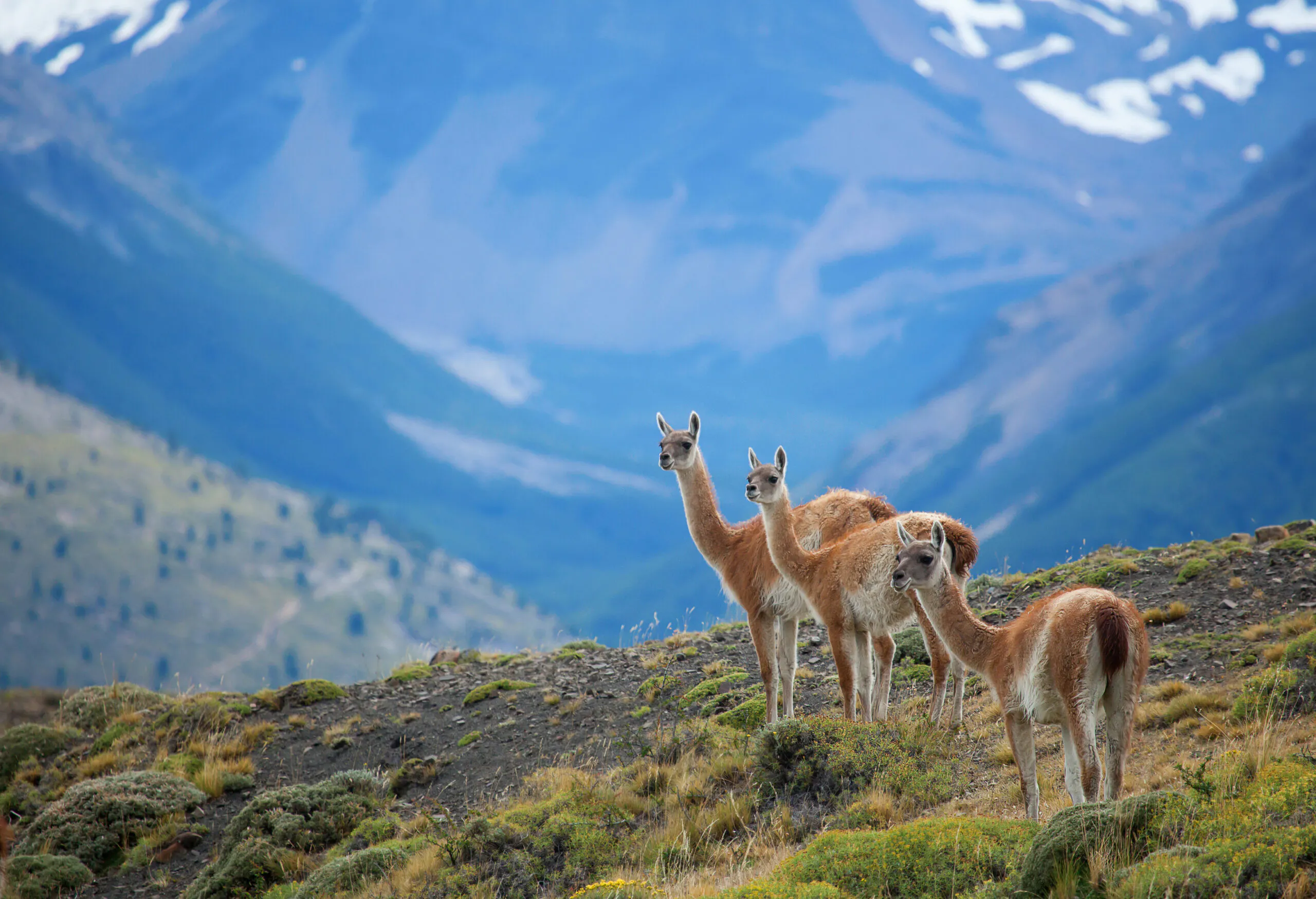
Guanacos are the park’s most iconic large mammals, often seen grazing in open country. Look a bit higher and you may find Andean condors circling on the thermals. Rheas, foxes, and an impressive assortment of birdlife (including the classic, red-headed Magellanic woodpecker) inhabit the park as well. Torres del Paine is also one of South America’s better-known places for pumas, although sightings are relatively rare. MT Sobek itineraries regularly encounter guanacos, rheas, and condors while hiking, with the possibility of seeing pumas in the right country.
- Guanacos: Similar to llamas and frequently encountered on the open Patagonian steppe.
- Andean condors: Watch the ridgelines and thermals for these spectacular birds that are listed as “vulnerable” by the International Union for Conservation of Nature.
- Pumas: Present in the park, but genuinely wild. Dedicated wildlife outings give you a better chance to see them than hoping to stumble across one during a trek.
- Huemul: The endangered South Andean deer inhabits Patagonia; quieter forested areas such as the Pingo Valley are worth exploring.
- Birdlife: Depending on habitat, look for rheas, Magellanic woodpeckers, austral parakeets, eagles, owls, and a variety of waterbirds. MT Sobek’s Pingo River hikes, for example, focus on this quieter side of the park.


Horseback Riding & Estancia Life
Like many places, Patagonia wasn’t originally explored on foot with trekking poles. It was horse country, and in many places it still is.
Spending time with baqueanos, Patagonia’s traditional horsemen, provides enriching context for everything you’ve been walking through. Riding across the steppe allows you to cover ground differently, but the better reason to do it is cultural. Horses, sheep ranches, and isolated estancias shaped life here for generations, and still do.
- Horseback riding: Available around Torres del Paine and at estancias in the surrounding region.
- Baqueano tradition: Local horsemen have deep practical knowledge of Patagonia’s terrain, livestock, and notoriously unpredictable weather.
- Estancias: Working ranches offer a glimpse into the pastoral history of southern Chile.
- Food: A traditional asado, often centered around Patagonian lamb cooked slowly over an open fire, is worth trying.
- Best combination: Pair a strenuous trekking itinerary with a night or two at an estancia rather than treating the cultural experience as a seperate adventure.


Adventure Cruising Through the Patagonian Fjords
If Torres del Paine is part of a longer Patagonia trip, consider connecting the mountains with the sea. Southern Patagonia is an astonishing labyrinth of channels, islands and fjords, much of it unreachable by vehicle.
Small-ship adventure cruises can carry you south through this maritime wilderness via the Strait of Magellan, Tierra del Fuego, and Cape Horn. It’s a completely different Patagonia—much more open water than land, with glaciers spilling toward narrow channels and excursions facilitated by Zodiac and on foot. MT Sobek’s Patagonia to the Sea itinerary combines trekking in Torres del Paine with a multi-day voyage through this maze of remote waterways.
- Landscape: Expect fjords, subantarctic forests, glaciers, islands, and mountains rising directly from the water.
- Excursions: Adventure cruises typically mix navigation with Zodiac outings and shorter hikes.
- Cape Horn: Some itineraries continue all the way to the legendary headland at the southern end of the Tierra del Fuego archipelago.
- Best for: Travelers with roughly two weeks who want to experience Patagonia beyond its marquee hiking trails.
- Why combine the two: Torres del Paine shows you land-based Patagonia; the fjords reveal the rugged, maritime world beyond it.
When to Go
There isn’t necessarily a bad month in Torres del Paine, but the timing of your visit has a tremendous impact on what you can do. For most people, and especially anyone planning to hike or combine hiking with kayaking or other activities, the best season is November through March—late spring, summer, and early fall in the Southern Hemisphere. This is when daylight is abundant, temperatures are most moderate, and the park’s backcountry infrastructure is fully operational. December through February is the peak season; November and March are colder with shorter days but have fewer people.
One thing we’ve learned about Patagonia weather is to be ready for anything. Torres del Paine can dish up beating sunshine, sleet, sideways rain, snow, and ferocious winds all in an afternoon. Think of the descriptions below as the character of each month, not a guarantee of what you’ll encounter.
January: Peak Summer
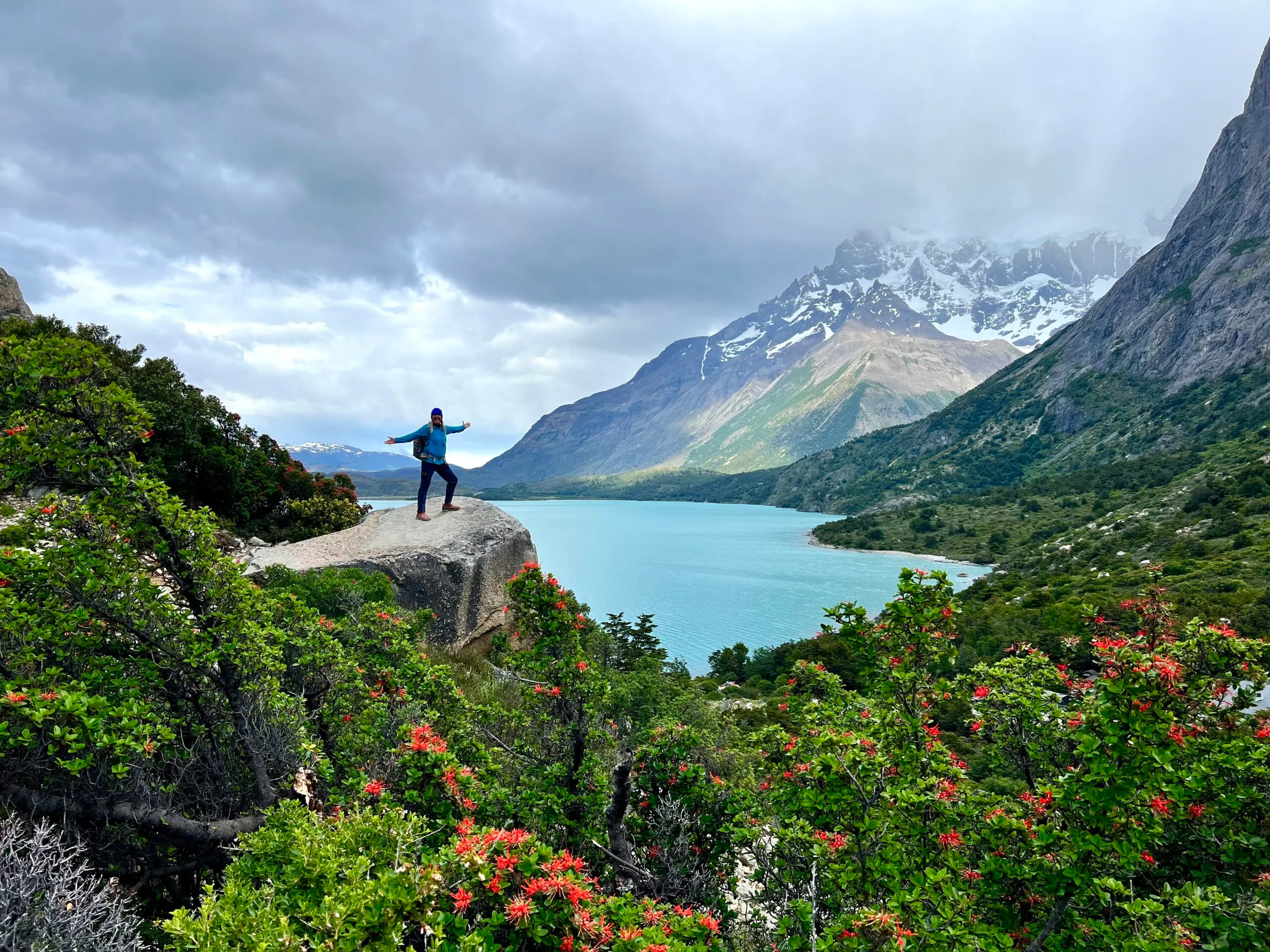
In January, days are exceptionally long, temperatures are among the warmest of the year, and every hiking opportunity is in play. This is prime time for the W Trek, O Circuit, Towers of Paine, French Valley, Grey Glacier, kayaking, and horseback riding.
Downside: January is busy, accommodations and refugios (mountain huts) are competitive and require advance planning, and the Patagonian wind can be extreme.
Best for: Multi-day treks, hotel-based hiking, adventure cruises and first-time visitors looking for the broadest range of activity options.
February: January Continued

Most of January’s summertime advantages continue into February: long days, comparatively mild temperatures and full access to the park’s signature trails. Summer crowds are still there, but by late in the month you’ll begin to feel the effects of autumn creeping in: chillier mornings and quieter trails. February is an excellent month for travelers trying to fit a lot into one trip—long hiking days combined with kayaking, wildlife viewing, and time around Grey Glacier.
Downside: February can feel busy, especially early to mid month; accommodations and refugios remain competitive and require advance planning, and the summer Patagonian winds are at their peak.
Best for: The W Trek and O Circuit, active hiking and multi-adventure trips, and travelers prioritizing trail access.
March: A Sweet Spot
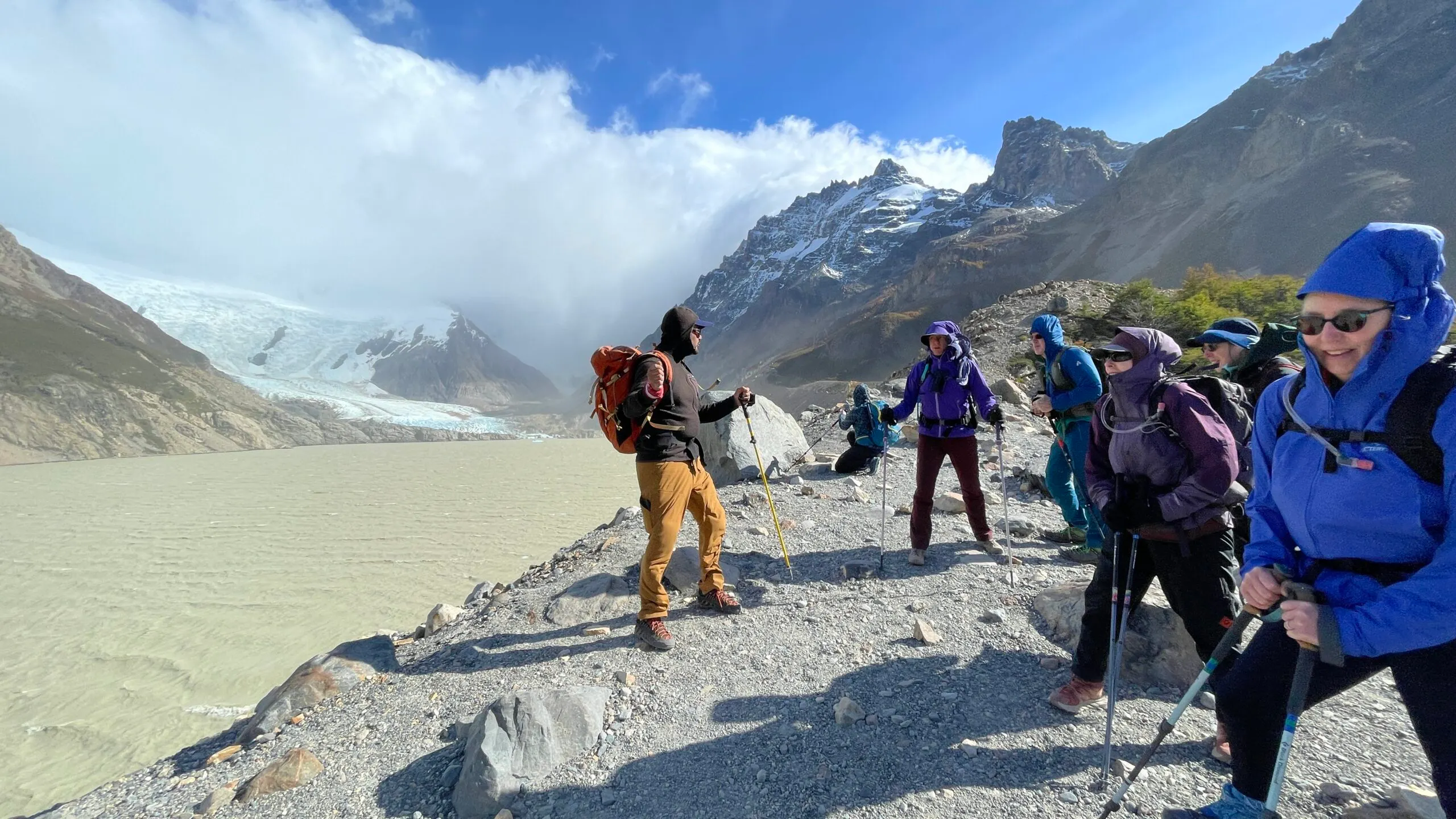
March is a sweet spot in Torres del Paine. The summer crowds begin to thin, the Patagonian sun shines long enough for serious hiking, and the first autumn tones begin slowly creeping into the landscape. Temperatures cool, particularly mornings and evenings, but that’s a welcome trade for quieter trails. For hardy or more experienced travelers who don’t need the absolute warmest conditions, March is offers unique advantages.
Downside: Cooler temperatures, shorter days, and an increased chance of snow and weather-related trail disruptions.
Best for: Hiking on quieter trails, photography, wildlife, and early autumn color.
April: Autumn in Patagonia
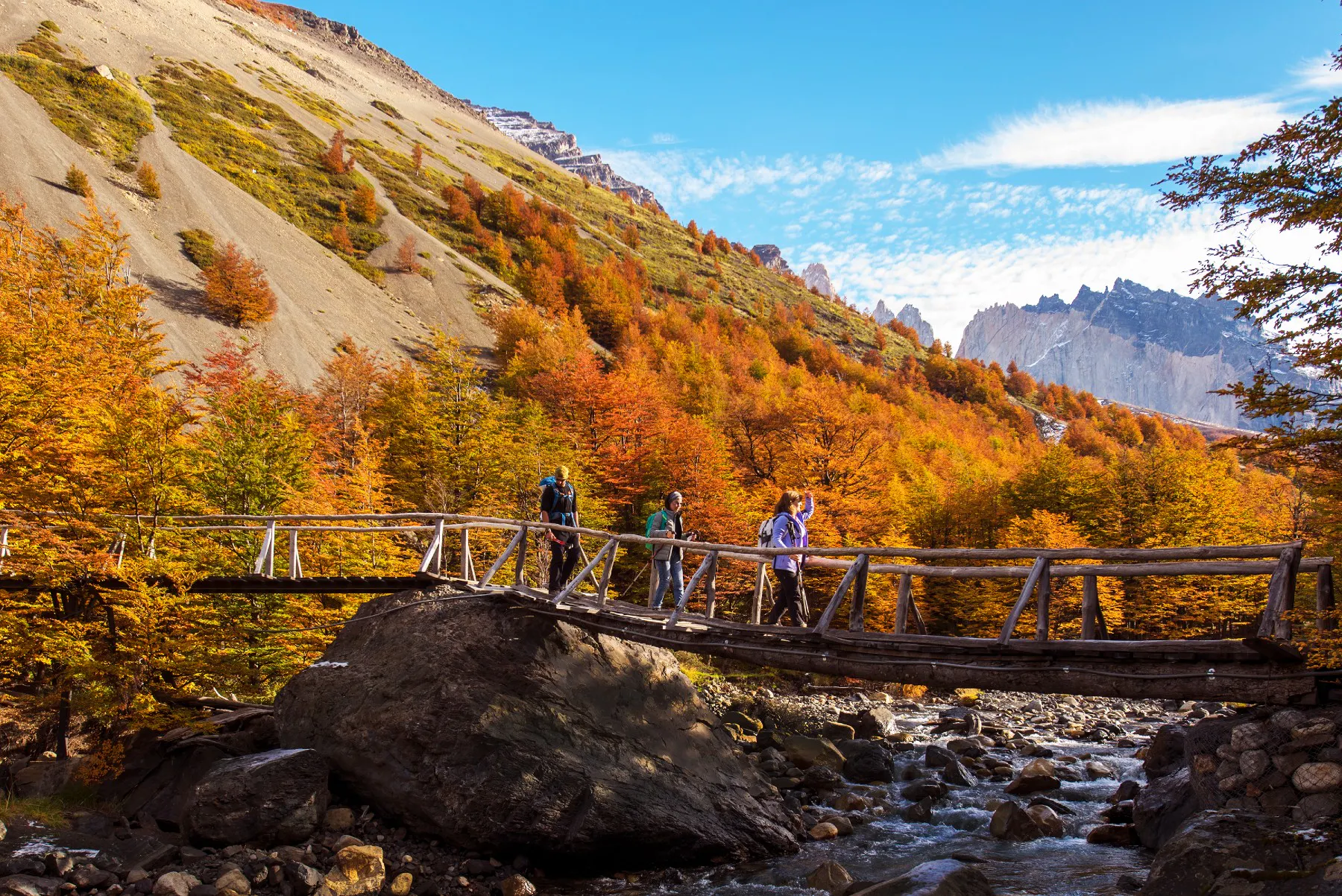
By April, Torres del Paine has noticeably lunged toward the coming winter, and fall colors are in their prime. Lenga forests turn yellow, orange, and red; snow begins dusting the high country; and the light can be especially good for photography. There are substantially fewer visitors, but there’s a tradeoff for that solitude: shorter days, colder temperatures, and some summer accommodations and services begin closing down. Anyone thinking about a multi-day trek this late in the fall should verify trail, refugio, and public transportation status rather than assuming everything is open.
Downside: Colder, wetter weather; shorter days; and reduced services as the trekking season winds down.
Best for: Fall color, photography, wildlife, and travelers comfortable with cooler, less predictable conditions.
May: Winter Arrives
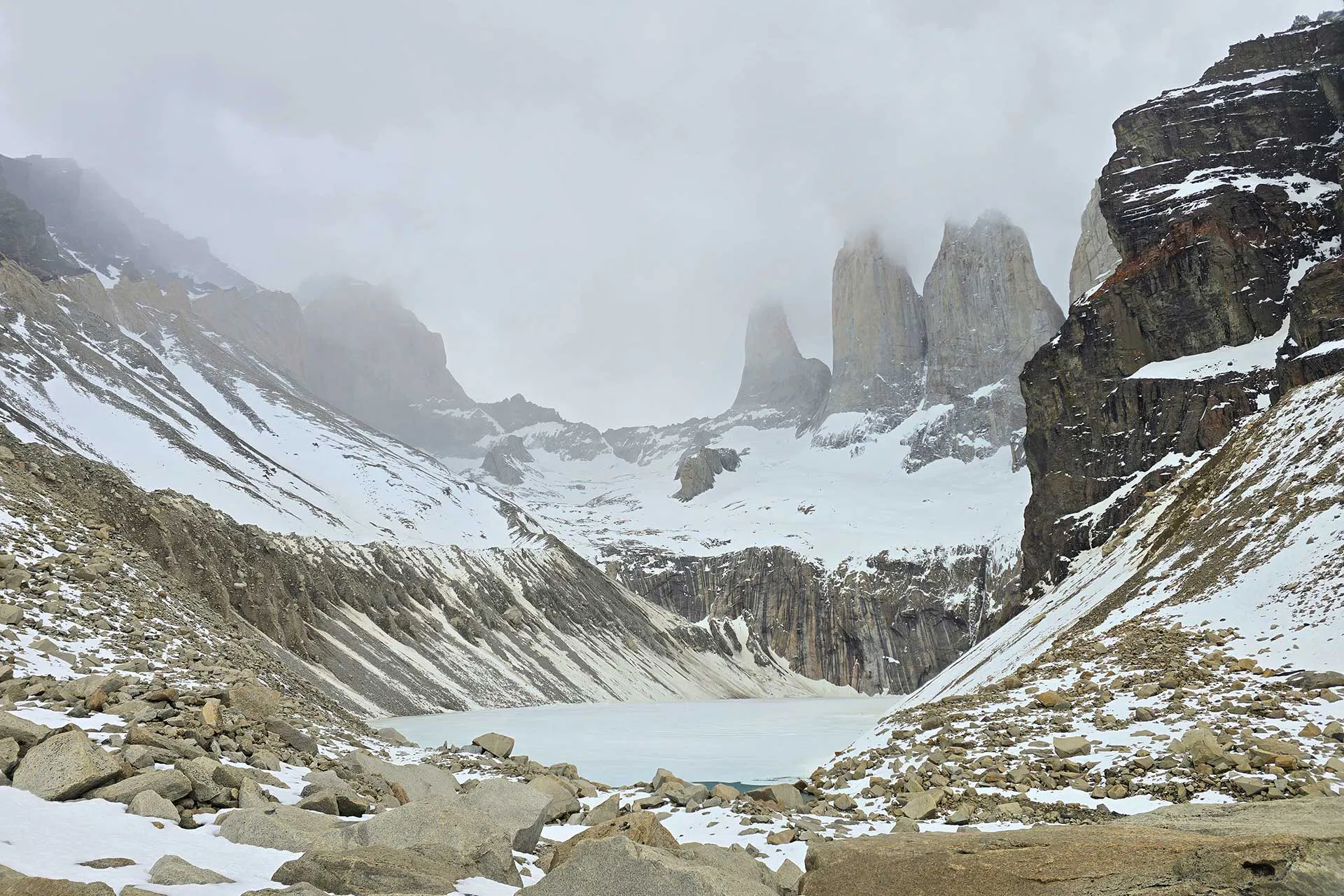
May is like the hinge between autumn and winter. Snow becomes increasingly likely in the mountains, nights turn cold, and most of the park’s trekking infrastructure is shut down. This is no longer a time we’d recommend for a conventional W or O Circuit trip. In fact, CONAF’s current regulations close the O Circuit from May onward for the winter season, with reopening based on spring conditions. What you gain is a completely different park—raw, peaceful and mostly empty.
Downside: Cold weather, short days, frequent snow, and substantial reductions in trail access, lodging, and park services.
Best for: Off-season travelers, photography, and limited excursions planned around present conditions.
June: Winter Deepens
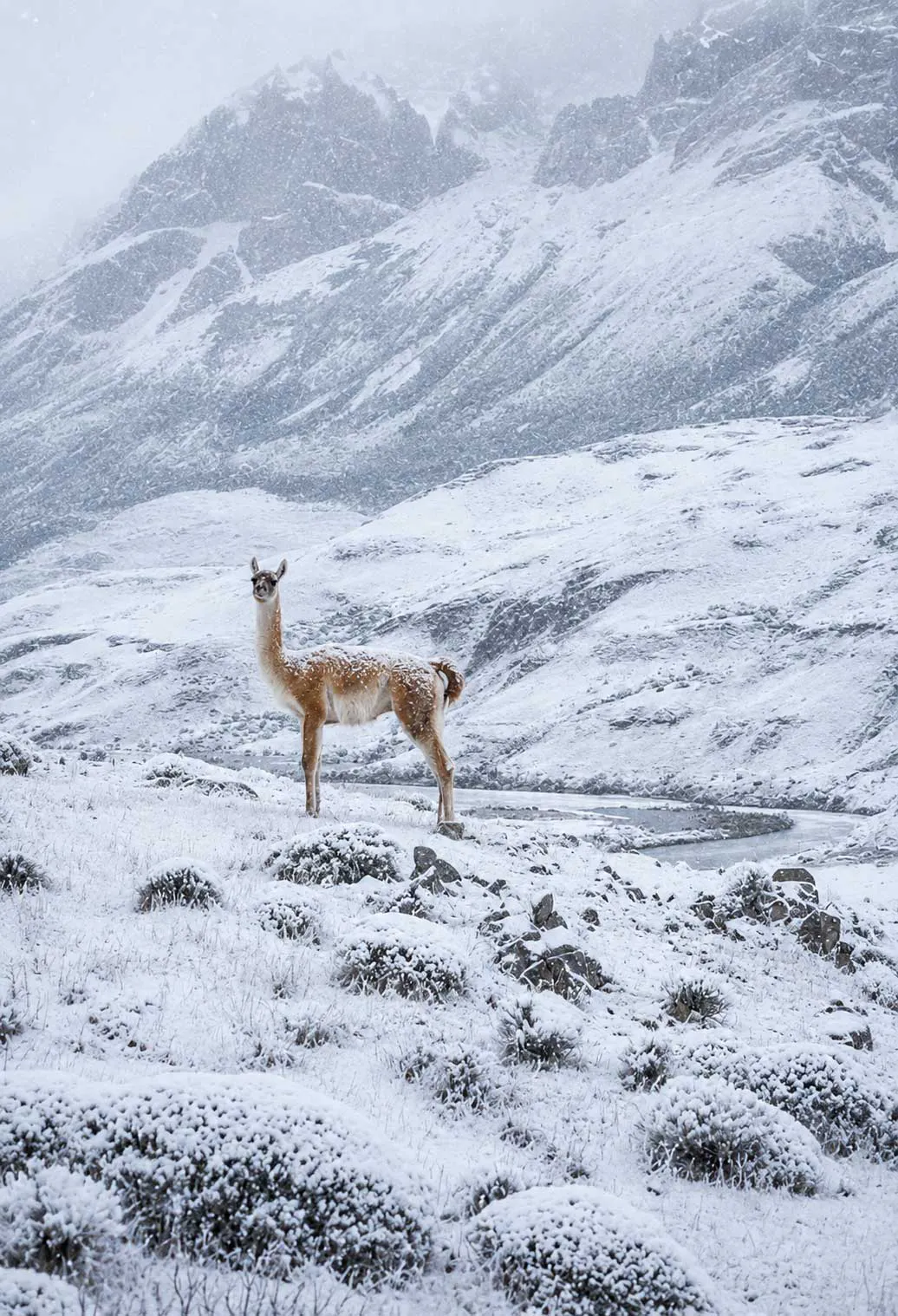
June ushers in even shorter days, colder temperatures, and snow to Torres del Paine. Access to the mountains changes dramatically—services such as markets, restaurants, trail access, refugios and campsites are limited; and wilderness travel requires expert winter skills and experience. Some trekking routes may operate under winter regulations, including a requirement to travel with authorized mountain guides.
Downside: Very short days, freezing temperatures, snow and ice, and limited access to many trails and services.
Best for: Guided winter experiences, snow-covered landscapes, and solitude.
July: Midwinter
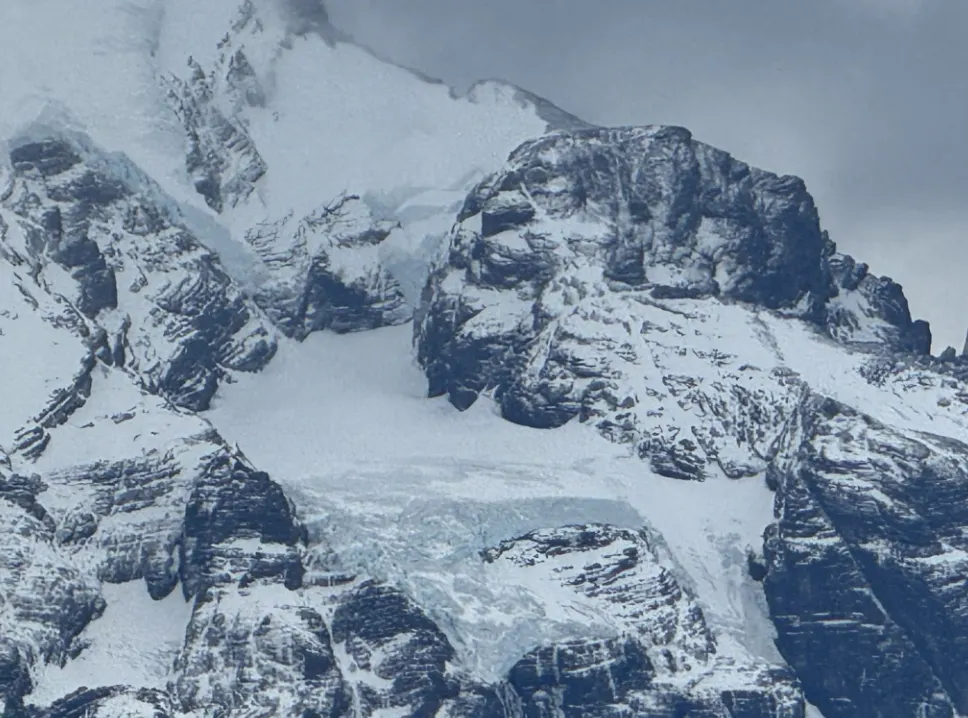
July is the coldest, darkest month of the Torres del Paine calendar. Expect freezing temperatures, snow, and considerably more complicated trail logistics. Many park services aren’t operating and the O Circuit is closed. It can feel a little bit like a ghost town. This is a season for expert wilderness travelers and mountaineers. On a clear winter morning though, the scenery can be stunning—rime-coated granite, low-angle light and barely another traveler in sight.
Downside: Midwinter brings freezing temperatures, very short days, snow and ice, and major limitations on trails, lodging, and services.
Best for: Experienced winter travelers and guided trips specifically designed around winter conditions.
August: Winter Begins to Recede
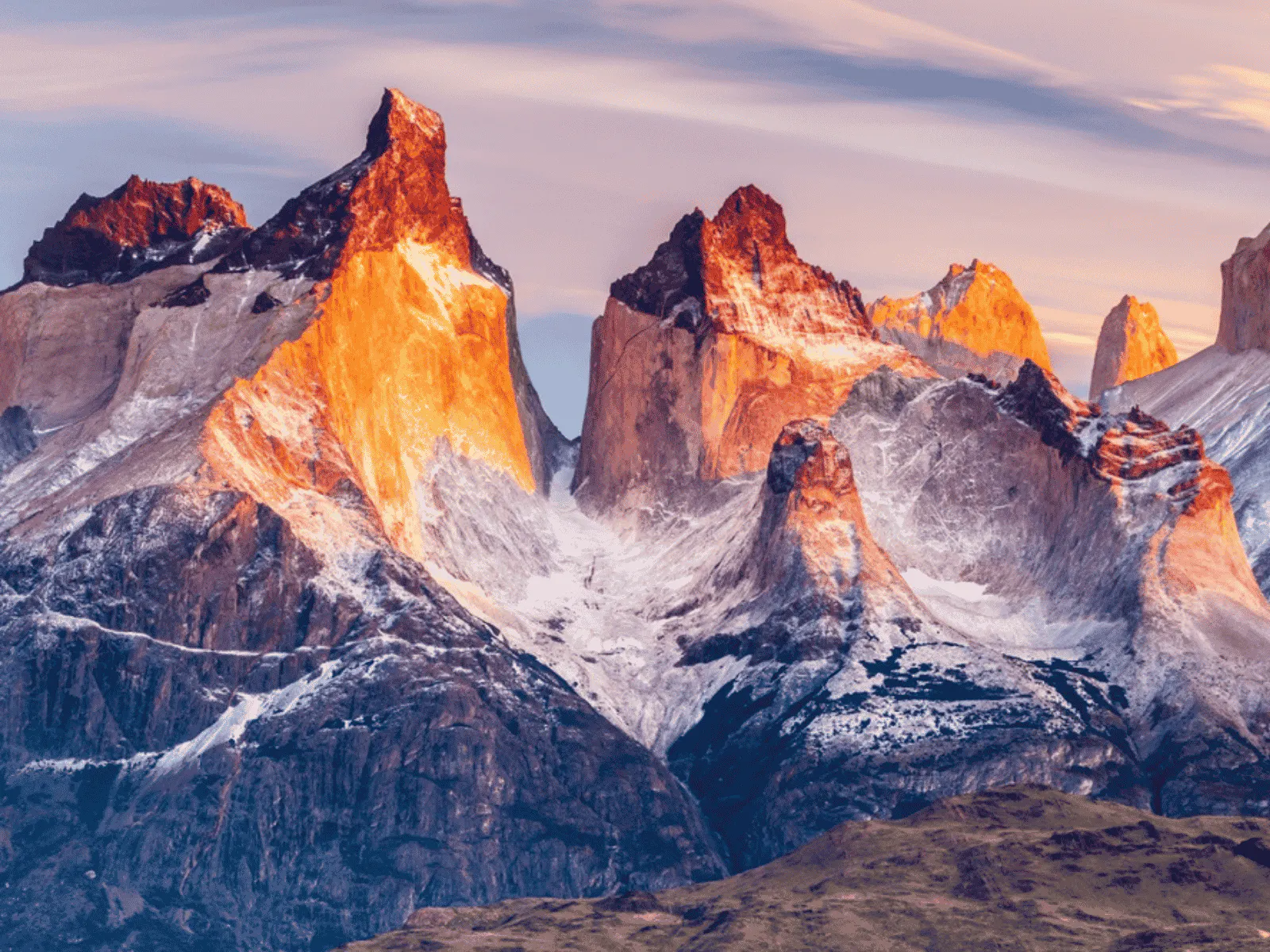
August is still deep in the Patagonian winter, but the days are growing longer. Snow and ice remain, and access to the high country is still restricted. CONAF advises travelers during winter conditions to be prepared for snow and ice on routes such as the W and Base Torres and to follow special winter regulations. It’s also an appealing month for photographers and repeat Patagonia visitors, but not one we’d recommend if the goal is to experience the park’s classic trekking routes.
Downside: Winter conditions persist, with cold temperatures, snow and ice, limited services, and restricted access to many trails.
Best for: Winter scenery, quiet travel, and guided wilderness excursions.
September: Patagonia Begins to Wake Up

September brings the first hints of spring. Snow can linger, cold snaps remain entirely possible and even likely, and portions of the park’s trail network typically still operate under seasonal restrictions. However, daylight is returning quickly, and the landscape starts making the turn toward another trekking season.
Downside: Early spring remains cold and unpredictable, with lingering snow, limited services, and many trails still inaccessible.
Best for: Adventurous shoulder-season travelers who value solitude over guaranteed access.
October: Spring in Patagonia
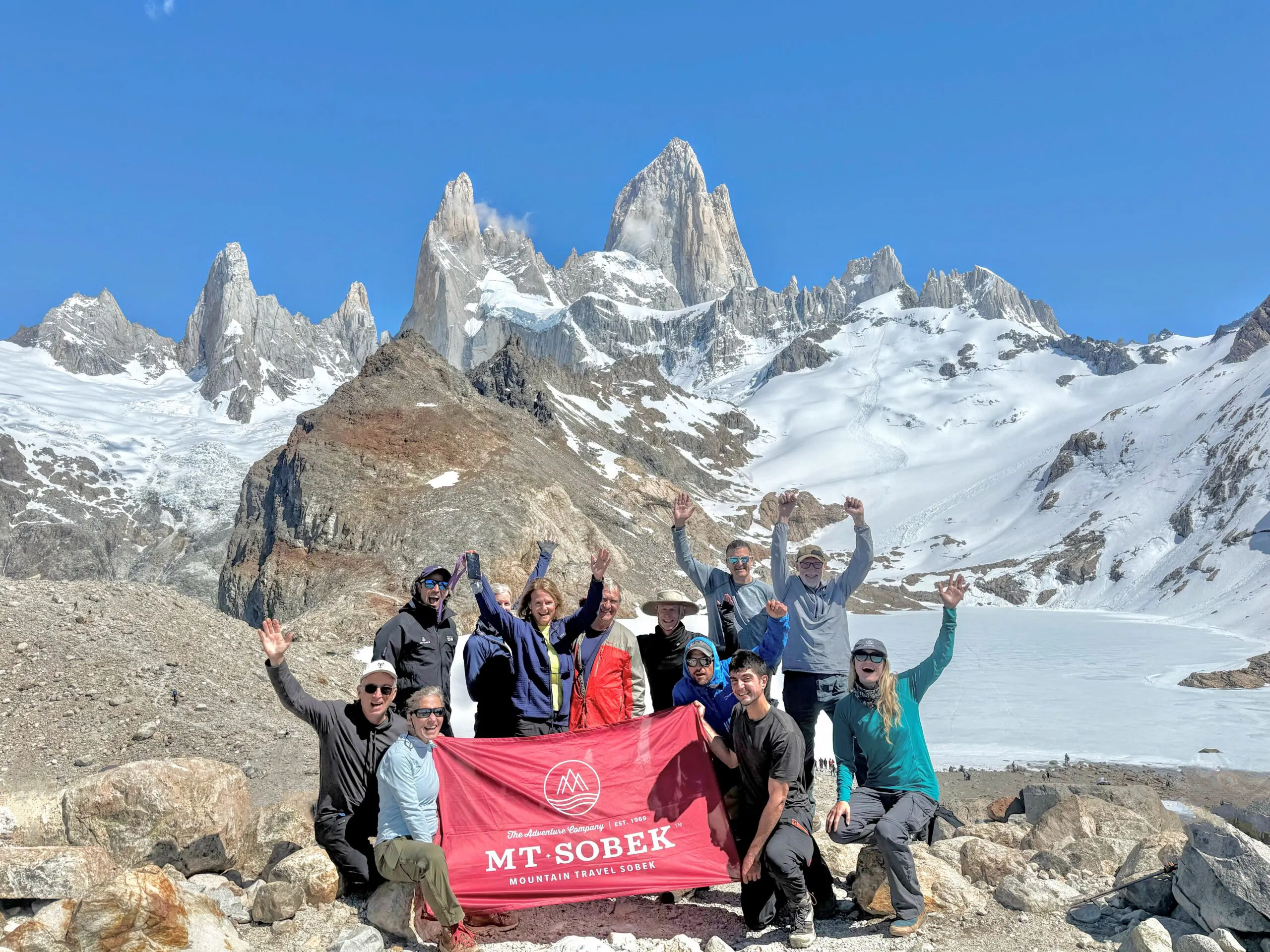
October is when Torres del Paine starts feeling like a true hiking destination again. Days become significantly longer, temperatures rise, and seasonal services like restaurants, refugios, and campsites start opening back up, although snow can persist at elevation. October can be an excellent time for wildlife, spring landscapes, and quieter hiking.
Downside: Spring weather is very unpredictable, with strong winds, lingering snow at elevation, and some seasonal services still ramping up.
Best for: Spring scenery, wildlife, fewer hikers, and early-season trekking.
November: Summer Arrives
November is another of our favorite months in Torres del Paine. Long days have returned, the primary trekking season is underway, and the park hasn’t yet reached the December and January peak visitation. It’s excellent for the W Trek, the Towers, Grey Glacier, kayaking, horseback riding, and wildlife viewing.
Downside: Strong spring winds and rapidly changing weather can make hiking conditions unpredictable, even as the main trekking season gets underway.
Best for: Serious hiking, multi-adventure trips, and avoiding the absolute peak of summer visitation.
December: Long Summer Days

December is magnificent. Southern Hemisphere summer has arrived, daylight stretches deep into the evening and essentially the entire slate of Torres del Paine adventures is available. The extra daylight allows for long hiking days, giving trekkers hours of usable light in reserve so adventures can feel less rushed. It’s also peak season. Refugios, campsites, and other desirable lodging can fill well ahead of departure, and popular stretches of trail will have company.
Downside: Peak-season crowds, higher lodging demand, and strong winds can make popular trails feel busy and/or exposed.
Best for: W and O Circuit trekking, family trips, kayaking, horseback riding, and travelers who want the most options.
How to Get There
Torres del Paine feels remote, but getting to the park is more straightforward than its location at the southern end of Patagonia might seem. For most international travelers, the journey follows the same basic pattern: fly to Santiago, continue south to Puerto Natales or Punta Arenas, then travel overland into Torres del Paine National Park. Puerto Natales is the principal gateway and the place where most travelers spend a night before or after their trek.
The Easiest Way to Get There
For most US travelers, the simplest route is:
United States → Santiago → Puerto Natales (MT Sobek trips starting point) → Torres del Paine
If flights to Puerto Natales aren’t available or don’t fit your schedule, use:
United States → Santiago → Punta Arenas → Puerto Natales (MT Sobek trips starting point) → Torres del Paine

Flying to Puerto Natales (Best Option)
The most direct option is Teniente Julio Gallardo Airport (PNT), just outside Puerto Natales. Direct flights from Santiago operate primarily during the main travel season (November through March), and the flight takes roughly 3.5 hours. The airport itself is only about 15 minutes from central Puerto Natales, making this by far the simplest arrival.
From Puerto Natales, you’re close—but not quite at Torres del Paine National Park. Depending on the entrance and route used, expect roughly 1.5 to 2 hours by road to reach the park.
Flying to Punta Arenas (Alternative)
If flights into Puerto Natales don’t line up with your dates, Presidente Carlos Ibañez del Campo International Airport (PUQ) in Punta Arenas is a workable alternative. It has more frequent air service throughout the year. From Punta Arenas, it’s approximately 155 miles (250 kilometers) and 3 hours by road to Puerto Natales, with scheduled buses as well as private transfers and rental vehicles available.
Puerto Natales to Torres del Paine
Regular buses travel from Puerto Natales’ bus terminal to Torres del Paine, generally taking around 2 hours to reach the main park entrances. Depending on the service, stops can include Laguna Amarga, Pudeto and other locations within the park. Current park information confirms regular bus service between Puerto Natales and Torres del Paine, but schedules vary seasonally and should be checked before departure.
Can You Drive to Torres del Paine?
Yes, and a rental car can be a great option if you’re exploring the park independently rather than hiking a point-to-point itinerary or joining a guided tour. Roads connect Puerto Natales with the park’s Serrano, Sarmiento, and Laguna Amarga entrances. Some roads are paved while others are gravel, and Patagonia’s wind and fast-changing weather deserve considerably more respect than the relatively modest distances on the map suggest.
Getting There from Argentina
Torres del Paine is also commonly combined with El Calafate and Los Glaciares National Park in Argentina. The two destinations look close on a map, but you’re crossing an international border and traveling through a sparsely populated part of Patagonia, so it isn’t a quick hop between neighboring parks. Travelers typically make the overland journey between El Calafate and Puerto Natales or Torres del Paine by bus, private transfer, or organized tour, allowing extra time for immigration and border formalities.
Where to Stay
Where you stay in Torres del Paine is important. The park is enormous, trailheads are spread out across different sections, and staying in a less-than-ideal location can mean spending hours each day in a vehicle. Your choices range from luxury wilderness lodges and traditional hotels to domes, refugios, and campsites directly along the W Trek and O Circuit.
Luxury Lodges
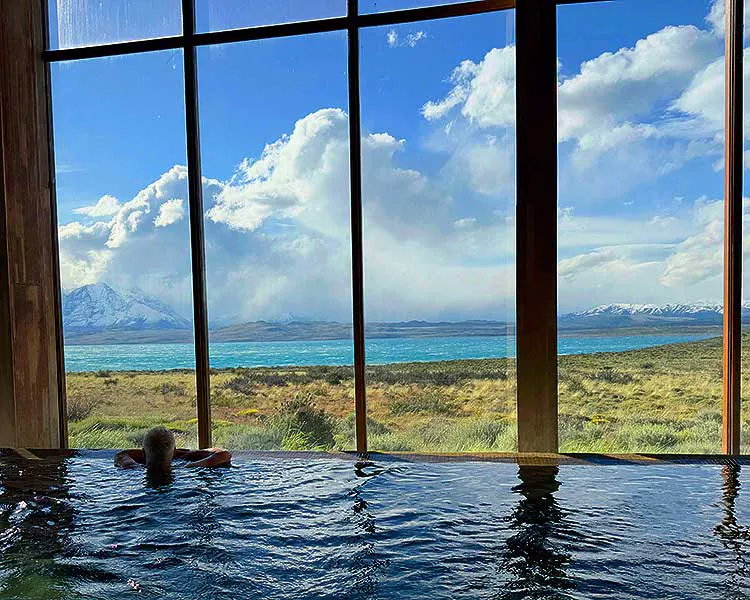
For the most comfortable way to experience Torres del Paine, you can book a variety of luxury lodges that surround the park. MT Sobek uses Tierra Patagonia Hotel & Spa, a striking hotel overlooking Lake Sarmiento and the Paine Massif. Rather than trekking from one overnight stop to another, you can stay here for three nights and head into the park for day hikes, returning each evening to spacious rooms, gourmet meals, an indoor pool, sauna, and spa. This lodge is the centerpiece of MT Sobek’s Premier Lodging itinerary and an upgraded experience from accommodations on the W or O Circuit.
Full-Service Park Hotels
If you want to stay close to Torres del Paine’s major sights and still enjoy private rooms and hotel amenities, there are several strategically located properties that we use on our Torres del Paine hiking tours.
Hotel Las Torres sits in the eastern part of the park at the gateway to the Ascencio Valley and the Base Torres hike. Hotel Lago Grey, on the opposite side of the park, overlooks Grey Lake and provides an excellent base for exploring Grey Glacier and the park’s western landscapes. Rio Serrano Hotel + Spa sits on the Serrano River just outside the park, combining easy park access with a pool, sauna, gym, and expansive views of the Paine Massif.


Refugios
Refugios are simple backcountry lodges positioned along Torres del Paine’s trekking routes. Expect bunk-style rooms, shared bathrooms, and a lively atmosphere of hikers coming in off the trail. Their advantage is location. MT Sobek uses refugios beside Lake Pehoe, near Grey Glacier, and deep on the remote northern side of the O Circuit. On some itineraries, MT Sobek also secures upgraded rooms; for example, our Ultimate Patagonia trip uses double dormitory-style rooms at Paine Grande rather than the larger communal rooms commonly used there.
Wilderness Cabins
Cabañas de los Cuernos occupies one of the most spectacular overnight locations on the W Route, directly beneath the unmistakable Cuernos del Paine. There are just eight small cabins, giving trekkers a real bed and more privacy than a refugio while still sleeping in the heart of the park. It’s a particularly memorable stop because you haven’t left the wilderness to reach it—you hike directly to your accommodation. MT Sobek utilizes these cabins on three itineraries: the W Trek, the O Circuit, and Ultimate Patagonia.
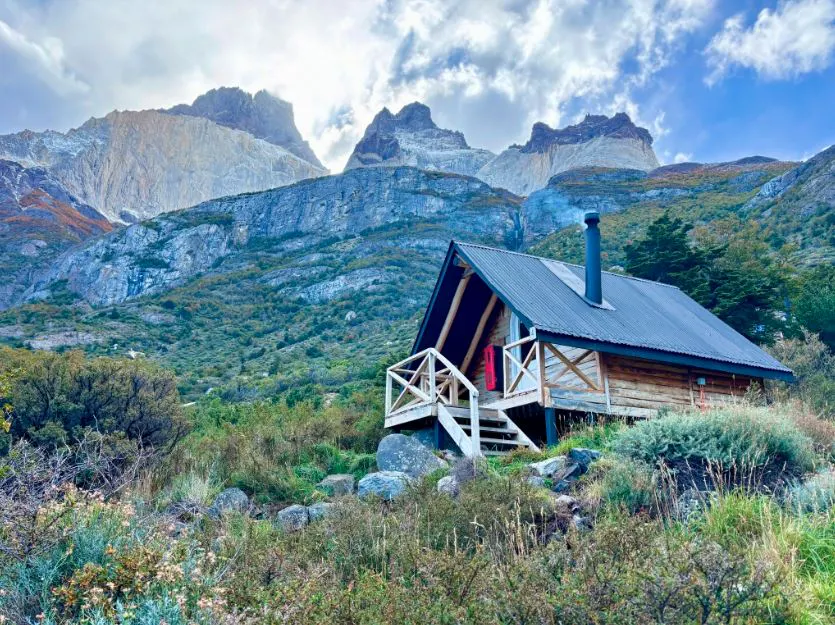

Backcountry Campsites
Completing the entire O Circuit means going around the remote backside of the Paine Massif, where camping becomes a mandatory part of the adventure. MT Sobek uses Camp Seron, Camp Los Perros, and Camp Chileno. Seron and Chileno feature large two-person tents raised on platforms, while Los Perros is considerably more primitive and remote. Sleeping bags and pads are provided, and MT Sobek’s porter team handles meals and logistical support along the route.
Campsites on the O Circuit
Camp Seron — first wilderness camp on the O Circuit; raised-platform tents and hot showers.
Camp Los Perros — the most remote overnight, deep in the forest before the John Gardner Pass; basic tents, shared bathrooms, and cold showers.
Camp Chileno — raised-platform tents in the Ascencio Valley, strategically located for an early-morning hike to see sunrise at the Base of the Towers.
MT Sobek trip using all three: Chile Patagonia Torres del Paine O Circuit Trek
FAQs About Hiking Torres del Paine
The best guided hiking tours in Torres del Paine include the W Trek, which links Grey Glacier, the French Valley, and Base Torres; and the more challenging O Circuit, an 8- to 10-day trek that loops around the entire Paine Massif. You can also enjoy the W Trek as part of a longer Patagonia adventure with more upscale lodging than refugios. For travelers who want to combine Chilean Patagonia with Argentine Patagonia, guided trips can also pair the park’s signature hikes with Fitz Roy and Los Glaciares National Park—there are options that include premier lodging as well as exploration of the Patagonian fjords on an adventure cruise.
The best time to visit Torres del Paine is October through April, during the warmer months of the Southern Hemisphere. For hiking, December through March has the longest days, mildest temperatures, and the most complete access to trails and services, although it is also the busiest season. October–November and March–April are excellent shoulder-season alternatives with fewer visitors, though weather can be colder and less predictable.
A Torres del Paine hiking tour combines often long days on premier national park trails with some of Patagonia’s most impressive scenery: towering granite peaks, deep turquoise lakes, blocky glaciers, deciduous forests, and wide windswept valleys. Depending on the itinerary you choose, you might hike the W Trek over 5 to 7 days, complete the more demanding O Circuit over 8 to 10 days, or stay in lodges and enjoy day hikes to regional highlights such as Base Torres, the French Valley, and Grey Glacier.
Expect variable weather that can change quickly, fierce winds, rocky and sometimes steep terrain, and hiking days that can last up to eight hours. Multi-day treks typically use a combination of refugios and campsites, while lodge-based tours offer more comfortable accommodations between hikes.
Yes. MT Sobek offers private and fully custom adventures in Torres del Paine, with itineraries tailored to your group’s preferred dates, hiking difficulty, accommodations, and interests. Options can range from a private W Trek to a customized Patagonia itinerary combining Torres del Paine with destinations such as Fitz Roy and Los Glaciares National Park in Argentina, or even an adventure cruise in the Patagonia fjords.
Hiking in Torres del Paine is unique because several of Patagonia’s signature landscapes come together in one national park. Hiking trails pass beneath the granite spires of the Paine Massif, along the shores of turquoise lakes, through deep lenga forests, across open valleys, and near massive tumbling glaciers. Many routes also provide exceptional wildlife viewing, with guanacos and Andean condors commonly seen along the way.
You don’t need technical climbing or mountaineering experience to trek in Torres del Paine, but good fitness and some experience with long day hikes are helpful. Trails such as the W Trek involve rocky, uneven terrain, sustained climbs, strong winds, and hiking days that can last 6 to 8 hours or more. The O Circuit is more demanding and is best suited to hikers comfortable with consecutive full days on the trail and rapidly changing mountain weather.
Pack for rapidly changing Patagonian weather, even during the summer months of December to February. Essentials include broken-in and waterproof hiking shoes or boots, moisture-wicking layers like merino wool or polypropylene, 1 to 2 warm layers like fleece or insulated jacket, waterproof and breathable rain jacket and pants, warm beanie-style hat and gloves, sun protection, a small daypack, and reusable water bottles or a hydration system. Trekking poles are especially useful on the rocky climbs and descents, and avoid cotton clothing, which dries slowly in Torres del Paine’s cool, windy conditions.
For a Torres del Paine hiking trip, it’s best to book 6 to 12 months in advance, especially if you plan to travel during the peak December–February season. Refugios and campsites along the W Trek and O Circuit have limited capacity and popular dates can sell out quickly.
For October–November or March–April, you may have more flexibility, but booking several months ahead is still recommended.
Whether to hike the W Trek or the O Circuit depends on your level of fitness and how much of a wilderness experience you’re looking for. MT Sobek’s Program Director for Latin America, Sharman Fox, says “The W Trek is a great choice for people who want to see the main highlights of Torres del Paine over 5 days of trekking and enjoy a soft bed each night. The O Circuit is for guests looking for the next level of adventure and wanting to explore more remote areas, who don’t mind camping and are invigorated by longer days on the trail.”
Learn More: W Trek or O Circuit: Which is Right For You?
Share Your Torres del Paine Adventure | #mtsobek


Ask an Expert
We want you to have the best adventure, so don’t hesitate to call our expert team of adventure specialists at 800-974-0300 to learn more. Or click the button to use our online contact form.