From Torres del Paine to Cochamo: Searching for Patagonia’s Next Wild Place
How a storm, an empty trail, and a conversation led us to Chile's hidden Cochamo Valley.
For nearly four decades, MT Sobek has explored Patagonia’s most spectacular landscapes, from pioneering treks in Torres del Paine to discovering remote corners that few international travelers have experienced. But as iconic destinations grow in popularity, a new question emerges: where can adventure still feel truly wild, and how do we help protect those places so what we love most about them is not lost.
This is the story of an early morning beneath the Towers of Torres del Paine, where a classic Patagonian snow storm, an empty trail, and a heartfelt conversation eventually lead us hundreds of miles north to the hidden Cochamo Valley and the important search for a new model of adventure travel—one rooted not just in exploration, but in stewardship.
The Storm.
The Patagonian weather was doing what it does best—throwing everything it had at the granite spires of Torres del Paine. After days of relentless snow and wind, with a forecast warning of heavy afternoon downpours and alpine blizzards, we knew our window was slim.
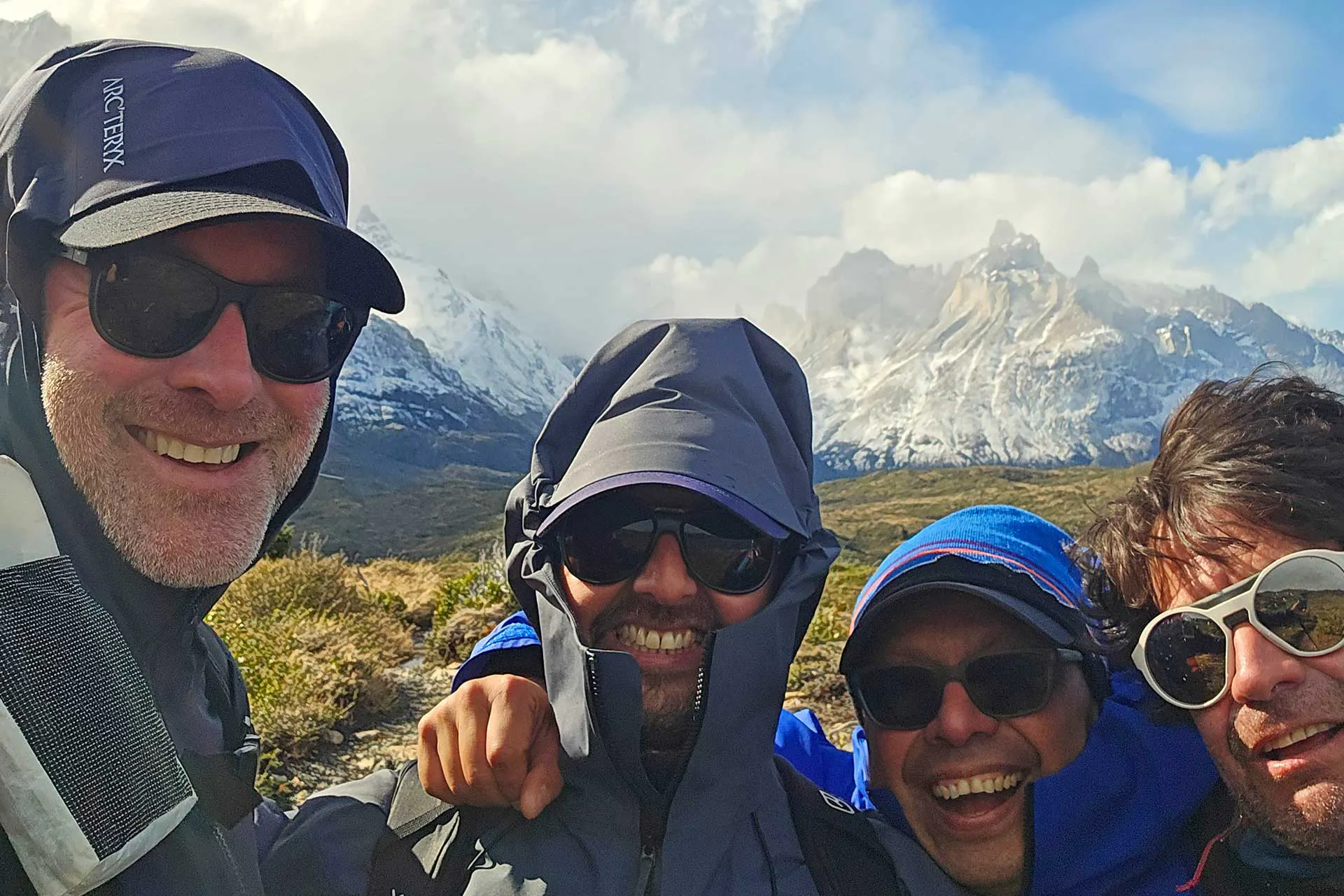
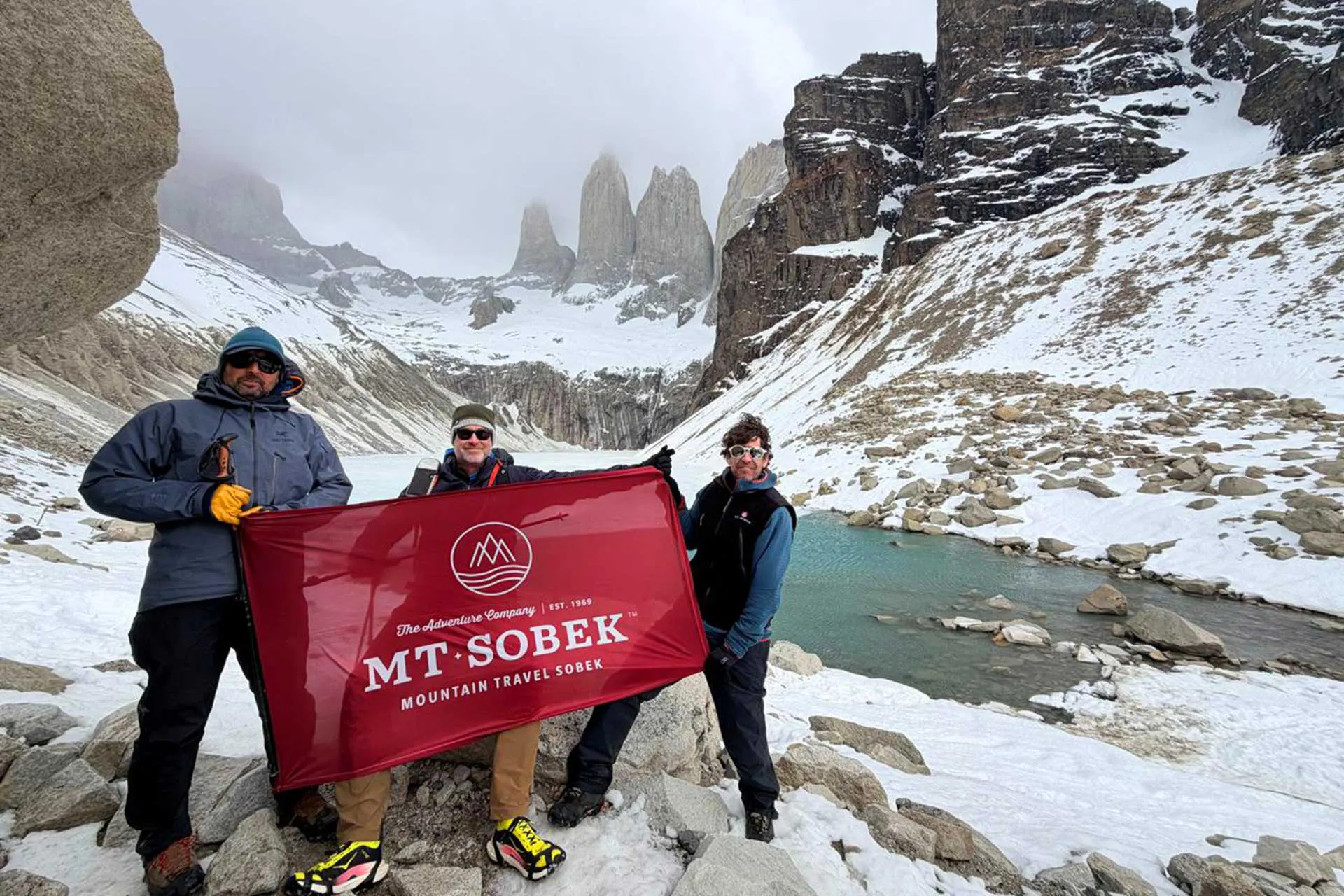
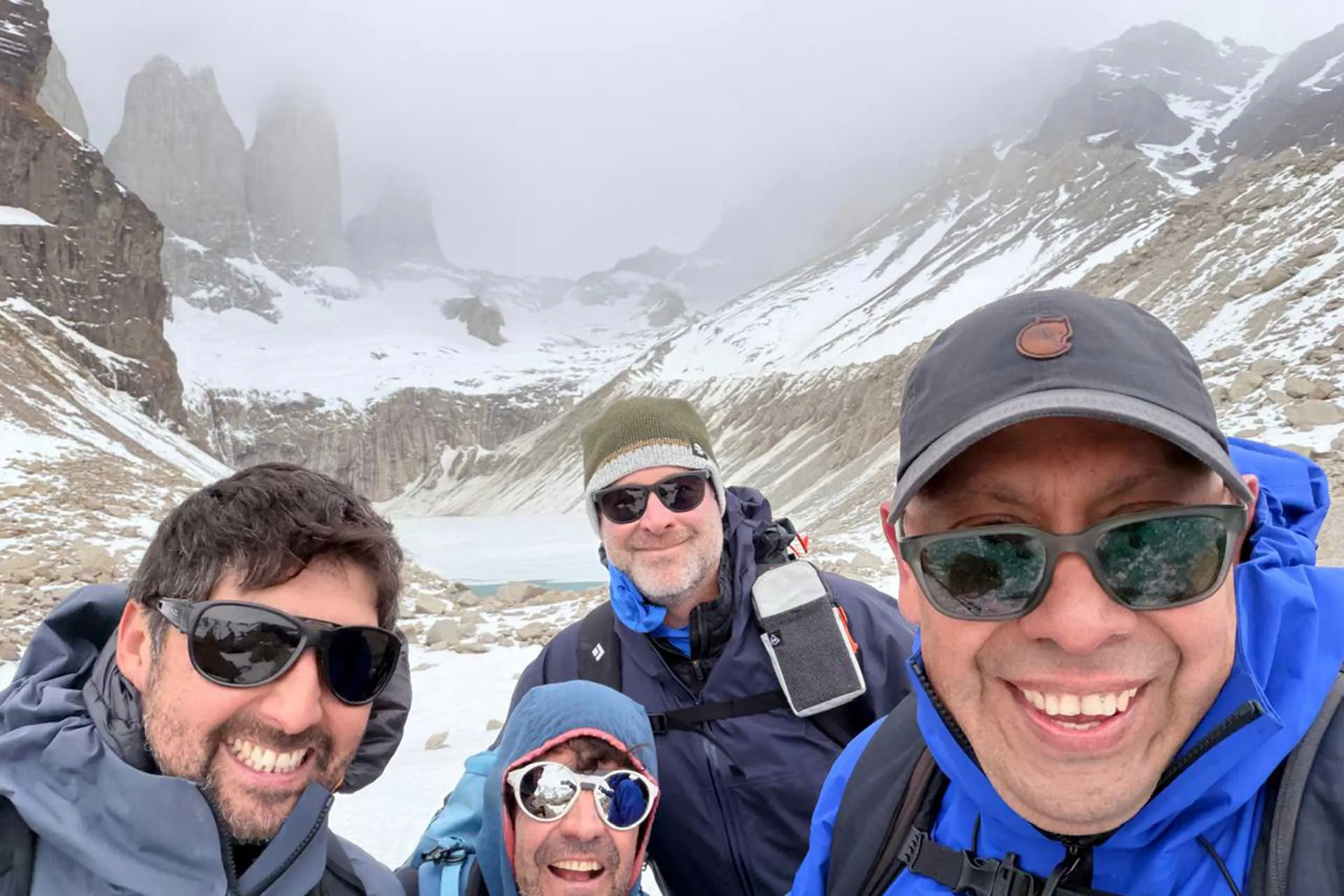
Very early that morning, before the rest of the world had stirred, I set out with our three veteran Patagonia guides: TC, Andre, and Ro. It was just the four of us, and our destination was the iconic Base of the Towers.
These three highly experienced and respected guides possessed more than 60 years of combined tenure leading MT Sobek guests into the wilderness of Patagonia. Their status as elite guides would soon prove to be a remarkable benefit in the current conditions.
An Empty Trail.
Because of our pre-dawn departure and the biting weather, something miraculous happened. The most famous trail in Patagonia, was entirely ours.
“Something miraculous happened. The most famous trail in Patagonia, was entirely ours.”
It wasn’t long however before our journey was abruptly paused, a thick rope stretched across the path, accompanied by a sign: “Sendero Cerrado—Trail is Closed.”
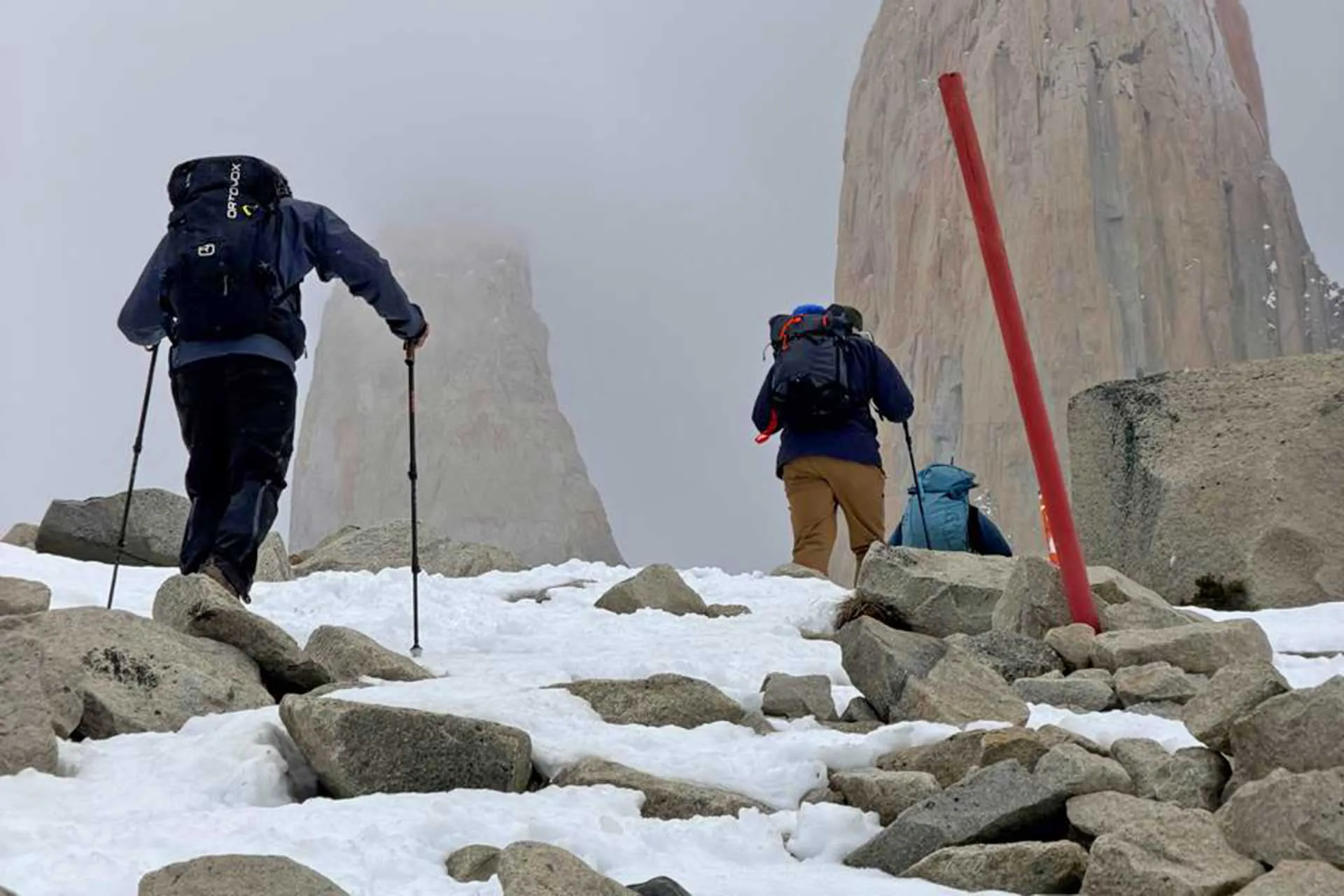
In the modern era of park management, this would have been the end of the line for most visitors. However, the park rangers knew the caliber and competency of TC, Andre, and Ro and because of that, we were granted permission to step past the sign and push upward into the alpine zone.
What followed was pure, unadulterated Patagonia—trekking through swirling snow on a quickly-disappearing trail, trudging through thigh-deep snow drifts and navigating completely blanketed talus fields. On the most iconic trail in Patagonia. Entirely alone.
The Conversation.
As we trekked on, a deep nostalgia settled over TC, Andre, and Ro. They began reminiscing about previous decades. They spoke fondly of a time when even January’s high season offered this exact sense of raw, isolated adventure. Not just for them, but for every MT Sobek guest they led into the wild. Today, finding this level of solitude in Torres del Paine required a storm and a 4:00 AM alarm. The popularity and management of this remarkable national park was a masterclass in successful conservation, but its very success had inevitably changed the place itself.
I brought up the legendary story of how Leo Le Bon—a co-founder of Mountain Travel Sobek who is often hailed as the “Godfather of Adventure Travel”—pioneered the trekking industry in Torres del Paine. It is a classic tale of MT Sobek lore. At the time, Patagonia was virtually unknown to international adventure travelers. Le Bon became the first American mountaineer and commercial adventure travel operator to scout the region. “In 1987, as soon as I had worked out the company’s first trekking and logistical travel plans with the help of the park rangers, Mountain Travel began to operate trips in Patagonia.”
“In 1987, as soon as I had worked out the company’s first trekking and logistical travel plans with the help of the park rangers, Mountain Travel began to operate trips in Patagonia.” – Leo Le Bon
This reflection on the evolution of travel prompted Andre to share a story. He had recently been on a climbing expedition to a hidden valley far to the north: “It has granite walls that rival Yosemite and spires that echo the very Towers we are climbing today,” Andre said, with deep passion in his voice. “But it is completely untouched by mass tourism. It’s wild. It’s free.”
He was talking about the Cochamo Valley. But this wasn’t just a tale of a hidden paradise; it was a cautionary one. Cochamo was entirely unprotected, quietly facing imminent threats from unchecked development. The conversation quickly shifted from awe to a shared sense of responsibility.
How could we help protect and conserve a place like that?
Could we introduce our guests to its majesty in a way that raised awareness for its conservation?
How could we use our voice at MT Sobek to shape conservation tourism from the ground up, ensuring maximum positive impact for the local community with the absolute minimum footprint?
The Vision.
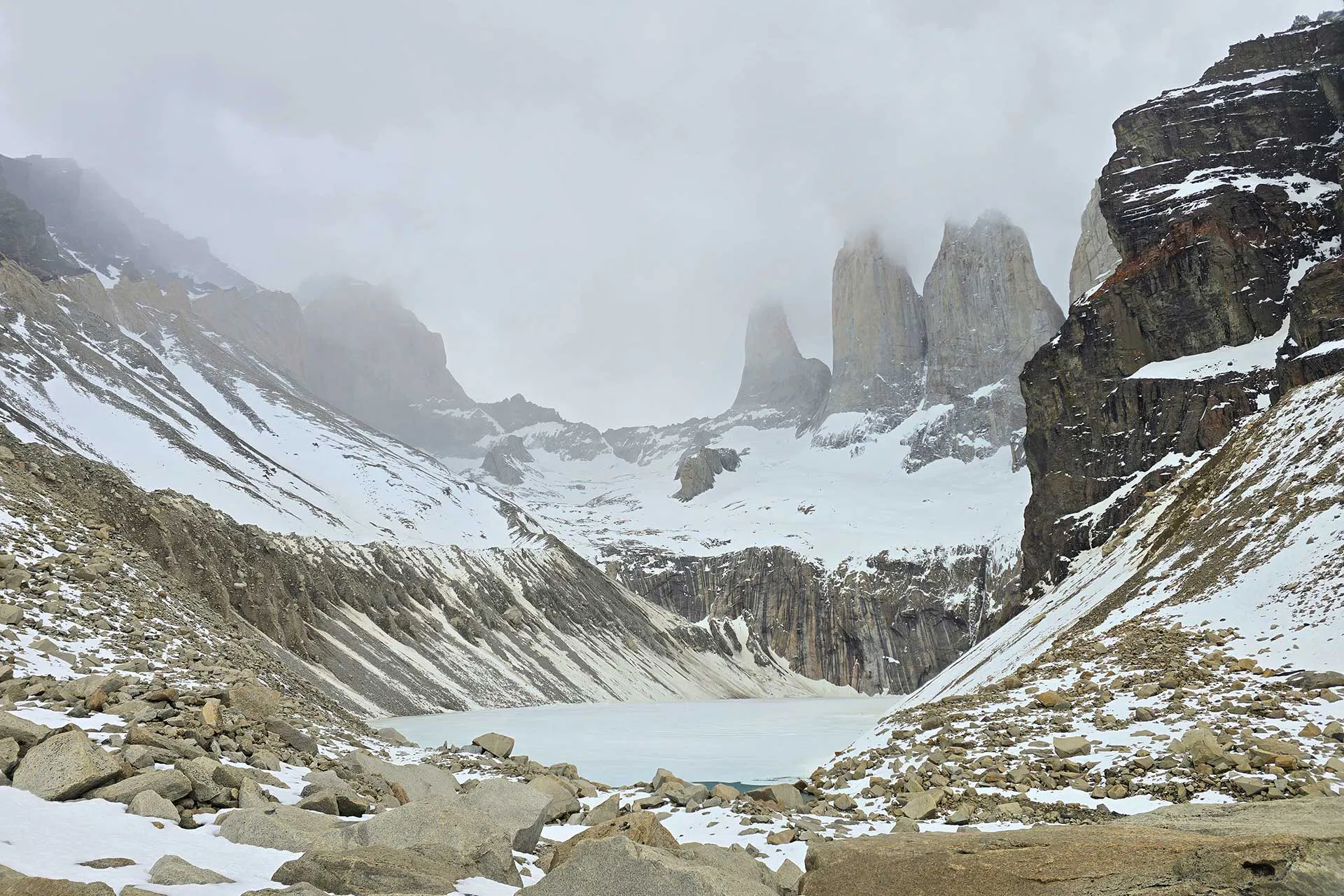
We finally reached the edge of the lagoon. There they were: the three iconic Towers of Torres del Paine, standing guard over the precious valley like massive granite sentries. We stood alone in the amphitheater of stone, with nothing but the sound of the swirling wind and snow, savoring a version of Torres del Paine that few modern travelers ever get to experience.
As we began our descent, the conversation naturally drifted back to the Cochamo Valley. Our experience at the Towers Base underscored exactly what was at stake in Cochamo.
I found myself drawing parallels to my own past—my time guiding the very first commercial trips into the famous turquoise waterfalls of Havasupai in the Grand Canyon. Decades ago, it was a pristine secret known only to a few dedicated wanderers. Then, the digital age and Instagram arrived. Overnight, tourism flooded the canyon, fundamentally altering its ecosystem and culture before the proper infrastructure could ever be put in place to manage it.
We knew that places as beautiful as Cochamo do not stay hidden forever. The question wasn’t if people would come, but how they would be guided when they arrived and would they too be moved to conserve it.
Two days later, the warmth of the trail felt far away. I found myself standing in a cold, drafty warehouse in Puerto Natales, huddled with TC, Andre, and Rodrigo Condeza of Puelo Patagonia—the grassroots organization that would soon save the Cochamo Valley—and I took my first step on the journey to Cochamo.
SAVED BY A COMMUNITY
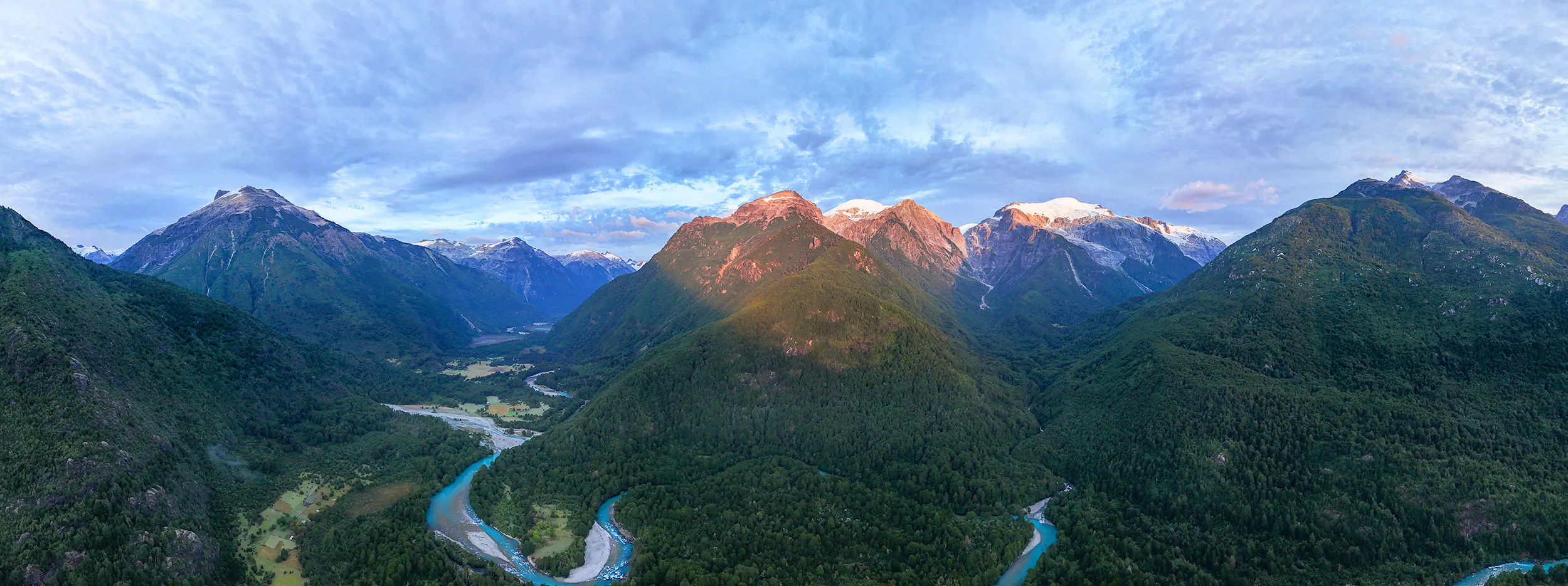
A grassroots coalition of local residents, conservationists, nonprofits and purpose-driven corporations came together to protect Cochamo Valley from large-scale development. Their extraordinary efforts preserved this stunning valley for future generations.
EXPLORE WITH MT SOBEK
Our small-group adventure brings you deep into the heart of Cochamo Valley—on foot, by packraft and by boat. Stay in charming local lodges, connect with the local community and experience Patagonia as it was meant to be taken in—raw and wild.


