Guide to Hiking the Narrows in Zion
Everything You Need to Know to Hike Zion's Narrows
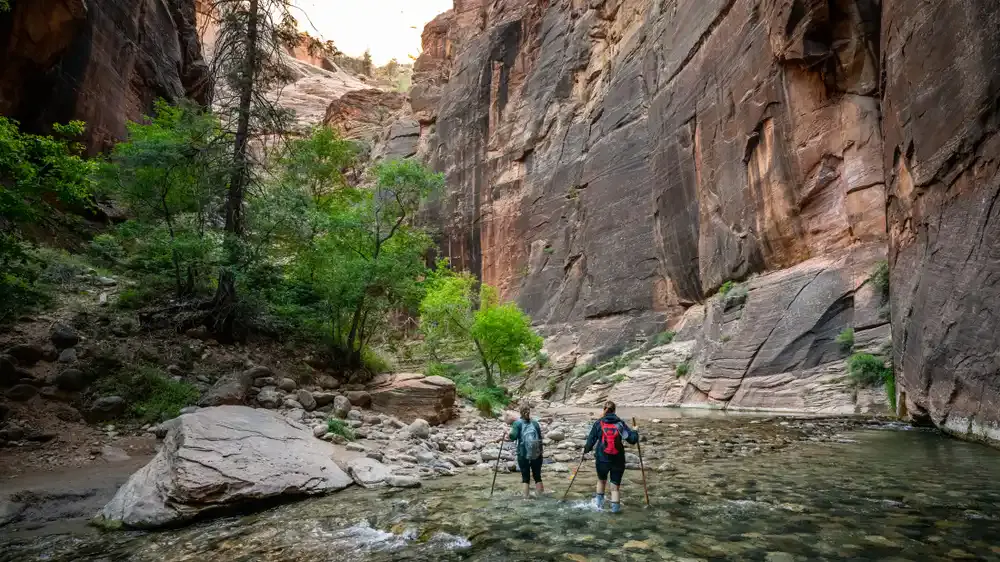
If there’s one experience that defines adventure travel in the American Southwest, it’s hiking the Narrows in Zion. Unlike traditional hikes that follow trails, this iconic journey is directly in the Virgin River—you’re walking in the water through narrow, towering sandstone walls that rise more than 1,000 feet overhead. This hike is immersive, photogenic, and truly unforgettable.
Located in Zion Canyon, the heart of the national park, the Narrows is widely considered one of the classic hikes in Utah. It’s also one of the most misunderstood. Safety and enjoyment on this trek depend on preparation, timing, gear, and a clear understanding of the route.
This guide breaks down everything you need to know about hiking the Narrows in Zion, with a deeper, more descriptive approach to help you maximize your experience.
Important Takeaways
- There are two ways to hike the Narrows: bottom-up, and top-down.
- Bottom-up is the best option for most people, as no permit is required, it’s as easy or difficult as you’d like it to be, and you can turn around at any time.
- Top-down is only for experienced desert hikers with the experience, fitness, and knowledge to manage the risks.
- Fall is the best time to hike the Narrows because water levels are often low, it’s less crowded than summer and there’s low flash flood risk.
- Check the weather before hiking the Narrows—if there is rain in the forecast in the area, do not go.
- Wear good, sturdy footwear, bring non-cotton layers, 2 to 3 liters of water per person and plenty of snacks.
What Makes Hiking the Narrows Unique
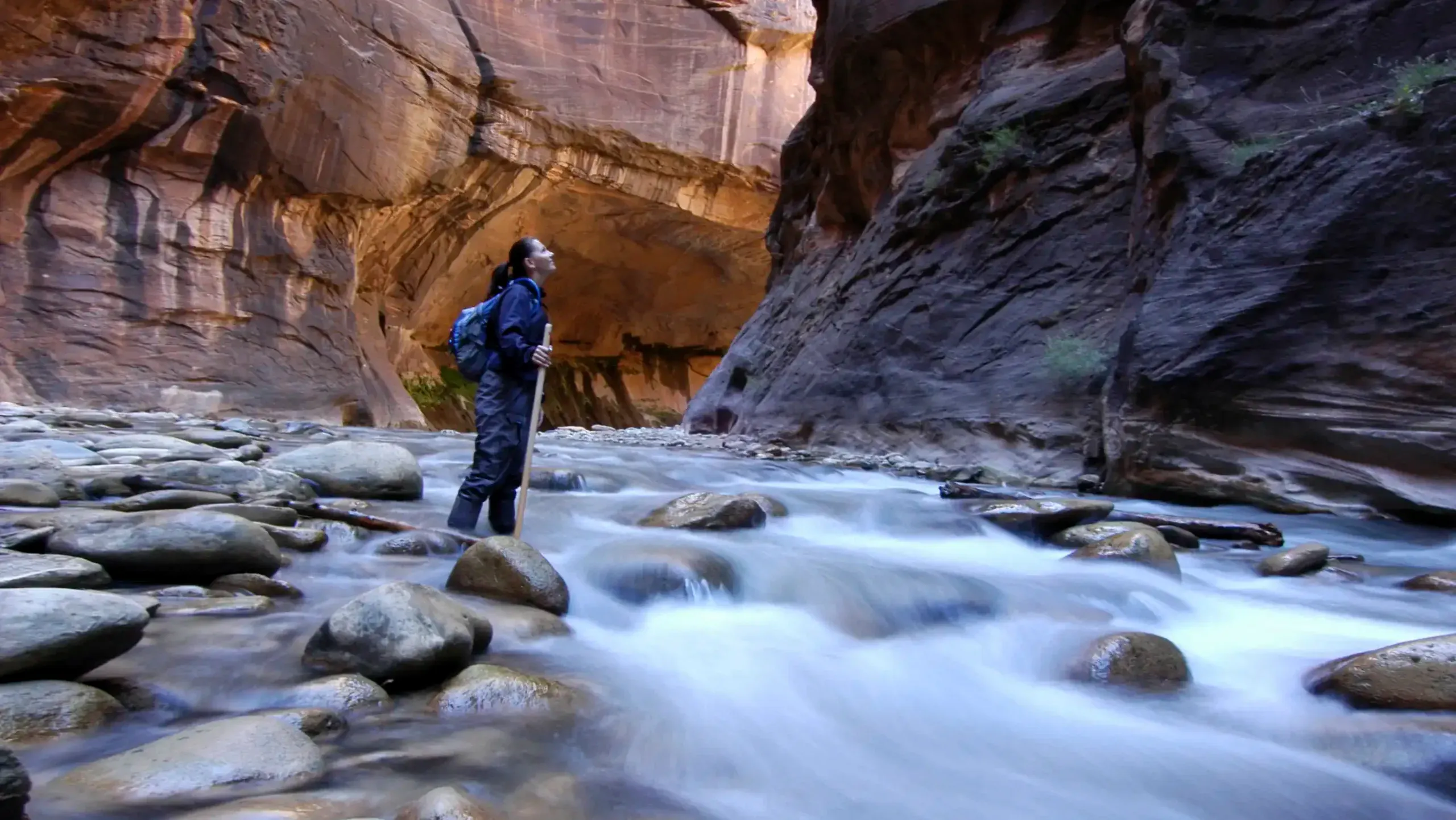
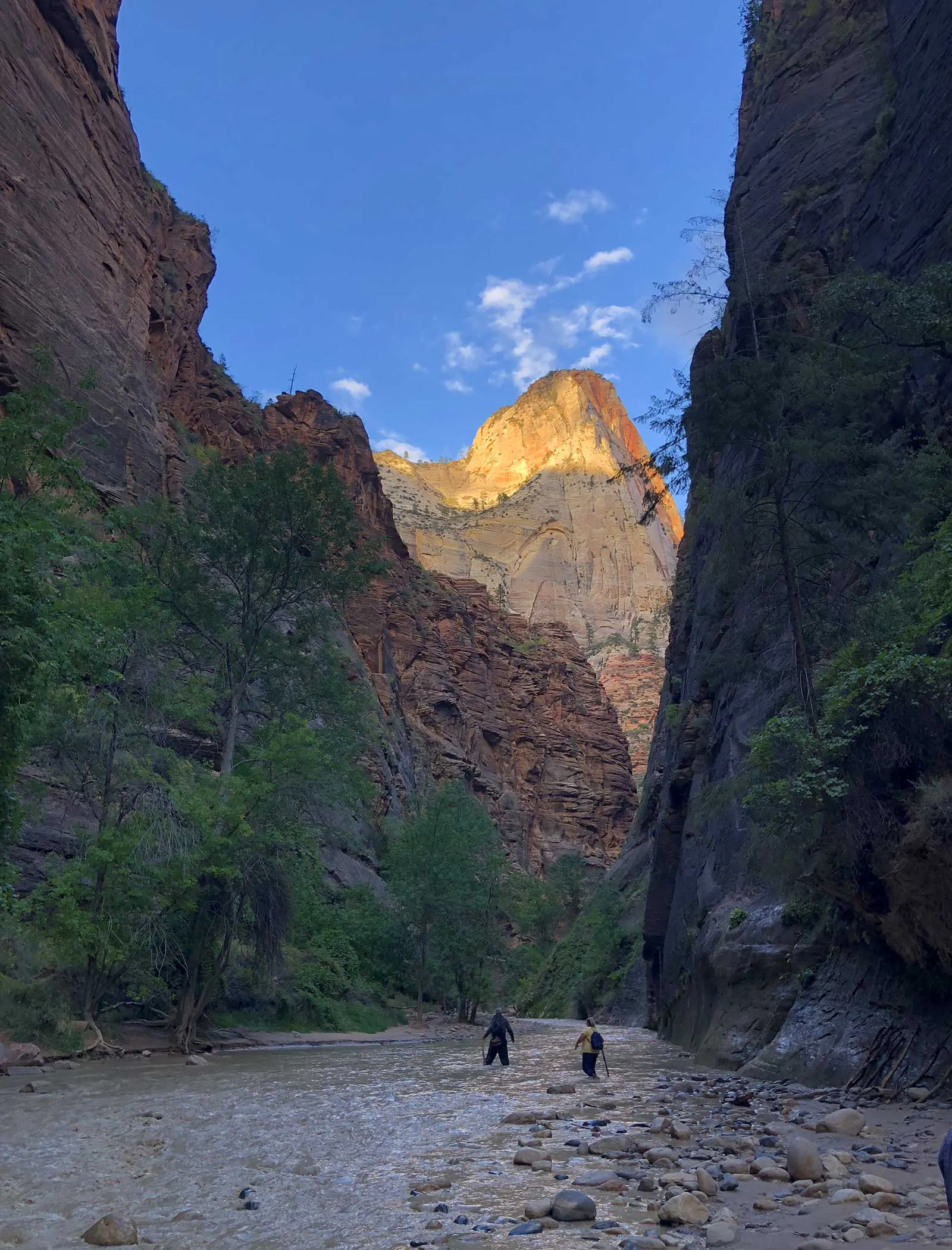
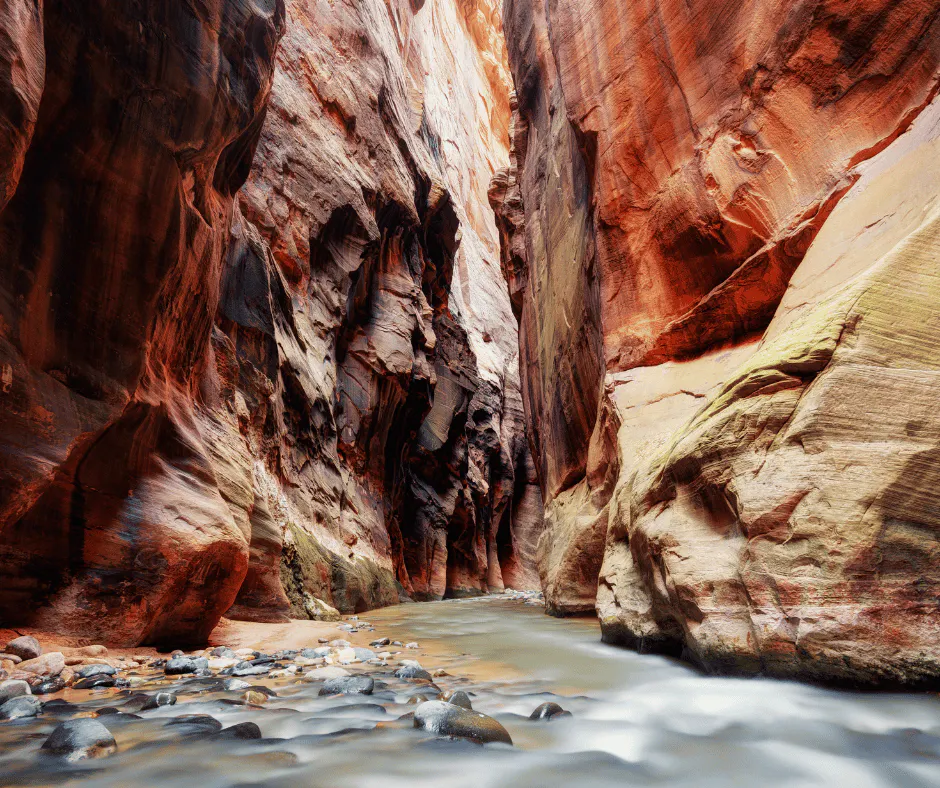
The Narrows in Zion is a spectacularly different hike. Most trails lead you up valleys or canyons, across passes or over ridges. This hike takes you deep into an unlikely and hidden world, where the Virgin River is your trail and soaring, black-streaked walls are your views. Every step is literally shaped by water, stone, and shifting light.
You spend the majority of your time walking in the river itself, navigating rounded rocks and refreshing currents. The canyon walls steadily close in, sometimes narrowing to just a few dozen feet across, while rising vertically in colossal sandstone buttresses. The effect of this environment is humbling and engaging—some may feel claustrophobic while others are excited. The water and canyon walls soften sounds and echo them at the same time. Light shimmers off the water and reflects against the canyon walls, for stunning photography. Even on busy days (and the Narrows can get quite busy), there are moments of stillness that feel sacred and surreal.
This is what sets hiking the Narrows in Zion apart—it’s more than scenic, it’s an immersive experience in a powerful, ancient environment. It is a journey that showcases up close the immense power time has to transform a place.
Understanding the Narrows’ Two Route Options
Before you go, it’s important to understand that there are two distinct ways to hike the Narrows, and they offer very different experiences. They also require two very different levels of skill, experience, and fitness.
The Bottom Up Route
3+ Miles | No Permit | Out and Back
The bottom-up route is the most popular and accessible, and is appropriate for a wide range of experience and abilities. Starting at the Temple of Sinawava—at the end of Zion Canyon Scenic Drive—you walk upstream into the canyon as far as you’d like. No permit is required, and the flexibility of when to turn back makes it ideal for most visitors. Many hikers aim to reach the Wall Street Narrows section, which delivers the narrowest and most dramatic scenery in the Narrows. Often, visitors choose to rent gear for the hike, such as canyoneering boots, neoprene socks, a hiking stick, and dry bibs.
The Top Down Route
16 Miles | Permit Required | Thru-hike
The top-down route is a full 16-mile journey beginning at Chamberlain Ranch and ending at the Temple of Sinawava. This full-day hike requires a permit and is significantly more committing, often taking 10 to 14 hours or done as an overnight backpacking trip. It’s quieter, more remote, and is a legitimate backcountry adventure. It is also much more dangerous in terms of flash flooding due to its remote and committing nature.
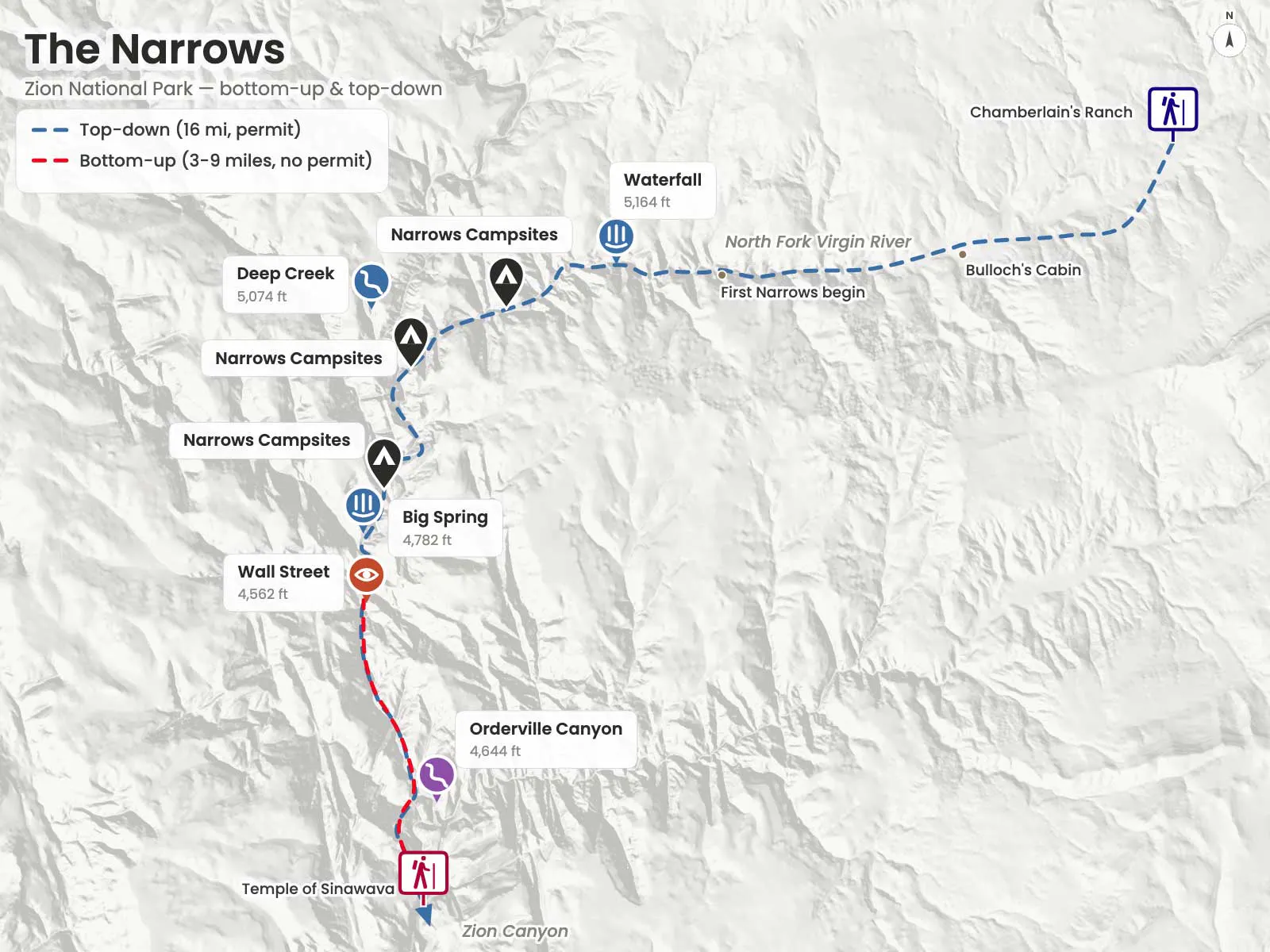
This map is an artistic rendering of the Narrows hikes in Zion and should not be used for navigational purposes.
The Narrows at a Glance: Bottom-Up or Top-Down?
For most visitors, hiking the Narrows in Zion bottom-up provides the perfect balance of adventure and accessibility. We address both options in this guide. See the table below for a quick side-by-side comparison of the two options.
| Bottom-Up | Top-Down | |
|---|---|---|
| Start | Temple of Sinawava | Chamberlain Ranch |
| Distance | As far as you want | 16 miles |
| Permit Needed? | No | Yes |
| Difficulty | Easy-Moderate | Strenuous |
| Time | A few hours to a full day | 10-14 hours or overnight |
| Crowds | More popular | Less crowded |
| Best For | All | Experienced hikers |
| Can You Turn Around? | Yes, anytime! | No – fully commit! |
| Shuttle | Zion Canyon Shuttle | Private or DIY Shuttle |
| Highlight | Wall Street section | Complete Narrows experience |
Bottom line: The bottom-up hike is the best choice for most visitors, offering iconic scenery with more flexibility and less risk. The top-down hike is a more remote, full-day adventure that requires a permit and greater experience.
— MT Sobek Expert tip
Hike Descriptions
The Bottom-Up Hike
The bottom-up Narrows approach begins at Temple of Sinawava with the Riverside Walk, a paved one-mile trail that gradually takes you deeper into the canyon. The walls begin to rise, and there’s a clear sense that you’re approaching something different.
At the end of the pavement, you step directly into the Virgin River—and in that moment the entire nature of the hike shifts dramatically. The water is often cold, even in summer, and your footing is on an uneven bed of polished river rocks. Progress slows immediately as you begin navigating the rugged terrain below the water.
The first stretch is relatively wide, with multiple channels and frequent crossings. This section allows you to orient yourself to the experience—testing footing, learning how to balance on smooth river rocks, how to use your trekking poles or hiking stick, and understanding the force of the current. As you move deeper, the canyon becomes more narrow, and it feels more enclosed.
Around two miles in, you reach Orderville Canyon, a side canyon that’s cooler and darker, offering a brief but worthwhile detour. Beyond this point, fewer casual hikers continue, and the solitude of your experience grows as the other hikers you see thin out considerably.
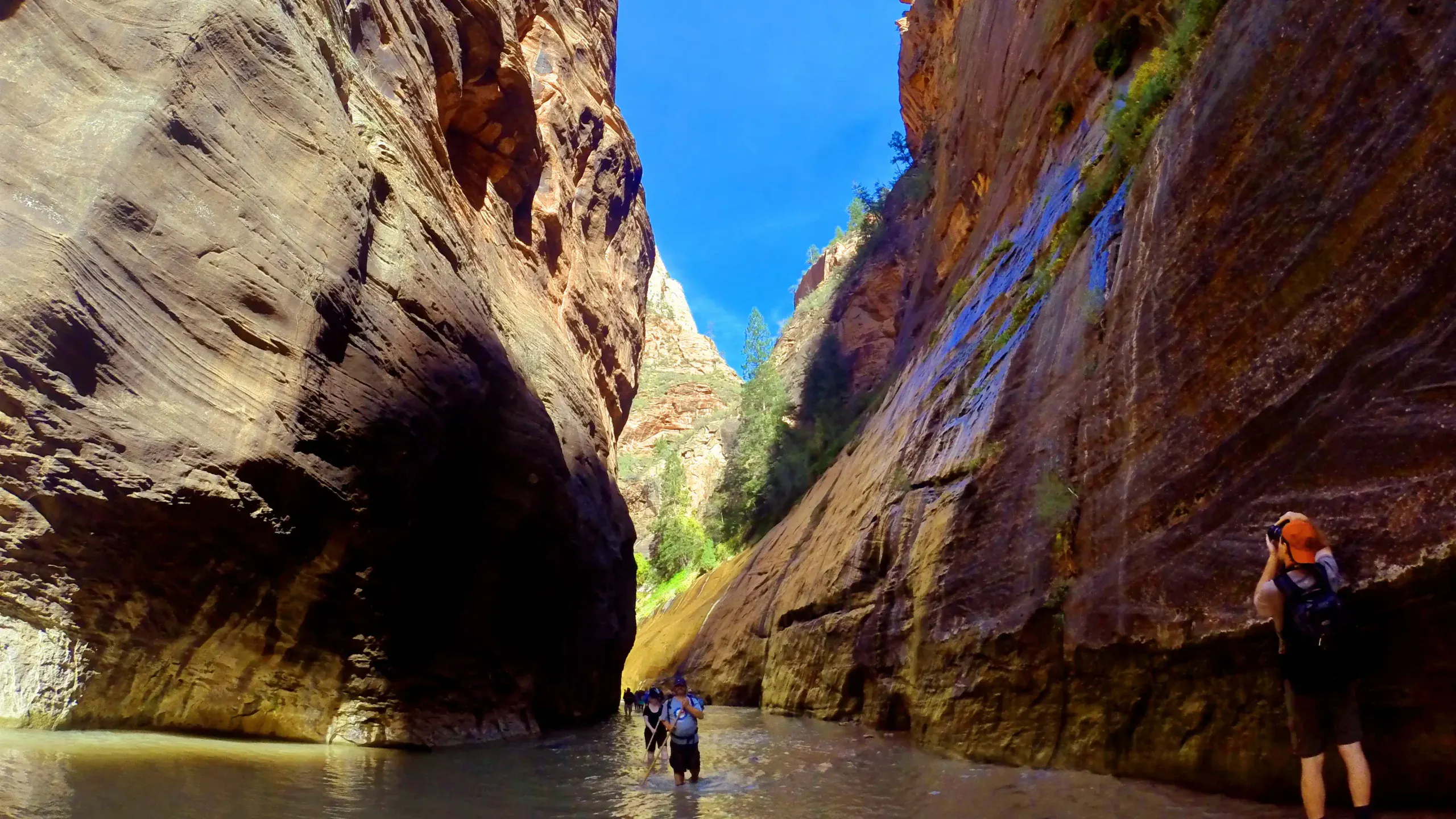
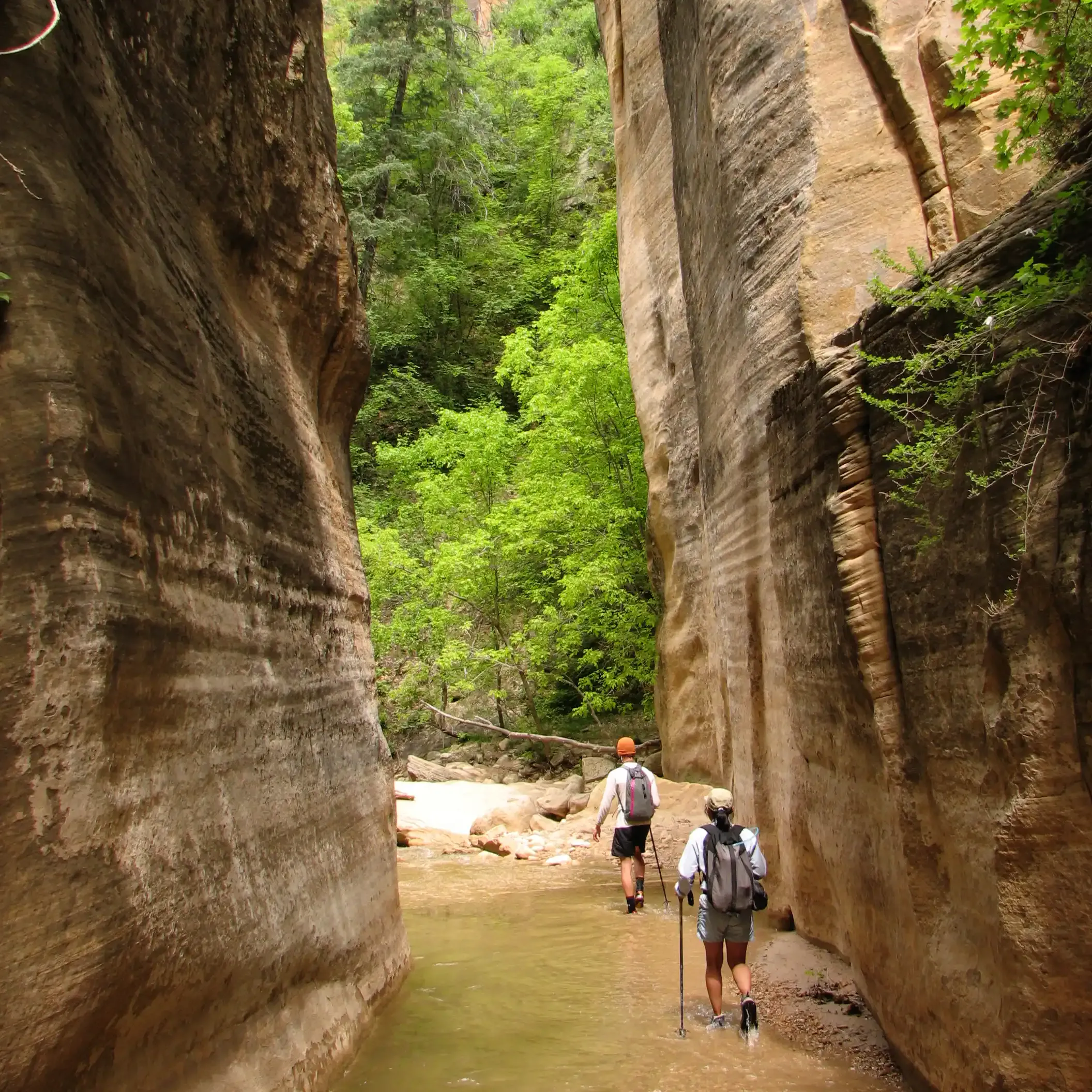
Eventually, you enter Wall Street, the most iconic part of the Narrows. Here, the canyon constricts dramatically, with towering sandstone walls rising on either side. Light from the blue sky above filters down in soft, shimmering patterns, refracting off the water and illuminating the rock in rich streaks of red, gold, and orange. This is the moment most people remember for years to come—the place where hiking the Narrows in Zion becomes something truly unforgettable.
You can turn about at any time, retracing your steps back to the trailhead.
The Top-Down Hike
The top-down route of hiking the Narrows in Zion is a completely different experience from the more popular bottom-up version—it is an epic, adventurous journey through one of the most extraordinary landscapes in the American West.
Shuttle to Chamberlain Ranch. This can be done with two vehicles, or you can book a shuttle service.
The hike itself begins near Chamberlain Ranch on the outskirts of Zion National Park. The route starts off as a surprisingly gentle stroll. You follow the Virgin River through open terrain, with wide skies and relatively low canyon walls.
Mile after mile, the canyon gradually begins to close in around you. The walls grow taller, and closer. The light becomes more filtered, and the sense of remoteness more acute. Unlike the bottom-up hike, where you encounter crowds early and often, on the top-down route you feel increasingly isolated with each step. There are long stretches where you may not see another person at all.
Physically, the top-down route demands endurance and mental focus. Sixteen miles of river hiking is far more taxing than the distance might imply. The constant walking on uneven, slick rocks; the resistance of moving through flowing water; and the cumulative fatigue of a full day of hiking all add up. Progress is steady but slow, and by the time you reach the narrowest sections—where the canyon transforms into the iconic corridors of Wall Street—you’ll know you’ve accomplished something special.
Finish the hike at Temple of Sinawava, where a National Park shuttle can return you to the Zion Canyon Visitor Center.

Difficulty and Physical Demands
Bottom-Up Difficulty
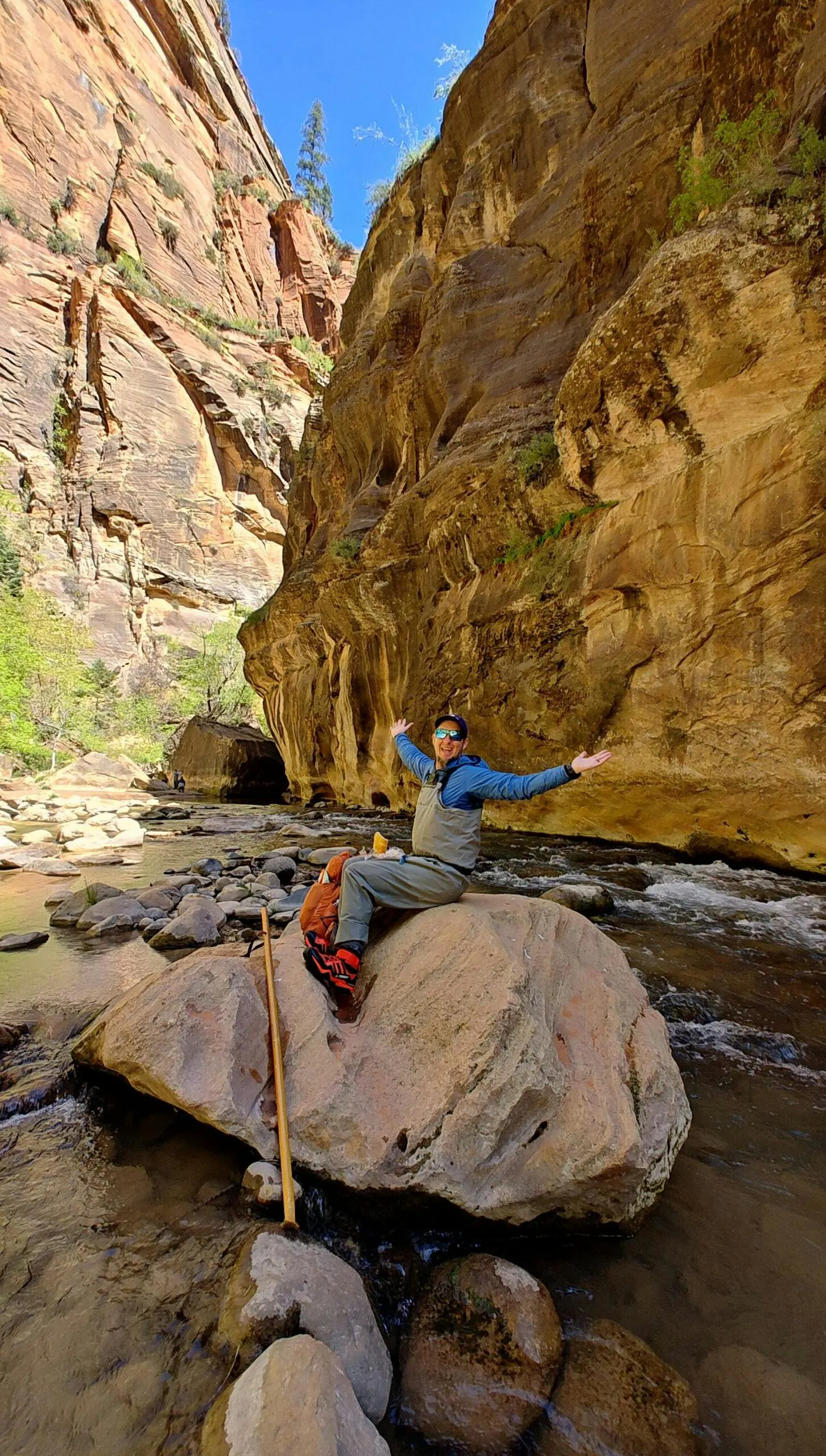
While not technically difficult, this hike is physically unique and often underestimated. Walking in water over uneven stones requires constant balance and attention. There is no consistent trail, no steady rhythm—just constant adjusting to the varying terrain.
What might look like an easy five-mile hike on paper can feel much more demanding in practice. Progress is slower, and fatigue builds differently than on dry land.
Most hikers find that:
- Each mile can take significantly longer than expected
- Balance and stability are more important than speed
- The return journey feels harder than the way in
Top-Down Difficulty
The top-down route of hiking the Narrows in Zion is deceptively demanding. On paper, 16 miles may sound manageable for experienced hikers, but the reality is far more strenuous. Nearly the entire route is spent walking in the Virgin River, navigating uneven, submerged rocks that constantly challenge your balance. Every step requires attention. Over the course of a full day, this constant, relentless effort becomes physically draining in a way that traditional hiking rarely is. By the later miles, even small obstacles can feel amplified as fatigue sets in.
Most hikers find that:
- The combination of cold water, current, and commitment makes this far more demanding than a typical day hike
- The distance feels significantly longer than 16 miles due to slow, uneven river travel
- Fatigue builds steadily from constant balance and attention, making the final miles the most challenging
Water Levels and Safety
When planning to hike the Narrows in Zion, nothing is more important than checking river conditions and weather forecasts.
— MT Sobek Expert tip
Overview of Water Levels
The Virgin River’s flow rate, measured in cubic feet per second (CFS), directly impacts difficulty and safety. Lower flows create calmer, more manageable conditions. As flow increases, the current becomes stronger, crossings more difficult, and footing less stable. At higher levels, the hike may be closed entirely.
Low Flow (Under ~70 CFS)
- Easiest and most ideal conditions
- Slower current, easier footing, and more exposed rocks
- Best for most hikers, including first-timers
Medium Flow (~70–100 CFS)
- Noticeably stronger current and deeper crossings
- More challenging balance and slower progress
- Suitable for experienced hikers with proper gear and confidence
High Flow (~100–150 CFS)
- Fast current, fewer stable footing options
- Physically demanding and potentially hazardous
- Only appropriate for strong, experienced hikers
- Zion National Park closes the top-down route at 120 CFS.
Extreme Flow (150+ CFS)
- The Narrows bottom-up route is closed at 150 or greater CFS.
Equally important is flash flood risk. Even if the weather in Zion is clear, storms upstream can send sudden surges of water through the canyon. This is the most serious hazard in the Narrows.
You should always check:
- Current river flow levels
- Weather forecasts for the entire watershed
- Park service alerts and closures
If you notice rising water, debris or clouding in the current, or distant thunder, it’s time to turn around.
Cyanobacteria and E. Coli
Bacteria levels in the Virgin River are an important consideration when hiking the Narrows. At times, Zion National Park reports elevated levels of cyanobacteria and E. coli, especially during warmer months when water flow is lower and temperatures rise. Also, if there wasn’t a strong spring runoff, the bacteria can become worse.
These outbreaks don’t usually close the hike, but they do increase health risks if precautions aren’t taken. The main concern is ingesting contaminated water or exposing open cuts to the river. Most hikers mitigate risk by avoiding submerging their heads, not drinking untreated river water, and washing hands or using sanitizer before eating. While serious illness is rare, staying informed through park alerts and practicing basic hygiene can significantly reduce the risk while enjoying the experience.
Best Time for Hiking the Narrows in Zion
Key Seasonal Takeaways
- The Narrows is often closed in the spring until May.
- Crowds and monsoons impact the summer season, but it’s still excellent.
- Fall is the best time to hike the Narrows.
- Winter is quiet but cold and specialty gear is recommended.
Seasonality plays a major role in shaping your experience.
Spring (March-May) brings snowmelt, which increases river flow and often leads to colder, higher water and frequent closures. In March and April, the Narrows is commonly closed due to flows exceeding 150 cubic feet per second (CFS), which can pass 400 CFS at times. Generally, the Narrows doesn’t become comfortably and safely hikeable—or even open—until May.
Summer (June-August) offers warmer temperatures and much more comfortable wading conditions, but also introduces heavier crowds and monsoon storms that raise flash flood risk. After dry winters, the bacteria levels can also spike in the summer months, leading to closures. This is still an excellent time for hiking the Narrows. Check the weather forecast, and if thunderstorms are possible, stay away! Start early to beat the crowds.
Fall (September-November) is often considered the best time for hiking the Narrows in Zion, with lower water levels, more stable weather, and fewer visitors. The monsoon rains can continue into September, so flash flooding is still a risk. Check the weather forecast before hiking. In November, Utah’s slot canyons get little sun and can be chilly.
Winter (December-February), while cold, offers a quieter and more atmospheric experience, especially for those prepared with proper gear. The full assortment of rental gear for the Narrows is recommended in winter: canyoneering boots, neoprene socks, dry suits or bibs, and a walking stick.
Each season has its advantages, but fall consistently provides the most predictable and balanced conditions.
Narrows Packing Checklist
Proper gear is essential for both comfort and safety. Unlike most hikes, your equipment on the Narrows directly affects your ability to move efficiently and stay warm.
Footwear & Clothing
- Sturdy hiking shoes or canyon shoes (sandals not recommended)
- Neoprene socks for insulation
- Quick-dry clothing (avoid cotton)
- Lightweight, non-cotton layers for temperature changes
- In cooler months (November–April), renting specialized gear like dry pants or dry suits is highly recommended.
- Rain jacket
- Extra socks and dry clothes for after the hike
Essential Gear
- Trekking poles or a sturdy hiking stick
- Waterproof backpack or dry bag
- Headlamp if starting early or finishing late
- Overnight gear if doing the top-down route as a backpacking trip
- 2–3 liters of water per person
- Plenty of sweet, salty snacks or meals
- Small first-aid kit
- Sun protection (hat, sun hoody, sunglasses, sunscreen)
In cooler months, renting specialized gear like dry pants or dry suits is highly recommended.
— MT Sobek Expert tip
Do It Yourself (DIY) or Guided: Which Is Better?
One of the most common decisions when planning to hike the Narrows in Zion is whether to go with a guide service or explore on your own.
Do It Yourself (DIY)
This option works well for prepared hikers.
Pros:
- Full flexibility in pace and distance
- Lower cost
- Easy logistics for the bottom-up route
Cons:
- You’re responsible for navigation and safety decisions
- No expert insight or support
- Requires more preparation and awareness
Guided Experience
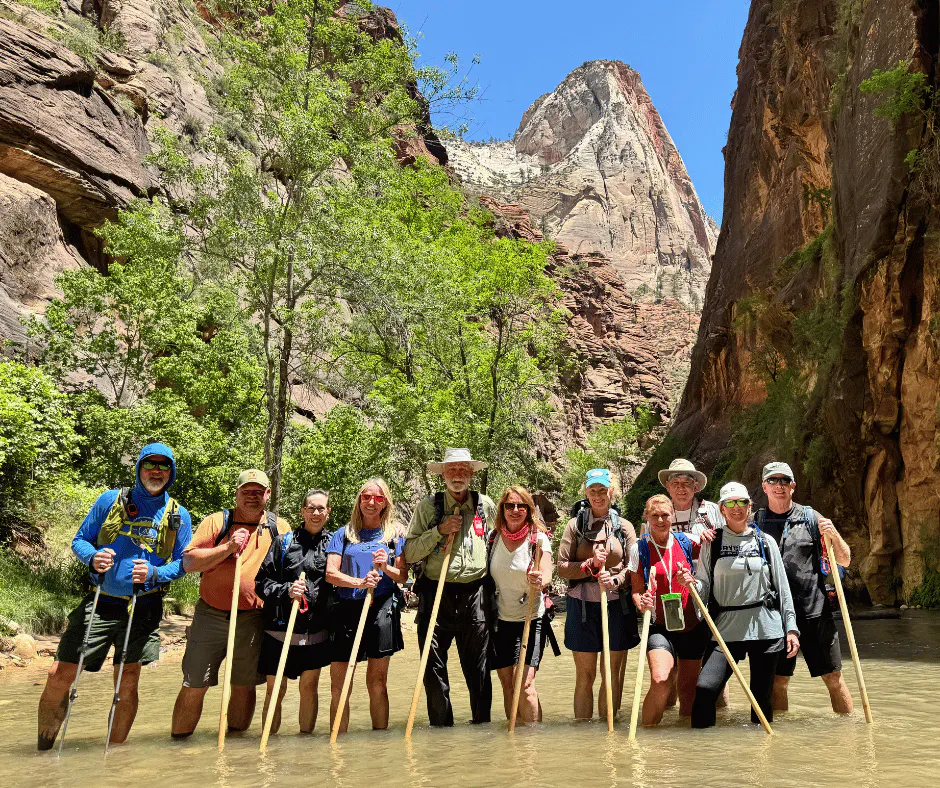
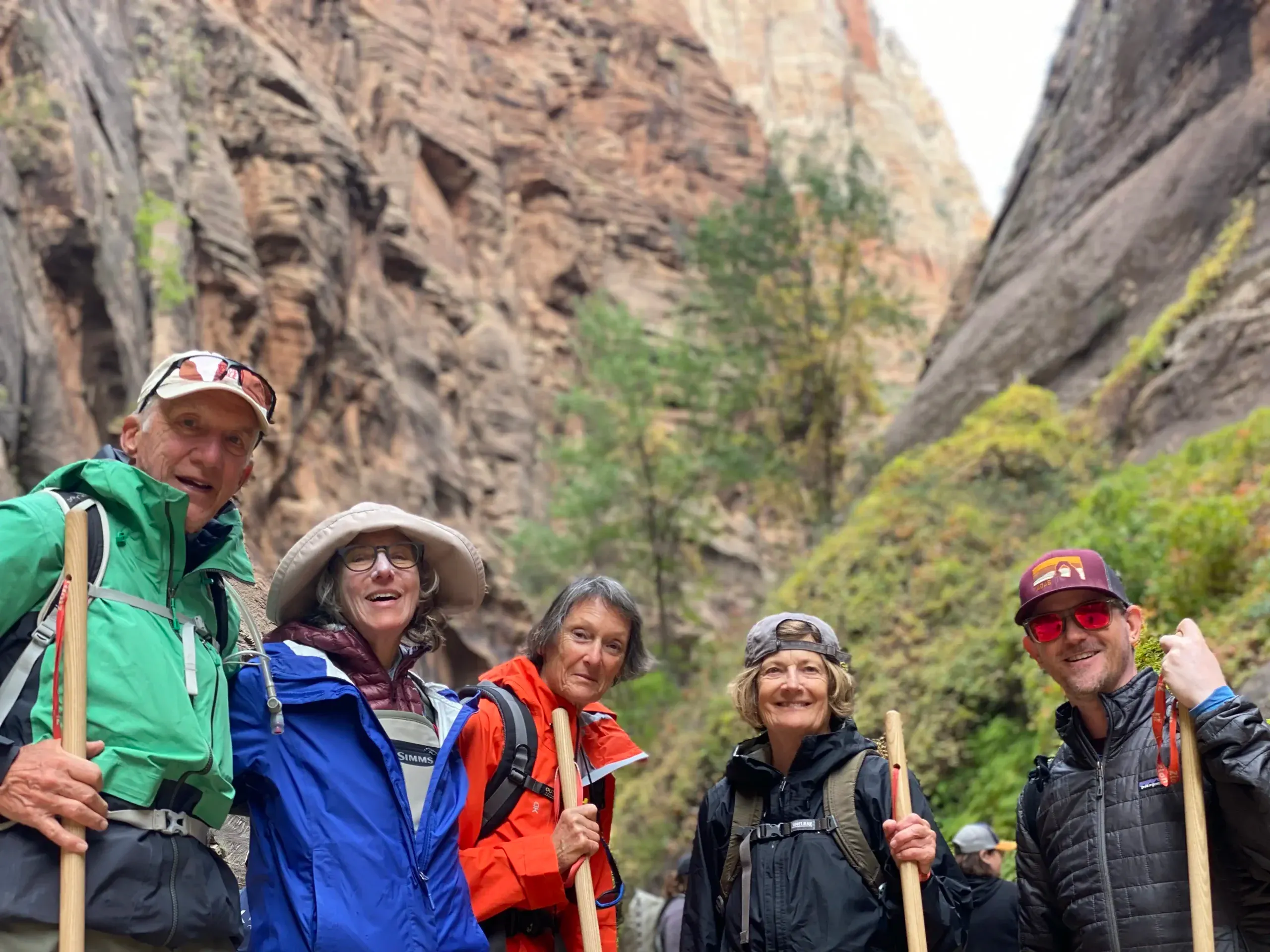
Guided trips, which are often part of a longer multi-park Utah adventure, can elevate the experience significantly, by taking care of logistics, reservations, permits, and safety while providing a professional leader with local expertise. Guides also bring more color to destinations by providing fascinating knowledge about the ecology, geology, and history of the area.
Pros:
- Expert knowledge of conditions and route
- Gear often included or recommended
- Increased safety, especially in higher water or colder seasons
- Broader and deeper interpretation of geology and landscape
Cons:
- Higher cost
- Less flexibility in pace
- Fixed schedule
Why Explore Utah with MT Sobek?
Hiking Utah with MT Sobek means hiking some of the state’s most spectacular landscapes with a company that has been pioneering adventure travel since 1969. From the narrow slot canyons of Zion to the geological wonders of Capitol Reef, MT Sobek designs journeys that combine iconic destinations with lesser-known trails. With expert guides, small groups, and thoughtfully crafted itineraries, travelers can focus on the experience of the hike while the logistics are handled seamlessly.
Why hike Utah with MT Sobek:
- Comfort and immersion: Rewarding hikes paired with premier lodging and memorable meals create a rewarding and relaxing experience.
- Decades of expertise: A pioneer in adventure travel since 1969 with a long legacy of leading exceptional hiking and rafting journeys across Utah, the United States and the world.
- Expert guides: Knowledgeable leaders share insights into local ecology, geology, wildlife, and cultural history, and ensure a commitment to safety and enjoyment throughout the journey.
- Carefully designed itineraries: A balance of iconic trails and hidden gems for a deeper experience of each destination. MT Sobek’s hiking adventures immerse travelers in the natural beauty and cultural heritage of Utah.
- Seamless travel logistics: Permits, transportation, and accommodations are expertly arranged so you can focus on the adventure.

Enjoying our content? Add MT Sobek as a Google Preferred Source.
FAQs
Water depth varies depending on river flow and location within the canyon. During typical conditions, hikers can expect water ranging from ankle-deep to waist-deep, with occasional deeper sections depending on seasonal runoff and weather conditions.
A permit is not required for the popular bottom-up day hike from the Temple of Sinawava. However, permits are required for the top-down route from Chamberlain Ranch and for overnight backpacking trips through the Narrows.
The bottom-up hike can take anywhere from a couple of hours to a full day depending on how far you choose to go. The top-down route is approximately 16 miles and typically takes 10 to 14 hours or is completed as an overnight trip.
The bottom-up route is often suitable for active beginners who are comfortable walking on uneven terrain in moving water. Conditions can change quickly, so hikers should always monitor weather forecasts and river flow levels before starting.
Many experienced hikers prefer September and October because the water is typically warmer, river levels are often more manageable than spring runoff, and visitation begins to decline after peak summer crowds.
Yes. Trekking poles or a sturdy hiking stick can significantly improve balance and stability while walking on submerged rocks and crossing areas of moving water. The National Park Service also recommends using a walking stick for the hike.
Guided hiking tours like MT Sobek can significantly enhance your experience by taking care of logistics, reservations, permits, and safety while providing a professional guide with local expertise. Guides can also bring more color to destinations by providing fascinating knowledge about the ecology, geology, and history of the area.
At times, the Narrows can be quite busy, especially during the high season from May through October, with hundreds of hikers all attempting the route at the same time. However, most people turn around after one to two miles, so the farther you hike the more solitude you will experience. If you want to experience the wonder of the Narrows and have it mostly to yourself, plan on doing a longer, 8 to 10 mile, hike.
Learn More About Adventure Travel in Utah


