Top 10 Most Beautiful Villages in Europe
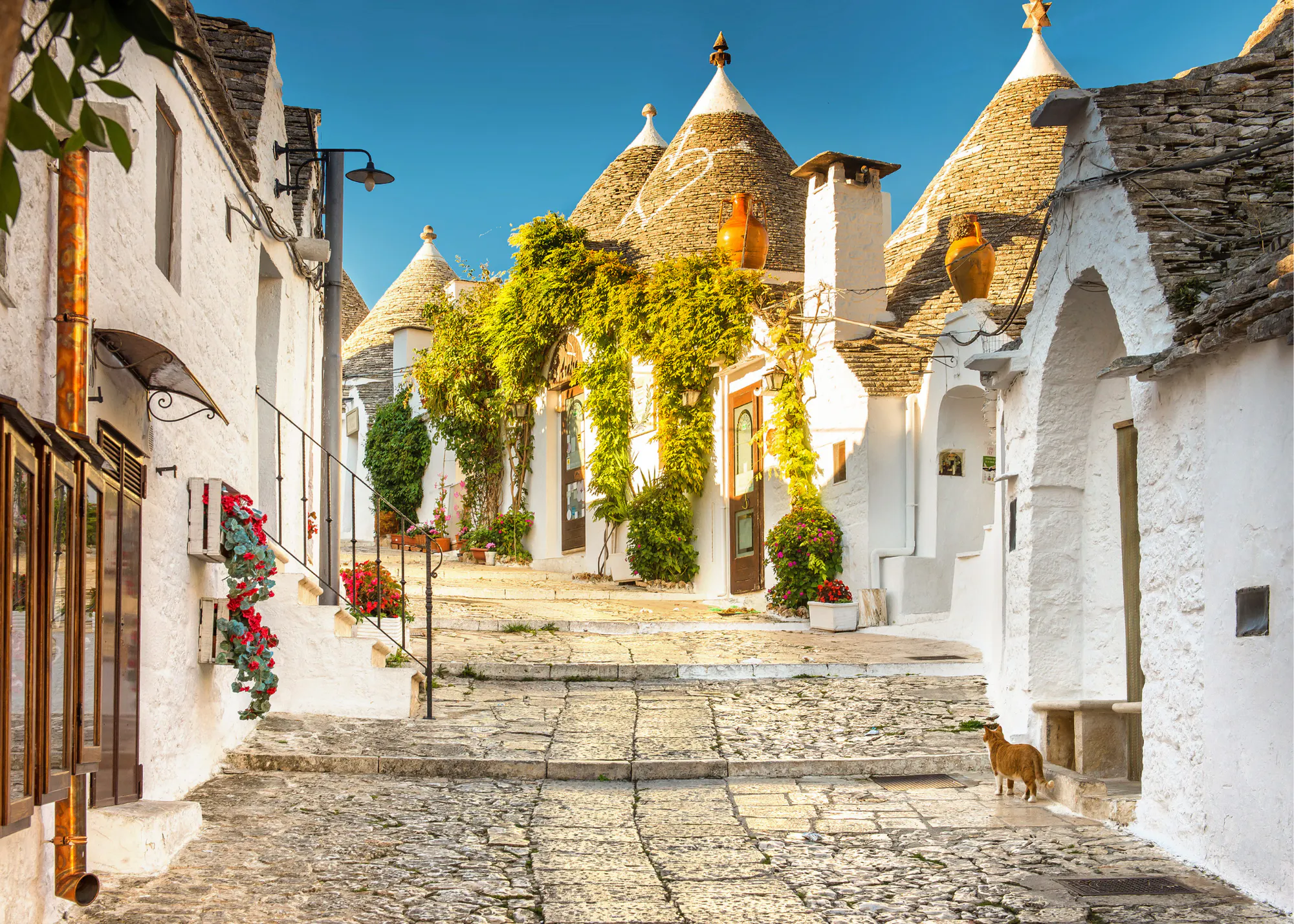
Be still our beating hearts! It’s time to put together our list of the most beautiful villages in Europe. While all of our adventures are breathtakingly scenic, many of our European hiking adventures journey through timeless villages that offer the perfect blend of historic wonder and dazzling beauty. From France’s medieval hill-top hamlets to the Italian Riviera’s coastal villages to England’s charming Cotswolds, here are our top 10 most beautiful villages—and how to see them.

1. Sucevita, Romania
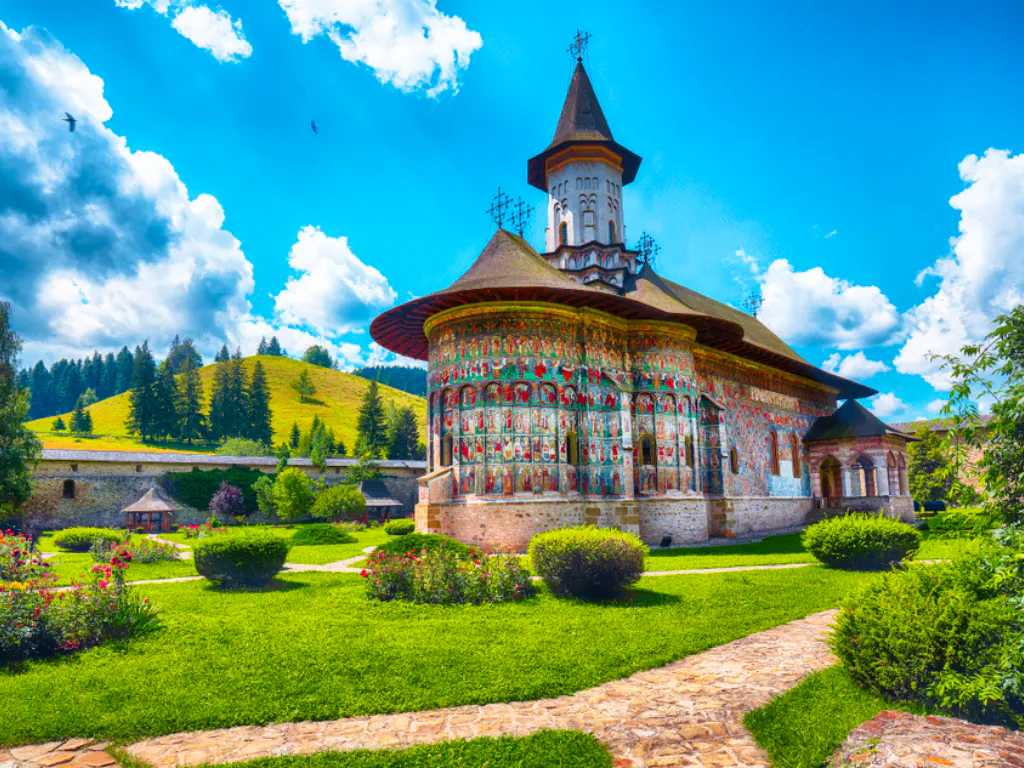
The beautiful village of Sucevita, located in northern Romania’s Bucovina region, is both a peaceful village and the gateway to one of Bucovina’s most treasured landmarks. Hike along the Via Transilvanica through spruce and beech forests to a hilltop lookout, where the emerald-roofed Sucevița Monastery comes into view. Built in the late 16th century, this UNESCO-listed site is famed for its vivid exterior frescoes, remarkably preserved in the Byzantine style. A visit to the monastery and the Church of the Resurrection offers not only a glimpse into Romania’s spiritual heritage but also a serene setting at the foot of the surrounding hills.
How to visit Sucevita? –> Join 9-day Romania Via Transilvanica & Beyond Hiking
2. Zermatt, Switzerland
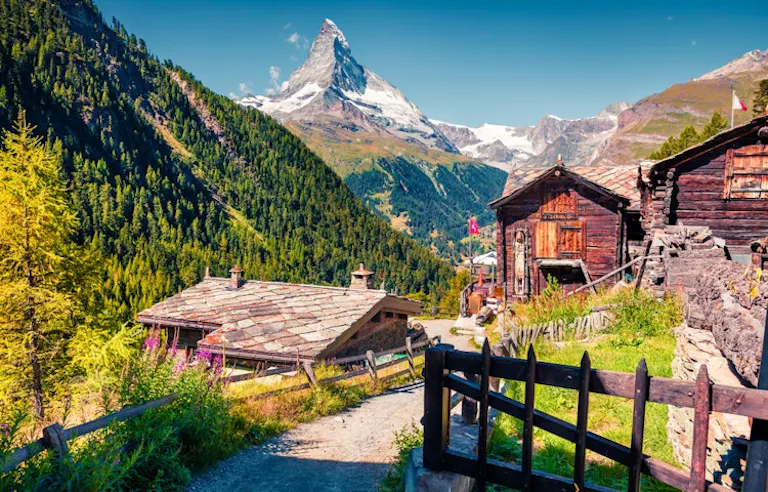
Zermatt is a storybook mountain town at the base of the mighty Matterhorn in Switzerland. Its iconic timber-framed Swiss chalets, meandering lanes, and panoramic vistas keep us coming back year after year. After exploring Zermatt, you can also hike to the hamlet of Zmutt hamlet (6,352′) and to Furi mountain station. From here you can take a cable car up to Schwarzsee (8,373′)—a picturesque lake, just below the Matterhorn.
How to visit Zermatt? –> Join 8-day Alps Village to Village Hiking or 7-day Alps Chamonix & Zermatt Hiking
3. Manarola, Italy

Experience the wonders of Italy’s Ligurian coast as you follow cliff-side trails that connect Cinque Terre’s picturesque seaside villages. From north to south, the five beautiful villages are Monterosso al Mare, Vernazza, Corniglia, Manarola, and Riomaggiore. It’s hard to choose a favorite, but Manarola—the second-smallest of the famous towns—would be our pick for its postcard-worthy multicolored houses perched on hills overlooking the sea.
How to visit Manarola? –> Join 8-day Italy Tuscany & Cinque Terre Walking
4. Gordes, France

Explore the Luberon’s classic Provençal landscape, with its lofty medieval villages, age-old abbeys, lavender fields, and olive groves. Along the way, enjoy a stop in Gordes where golden-stone homes rise in steep circles above the Calavon Valley. Wander its labyrinth of cobblestoned streets before heading out along thyme-laden hills toward Senanque Abbey, a collection of 850-year-old Romanesque structures hidden among lavender fields.
How to visit Gordes? –> Join 7-day Provence Village to Village Hiking

5. Bibury, England

England’s Cotswolds make for a delightful walking vacation. Set out on foot to explore a dreamy landscape of rolling hills, hedgerow-lined fields, and postcard-pretty hamlets, including Bibury—known as the “most beautiful village in England!” Take a walk by the River Coln, which flows through the village, and see the charming stone cottages of Arlington Row (pictured).
How to visit Bibury? –> Join 8-day England Cotswolds Village to Village Walking
6. Corte, France
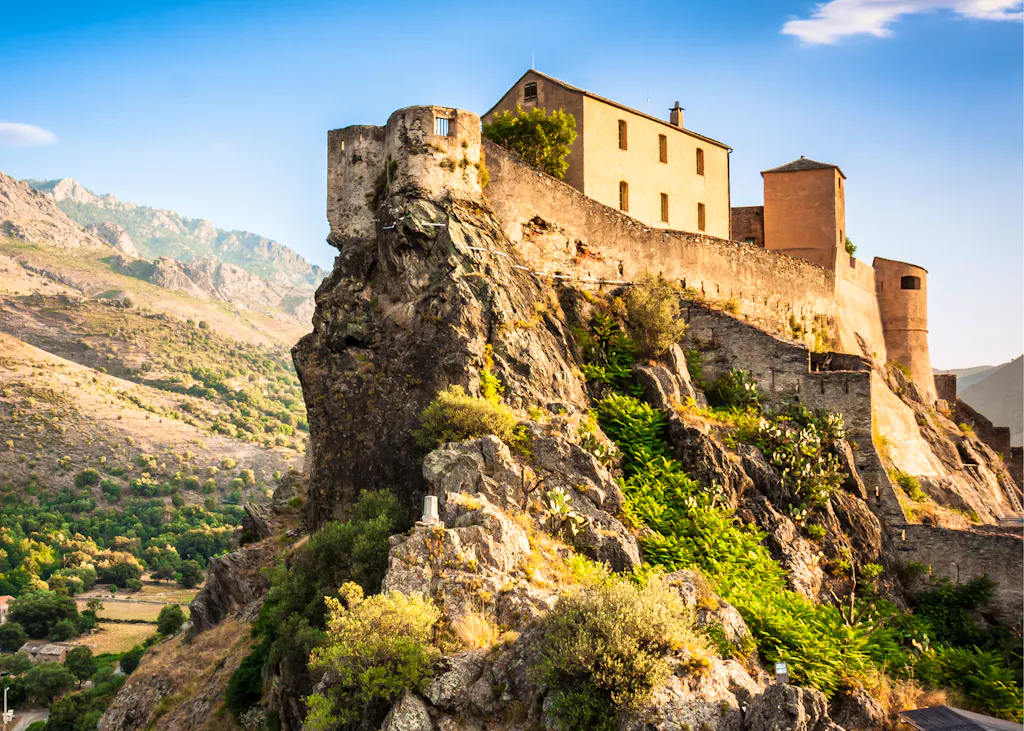
Corte is a spectacular village in the heart of Corsica, France’s “Isle of Beauty.” Its ancient fortified citadel fits perfectly within the natural mountain setting, and we recommend getting a panoramic view by taking the steep path that leads from the main square to the viewpoint. There are plenty of great hikes around Corte, including majestic sections of the GR20 with a backdrop of serrated summits.
How to visit Corte? –> Join 8-day France Island of Corsica Hiking
7. Motovun, Croatia

Croatia’s captivating walled town of Motovun sits atop a hill overlooking a verdant valley that’s literally filled with truffles! After waking up in this medieval hilltop town, we like to take a hike along the truffle route and learn the art of ‘hunting’ (and wine pairing) this precious subterranean mushroom. Walk off the truffles and wine by exploring Motovun’s pretty Romanesque and Gothic buildings in the old town.
How to visit Motovun? –> Join 9-day Croatia, Slovenia & Italy Village to Village Walking Tour
8. Monsanto, Portugal

Get off the beaten track in Portugal’s rugged central massif, where you’ll find the spectacular village of Monsanto. Walk through the tangle of centuries-old cobblestone streets and marvel at the houses wedged between giant boulders. The boulders form part of the structure of the medieval stone cottages—floors, doors, walls! For stunning panoramas, you can hike up to castle above Monsanto. Also a great spot for a picnic.
How to visit Monsanto? –> Join 8-day Portugal Historic Village Hiking
9. Murren, Switzerland

This beautiful village is Murren, nestled high in Switzerland’s Bernese Oberland at 5,374 feet. This alpine hamlet is completely car-free, which means you can only get there by foot, train by cable car! We recommend hiking the 12-mile route from Kiental to Murren, showcasing majestic views of the Jungfrau, Monch and Eiger mountains. The cable car down through the Lauterbrunnin Valley is equally spectacular!
How to visit Murren? –> Join Alps Eiger to Matterhorn Trek
10. Amalfi, Italy

Tucked along Italy’s dramatic southern coastline, Amalfi is one of the most enchanting villages in Europe, blending history, seaside charm, and jaw-dropping landscapes. At its heart is the stunning Cathedral of St. Andrew, with its striking striped façade and ornate interiors dating back to the 9th century. Beyond the town’s bustling piazzas and lemon-scented lanes, Amalfi is also a gateway to some of the region’s most unforgettable trails. Take in dazzling Mediterranean views while hiking the Amalfi Coast’s otherworldly Path of the Gods and Path of Lemons. Whether you’re savoring fresh seafood by the harbor or pausing mid-hike to take in the endless vistas, Amalfi captures the essence of la dolce vita in every step.
How to visit Amalfi? -> Join Italy Sorrento Peninsula & Amalfi Coast Hiking
Why Explore Europe with MT Sobek
MT Sobek began operating adventure trips in Europe in the early 1970s, making Alps hiking adventures one of our earliest international offerings. While our very first trip was an Everest Base Camp trek in 1969, we quickly expanded into Europe and have been refining our Alps itineraries ever since—for more than 50 years.
So what does this rich history provide for MT Sobek guests?
- Carefully designed itineraries: A balance of iconic trails and hidden gems for a deeper experience of each European destination. MT Sobek’s Europe hiking adventures immerse guests in the natural beauty and cultural heritage of Italy, Croatia, France, Romania and more.
- Small group adventures: All MT Sobek trips in Europe are limited to no more than 16 guests, while some are capped at 12. Small group sizes create a more personalized and immersive experience.
- Seamless travel logistics: Permits, transportation, meals, activities and accommodations are expertly arranged so you can focus on the joy of adventure and cultural discovery.
- Comfort and immersion: Rewarding hikes paired with premier lodging and memorable meals create a enriching and relaxing experience.
- Expert guides: Knowledgeable leaders share insights into local ecology, geology, wildlife, and cultural history, and ensure a commitment to safety and enjoyment throughout the journey.
Looking for more inspiration? Get your copy of our free catalog!
Check out all of MT Sobek’s adventures in Europe and get your free MT Sobek catalog!
Enjoying our content? Add MT Sobek as a Google Preferred Source.
FAQs
Late spring (May-June) and early fall (September-October) are the best times of year to visit Europe’s most beautiful villages. These timeframes offer comfortable weather, vibrant scenery, quieter trails, and excellent hiking, walking and trekking. Summer is the most popular season, but that also makes it the busiest, while the winter months transforms many European villages into lively ski resorts.
Some of Europe’s finest hiking villages include Zermatt and Lauterbrunnen in Switzerland, Chamonix in France, Cortina d’Ampezzo in Italy, and Hallstatt in Austria. These villages are perfectly situated for direct access to iconic hiking trails and iconic multi-day treks like the Tour du Mont Blanc and Alta Via trails. However, these villages also become crowded. If you’re interested in great hiking in more off-the-beaten-path areas, consider Bolzano, Italy; Innsbruck, Austria; Davos, Switzerland; and Aosta, Italy.
Yes, some famous European villages can be very busy during the peak summer months (June-August). Zermatt, Gordes, Monsanto Murren and Amalfi can get quite crowded. Traveling during the shoulder seasons, or exploring lesser-known villages and off-the-beaten-path destinations like Romania can provide a much quieter experience while still taking in spectacular European scenery.
Of course you can, and in fact that is exactly the way to do it. Many of Europe’s most picturesque villages have world-class hiking trails connecting them. You can also visit multiple villages by train or car. Regions like the Alps, Cinque Terre, Provence, the Cotswolds, and the Dolomites make it easy to experience many villages on a single itinerary.
Guided hiking and adventure tours offer several advantages, especially in mountain regions or more remote areas. Local guides offer historical insights, handle logistics, make dining recommendations, offer more authentic cultural immersion, and often include hikes that independent travelers are unlikely to ever find.
All European countries have extraordinarily charming and picturesque towns with historical buildings, centuries-old architecture, and unique characteristics. However, some nations stand above the rest with the beauty of their villages. Italy, France, Switzerland, Austria, Croatia, Slovenia, Spain, England, Romania, and Germany are all home to exceptionally scenic settlements. Each country offers towns with their own unique character—from vibrant Mediterranean fishing villages to stunning Alpine hamlets and fantastical medieval towns.
A single village can be enjoyed in one or two days, but if you would like a more complete European experience, it’s best to play on one to three weeks so you can visit many different regions and towns. Some travelers prefer to focus their visit on hiking, wine tasting, visiting local markets, touring castles, and having cultural experiences, while the villages themselves are secondary.
You will need comfortable walking or hiking shoes, active clothing layers, rain gear, water bottles and/or a hydration bladder, sun protection, toiletries, evening clothes, trekking poles (optional) and a small daypack. If you’re hiking in the Alps, weather can shift quickly and snow on mountain passes is possible year round, so it’s recommended to have warmth layers.
Learn More About Adventure Travel in Europe


