10 Bucket-List Adventures in Patagonia
A Guide to My Favorite Adventures in Patagonia
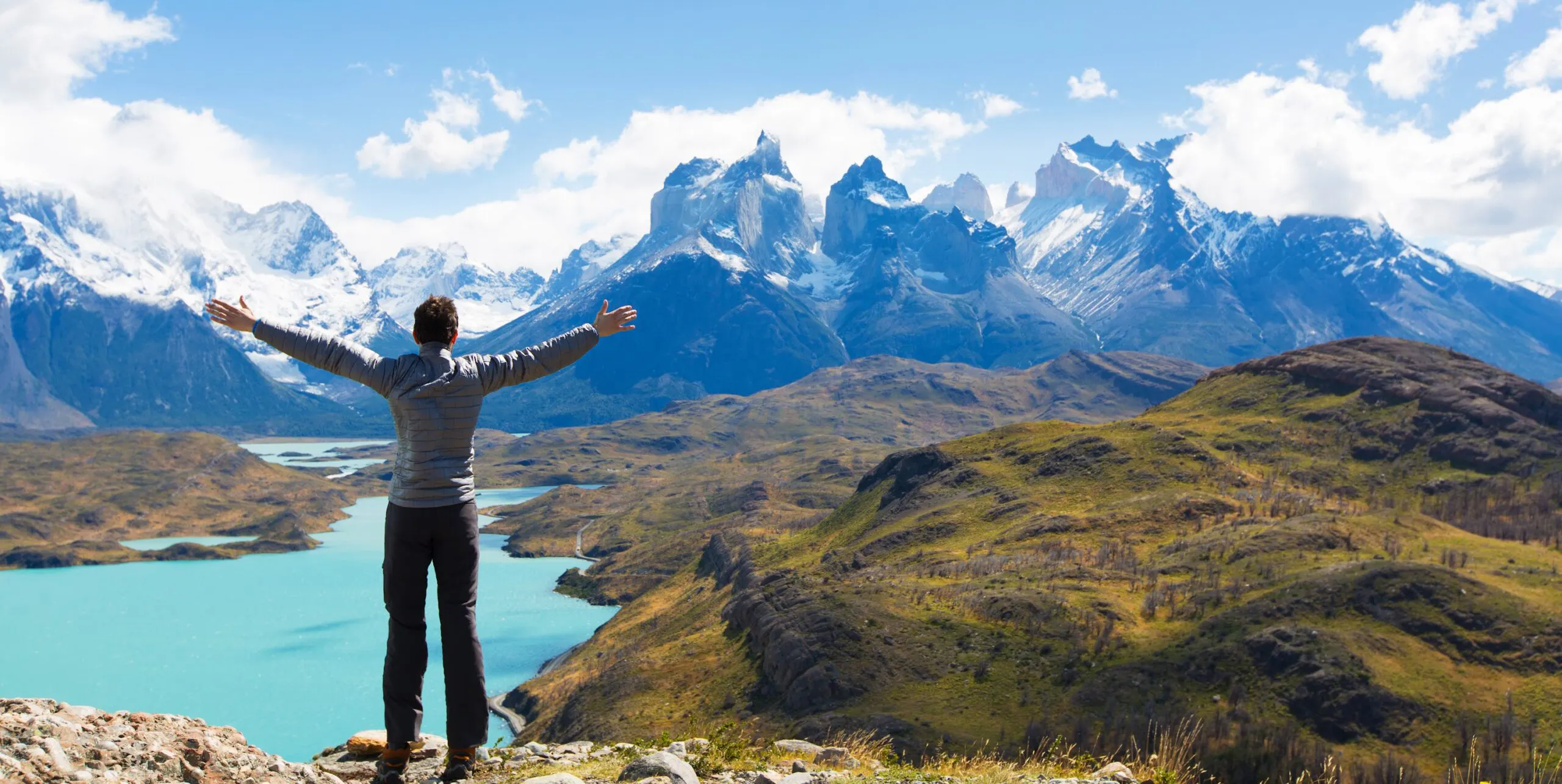
Patagonia is one of my favorite destinations on the planet. I’ve traveled to every continent, across dozens of diverse landscapes, and I’ve found nowhere else that provides perspective quite like Patagonia. The landscape is open, dramatic, and raw in a way that can simultaneously humble and inspire you, regardless of your travel experience. Across southern Chile and Argentina, Patagonia is home to ancient icefields, temperate rainforests, barren steppe, glacial-fed lakes, dramatic fjords, and the Southern Ocean. These features converge to form one of the world’s most stunning and impressive “playgrounds” for adventure.
Making it even better, there are many different ways to experience it!
“You can choose between hiking, biking, horseback riding, and kayaking,” says Sergio Mauricio “TC” Bahamondez Montenegro. The Patagonia native and longtime MT Sobek guide and logistics expert has spent decades exploring and guiding throughout the region. “It’s an amazing place to do outdoor activities.”
For TC, however, Patagonia is about much more than dramatic scenery.
“It’s not only the beauty of the mountains,” TC says, “it’s Patagonia’s history and geology, the birds and the mammals. This is a perfect place to regenerate and refresh both the mind and the soul, and to just be ‘awake’.”
— Sergio Mauricio “TC” Bahamondez Montenegro., MT Sobek guide
Key Takeaways
- Patagonia is enormous. Choose one or two areas to focus on and design your trip around the experiences that matter most to you.
- The classic adventures are classics for a reason. The W Trek, O Circuit, Fitz Roy, and Perito Moreno Glacier deliver some of Patagonia’s most spectacular scenery and are excellent choices for a first visit.
- You don’t have to be a hardcore trekker. Horseback riding, cycling, wildlife watching, glacier excursions, kayaking, and expedition cruising offer excellent ways to experience the region.
- Guides aren’t always necessary, but local experts can enrich your experience significantly.
- Leave room for the unexpected. Some of Patagonia’s most memorable moments aren’t necessarily the famous viewpoints, but the spontaneous encounters and experiences you find along the way.
Table of Contents
- Patagonia at a Glance
- Hike the W Trek or O Circuit in Torres del Paine
- Trek to Laguna de los Tres beneath Fitz Roy
- Walk on Perito Moreno Glacier
- Go Wildlife Watching on Peninsula Valdes
- Sail to Cape Horn through Tierra del Fuego
- Live Like a Gaucho on a Patagonian Estancia
- Raft the Futaleufu River
- Hike the Cochamo Valley
- Mountain Bike or Cycle Through the Lake District
- Sea Kayak Through the Patagonian Fjords
- FAQs

The MT Sobek Adventure Catalog
Our latest trips, photos, and itineraries, mailed free to your door.
Patagonia at a Glance
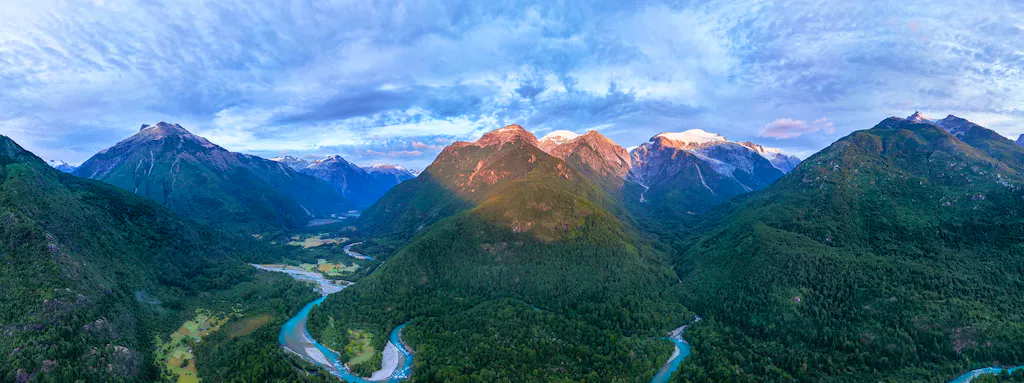
Encompassing more than 400,000 square miles across southern Chile and southern Argentina, Patagonia is enormous. To put it in perspective, the region is larger than France and Germany combined. “Patagonia is a huge area,” says TC. “It’s like going to the US. You think, OK, I need to see Yosemite, I need to see Yellowstone—but it’s impossible to see it all.” Especially in one trip.
For first-time visitors to Patagonia, TC says you might want to start with the icons: places like Torres del Paine in Chile and Perito Moreno Glacier in Argentina. However, “If you are exploring and want to be away from the crowds, northern Patagonia—on both the Chilean and Argentinian side—is incredible.”
From the classic W Trek to horseback riding in gaucho country, here are 10 essential ways to experience Patagonia’s adventure offerings. Rest assured, they’ll keep you coming back for more!
1. Hike the W Trek or O Circuit in Torres del Paine
Location: Torres del Paine National Park, Chile
Typical duration: 4 to 5 days on the trail for the W; 7 to 9 days for the O Circuit (MT Sobek’s guided trips: 7 days with 5 on the trail for the W; 12 days with 9 on the trail for the O)
Difficulty: Moderate to strenuous
Best season: November–March
If hiking in Patagonia has defining routes, these two treks are them.
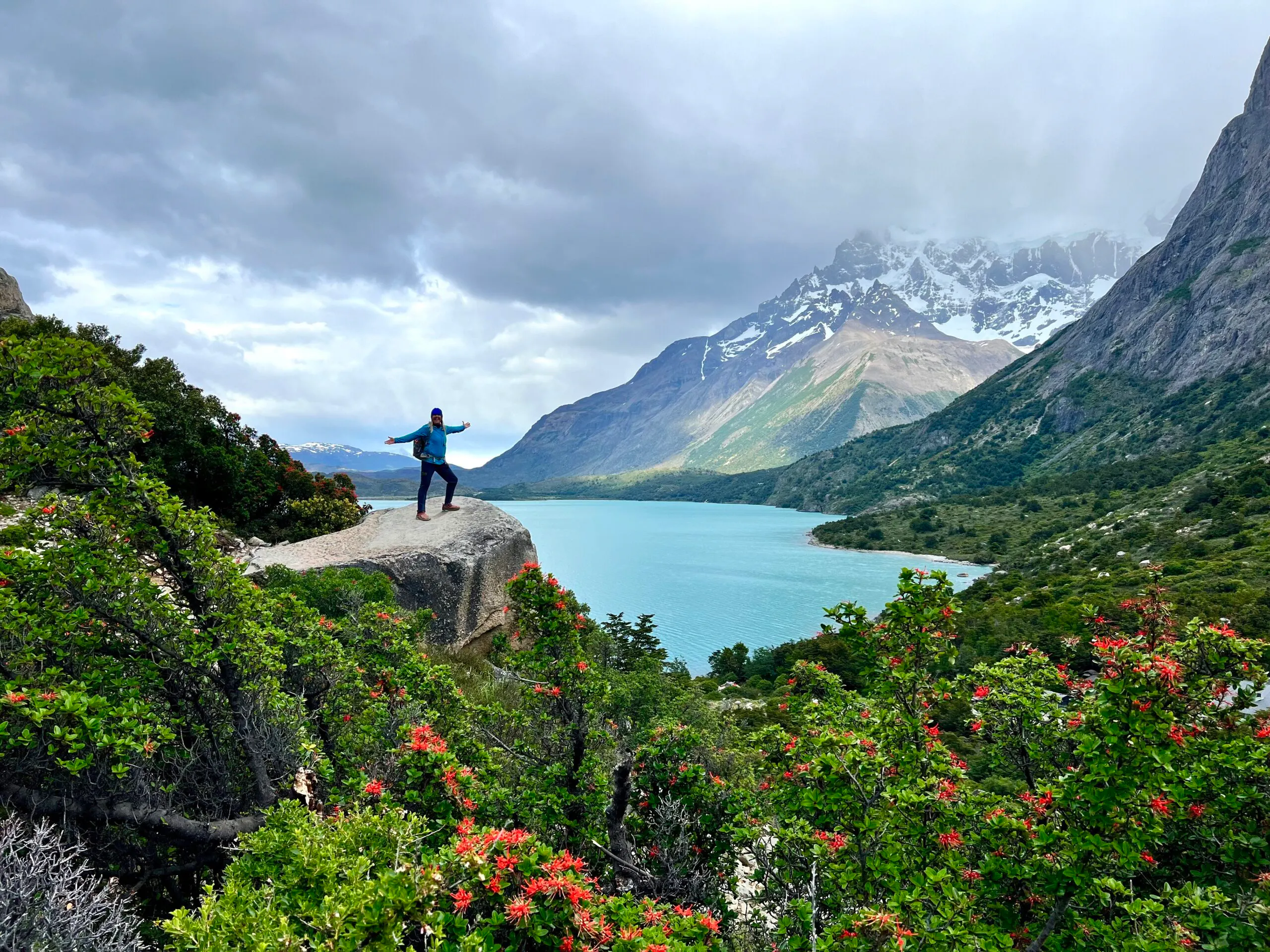
The W Trek threads through the southern and western portions of Torres del Paine National Park, connecting three extraordinary highlights: the Base of the Towers, the French Valley, and Grey Glacier. The longer O Circuit circles the entire Paine Massif, exploring all of the W Trek along with the wilder northern and eastern sections of Torres del Paine.
On both of these extraordinary treks, the scenery changes constantly. One moment you’re walking beside a brilliant, glacial-fed turquoise lake; the next you’re hiking beneath immense granite towers, through beech forests, or staring across a glacier-fed valley at a herd of guanacos (wild llamas).
The O Circuit’s John Garner Pass provides one of the most famous panoramas in Patagonia, with the vast Grey Glacier and Southern Patagonian Ice Field spread below.
If you’re active and enjoy hiking, says TC, a multi-day trek through Torres del Paine is worth every effort it takes to travel to this region and make it a reality.
Adventure Details:
- Need to know: These hikes are not easy “walks in the park.” Fierce winds, rain, snow, and sudden, unpredictable weather changes are a normal part of most hiking days in Torres del Paine. Accommodation and camping reservations are required, and park rules can change by year and by season. For example, beginning in 2026, winter restrictions included closures and additional guide requirements on sections of both the W and O routes.
- Guided vs. unguided: With well-marked and well-maintained trails, independent trekking is popular during the main season (October through April). However, the logistics are complicated: you will need to organize lodging or camping reservations, transfers, gear, and food, and conditions can change quickly. If you want added safety, detailed info on flora, fauna, and geology, cultural immersion, and assistance on everything from booking lodgings to navigating weather, consider a guided expedition. MT Sobek pioneered commercial O Circuit trips decades ago and still operates a fully guided version, complete with porter support and a combination of hotels, camps, and refugios. Our W Trek Hiking Tour is as equally as iconic, offering premier access to the park’s most iconic highlights.

2. Trek to Laguna de los Tres beneath Fitz Roy
Location: El Chaltén, Argentina
Distance: About 15.5 miles/25 km round trip
Typical duration: 8 to 9 hours
Difficulty: Moderate to high
Best season: November–March
The jagged silhouette of Mount Fitz Roy is one of Patagonia’s defining images. The best way to appreciate it is to earn it on a full day hike in Los Glaciares National Park.
The trail to Laguna de los Tres begins from town in El Chaltén, Argentina’s self-proclaimed—and officially recognized—”National Trekking Capital.” From town, the trail climbs through forest and open landscapes toward Fitz Roy, ending with a steep final ascent over glacial moraine to the turquoise lagoon at the mountain’s base.
The rewarding view is enormous: the granite towers of Fitz Roy rise directly above the lake, often surrounded by hanging glaciers and snow.

Adventure Details:
- Need to know: The final climb is steep, and typical Patagonian weather can make the trail considerably more demanding. Carry sufficient water and snacks. Be prepared for a long, arduous day on the trail and only plan on doing the entire hike if you’re fit and in good health.
- Guided vs. unguided: For most fit hikers, it’s possible to go unguided. The main trails from El Chaltén are well established and well traveled. Consider a guided trek if you’re extending the trip into remote areas, crossing glaciers, combining Argentina with Chile, or want deeper knowledge of the geology, wildlife, and landscape. MT Sobek’s Chile & Argentina Ultimate Patagonia Hiking Tour includes a trek to Fitz Roy for breathtaking views of the peak and its hanging glaciers.

3. Walk on Perito Moreno Glacier
Location: Los Glaciares National Park, Argentina
Typical duration: Half day to full day, depending on excursion
Difficulty: Moderate, depending on route
Best season: Spring through fall (November-March)
Perito Moreno is one of Patagonia’s most impressive natural features, even if you only see it from a distance. From the park’s famous viewpoints, you can see massive, steely blue-white walls of ice rising above Lago Argentino, and usually hear chunks of glacier calving into the icy waters. While viewing it is impressive, walking across the glacier is a whole other experience, and I highly recommend it.
Authorized glacier excursions take visitors onto the ice with crampons and professional mountain guides. The ice reveals blue pools, crevasses, moulins, and unusual formations that are impossible to appreciate from the shore. It is an intimate look at one of the Earth’s most powerful forces—the slow-marching ice sheets that can carve mountains in half. This is without question one of the hallmark features of Los Glaciares National Park.
Adventure Details:
- Need to know: The glacier portion is strictly guided. The viewing platforms can be enjoyed on your own.
- Guided vs. unguided: To hike the glacier and navigate its ever-changing landscape, an authorized operator is required. Several MT Sobek Patagonia itineraries feature Perito Moreno viewing, including our Chile & Argentina: Ultimate Patagonia Hiking Tour.
4. Go Wildlife Watching on Peninsula Valdes
Location: Chubut Province, Argentina
Typical duration: 2 to 4 days
Difficulty: Easy to moderate
Best season: Varies by species
Situated along Argentina’s Atlantic coast, Peninsula Valdes is both an incredible wildlife destination and a UNESCO World Heritage Site. Southern right whales use its protected waters to mate, give birth, and nurse their newborn calves between May and December, while everything from southern elephant seals to Magellanic penguins inhabit the peninsula itself. This incredible destination is a little bit like the Galapagos of Patagonia.

Adventure Details:
- Need to know: This is a different Patagonia from Torres del Paine or Los Glaciares. Expect open steppe, gravel roads, cliffs, and expansive ocean rather than granite spires and alpine trails. The town of Puerto Madryn is the usual base, while Puerto Piramides provides access to whale-watching excursions.
- Guided vs. unguided: A rental car makes independent exploration possible, but a knowledgeable wildlife guide can dramatically improve the experience by knowing where and when to spot different animals, including guanacos and various birdlife. A guide also helps understand the cultural context of the area, which for many people enriches the experience.

5. Sail to Cape Horn through Tierra del Fuego
Location: Tierra del Fuego, Chile and Argentina
Typical duration: Several days aboard an expedition cruise
Difficulty: Easy to moderate, depending on shore excursions
Best season: November–March
At the southern end of the continent, Patagonia becomes maritime. An expedition cruise through the Strait of Magellan, Beagle Channel, and southern fjords provides a completely different perspective of the region. Instead of hiking toward mountains, you travel beneath them, floating past islands, glaciers, forests, and remote channels where land and sea converge.
The ultimate objective is Cape Horn—the legendary headland where the Atlantic and Pacific meet. Weather determines whether ships can make a landing, which is part of what makes the experience feel authentically expeditionary.
Adventure Details:
- Need to know: Weather controls the itinerary. Cape Horn landings and other shore excursions can be modified or canceled for safety. Bring layers and waterproof gear even when the forecast looks favorable.
- Guided vs. unguided: While the cruise itself is guided, it’s easy to explore around Ushuaia and Tierra del Fuego National Park before and/or after departure. MT Sobek’s Patagonia to the Sea itinerary combines spectacular onland adventures with a multi-day expedition cruise, with twice-daily shore excursions when conditions permit. TC calls it “a fantastic option,” because it merges Torres del Paine, Perito Moreno, El Chaltén, and the fjords into one incredible trip.
6. Live Like a Gaucho on a Patagonian Estancia
Location: Throughout Chilean and Argentinian Patagonia
Typical duration: One day to several nights
Difficulty: Easy to moderate
Best season: November–April
For MT Sobek guide TC Montenegro, horseback riding is one of Patagonia’s quintessential experiences.
“It’s one of the best places to ride horses in the entire world,” he says, “not least because riding connects travelers with the region’s gaucho culture.”
— Sergio Mauricio “TC” Bahamondez Montenegro., MT Sobek guide
The gauchos of Patagonia have a long relationship with the land and horses. Historically, horses were essential to traveling across the enormous distances of the region; today, a stay at a working estancia offers travelers a chance to experience that culture firsthand.
TC particularly recommends experiences around places such as Estancia Cerro Guido near Torres del Paine and Estancia Cristina near El Calafate. The appeal is cultural as much as scenic.
“[Gauchos] have a real passion for the horses and a passion for the land,” he says, “and their way of life is just so unique.”
— Sergio Mauricio “TC” Bahamondez Montenegro., MT Sobek guide

Adventure Details:
- Need to know: You don’t have to be an experienced rider to enjoy an estancia visit, but tell the operator your riding experience in advance. Routes and horses can be matched to ability.
- Guided vs. unguided: The stay itself can generally be booked independently, but horseback rides and working-estancia experiences are hosted by local guides and gauchos.

7. Raft the Futaleufu River
Location: Los Lagos Region, Chile
Typical duration: Half-day to multi-day rafting expedition
Difficulty: Class III–V, depending on section and conditions
Best season: Generally December–March
Patagonia is famous for trekking, but some of its most exhilarating adventures happen on the water. The Futaleufu River winds its way through northern Chilean Patagonia near the Argentinian border, and is one of the world’s great whitewater destinations. Fed by glacial lakes in the Andes, the river is famous for its turquoise water, powerful rapids, and a spectacular setting of forested mountains.
The river’s most challenging stretches reach Class IV and V, putting them firmly in the realm of serious whitewater. Commercial rafting trips use professional guides and safety kayakers, with routes selected according to experience and current river conditions.
Adventure Details:
- Need to know: This is serious whitewater, particularly on the upper and more technical sections. Seek out clear information about the difficulty of the route, and a trip that matches your experience level. Outfitters typically provide wetsuits for the river.
- Guided vs. unguided: The combination of powerful rapids, cold water, changing river levels, and remote terrain makes independent rafting an unwise choice for most travelers. For expert assistance, go with a guide.
8. Hike the Cochamo Valley
Location: Los Lagos Region, Chile
Typical duration: 1 to 3+ days
Difficulty: Moderate to strenuous
Best season: November–March
Often called the “Yosemite of South America,” Cochamo Valley is one of northern Patagonia’s great emerging adventure destinations.
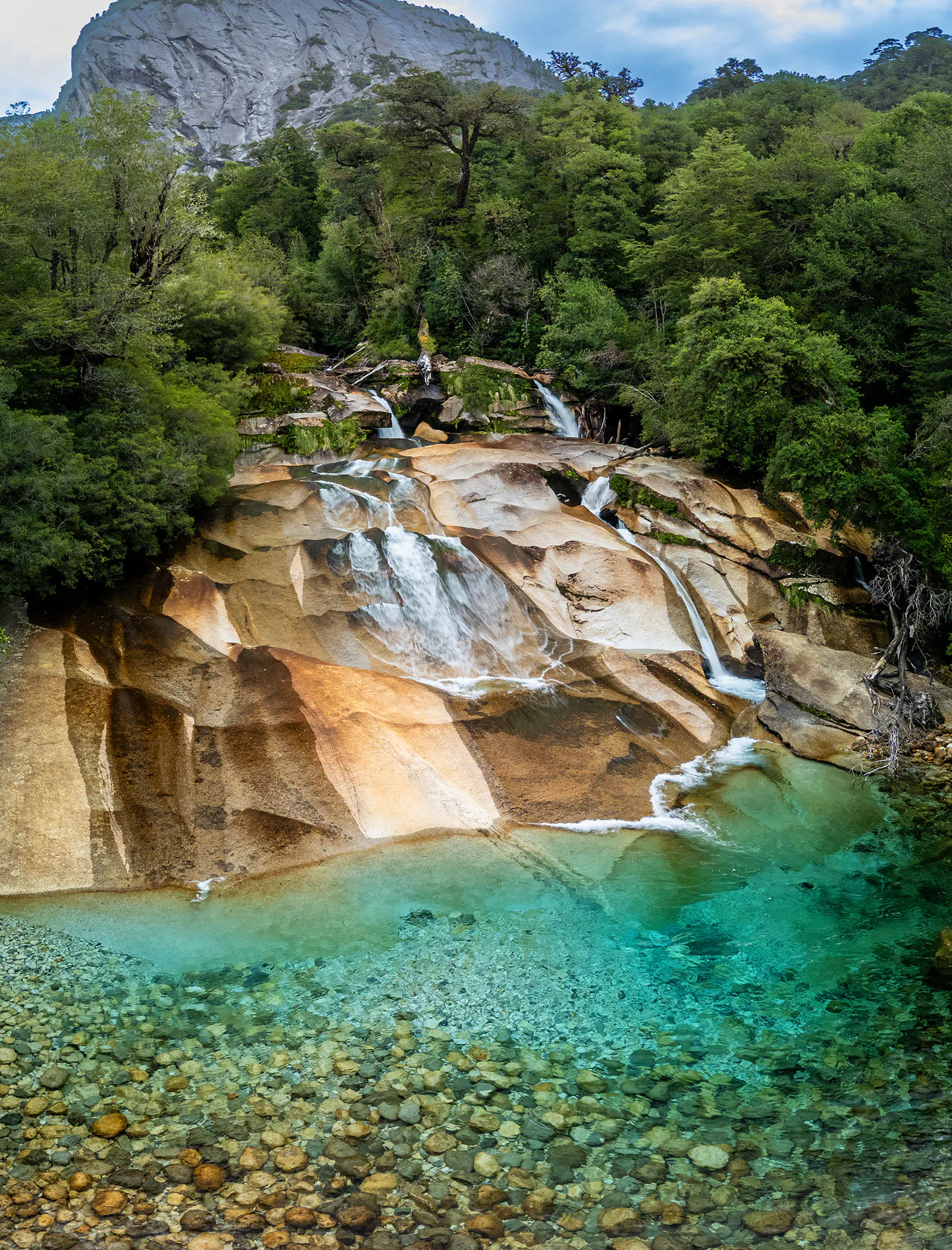
The comparison to Yosemite makes sense at first glance: towering granite walls rise dramatically above a deep valley. But instead of Yosemite’s relatively dry mountain environment, Cochamo’s cliffs emerge from lush temperate rainforest, with ancient trees, waterfalls, rivers, and dense vegetation surrounding the valley.
You’ll follow historic gaucho trails into the mountains, cross streams and navigate muddy, sometimes steep terrain before reaching La Junta, the heart of the valley. For TC, Cochamo represents the kind of Patagonia that can be harder to find in the better-known southern parks.
“If you are exploring and want to be away from the crowds, northern Patagonia—on both the Chilean and Argentinian side—is incredible,” TC says.
— Sergio Mauricio “TC” Bahamondez Montenegro., MT Sobek guide
Adventure Details:
- Need to know: Expect mud, roots, stream crossings, and steep sections. Weather can change quickly, and trails may become considerably more difficult after heavy rain. Accommodation is intentionally rustic, with camping and simple lodging options rather than the extensive refugio infrastructure found in Torres del Paine. Carry appropriate rain gear, footwear with good traction, and enough food and water for the day’s conditions.
- Guided vs. unguided: Experienced hikers can tackle the main route independently, but a guide is valuable here. Local knowledge helps with route finding, river crossings, weather decisions, and understanding the valley’s ecology and history. MT Sobek’s new Chile Patagonia Cochamo Valley Hiking Tour is a first-of-its-kind expedition into the Cochamo Valley, offering access to a landscape that is still relatively new to international adventure travelers.

9. Mountain Bike or Cycle Through the Lake District
Location: Northern Patagonia, Argentina and Chile
Typical duration: 2 to 7 days
Difficulty: Easy to strenuous, depending on route
Best season: October–April
The Lake District of northern Patagonia is one of the region’s best places to explore by bicycle, combining snow-capped volcanoes, deep-blue glacial lakes, temperate forests, and mountain roads.
On the Argentinian side, there is an extensive network of cycling and mountain-biking opportunities, from relatively gentle rides to technical trails around Bariloche. The Chilean side offers another set of possibilities around Puerto Varas, Lake Llanquihue, and the volcanoes of the northern Andes.
TC sees cycling as an especially accessible way to experience the region. “E-bikes and mountain e-bikes are also very popular, and more accessible for people who aren’t used to doing a lot of biking,” he says. For experienced cyclists, however, there are plenty of challenges. Mountain passes, long distances, gravel surfaces, and unpredictable weather can turn a scenic ride into a serious endurance adventure.
Adventure Details:
- Need to know: Don’t assume every trail is open to bicycles. Some hiking routes are reserved for pedestrians or horses only, and conditions can change seasonally.
- Guided vs. unguided: Both work well. Experienced cyclists can tackle established routes independently, particularly in the Lake District. A guided trip becomes attractive when you want high-quality bike rental, a support vehicle, luggage transfers, route planning, and local knowledge.
10. Sea Kayak Through the Patagonian Fjords
Location: Southern Chilean Patagonia
Typical duration: Day trip to multi-day expedition
Difficulty: Moderate to advanced
Best season: November–March
Southern Chile is carved by an immense network of channels and fjords, where mountains plunge directly into the sea, temperate forests crowd the shoreline, and glaciers descend toward salt water.
This is the Patagonia that TC describes as still genuinely remote. “The channels and the fjords are incredible,” he says. “There are whales, dolphins, native forests, mountains, and glaciers running down to the ocean.”
Sea kayaking offers an intimate way to explore that environment. Waterfalls pour directly into the sea, seabirds circle overhead, and marine mammals can appear right alongside your sea craft.

Adventure Details:
- Need to know: Remote sea kayaking requires careful planning around weather, tides, currents, communications, water temperature, and emergency access. Waterproof layers are essential, and you’ll want to be comfortable paddling for extended periods. Multi-day expeditions also involve camping in remote locations and dealing with wet conditions.
- Guided vs. unguided: For most travelers, guided is the clear choice. Professional outfitters bring appropriate sea kayaks, safety equipment, communications, and local knowledge, while guides can make real-time decisions about weather and route conditions.
Enjoying our content? Add MT Sobek as a Google Preferred Source.

FAQs
For an active first-time visitor, the W Trek in Torres del Paine is hard to beat. It combines several of Patagonia’s defining landscapes—granite peaks, turquoise lakes, hanging valleys, forests, and glaciers—into one itinerary and has enough infrastructure to make a first multi-day trek manageable.
If you want a broader introduction with less sustained hiking, consider combining a visit to Torres del Paine with Perito Moreno Glacier or an expedition cruise through Tierra del Fuego and the Patagonian fjords.
At least a week is worthwhile, but 10 to 14 days gives you much more flexibility.
With only a week, try focusing on one particular area of Patagonia. For example, you could base yourself in El Chaltén and hike Fitz Roy, or spend several days on the W Trek.
If you have 2 weeks, you can combine major destinations in both Chile and Argentina, such as Torres del Paine, El Chaltén, and El Calafate.
If you want to add a cruise, wildlife destination, estancia, or northern Patagonia, allow additional time. Patagonia is enormous, and transfers between regions can take much longer than the map suggests.
For classic trekking and most outdoor adventures, December through February offers the longest daylight and generally the most favorable conditions. It is also the busiest period.
November and March can be excellent alternatives. November brings spring landscapes and fewer visitors, while March offers autumn colors, cooler conditions, and quieter trails.
TC particularly emphasizes that Patagonia shouldn’t be thought of as a destination that only works in summer. “During spring and fall, and even in winter,” he says, “everything’s unique.” For more, see The Best Time to Visit Patagonia: A Month-by-Month Guide.
Guided hiking tours can significantly enhance your experience by taking care of logistics, reservations, permits, and safety while providing a professional guide with local expertise. Guides can also bring more color to destinations by providing fascinating knowledge about the ecology, geology, and history of the area.
Learn More About Adventure Travel in Patagonia


