Guided vs. Independent Patagonia Trekking: Which Is Right for You?
From the W Trek to remote backcountry routes, our experts break down the best way to trek Patagonia for your travel style and trip style.

By any standard, Patagonia is a very special hiking destination. It can make any adventurer, from novice to expert, feel like a first-time explorer. This is especially true on more remote routes like the O Circuit and the amazing Cochamo Valley.
Patagonia stretches across the southern region of both Chile and Argentina. It is a vast, mountainous region encompassing a wild variety of landscapes, from jagged alpine peaks and ancient forests to massive glacial-fed lakes and ice fields, not to mention some of the most spectacular hiking trails on the planet. I like to think of it a little bit like the Alaska of South America.
Like Alaska, Patagonia is also a place where weather and trail conditions can change rapidly, and often do. A sunny morning can easily turn into a rainy, windy mid day, and a mellow-looking trail can become considerably more challenging when the weather shifts like this. Add in remote trailheads, international border crossings, foreign languages, campsite and refugio (mountain hut) reservations, and the sheer size of the region, and planning a Patagonia trek well can be nearly as complicated as hiking one.
However, when it comes to the question of whether to hike Patagonia independently or go with a guide, there’s no one answer that fits everyone. The right choice depends on many factors. While independent (i.e., non-guided) trekking offers autonomy, privacy, and lesser costs, guided trekking comes with distinct and compelling benefits, which I explore at length in this article.
Ultimately, whether you choose to trek Patagonia independently or with a guide and tour company comes down to a few key questions: what kind of traveler you are, what kind of experience interests you, whether you’re willing to invest in a premium experience and how much independence you want once you’re on the trail.

Key Takeaways
- Independent trekking is best for experienced hikers who value autonomy and cost efficiency.
- Guided trekking tours cost more but provide local leadership, greater cultural immersion, logistical expertise, an additional layer of safety, the camaraderie of a group, unique experiences, and greater awareness of the natural and cultural history of the area.
- Patagonia’s weather is a factor. As MT Sobek’s guides emphasize, conditions can change quickly, making experience and flexibility particularly important.
- There is no universally “right” way to experience Patagonia. The best approach depends on your experience, budget, group, itinerary, and interests.
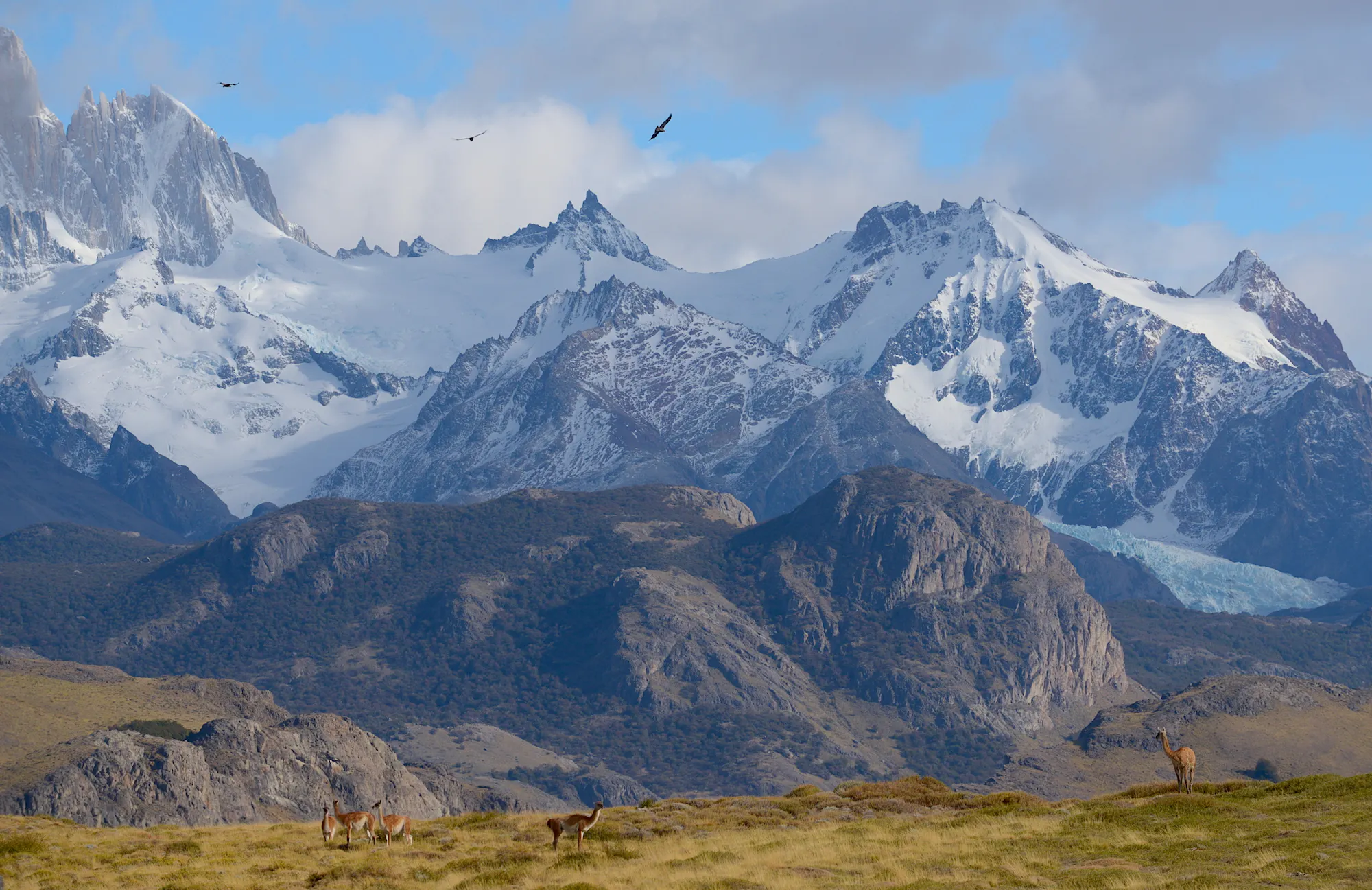
Understanding the Geography of Patagonia
Patagonia spans parts of both Chile and Argentina, with different landscapes and trekking experiences on either side of the border.
In Chile, Torres del Paine National Park is home to some of Patagonia’s most spectacular scenery, including the iconic granite towers and Grey Glacier, accessed on both the W Trek and O Circuit. Across the border in Argentina, Los Glaciares National Park features the dramatic peaks around El Chalten such as Mount Fitz Roy and Cerro Torre, along with the enormous Perito Moreno Glacier.
The geography of the region is remarkably diverse, all tied together through the great vastness of Patagonia. That doesn’t mean it’s unmanageable. Established routes such as the W Trek and the trails around El Chalten are popular because they offer relatively well-maintained trails and trekking experiences. But if you’re taking on Patagonia independently, you need to be ready to think on your feet and make good decisions about weather, navigation, equipment, reservations, and any physical limitations you have.
As MT Sobek guide Andre Labarca puts it, responsibility starts with the traveler, regardless of whether a guide is present: “Whether you go into the mountains with a guide or independently, it’s your job to be prepared. Have the right gear. Pay attention to the weather. You have to be responsible.”
What Is the Difference Between Independent and Guided Trekking?
At its simplest, the difference between guided and independent trekking in Patagonia comes down to who handles the details.
With independent trekking, you’re responsible for building and managing the trip yourself. That means researching routes; reserving campsites, hotels or refugios; planning and carrying your equipment and food; managing border crossings and language barriers; and making wise decisions about how to handle current conditions.
With guided trekking, a professional guide or tour company manages most of these responsibilities. Your days are typically as active, if not more active, than independent travelers. You may hike for hours and tackle significant mileage and elevation changes—but most of the behind-the-scenes work is taken care of for you.
In the most basic terms:
Independent: You plan it, carry it, and manage it.
Guided: A professional, local team manages the logistics and planning and helps make decisions along the way.

Independent Patagonia Trekking
For experienced backpackers, independent trekking can be incredibly rewarding.
You determine when to start walking, how long of a lunch break you’d like, how quickly to hike, and how much time you spend taking in views. There’s no group schedule to follow and no need to compromise your pace with others.
It’s also generally less expensive. By camping or reserving your own accommodations, planning and carrying your own food, and arranging your own transportation, you may spend less than what a guided Patagonia trek costs. However, you’ll invest more time and responsibility, and without extensive research, you may miss out on opportunities only local experts know well. Campsites, refugios, transportation, and park systems often all involve different booking processes, and reservations typically should be made six to nine months in advance of your trip.
Then there’s the trek itself.
If the weather deteriorates, you don’t have an experienced guide helping making the call about whether to continue, when to continue, or how to continue. This was illustrated tragically in the November 2025 blizzard that tragically took the lives of five hikers. If you’re carrying too much gear, you’re stuck with it for the entire trip. You’re more likely to miss a transportation connection or miscalculate the day’s hiking time, and if you do, you’re left to find a solution on your own.
Benefits of Independent Trekking in Patagonia
- Autonomy
- Freedom to adapt and adjust the itinerary how you want
- Often less expensive
Drawbacks of Independent Trekking in Patagonia
- The burden of all logistical planning
- Less cultural exposure and immersion
- Often a smaller margin of safety
- Fewer insights into the natural and cultural history
- Possibility of missing unique opportunities locals know well
- Less certainty of a well-designed itinerary
- Lack of camaraderie if traveling alone
- Making accommodations decisions with less familiarity of the options
Guided Patagonia Trekking
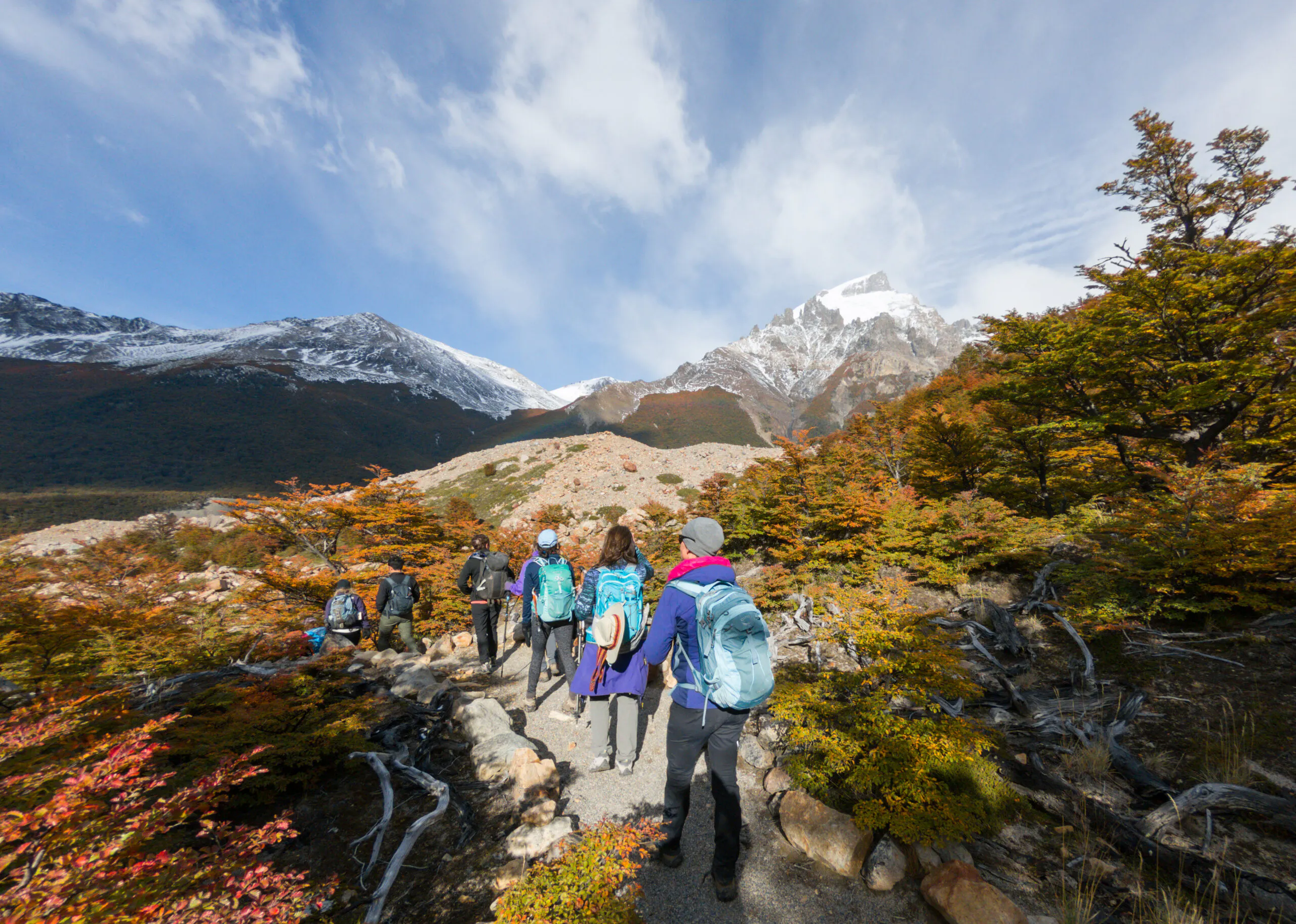
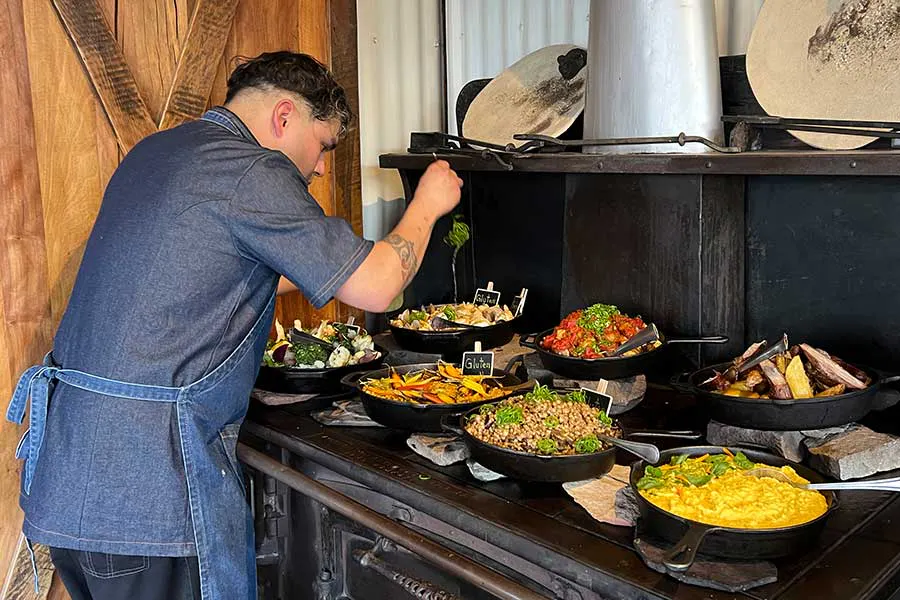
A professional guide brings everything from local knowledge to medical certifications and safety training, and the overall trip package typically includes lodging, meals, gear, packing lists, logistical and travel support, transportation, and portering or ferrying overnight gear between accommodations.
However, many Patagonia hiking tour guests report that the biggest benefit isn’t the convenience—it’s the way the local expertise elevates the experience.
Sharman Fox, MT Sobek’s Program Director for Latin America, explains that guides are constantly making decisions based on conditions that travelers may not recognize.
“MT Sobek’s guides have a really good awareness of what different weather conditions might mean.”
— Sharman Fox. MT Sobek’s Program Director for Latin America
Guides may decide that a particular day isn’t the right time to cross a mountain pass, for example, and use their local relationships and knowledge to find another solution.
These kinds of decisions invariably happen behind the scenes. “They’re also making judgment calls all the time in terms of the safety of the group,” Fox says, describing the “little micro-decisions” guides make to give travelers the best possible experience despite changing conditions.
Benefits of Guided Trekking in Patagonia
- All logistical planning handled for you
- More cultural exposure and immersion
- Often a larger margin of safety
- Insights into the natural and cultural history
- Enjoying unique opportunities only locals know well
- Certainty of a well-designed itinerary
- Camaraderie of a group
- Accommodations selected by people familiar with the options
Drawbacks of Guided Trekking in Patagonia
- Less autonomy
- Less freedom to adapt and adjust the itinerary how you want
- Often costs more

Guided vs. Independent by Traveler Type
The right choice also depends on who’s doing the trekking.

Solo Travelers
Although independent trekking is less expensive, solo travelers forgo a built-in partner to help with navigation, equipment, or difficult decisions. But a guided trip provides an instant social network and the increased safety of being part of a group.

Solo Female Travelers
Popular Patagonian trails have a strong international trekking community, and independent travel can be an excellent option for women who are comfortable hiking alone.
The bigger issue may be logistics rather than the trail itself. Getting between remote transportation hubs, coordinating accommodations, or managing unfamiliar logistics alone can add stress, and make a guided trek a popular choice for solo female travelers.

Couples
Couples may be ideal candidates for both independent and guided trekking in Patagonia.
Two people can share equipment and food, divide responsibilities, and provide one another with an extra measure of safety. They also get complete control over their pace and schedule.
However, couples are one of the most common groups that join guided adventures in general. on guided trips, couples get the best of both worlds: time alone as a couple and time with a group enjoying the greater camaraderie. Joining a guided group can make the experience more enjoyable for a couple, as they can relax into the experience knowing they are led by an expert and traveling with a group of like-minded companions.

Groups of Friends
For groups of friends, the question of whether to hike independently or join a guided trek depends on your experience level and the type of adventure you’re interested in. If your group is experienced and enjoys the challenge of planning, logistics, reservations, etc., then independent travel may the best choice. On the other hand, if you want to make the very most of your time in Patagonia and prefer to have professional-level service along the way, a guided trip may be a better option. Also, custom trips are a popular choice for groups of friends.

Families
Families face a different set of challenges.
Trying to coordinate consecutive campsites or refugio spaces for multiple people can be complicated, and younger children may not be able to carry the same weight as adults. Parents can quickly find themselves carrying additional clothing, food, equipment, and emergency supplies.
For families, having a professional team handle accommodations, logistics, and potentially luggage or gear transportation can make a major difference.
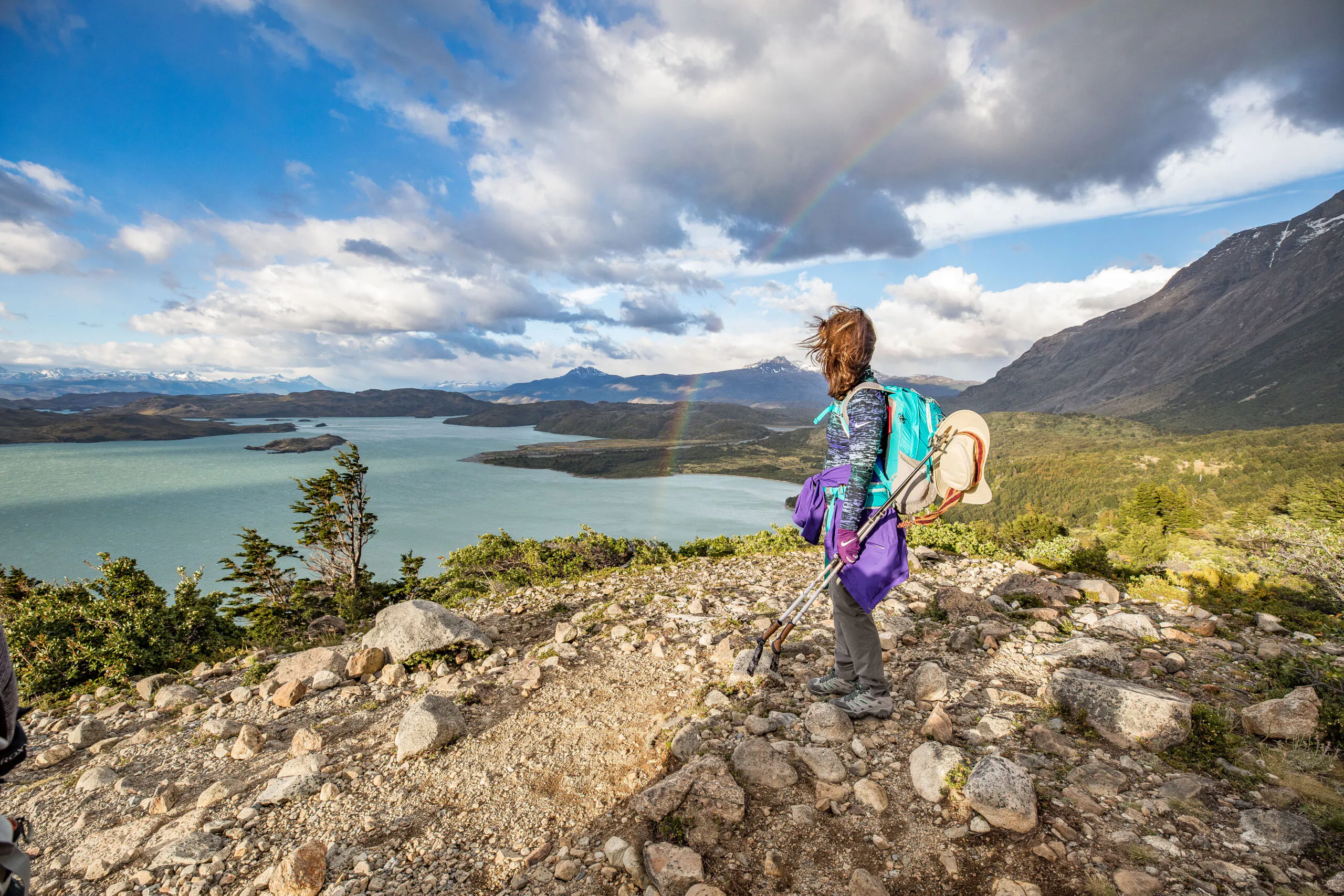
Guided vs. Independent by Trip Type
Not every Patagonia trek presents the same logistical challenge.
W Trek
Patagonia’s W Trek in Torres del Paine National Park is an accessible choice for independent trekkers because it is a popular, established route with a strong infrastructure of campsites and refugios.
A guided W Trek, however, removes much of that organizational burden. For example, MT Sobek’s W Trek itinerary handles the logistics so travelers can focus on the hiking itself.
O Circuit
Torres del Paine’s O Circuit is longer, more remote, and more physically demanding. Weather can be more significant, and carrying everything you need adds another layer of difficulty (camping is required on the O Circuit).
While plenty of experienced backpackers still tackle it independently, for many outdoor lovers, having local expertise on the “O” is particularly valuable.
Lodge-Based & Premier-Lodging Trips
Not every Patagonia adventure involves carrying a backpack from campsite to campsite.
Lodge-based trips offer a different model: travelers stay in comfortable lodgings and spend their days hiking, exploring by vehicle, or experiencing the landscape without sacrificing creature comforts.
For travelers who want Patagonia’s scenery but don’t want to spend every night in a tent or refugio, this can be the sweet spot.
MT Sobek CFO Trevor Ward experienced this firsthand when he went on the company’s premier Patagonia hiking experience. As an experienced adventurer himself, Ward says what surprised him most wasn’t simply the quality of the hiking, but the way the trip was designed to build “lodge by lodge, day by day” toward a larger experience.

What Guides Add Beyond Navigation
There’s another reason to consider guided trekking: a guide can change how you experience the landscape itself.
MT Sobek guide Rodrigo “Ro” Bahamondez points out that guides know not only the trail, but also the places worth stopping, how to avoid some of the busiest areas, and how to time the day for the best possible experience. They can also provide insight into Patagonia’s flora, fauna, geology, and geography.
Why Patagonia with MT Sobek?
MT Sobek’s history with Patagonia is extensive.
They ran their first commercial Patagonia trek in the 1970s, well before Torres del Paine became a must-visit destination for international travelers. That experience helped shape their approach to trekking in the region, and has led to a half-century of building and operating adventures throughout Patagonia along with leading small groups with local guides who have extensive knowledge of the region.
They also know the best times of the year to visit. While November can bring spring wildflowers, March offers fall color and potentially thinner crowds. They build their departures around these seasonal considerations, so you’re always there at an exceptional time of year.
FAQs
It depends on your experience and itinerary. Independent trekking can be an excellent choice for experienced backpackers on established routes such as the W Trek. Guided trekking can be a better fit for first-time multi-day trekkers, travelers with limited time, or anyone heading into more remote terrain.
Generally, yes. Independent travelers avoid the cost of professional guiding and can save even more by camping and preparing their own food. However, they also take on the cost—and time—of arranging transportation, accommodations, and other logistics.
Not necessarily. The W Trek is one of Patagonia’s most established trekking routes and can be completed independently by experienced hikers who are comfortable handling their own logistics. A guided trip can nevertheless simplify reservations, gear, transportation, meals, and weather-related decisions.
The O Circuit requires greater preparation and self-reliance than the W Trek. Travelers need to be comfortable with longer days, carrying equipment, managing changing weather, and handling their own safety decisions. Experienced backpackers can complete it independently, while others may prefer the additional support of a guide.
You still need to be prepared for changing mountain conditions. Andre Labarca recommends keeping your daypack light while carrying essentials such as personal medication and being prepared for four seasons of weather. Guides and porters may handle some of the heavier equipment, depending on the itinerary.
A guide doesn’t necessarily make the hiking itself easier. Patagonia remains a physically demanding destination. What a guide can do is make the overall experience less complicated by handling logistics, providing local knowledge, and making informed decisions when weather or trail conditions change.
MT Sobek brings more than five decades of adventure-travel experience to Patagonia, including decades of trekking in the region. Its trips combine small groups, local guides, logistical support, and itineraries covering both Chilean and Argentine Patagonia.
Learn More About Adventure Travel in Patagonia


