Chilean or Argentinian Patagonia: Which Is Right for You?
Our experts break down how to plan the best Patagonia Adventure in Chile or Argentina.
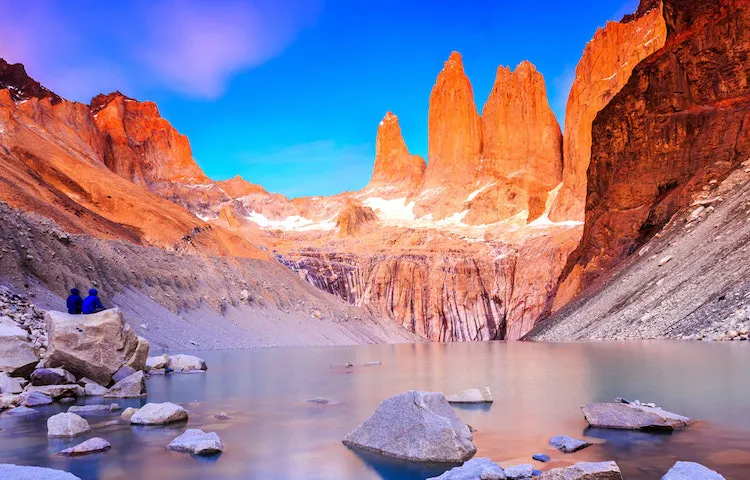
Chilean Patagonia’s most distinctive features are its multi-day treks like the W Trek and the O Circuit in Torres del Paine, while Argentinian Patagonia is specifically best for stringing together day hikes and exploring glaciers from a hotel base in El Chaltén. The best overall solution to fully experience the region, though, is to combine Chile and Argentina into one comprehensive Patagonia adventure.
Stretching across the southern reaches of Chile and Argentina, Patagonia is a vast wilderness that’s famous for its jagged granite peaks, immense glaciers, and wildlife-abundant coastlines. But planning an adventure to this incredible region comes with a big question: where should you even start?
While Chilean and Argentinian Patagonia each offer their own distinct landscapes and experiences, they also complement each other remarkably well. Chile is home to the dramatic granite spires and multi-day treks of Torres del Paine. Argentina offers the craggy peaks of Fitz Roy, the massive glaciers of Los Glaciares National Park, and the hiking hub of El Chaltén.
To be clear, Patagonia is a vast region and there are many other destinations you could consider. Because there are so many options of where to explore, I focus this article on the main trekking areas of the region: Torres del Paine in Chile and Los Glaciares in Argentina.

The MT Sobek Adventure Catalog
Our latest trips, photos, and itineraries, mailed free to your door.
“All of Patagonia shares the same culture,” says Sergio Mauricio “TC” Bahamondez Montenegro, a Patagonia native and longtime MT Sobek guide and logistics expert. “We drink the same mate, a traditional herbal beverage, eat similar meals, listen to the same music—it’s very hard to divide the region culturally.”
Thankfully, what’s especially great about Patagonia is that you don’t necessarily have to.

Key Takeaways
- Chile is the choice for classic multi-day trekking. Torres del Paine’s W Trek and O Circuit deliver some of the best adventures in Patagonia, with iconic scenery, while places like Cochamo Valley offer a more remote, less crowded hiking experience.
- Argentina excels at flexible hiking and glacier experiences. Base yourself in El Chaltén for day hikes beneath Fitz Roy and Cerro Torre, or head to El Calafate for the spectacular Perito Moreno Glacier.
- You can combine Chile and Argentina into one grand Patagonia journey. Chile and Argentina offer different landscapes—from Chile’s fjords, rainforests, and granite peaks to Argentina’s expansive steppe and massive glaciers. This variation makes a combined trip an especially rewarding way to hike Patagonia.
- Guided travel can simplify a complicated destination. Patagonia’s enormous distances, international border crossings, competitive park reservations, and often rapidly changing weather can make logistics challenging. MT Sobek offers guided Patagonia itineraries that combine both countries, with options ranging from strenuous trekking and wilderness lodging to expedition cruise and hiking combos with luxury accommodations.
The Two Sides of Patagonia


Covering more than 400,000 square miles, Patagonia is enormous, and the border between Chile and Argentina isn’t totally cut and dry. The natural boundary between the two countries follows the continental divide along the spine of the Andes mountains, where water flows either west to the Pacific Ocean or east to the Atlantic Ocean. This divide creates different environments and ecosystems on either side of the range.
Chilean Patagonia encompasses fjords, forests, and vast icefields, but for many visitors—especially hikers—its main draw is Torres del Paine National Park, where granite towers rise far above turquoise lakes, glaciers, and rolling grasslands.
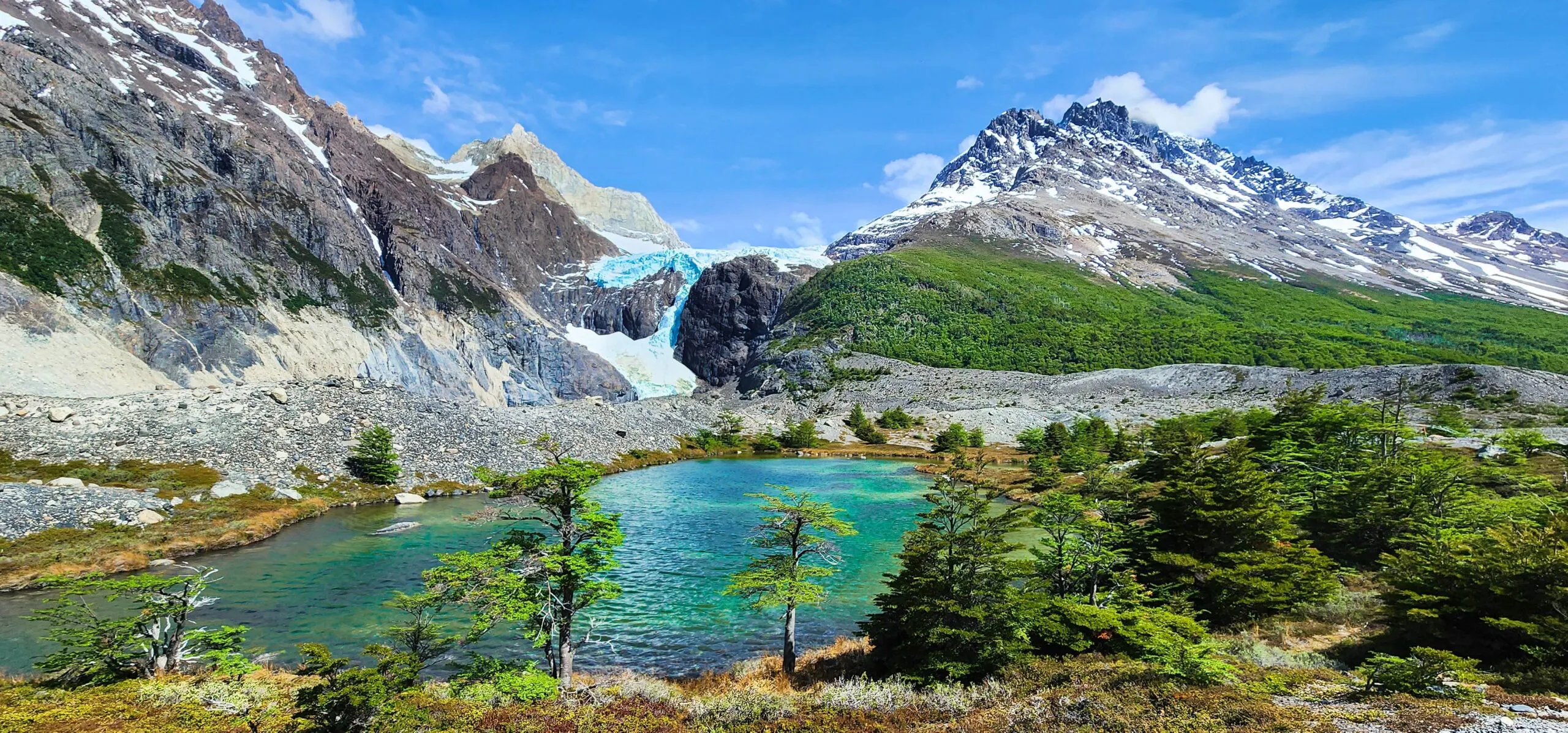
Then there’s Argentinian Patagonia: an open space of windswept steppes, dramatic mountain spires, and massive calving glaciers. Its Los Glaciares National Park is home to wondrous peaks like Fitz Roy and Cerro Torre, as well as the enormous Perito Moreno Glacier.
Chilean Patagonia’s Offerings

If your idea of a Patagonia adventure involves hiking from one spectacular viewpoint to another for several days, Chilean Patagonia is hard to beat.
The star attraction is Torres del Paine National Park, where enormous granite formations rise above turquoise lakes, glaciers, and forests. The park is home to two of Patagonia’s best-known trekking routes: the W Trek and the longer O Circuit.
While the W Trek is the classic introduction to Torres del Paine, connecting some of the park’s most famous sights—the Base of the Towers, the French Valley, and Grey Glacier—the “O” takes you farther into the park and around the Paine Massif, offering a more authentic and wild backcountry experience.
Torres del Paine’s popularity does come with trade-offs.
The park requires more advance planning than many travelers expect. Reservations for campsites and refugios (mountain huts) can be highly competitive, and organizing the trek independently means coordinating accommodations, transportation, meals, trailhead shuttles, and other logistics anywhere from 6 to 12 months ahead of time.
Chile can also be more expensive overall, particularly when you factor in park transfers and the various components required to organize a multi-day trek.
For travelers who want the freedom of a spontaneous hiking trip, the complexity and expense can be frustrating. For those who want a structured, guided Patagonia adventure, however, companies like MT Sobek can make the experience considerably easier.
Learn More:
- W Trek or O Circuit: Which is Right for You?
- Everything You Need to Know to Hike the W Trek
- Everything You Need to Know to Hike the O Circuit
- Torres del Paine Hiking Tours & Destination Guide
Argentinian Patagonia’s Offerings

On the Argentinian side, Patagonia trekking takes on a different character.
The hiking town of El Chaltén serves as an ideal adventure hub. Rather than committing to a single multi-day circuit, you can settle into town and choose from an extensive network of day hikes, including routes toward Mount Fitz Roy and Cerro Torre. This flexibility is one of Argentina’s biggest advantages. You can hike hard, return to town, shower, and have dinner without carrying everything you need for several nights in the backcountry.
Argentina is also the place to experience Perito Moreno Glacier, one of Patagonia’s most extraordinary natural features. The immense glacier is accessible from El Calafate, where you can see enormous walls of ice calving into the water—and, depending on your itinerary, step onto the glacier itself.
However, the main trade-off here is scale.
Argentinian Patagonia’s highlights are separated by substantial distances. El Calafate and El Chaltén—the main bases for visiting Perito Moreno Glacier and hiking near Fitz Roy and Cerro Torre—are approximately 137 miles (220 km) apart by road. Perito Moreno Glacier lies another 50 miles (80 km) west of El Calafate. Connecting these destinations means allowing time for transfers across Patagonia’s expansive landscapes.
Once you reach El Chaltén, however, several major hiking trails are accessible directly from town, making it possible to enjoy consecutive hiking days without long daily drives. Staying multiple nights in one hiking base is therefore more important for maximizing trail time than simply choosing between Argentinian and Chilean Patagonia.
Learn More:
Chile vs. Argentina: Which Patagonia Is Right for You?
When it comes to choosing between Chilean and Argentinian Patagonia, it really depends on what kind of adventure you’re looking for. The good news is that choosing one doesn’t mean you’re missing the “real” Patagonia. Each offers its own version of the region.
Learn More:
Choose Chile If You Want:
- A classic multi-day trekking experience
- The W Trek or O Circuit
- Torres del Paine’s famous granite towers
- Dramatic mountains, glacial lakes, forests, and fjords
- A more structured backcountry adventure
Choose Argentina If You Want:
- Flexible day hiking
- Fitz Roy and Cerro Torre
- Easy access to Perito Moreno Glacier
- Comfortable lodging in mountain towns
- Vast Patagonian steppe and a different perspective on the Andes
Argentina–Chile Patagonia Comparison Table
| Factor | Chilean Patagonia | Argentinian Patagonia |
|---|---|---|
| Signature hiking hub | Torres del Paine National Park, reached from Puerto Natales and famous for the granite Torres and Cuernos del Paine. | El Chaltén, Argentina’s self-styled “National Trekking Capital,” at the foot of Mount Fitz Roy in Los Glaciares National Park. |
| Iconic treks | The W Trek (typically 4 to 5 days) and the full O Circuit (typically 7 to 9 days). Also Cerro Castillo in Aysen and Dientes de Navarino near Cape Horn, the world’s southernmost trek. | Laguna de los Tres (Fitz Roy), Laguna Torre (Cerro Torre), Loma del Pliegue Tumbado, and the remote Huemul Circuit. Farther north, refugio-to-refugio hiking around Bariloche. |
| Trekking style | Classic multi-day, point-to-point trekking. You sleep inside the park in refugios, domes, or campsites and move between them. | Mostly day hikes from a town base: hike out in the morning, sleep in a hotel. Easy to pick and choose routes based on weather and energy. |
| Landscape character | A wetter, greener side of the Andes: turquoise lakes, hanging glaciers, temperate rainforest, and fjords along the coast. | Jagged spires (Fitz Roy, Cerro Torre) rising from dry steppe, plus the Southern Patagonian Ice Field’s big glaciers such as Perito Moreno. |
| Glacier experiences | Grey Glacier is reached on foot along the W or O, with kayaking and boat options. Fjord cruises and ice-field views along the coast. | Perito Moreno is one of the most accessible glaciers anywhere, with boardwalks and guided ice treks right on the glacier. |
| Planning and permits | Less flexible. Overnight W and O treks require park registration and advance bookings for every night’s refugio or campsite, which sell out early for peak season. Hotels are also competitive. | More flexible. Trails in the El Chaltén sector now require a paid park entry, but there’s no need to lock in nightly lodging inside the park. Lodging in El Chaltén is competitive. |
| Difficulty | Moderate to challenging cumulative effort over several days. The O adds remote stretches and the exposed John Gardner Pass. | Moderate day hikes with one or two steep pushes (the final climb to Laguna de los Tres is the most strenuous section). You only carry a daypack. |
| Crowds | The W is one of South America’s most popular treks, so expect company at the Base Torres viewpoint at sunrise. The back side of the O is far quieter. | Busy trails in peak season, but crowds spread out across many day-hike options. |
| Weather | More rain and fast-changing conditions coming off the Pacific. Wind can be very strong, especially near Grey Glacier and on John Gardner Pass. | Drier and sunnier on the steppe side, but notoriously strong winds. Fitz Roy is often hidden in cloud, so a few days can provide flexibility. |
| Getting there | Fly to Punta Arenas or Puerto Natales, then drive into the park. Aysen treks are reached via Balmaceda and the Carretera Austral. | Fly to El Calafate, then about 3 hours by road to El Chaltén. Bariloche and Ushuaia have their own airports. |
| Best for | Travelers who want an immersive, multi-day trek deep inside one park. | Travelers who want big mountain scenery with comfortable town nights, flexible planning, and easy glacier add-ons. |
Torres del Paine vs. El Chaltén: Which Is Better for Hiking?

Torres del Paine (Chile) and El Chaltén (Argentina) are Patagonia’s two best hiking bases, both with exceptional trails and access to the wilderness. However, they’re 280 to 300 miles apart, and they offer very different trekking experiences.
Torres del Paine Hiking
Torres del Paine is a multi-day trekking destination. Most hikers walk the W Trek (usually done in 4 to 5 days) or the full O Circuit (typically takes 7 to 9 days). They sleep inside the park in refugios, domes, or campsites and move from one area to the next. The experience is a continuous journey past the famous highlights: granite Torres, the Cuernos, the French Valley, and Grey Glacier. The price for this experience is the required planning: overnight treks need park registration and advance bookings for every night of the journey—reservations for the various accommodations are not offered in a single place and peak-season spots sell out early.
Most refugios and campsites are booked through Las Torres Patagonia and Vertice Travel; check whether any park-run campsites on your route require a separate reservation.
El Chaltén Hiking
El Chaltén is a day-hiking town at the foot of Mount Fitz Roy in Argentina’s Los Glaciares National Park. Trails to Laguna de los Tres (Fitz Roy), Laguna Torre (Cerro Torre) and Loma del Pliegue Tumbado start right from town. You can hike with a daypack and return to town to sleep in a hotel or lodge each night. Because you can pick your route each morning, it’s easy to work around Patagonia’s weather. If Fitz Roy is obscured by clouds, you can simply choose a different hike and give Fitz Roy another shot the next day.
Summary
- Choose Torres del Paine if you want a backcountry, point-to-point trek and the sense of exploration that comes with it.
- Choose El Chaltén if you’d rather take on hard day hikes and return to comfortable nights in town.
- Choose both if you have about 10 to 14 days. The two connect by road through El Calafate, which is also the base for visiting Perito Moreno Glacier.

Experiencing Them Both
If you have enough time, consider both sides of Patagonia. On one side of the Andes, you can trek among Chile’s deep green forests and dramatic granite peaks. On the other, you’ll find yourself trekking beneath Fitz Roy, encountering enormous glaciers, and traveling through Argentina’s wide-open steppe.
There’s also a cultural component.
“In both Chile and Argentina you can live like a gaucho on a Patagonian estancia,” says TC. “It’s an amazing experience to meet the gauchos: to talk with them, drink mate with them, or even share a typical Patagonian barbecue in the countryside.”
— Sergio Mauricio “TC” Bahamondez Montenegro, MT Sobek Guide
Not only can you get a glimpse into the deep connection gauchos have with horses and the land, but you’ll also get to witness firsthand a truly distinctive way of life.
A Note About Weather
Whenever you’re planning a Patagonia trip, build flexibility into your expectations.
The weather can change rapidly, particularly in the mountains. Wind, rain, snow, and sun can all appear within a short period of time, and conditions may vary dramatically depending on elevation and location. Waterproof layers, warm layers, sturdy footwear, and protection from the wind are essential parts of a Patagonia packing strategy. Also, consider traveling with local guides. They’re familiar with regional conditions, meaning they’re well-versed in when to push ahead, when to change plans, and when it’s better to wait. Such expertise can alleviate a lot of extra stress.
Learn More:

Planning Ahead
While Patagonia’s southern highlights may look close together on a map, the region itself is enormous. Traveling between Torres del Paine and El Chaltén, for example, can take much of a day—the drive is approximately 280 to 300 miles and typically takes 8 to 9 hours. Rental-car arrangements can become complicated when crossing an international border, and travelers need to clear customs in both countries.
Flights aren’t necessarily an easy solution, either. The domestic flight networks on the two sides don’t simply connect Chilean and Argentinian Patagonia, meaning travelers can sometimes face lengthy routing to move between regions.
That’s one reason guided trips that handle the logistics can be particularly appealing.
MT Sobek has extensive experience operating adventures in Patagonia. While the 12-day Chile & Argentina Ultimate Patagonia Hiking Tour combines Torres del Paine in Chile with Argentina’s Fitz Roy Range and Los Glaciares National Park, mixing a major trek with a blend of comfy hotels, cabins, and remote mountain lodges, the Argentina & Chile Patagonia to the Sea Hiking & Cruising Tour pairs expedition cruising through the Cape Horn and Beagle Channel region with hiking in Torres del Paine.
“The hiking and cruise adventure is a fantastic option because you’ll get an overview of the greater region including Cape Horn, Wulaia Bay, several glaciers and fjords, Torres del Paine, and the surrounding wilderness while also traveling aboard a 200-person expedition vessel.”
— Sergio Mauricio “TC” Bahamondez Montenegro, MT Sobek Guide

Ultimate Patagonia Hiking
Activity Level: 4 // Days: 12
Enjoy a comprehensive “best of” Patagonia adventure! Combine 40 miles on the W Route in Chile’s Torres del Paine with the remote reaches of Argentina’s Los Glaciares, all in the company of our expert Patagonia team. Stay at perfectly located hotels and highly sought-after mountain lodges, allowing you to get an early start on trails up to iconic peaks and glacial lakes, without the need to camp.

Patagonia to the Sea Hiking & Cruise
Activity Level: 3 // Days: 11
Experience Patagonia by land and sea, from Ushuaia and the waters around Cape Horn to the peaks of Torres del Paine. Cruise remote fjords aboard the Ventus Australis or Stella Australis, exploring glaciers by Zodiac and making shore landings as conditions allow. Then enjoy guided hikes in Torres del Paine and stays at distinctive hotels and lodges. Depending on your departure, accommodations may include Estancia Cerro Guido, a working estancia with just 13 restored rooms and sweeping views of the Paine Massif.

Patagonia Beyond the Famous Highlights
While Torres del Paine, Fitz Roy, and Perito Moreno Glacier are famous for good reason, Patagonia also features many lesser-known offerings that are just as incredible.
“If you are exploring and want to be away from the crowds, northern Patagonia—on both the Chilean and Argentinian side—is incredible, and this includes our new trip in the Cochamo Valley.”
— Sergio Mauricio “TC” Bahamondez Montenegro, MT Sobek Guide
Sometimes called the “Yosemite of South America,” the north’s Cochamo Valley is known for its enormous granite domes, ancient forests, and crystal-clear rivers. It’s also one of MT Sobek’s newest hiking offerings.
Although Chile’s southern Patagonian fjord region remains particularly remote, there are still opportunities for sailing and kayaking. “The channels and the fjords are incredible,” TC says. “There are whales, dolphins, native forests, mountains, and glaciers running down to the ocean.” On the southern Argentinian side, you can see elephant seals, visit penguin colonies, and explore dramatic ocean cliffs.
Then there’s northern Patagonia’s Lake District, which veteran MT Sobek guide Rodrigo “Ro” Bahamondez says is particularly interesting in winter, with hiking, volcano climbing, snowshoeing, skiing, and hot springs.
Chile Patagonia Cochamo Valley Hiking
Activity Level: 4 // Days: 11
Chile Patagonia Cochamo Valley Hiking explores the Cochamo and Ventisquero Valleys, two remote valleys in northern Patagonia that rival Yosemite in scale but can only be reached on foot. Led by Andre Labarca, one of MT Sobek’s most popular longtime guides, you’ll hike beneath 3,000-foot granite walls and domes, following clear rivers and turquoise lakes through a region that shelters 11% of the world’s remaining Alerce forests—ancient trees that grow over 200 feet tall and live more than 3,600 years.

Custom Patagonia Adventure
Activity Level: 4 // Days: 11
Take your ultimate custom Patagonia adventure with MT Sobek, from iconic Torres del Paine to the remote beauty of Tierra del Fuego. Whether you crave challenging hikes or serene landscapes, we’ll tailor the trip to match your aspirations. Experience glaciers, spot wildlife, and immerse yourself in one of the world’s most awe-inspiring regions.
In the End: Chile or Argentina, or Both?
If you have the time, combine them both.
“Patagonia is a huge area,” says TC, “but with time it’s become more accessible.” And oh-so worth it.
Explore MT Sobek’s Patagonia adventure travel tours.
Enjoying our content? Add MT Sobek as a Google Preferred Source.

FAQs
Neither is definitively better; they offer different hiking experiences. Chile is particularly well known for multi-day trekking in Torres del Paine, including the W Trek and O Circuit. Argentina’s Los Glaciares region offers spectacular day hikes around Fitz Roy and Cerro Torre, with trailheads accessible from El Chaltén.
Yes. In fact, combining the two countries can provide a more complete Patagonia experience. However, the region’s size and international border crossings mean that transportation requires careful planning. A guided itinerary can simplify these logistics.
Costs vary significantly depending on the itinerary, season, lodging, and exchange rates. Chile generally has higher and more stable prices, while Argentina has historically offered lower costs for some food and lodging, although its exchange rate can be more unpredictable.
Both have impressive glaciers, but Argentina is particularly well known for Perito Moreno Glacier, which is one of the region’s signature attractions. Chile’s Patagonia also offers extensive glacial scenery, particularly around Torres del Paine and its southern fjords.
No. While camping is an important part of many independent Patagonia treks, MT Sobek offers itineraries that combine major hiking experiences with hotels, cabins, refugios, and wilderness lodges, depending on the trip. There is only one MT Sobek Patagonia hiking adventure that requires camping, and that is the O Circuit in Torres del Paine.
Not at all. While some of the region’s most famous adventures are strenuous, there are also day hikes, wildlife excursions, cruises, cultural experiences, and itineraries designed for travelers who want to experience the landscape without committing to a demanding multi-day trek. MT Sobek’s Patagonia to the Sea itinerary, for example, combines cruising with twice-daily opportunities to hike and explore.
For active travelers, a combination of Torres del Paine in Chile and Los Glaciares in Argentina offers an excellent intro to the region. You’ll experience two of Patagonia’s most iconic landscapes while also seeing how dramatically the scenery changes across the Andes.
Yes. The best time to hike Patagonia is November through March, which is late spring, summer, and early fall in the Southern Hemisphere. Whether you go to Chile and Torres del Paine or farther north to Aysen and Cochamo, or whether you head to El Chaltén and Los Glaciares in Argentina, the Patagonia summer is the best time to hike. For a month-by-month breakdown, see The Best Time to Visit Patagonia.
Plan at least 6 to 8 days for one country and 10 to 14 days for both countries. Patagonia is remote, and getting in, getting out, and moving between hiking areas takes most of a day each time. Building in a spare day or two also gives you the flexibility needed to wait out bad weather.
Plan about 6 to 8 days for the W Trek and 9 to 11 days for the O Circuit. Those totals include arriving through Punta Arenas or Puerto Natales and moving into the park. The W itself typically takes 4 to 5 days on the trail, and the O takes 7 to 9.
Plan on 5 to 7 days total. This includes 3 to 4 hiking days in El Chaltén, plus a day for the drive from El Calafate (about 3 hours each way). Add a day in El Calafate for Perito Moreno Glacier. Extra days improve your chances of seeing Fitz Roy on a clear day.
Yes. Most combined trips take 10 to 14 days and link the two through Puerto Natales and El Calafate. Driving directly from Torres del Paine to El Chaltén takes most of a day (8 to 9 hours), so many people choose to stop overnight in El Calafate. MT Sobek’s 12-day Ultimate Patagonia Hiking tour combines the W Trek with Los Glaciares National Park.
Most travelers go by road between Puerto Natales (Chile) and El Calafate (Argentina). The usual crossing is Paso Rio Don Guillermo, called Cerro Castillo on the Chilean side and Cancha Carrera on the Argentinian side. You go through Chilean exit formalities, then Argentinian entry, including immigration and customs. The bus ride is about 170 miles (270 km) and typically takes 5 to 7 hours including the border.
Yes. Companies including Bus-Sur and Turismo Zaahj run this route. There are usually a few departures per day from November through March and fewer in the shoulder seasons, so book ahead if traveling in the summer months. Sometimes several buses reach the border at once in peak season, which can lead to longer waits at immigration and customs.
No. US citizens can visit either country for tourism for up to 90 days without a visa, and neither country currently charges US visitors an entry fee. Bring a valid passport—6 months’ validity is the recommended standard. Rules can change, so check the State Department’s country pages (Argentina | Chile) before you travel.
Generally, no. Both countries restrict fresh fruit, vegetables, meat, dairy, honey, and seeds, and bags are often X-rayed. Declare anything you’re carrying, because undeclared items can lead to steep fines. Packaged, sealed snacks are often fine. The simplest approach is to finish your fresh food before you cross the border.
Yes, but only with advance permission from the rental company. You’ll need a cross-border authorization (incurs an extra fee), insurance valid in both countries, and the vehicle registration papers. Let the agency know in advance of pickup, because the paperwork processing can take several days. Many travelers find a bus or a guided trip easier than handling a one-way, cross-border rental.
Learn More About Adventure Travel in Patagonia


