How to Choose a Patagonia Tour Company
A practical guide to choosing a Patagonia tour company: compare routes, lodging, guides, group size, cost, and what’s included.

There are many different ways to experience Patagonia. This vast wilderness at the southern end of South America stretches across Chile and Argentina, encompassing tooth-like spires, cyan lakes, and some of the world’s most famous hiking trails. It’s this immense variety that makes planning a Patagonia adventure both exciting and complex.
Should you opt for the iconic W Trek or commit to the longer O Circuit? Is Argentina’s El Chalten a better fit for the way you like to travel? Do you want to do a bit of backcountry camping, overnight in refugios (mountain huts), or return to comfy lodges at the end of the day? Does group travel appeal to you, maybe hiring a private guide, or would you rather organize the trip yourself?
Probably the biggest question of all: If you decide to join a guided trip, how do you choose a Patagonia tour company when there are so many options?
It ultimately all depends on what kind of adventure you’re looking for. The short answer: the best Patagonia tour company is the one that runs the route you want, at the comfort level you want, with the amount of support you need. Below, we walk through how to narrow it down in four steps: pick your route, decide how much support you want, understand the types of companies, and then compare them on the details that matter most in Patagonia.
Key Takeaways
- The best Patagonia tour company is the one that runs your chosen route, at your desired comfort level, with the support you need or want.
- Your route narrows the list: nearly every company runs the W Trek, but far fewer run the O Circuit, ship-based trips through Tierra del Fuego, or the Cochamo Valley.
- Know what kind of company you’re booking: a large group-tour operator, a tailor-made specialist, a luxury lodge, or an active-adventure specialist.
- Look beyond price: where you sleep on the trail, quality of guides, group size, days on the trail, and what’s included all matter.
- For an active adventure with expert guides and seamless logistics, consider a proven Patagonia specialist like MT Sobek.

FEATURED TRIP
Argentina & Chile Patagonia Hiking with Premier Lodging
9 Days · Runs November–March · Day-hike Fitz Roy, the Perito Moreno Glacier, and Torres del Paine, then unwind in comfortable, well-located lodges each night.
1. Pick Your Route
The first step is deciding what you want your trip to feel like. Patagonia caters to first-time hikers and experienced trekkers alike, with everything from jaw-dropping day hikes to challenging, multi-day backcountry expeditions. Your options range from classic treks in Torres del Paine to two-country journeys across Chile and Argentina, ship-based trips through Tierra del Fuego, visits to the Perito Moreno Glacier, and adventures through remote valleys in northern Patagonia.
Your route matters for another reason: not every company offers every trail, route or itinerary. Almost every Patagonia operator offers hiking in Los Glaciares and Torres del Paine, but far fewer operate the O Circuit or ship-based trips through Tierra del Fuego, and very few go to the Cochamo Valley. Pick your route first, and you’ll know right away which companies are worth comparing.
| Route | Length | Difficulty | Where you’ll sleep | What it means for choosing a company |
|---|---|---|---|---|
| W Trek | 4-5 days on the trail, about 37-50 miles | Moderate to strenuous | Refugios, tents, cabins, or hotels, depending on the company | Nearly every company runs it, so compare where you sleep and how big the group is. |
| O Circuit | 7-10 days on the trail, about 75-85 miles | Strenuous | Mostly camping and refugios | Far fewer companies run it; look for proven backcountry experience. |
| El Chalten | Day hikes from a town base | Your choice, from easy to strenuous | Hotels and lodges in town | Usually part of a two-country trip; compare how many days you get on the trails here. |
| Chile and Argentina combined | 9-12 days, usually Torres del Paine plus El Chalten and the Perito Moreno Glacier | Moderate to strenuous | Hotels and lodges, sometimes refugios on the W | Ask how the border crossing is handled and how long the transfer day is. |
| Tierra del Fuego, Cape Horn and the fjords | About 4 nights on an expedition ship, often paired with Torres del Paine | Easy to moderate | Ship cabins plus hotels | Ask which ship the company uses and which landings depend on the weather. |
| Cochamo Valley | Multi-day hiking in a remote valley | Moderate to strenuous | Rustic lodges and camps | Only a handful of companies operate here. |

The Classic W Trek
Located in Chile’s Torres del Paine National Park, the W Trek is one of Patagonia’s premier hiking experiences. The roughly 37- to 50-mile route takes around four to five days to complete. Along the way, it connects some of the park’s most iconic landscapes, including the granite towers of Las Torres, French Valley, and Grey Glacier.
The hike is a great choice for travelers who want a multi-day trek without committing to the physical and logistical demands of a longer backcountry trip.
One advantage is the availability of refugios, strategically placed along the route. Depending on your itinerary, you can sleep in beds and enjoy hot, prepared meals rather than carrying a full backpack of supplies.
Best for: First-time Patagonia trekkers, travelers with limited time and hikers who want iconic scenery with a balance of adventure and comfort.
What to ask a tour company: Where will I sleep each night on the trail? On guided W Trek trips, that can range from tents and refugio dorms to hotel rooms at the trailhead.
Read More:
The O Circuit
The O Circuit takes the Torres del Paine experience a step further. This 75- to 85-mile loop generally takes seven to 10 days, and circles through the park’s backcountry before incorporating the W Trek en route.
Along with a stronger sense of overall solitude, the “O” offers a much deeper immersion in the landscape. However, it also requires considerably more preparation and endurance than the “W”. You’ll spend more time in the park’s wild and remote northern section, and depending on your trip, you may need to plan ahead for camping and carrying more of your own gear.
Best for: Experienced hikers, fit travelers seeking a more remote trek, and anyone who wants to spend a week or more immersed in the stunning surroundings of Torres del Paine.
What to ask a tour company: How many O Circuit departures do you run each season, and which nights are in tents versus refugios? Fewer companies operate the full circuit, so look for proven experience.
Read More:
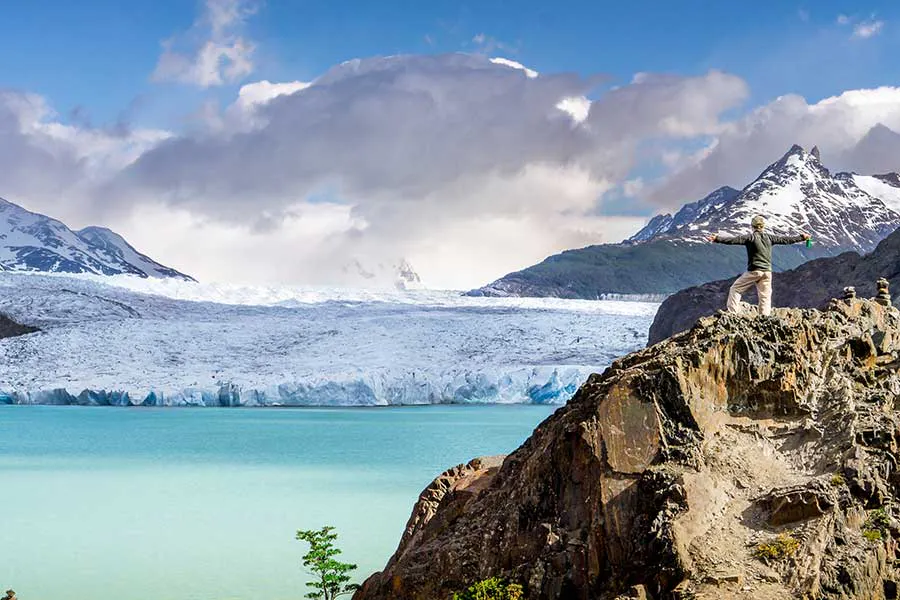
Get the free day-by-day W Trek itinerary
See how we hike the W in seven days, with departures running October through April: daily routes, lodging, and what’s included.
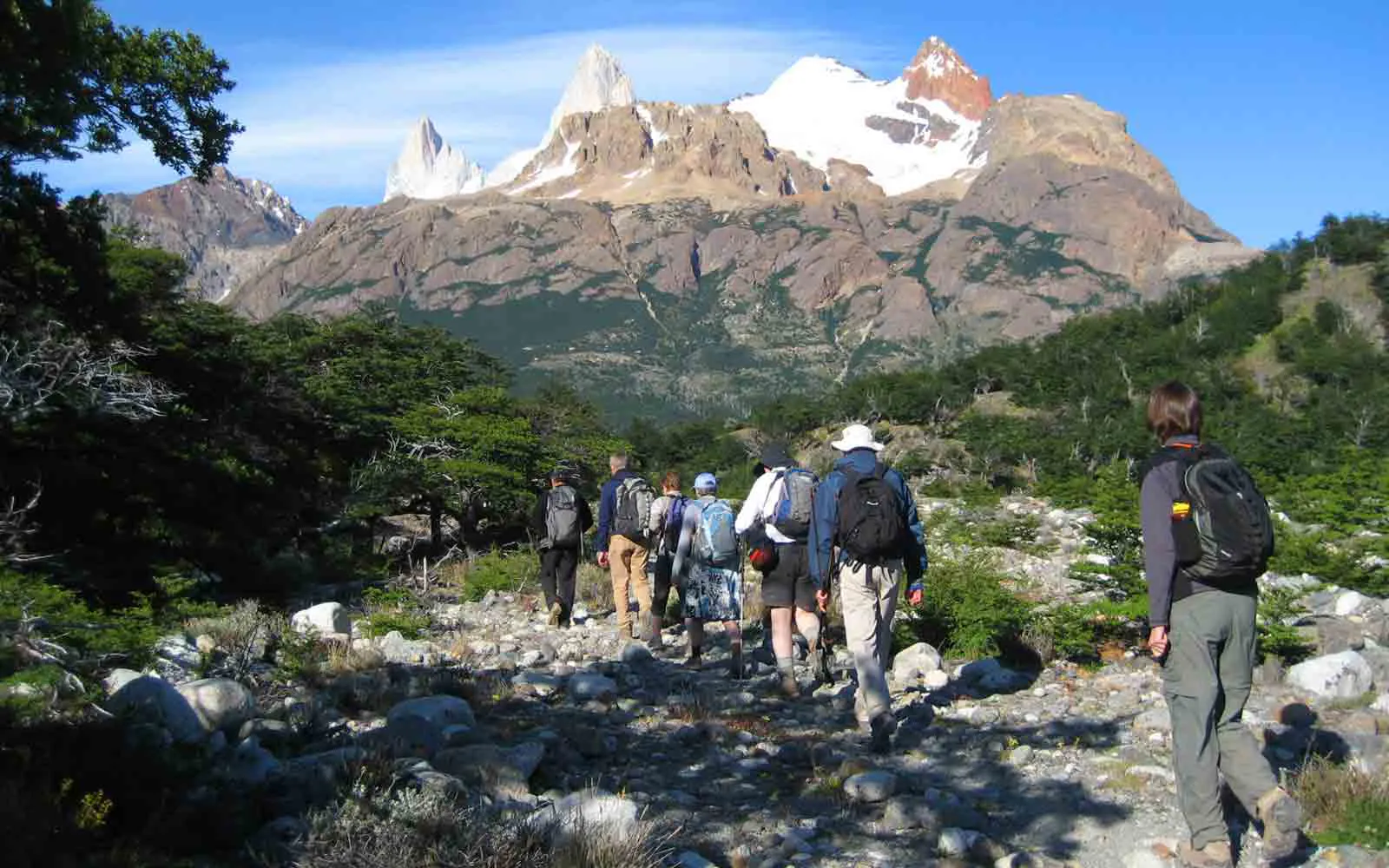
El Chalten Day Hikes
On Patagonia’s Argentine side, the small mountain town of El Chalten offers a very different hiking experience.
Rather than moving from campsite to campsite (or refugio to refugio as in Chile), travelers can use El Chalten as a base and head out for day hikes on trails like Laguna de los Tres and Laguna Torre. After a day of trekking, you can then return to town for a hot shower, delicious local dinner and a glass of regional wine or beer. It’s an excellent option for those who want spectacular Patagonia hiking without committing to a multi-day expedition.
Best for: Day hikers, first-time Patagonia visitors, travelers who want comfy lodgings, and anyone who wants a greater range of flexibility.
What to ask a tour company: El Chalten is often paired with Torres del Paine on two-country trips. Ask how the border crossing between Chile and Argentina is handled, and how many days you’ll spend in transit. Also ask whether the Perito Moreno Glacier is part of the itinerary (we recommend it).
Read More:
Both Sides of Patagonia in One Trip
Many travelers don’t want to choose between Chile and Argentina, and fortunately they don’t have to. Two-country itineraries pair Torres del Paine with El Chalten’s Fitz Roy trails and the Perito Moreno Glacier, crossing the border overland between them.
How you see both sides varies a lot from company to company. MT Sobek’s 12-day Chile & Argentina Ultimate Patagonia Hiking trip hikes the W Trek and then spends three days on the trails around Fitz Roy and Cerro Torre, while the nine-day Argentina & Chile Patagonia Hiking with Premier Lodging trip trades multi-day trekking for day hikes from boutique hotels and lodges on both sides of the border.
Best for: Travelers who want Patagonia’s highlights in one trip, and first-timers who aren’t sure which side to choose.
What to ask a tour company: How is the border crossing handled, and how long is the transfer day? Driving between Torres del Paine and El Calafate can take most of a day, so private transport can make a significant difference.
Read More:
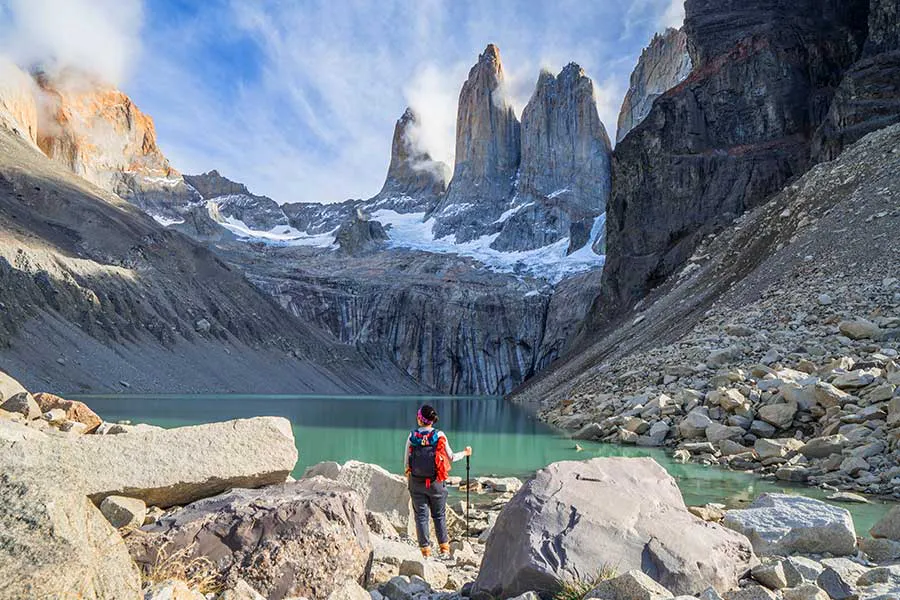
Get the free day-by-day Ultimate Patagonia itinerary
See how we hike both sides of Patagonia in 12 days, from the W Trek in Torres del Paine to the trails around Fitz Roy: daily routes, lodging, and what’s included.

Tierra del Fuego, Cape Horn, and the Fjords
For something different, start at the bottom of the continent. Itineraries that begin in Ushuaia combine hiking in Tierra del Fuego National Park with an expedition cruise through the Beagle Channel and the fjords of Tierra del Fuego. Depending on the weather, that can include a landing at Cape Horn, Zodiac trips to tidewater glaciers, and a walk among the Magellanic penguins on Magdalena Island before you finish with day hikes in Torres del Paine.
MT Sobek’s 11-day Argentina & Chile Patagonia to the Sea Hiking & Cruising trip follows this route, with four nights on board and six in comfortable hotels.
Best for: Travelers who want wildlife, glaciers, and remote coastline along with their hiking, at a moderate pace.
What to ask a tour company: Which expedition ship do you use, how many nights are on board, and which landings depend on the weather?
Read More:
The Cochamo Valley
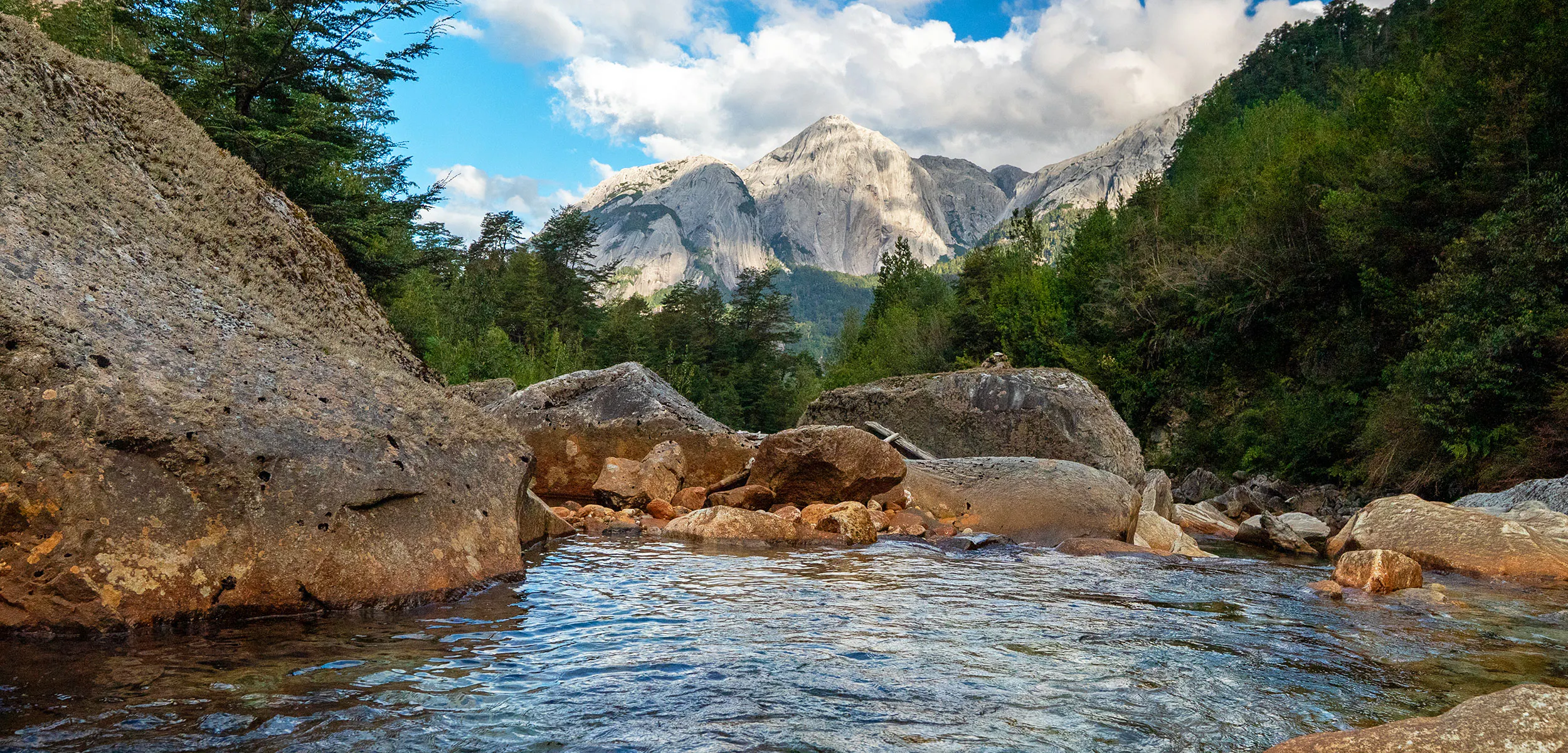
For a more remote Patagonia hiking experience, opt for Chile’s Cochamo Valley, where enormous granite domes rise above ancient Valdivian rainforest. The region is a landscape of granite monoliths, glacial river valleys, and old-growth forest, and in late 2025, conservation groups secured more than 328,000 acres at its heart for permanent protection.
Hike deep into Valle Ventisquero, a remote Andean sanctuary of unnamed peaks, turquoise glacial rivers, and millennia-old alerce trees. In Valle Cochamo, trails wind through lush woodlands beneath towering 3,000-foot rock walls, with traditional gaucho culture still woven into the landscape. For dramatic scenery and true wilderness away from Patagonia’s better-known trails, Cochamo is the way to go.
Best for: Hikers looking to get off the beaten path.
What to ask a tour company: Cochamo is remote, and only a few companies operate here. Ask what the lodging looks like, since trips typically combine rustic lodges and camps rather than hotels.
Read More:
Add Antarctica

Ushuaia and Punta Arenas are also the gateways to Antarctica. If you’re traveling this far, consider pairing Patagonia with an Antarctica expedition cruise or a fly-and-cruise trip that skips the Drake Passage crossing by boat.
What to ask a tour company: Can you link the two trips for me, including hotel nights and transfers in between?
Read More:
2. Decide How Much Support You Want
Once you’ve chosen your route, think about how much of the trip you want to organize yourself, and how much you’d prefer someone else to handle. Your answer tells you what kind of company you need, or whether you need one at all.
For experienced travelers who enjoy researching routes, securing reservations, and managing their own transportation, independent travel can be both rewarding and less expensive. However, Patagonia is also a place where logistics can be surprisingly complicated.
Lodging reservations often sell out several months ahead. Transportation between trailheads can be long and confusing. Border crossings are complicated. And weather often affects transportation and hiking plans. In remote areas especially, the difference between going it alone and having an experienced guide who knows the terrain firsthand can be huge.
This is where a Patagonia tour company comes in handy, and where the differences between companies start to matter.
Guided Patagonia Tours
A guided adventure is particularly valuable if you’d like to focus solely on the experience, and leave the logistics to professionals. A quality operator handles transport, accommodations, permits, and portage while employing knowledgeable guides. Not only do they understand the landscape and weather, but they also know how to respond when conditions change.
An experienced Patagonia guide knows that a trail isn’t simply a line on a map. Wind, rain, snow, and the condition of the trail itself can all influence how best to adjust plans and organize the day.
Read More:
Self-Guided Patagonia Tours
Some travelers want the freedom of hiking at their own pace but don’t want to spend months coordinating hotels, transfers, and reservations. Self-guided tour packages can arrange the key logistics while leaving travelers to explore independently.
One thing to note: Independent trekking and self-guided package tours are not the same thing. For instance, a fully DIY W Trek means that you’ll book your own refugios and campsites, arrange your own transport, and secure your own meals. A self-guided package outsources much of that work, while leaving the hiker to navigate a trail on their own.
3. Know the Types of Patagonia Tour Companies

Once you know your route and how much support you want, it helps to understand the kinds of companies you’ll find. Don’t assume there is one universally “top” company for hiking the region. The best operator for a solo traveler looking for an affordable adventure might be very different from the best operator for an experienced hiker seeking a small-group, fully guided trek.
Instead, focus on each company’s strengths and specialties.
Scheduled Small-Group Departures
Fixed-departure tours are a good choice if you are traveling solo, want to meet other travelers, or prefer having a set itinerary. Scheduled departures also let you plan far in advance.
International adventure companies of all sizes such as MT Sobek, G Adventures, and Wilderness Travel offer scheduled group trips, often at a lower price point than highly customized private adventures.
Private & Custom Patagonia Tours
Custom trips offer more control over dates, hiking pace, accommodations, and overall itinerary.
They’re particularly appealing for couples, families, and groups of friends who want to build an adventure around their own priorities and timelines.
MT Sobek has an award-winning Custom Team that can support you in planning your ideal trip. Also, regional specialists such as Swoop Patagonia and Say Hueque are two companies that focus heavily on Patagonia travel that’s tailor-made.
Luxury & Lodge-Based Tours
Not everyone wants to choose between hiking hard and sleeping well.
Luxury Patagonia tours combine active days with higher-end hotels, transportation, and other comforts. These trips can be a particularly good fit for anyone who wants access to Patagonia’s wilderness without giving up their creature comforts.
MT Sobek’s Argentina & Chile Patagonia Hiking with Premier Lodging Tour is an excellent example. Also, at the top end, some lodges in and around Torres del Paine, such as Explora, run their own guided hikes and excursions as part of an all-inclusive stay.
Operators vs. Travel Specialists
One difference that’s easy to miss: some companies run their own trips with their own guides and trip leaders, while others design and book your trip through a network of local partners. Both can work well. The difference is who you’re dealing with when plans change on the trail, so ask who employs your guides and who runs the trip on the ground.
Active and Specialty Trekking Companies
If hiking is the primary reason you’re going to Patagonia, look for an operator with genuine expertise in active travel.
Patagonia Tour Companies Compared
| Company | What they are | Best for What Kind of Traveler | Patagonia trip styles | Group size | W Trek Lodging |
|---|---|---|---|---|---|
| MT Sobek | US-based active-adventure specialist, guiding since 1969 | Hikers seeking a premium Patagonia adventure, combining decades of regional expertise, exceptional local guides, thoughtfully paced itineraries, and distinctive lodging—from the W Trek and O Circuit to the remote trails of Cochamo Valley | Small-group departures plus private and custom trips: W Trek, O Circuit, Cochamo Valley, Chile–Argentina combinations, hike-and-cruise pairings | Up to 16 (12 on the O Circuit and in Cochamo) | Mostly hotels, with two nights in a refugio and cabins (7-day trip) |
| G Adventures | Large international group-tour company | Value-minded travelers and younger groups | Active, Classic, 18-to-Thirtysomethings and upscale Geluxe trips | Up to 16 (average 12 on the W Trek) | Three nights camping plus hotel nights (6-day trip) |
| Intrepid Travel | Large international group-tour company | Solo travelers and people who want to pick a comfort level | Basic, Original, Comfort, and Premium trips, plus independent short breaks | Up to 14 on the W Trek | Refugio dorms or full-service camping, plus two hotel nights (6-day trip) |
| Exodus Adventure Travels | Long-running adventure travel company | Fit trekkers seeking 13 to 14 day itineraries of Patagonia and other regions of Chile and Argentina | Scheduled small-group treks, such as the 13-day Classic Patagonia Treks | 4 to 16 | A mix of refugios and full-service camping |
| Swoop Patagonia | Patagonia travel specialist that plans trips with a network of local partners | Travelers seeking customized Patagonia itineraries using local operators, with a choice of trekking, wildlife, cruising, and lodging options | Tailor-made, independent, small-group, specialty (wildlife, riding, kayaking) and luxury trips | Varies by trip | Varies by trip |
| Say Hueque | Argentina-based travel company, founded in 1999 | Independent travelers seeking customized Patagonia trips or Chile–Argentina itineraries with prearranged logistics and guided or self-guided options | Mostly tailor-made itineraries, with some guided group departures | Varies by trip | Varies by trip |
| Wilderness Travel | US-based adventure travel company, founded in 1978 | Hikers seeking 10 to 14 day Patagonia trips built around day hikes and lodge or estancia stays | Small-group departures and private journeys in Argentine and Chilean Patagonia | Averages about 10 travelers | Varies by trip |
Where MT Sobek Fits
If hiking is your top priority, this is where MT Sobek stands out.
Since 1969, MT Sobek has built its reputation around active adventures, combining challenging trekking with experienced guides and meticulously organized logistics. Its Patagonia trips are designed for travelers who want to get out on the trails, hike ambitiously, and experience the landscape actively—not simply see it from a vehicle—and enjoy a comfortable room at the end of the day.
- Small groups: Patagonia departures are capped at 16 guests, and at 12 on the O Circuit and in the Cochamo Valley.
- The logistics are handled: Refugio and lodge reservations, park transfers, and the travel between Chile and Argentina are built into the itinerary.
- Recognized excellence: MT Sobek was named the #1 Best Adventure Travel Company in USA TODAY’s 10 Best Readers’ Choice Awards.
MT Sobek isn’t the right choice for everyone. If you’re on a tight budget, want to camp every night, or would rather plan your own trek, a large group-tour company or an independent trip will be a better fit. But if you want challenging hiking with expert guides, small groups, and, on most trips, comfortable lodging at the end of the day, it’s worth a close look.

4. Compare Companies on What Matters in Patagonia
After narrowing down your options, don’t compare companies based solely on the price. Focus on what you’re actually going to get for your investment of money and time.
Where Will You Sleep on the Trail?
This is one of the biggest differences between companies, especially on the W Trek. Depending on the operator, your trail nights might be in a tent, a shared refugio dorm, a rustic cabin, or a hotel near the trailhead. Look for or ask for a night-by-night lodging list before you book.
Who Are the Guides?
Guides are one of the most important—and easiest to overlook—parts of a Patagonia tour. Seek out companies that work with experienced, local guides who know the region intimately, and ask about the guide-to-guest ratio, not just the total group size. A format that works well for many American travelers is a US-based company that hires and trains local guides. It combines a US company’s planning and service with the cultural insight and local expertise that only regional guides can bring.
How Big Is the Group?
Group size can dramatically affect the experience. A smaller group (16 or fewer) typically means more personal attention from the guide and greater flexibility on the trail.
How Many Days Are Actually on the Trail?
Patagonia is enormous, and transfers take time. Compare how many days you’ll spend hiking versus traveling between airports, parks, and towns, especially on trips that combine Chile and Argentina.
What Is Included?
Read the itinerary carefully. Does the price include accommodations, meals, park fees, transportation, ferries, and other necessary logistics? What about domestic flights? Gear rentals?
A lower trip cost isn’t necessarily a better value if you end up having to arrange big portions of the travel yourself.
Who Handles Permits and Reservations?
This is particularly important for popular routes in Torres del Paine. Refugios and campsites can sell out well in advance, so an operator should have a clear plan for securing your accommodations.
How Are Transfers Handled?
Patagonia encompasses a vast area. A well-designed itinerary should make the transitions between airports, trailheads, hotels, and parks feel relatively seamless. Border crossings between Chile and Argentina can be tricky. Ask if the border crossings are handled by public bus, private vehicle, or some other mode of transport.
What Happens When the Weather Changes?
Patagonia’s weather is famously unpredictable. Strong winds, rain, snow, and rapidly changing conditions are part of the experience. A good Patagonia tour company doesn’t promise perfect weather; it has the experience to adapt when conditions aren’t perfect.
Questions to Ask Before You Book
- Which routes do you run, and how many departures do you operate each season?
- How many years have you been operating in Patagonia, and in general?
- Where will I sleep each night on the trail?
- How many days will we actually spend hiking?
- Who are the guides, and what is the guide-to-guest ratio?
- What is the maximum group size?
- What’s included: park fees, meals on the trail, domestic flights, transfers, and border crossings?
- Who books the refugios, campsites, and park permits?
- What’s the plan if weather closes a trail or cancels a ferry?


How Much Does a Guided Patagonia Tour Cost?
Prices for guided Patagonia trips vary widely, and for good reason. Two W Trek trips can look almost identical on paper and still differ by thousands of dollars, depending on where you sleep, how much is included, and how the trip is run.
Here’s roughly how the options break down for a guided W Trek:
| Type of trip | Relative cost | What you usually get |
|---|---|---|
| Value group trips | $ | Trail nights in tents or shared refugio dorms, more meals on your own |
| Premium small-group trips | $$ (often 2-3 times a value trip) | Most nights in hotels and lodges, expert guides, more meals and logistics included |
| Luxury lodge stays | $$$ | All-inclusive stays at high-end lodges with their own guided hikes |
What drives the cost differential:
- Where you sleep. This is the biggest factor. A hotel room inside Torres del Paine costs far more than a campsite or a refugio bunk. Ending a 12-mile day with a hot shower and a real bed is a very different trip from pitching a tent in the wind.
- What’s included. Check for meals, park fees, catamaran crossings, transfers and domestic flights. A lower price can often mean more costs added later.
- Guides and group size. More guides per guest and smaller groups cost more, and they significantly change the experience on the trail.
- How the trip is run. Private transportation, flexible plans when the weather turns, and someone handling reservations all add cost and take stress off you.
MT Sobek’s seven-day W Trek sits in the premium tier. Four of its six nights are in hotels, including two at Hotel Las Torres at the foot of the towers. The trip is fully guided, and the price covers all 17 meals, private transfers, the catamaran to Grey Glacier, and porter support on the trail. When you compare it with other premium trips, look at how many nights are in hotels, how many meals are included and whether the trip has porters.
The cheapest trip isn’t automatically the best value, and the most expensive isn’t by default the best trip. Decide which of these things matter most to you, then compare companies based on those merits.
When to Book a Patagonia Tour
The main trekking season runs roughly from late spring through early fall, with December through February offering the longest days and what’s considered the most favorable conditions for classic trekking. These months are also the busiest. Plan early!
The shoulder seasons—roughly October/November and March/April—typically offer fewer crowds, but conditions are more variable. You can often book your tour closer to these dates, as they are less competitive.
Refugios, campsites, and lodges in Torres del Paine can sell out many months ahead for December through February, so if you have your heart set on peak season, start comparing companies early.
Read More:
- The Best Time to Visit Patagonia: A Month-by-Month Guide
- How to Pack for Patagonia Like an MT Sobek Guide
The Patagonia Tour Company Trip Picker
Still not sure which type of Patagonia tour company is right for you? Start here.
- I want to hike the iconic Torres del Paine trails, but I’m new to Patagonia.
→ A guided W Trek with a small-group company.
Try: Chile Patagonia Torres del Paine W Trek Hiking
- I want a serious multi-day trek and don’t mind roughing it.
→ A company with real backcountry experience on the O Circuit.
Try: Chile Patagonia Torres del Paine O Circuit Trek
- I want spectacular hiking but prefer luxury or high-end accommodations.
→ A premium active-adventure specialist or a lodge-based trip.
Try: Argentina & Chile Patagonia Hiking with Premier Lodging
- I want to hike during the day but return to restaurants, breweries, and a hot shower at night.
→ A two-country trip that includes El Chalten and Argentina’s Fitz Roy region.
Try: Chile & Argentina Ultimate Patagonia Hiking
- I want hiking plus wildlife, glaciers, and time on the water.
→ A hike-and-cruise trip through Tierra del Fuego and the fjords.
Try: Argentina & Chile Patagonia to the Sea Hiking & Cruising
- I want to get off the beaten path.
→ A specialist that operates in the Cochamo Valley.
Try: Chile Patagonia Cochamó Valley Hiking
- I want to see both Chilean and Argentine Patagonia in one trip.
→ A two-country itinerary that handles the border crossing for you.
Try: Chile & Argentina Ultimate Patagonia Hiking
- I’m coming all this way and want to see Antarctica, too.
→ A company that can link a Patagonia trip with an Antarctica cruise.
Try: MT Sobek Antarctica trips
- I’m traveling with family or friends and want the itinerary built around our preferences.
→ A company that builds private, custom trips.
Try: MT Sobek custom trips
- I’m on a tight budget, or I want to plan the trip myself.
→ A large group-tour company, or an independent or self-guided W Trek.
Read: Guided vs. Independent Patagonia Trekking
Making Your Choice
Ultimately, the best Patagonia tour company is the one whose expertise, guiding style, group size, accommodations, and itinerary match the experience you actually want. Start with your route, decide how much support you want, then use the questions above to compare a short list of companies side by side.
Explore MT Sobek’s Patagonia adventure travel tours.
Enjoying our content? Add MT Sobek as a Google Preferred Source.
Ready to go? See three featured Patagonia trips
Whichever adventure you choose, an expert guide makes Patagonia easier. These small-group trips handle the permits, lodging, and logistics so you can focus on the trail.

Chile Patagonia Torres del Paine W Trek Hiking Tour
7 Days · Runs October–April · Hike Torres del Paine’s famous W route to Grey Glacier, French Valley, and the towers with expert MT Sobek guides.

Chile Patagonia Cochamo Valley Hiking Tour
11 Days · Runs October–April · Hike among granite domes and old-growth Valdivian rainforest in the wild northern Patagonian Andes.

Chile & Argentina Ultimate Patagonia Hiking Tour
12 Days · Runs November–March · Combine 40 miles on the W in Torres del Paine with the trails around Fitz Roy in Argentina’s Los Glaciares.

FAQs
There isn’t one best Patagonia tour company for every traveler. The right choice depends on the route you want to hike, your preferred hiking style, group size, budget, accommodations, and how much logistical support you want. Travelers seeking an active, guided adventure with expert guides and carefully managed logistics should consider a specialist like MT Sobek.
Start by picking your route, since not every company runs every trail. Then decide how much support you want, guided, self-guided, or independent. Finally, compare companies on where you’ll sleep on the trail, guide experience, group size, days spent hiking, what’s included, and how they handle transfers, park logistics, and bad weather.
It depends on your experience and travel style. Independent trekking can be rewarding for experienced hikers who enjoy handling their own planning and logistics. A guided Patagonia tour is a better fit if you want expert local knowledge and someone else to manage the details, from lodging and permits to transfers and weather changes.
For December through February, start comparing companies many months ahead. Refugios, campsites, and lodges in Torres del Paine can sell out early in peak season. Shoulder-season trips in October, November, March, and April often have more availability.
A tour operator runs its own trips with its own guides or trip leaders. A travel specialist or agency designs and books your trip through local partners. Both can work well; ask who employs your guides and who runs the trip on the ground.
It depends on the company and the route. On the W Trek, guided trips may use tents, refugio dorms, rustic cabins, hotels near the trailhead, or a mix. The O Circuit relies mostly on camping and refugios. Ask for a night-by-night lodging list before you book.
Check exactly what’s included before booking. Depending on the operator, packages may include accommodations, meals, park fees, ground transportation, ferries, guides, gear, and domestic flights. Also confirm which reservations and permits the company handles for you.
Yes. Many Patagonia tours combine Torres del Paine in Chile with El Chalten and the Perito Moreno Glacier in Argentina, crossing the border overland. Ask how the crossing is handled and how long the transfer day is, since the drive can take most of a day.
Learn More About Adventure Travel in Patagonia


