The Best Time to Visit Patagonia: A Month-by-Month Guide
Patagonia’s weather is unpredictable year-round, but daylight, crowds, wildlife and scenery change with the seasons. Our guides break down the best time to visit Patagonia, month by month.

I’m going to start this article by telling you that for most people, the best time to visit Patagonia is November through March, which is the Southern Hemisphere’s late spring, summer and early fall. This season has the most daylight hours, the most moderate temperatures, and Patagonia’s famous national parks are fully open and operational.
Having said that, there’s actually no “best” time to visit Patagonia. After personally visiting and hiking for two weeks throughout Patagonia in 2026, I can tell you from firsthand experience that it is a vast region. It spans more than 400,000 square miles across southern Chile and Argentina, and it feels that big. Ask when to go, and you’ll often hear what I said initially—that the Southern Hemisphere’s summer months, December through February, offer the best weather and longest days. And while summer is popular for good reason, that answer only tells part of the story.
Patagonia’s weather is famously unpredictable. I experienced several days that started off sunny and calm, and by afternoon it was wet and windy. This can happen any time of year. What does change reliably with the seasons is daylight, crowds, temperatures, and accessibility, not to mention the landscape itself.
“From November to March or April there’s more light and often better weather conditions,” says Sergio “TC” Bahamondez Montenegro, a Patagonia native and longtime MT Sobek guide and logistics expert. But visit during the shoulder seasons or even winter, he says, and “the scenery changes and everything’s unique.”
For TC, this distinctiveness is part of the appeal. “While you need to be prepared for those seasons, there’s nothing better than enjoying a natural place without it being crowded,” he says. According to TC, experiencing the base of Torres del Paine in the off-season can feel much more dramatic than sharing it with 1,500 other people.
When it comes down to when you should visit Patagonia, it really depends on what you want to do and what kind of experience inspires you most.
Key Takeaways
- Spring (September through November) offers wildflowers and quiet trails, but from September through mid-October, access to trails and park amenities can be limited.
- Summer (December through February) offers the longest days and best access to classic treks, but also crowded conditions.
- Fall (March through May) delivers brilliant red and yellow foliage and solitude, but increasing odds of winter weather.
- Winter (June through August) reveals a quieter Patagonia and opens the door to snow-filled adventures.
- Patagonia’s weather is unpredictable—come prepared for anything all year.
- MT Sobek’s Patagonia departures run from October through April, including shoulder-season dates on the W Trek and in the Cochamó Valley.

FEATURED TRIP
Chile Patagonia Torres del Paine W Trek Hiking Tour
7 Days · Runs October–April · Hike Torres del Paine’s famous W route to the towers, the French Valley and Grey Glacier with expert MT Sobek guides.
Patagonia by Season


Spring: September through November
Patagonian spring brings longer days, emerging wildflowers, and the gradual return of classic trekking conditions. September and October can still feel distinctly wintry, particularly at higher elevations, but the landscape begins its transformation.
According to MT Sobek guide Rodrigo “Ro” Bahamóndez, September and October can be especially beautiful for flowers. Patagonia is home to roughly nine species of wild orchid, along with native fuchsia and a striking red flower known as fire bush that can cover entire mountainsides. Their blossoms don’t necessarily arrive on a predictable schedule. “In general,” says Ro, “these blooms happen sporadically, it’s not just one month.”
By November, daylight has increased considerably, making it a more appealing month for Patagonia hiking and trekking. Conditions can still be variable, but for those willing to visit outside the height of summer, a great combo of fewer people and increasingly favorable conditions may be worth it.
What to pack in spring: Waterproof rain jacket and pants, warm midweight layers, insulated jacket, gloves, hat, trekking poles, along with boot traction devices like ice cleats depending on the route and conditions.
Summer: December through February
Summer is Patagonia’s busiest season and the traditional choice for travelers tackling major treks such as the W Trek and O Circuit in Chile’s Torres del Paine.
The biggest advantage isn’t necessarily guaranteed sunshine—it’s daylight.
“In December and January, daylight goes from 4:30 in the morning until 11:30 at night,” says Ro. He’s counting first light to last light: around the December solstice in Torres del Paine, the sun rises about 5:30 a.m. and sets just after 10 p.m., with twilight stretching from roughly 4:45 a.m. to nearly 11 p.m. These exceptionally long days give hikers considerably more flexibility for lengthier outings and make it easier to maximize time in the mountains. But don’t confuse summer with predictable weather.
“As humans, we tend to think of summertime as having the best weather,” Ro says. “That doesn’t make sense in Patagonia, where our weather changes by the minute.”
— Rodrigo “Ro” Bahamóndez, MT Sobek Patagonia guide
The veteran Patagonia guide has seen December bring day after day of rain, strong winds, and mountains hidden behind clouds. The following year, the same period could bring 15 days of bluebird skies. “Honestly, the only thing that makes a difference between summer and the shoulder seasons is the amount of daylight.”
Summer is also when crowds are most noticeable. December through February coincides with summer holidays in Chile, Argentina, and other parts of South America. Popular trails and destinations can be busy, and accommodations and trekking permits can fill well in advance.
What to pack in summer: Full waterproof rain gear even when the forecast looks good, sun protection, a warm layer, quick-drying hiking clothes, trekking poles, and a waterproof system inside your backpack.
Get the free day-by-day W Trek itinerary
See how we hike the W in seven days, with departures from October through April: daily routes, lodging and what’s included.
Fall: March through May
Fall is one of Patagonia’s most underrated seasons—and one of Ro’s favorites.
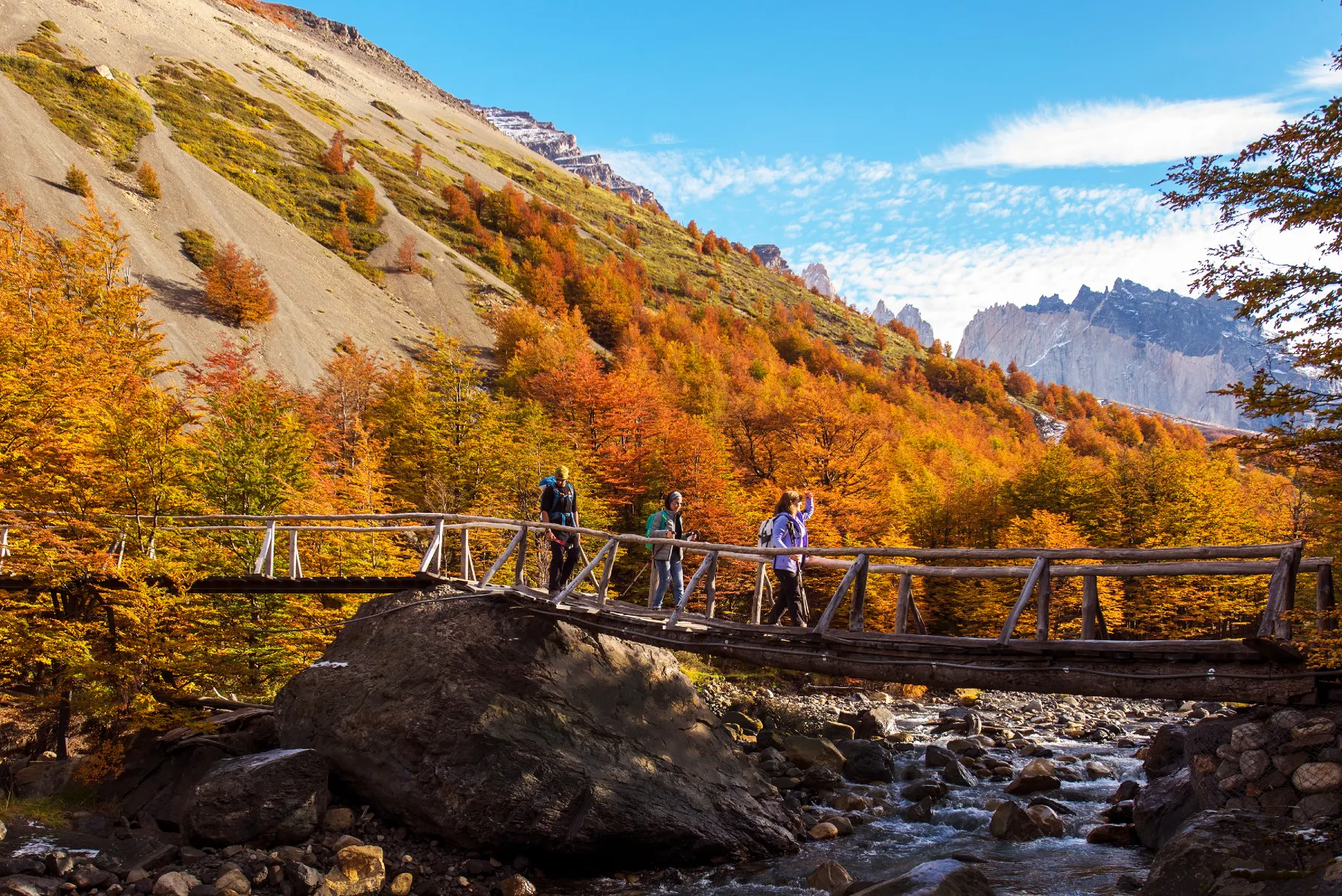
By late March and into mid-April, deciduous trees begin turning brilliant shades of red and yellow. The combination of autumn foliage, rugged mountains, and fewer visitors can make this an exceptional time to experience Patagonia.
The trade-off is shorter daylight and increasingly unpredictable weather conditions. But travelers who don’t need the longest possible hiking days may find autumn to be particularly atmospheric.
TC agrees that the shoulder seasons can provide something summer can’t: solitude.
What to pack in fall: Warm layers, waterproof shell and pants, insulated jacket, gloves, hat, trekking poles, and a backpack liner or dry bag to protect essentials.
Winter: June through August
Winter transforms Patagonia. Snow, ice, cold temperatures, and extremely short days change what is practical—and where you should go.
“Between mid-April until early September, days are really short,” says Ro.
— Rodrigo “Ro” Bahamóndez, MT Sobek Patagonia guide
Around the June solstice, the sun doesn’t rise in Torres del Paine until nearly 10 a.m., and it sets before 6 p.m., leaving less than eight hours of daylight. That makes winter a poor fit for travelers whose primary goal is to spend long days trekking the classic Patagonia circuits. Glacier travel can also become more complicated. Ro notes that glaciers can be tricky during this period because there may not be enough snow to create solid bridges over crevasses.
But winter isn’t a reason to write off Patagonia altogether.
The Lake District farther north offers a strong winter season, with hiking, volcano climbing, snowshoeing, ski resorts, and hot springs. For travelers interested in winter adventure rather than classic multi-day trekking, it can be a good alternative. MT Sobek doesn’t run scheduled Patagonia departures in winter, but our Custom Team can design a winter adventure around your interests.
What to pack in winter: Insulated layers, warm hat and gloves, winter-weight socks, waterproof outerwear, sturdy footwear, and appropriate winter or traction equipment for your specific activity.
Patagonia at a Glance: Month by Month
Use this table to compare Patagonia’s seasons at a glance. Temperatures are averages, and remember Ro’s warning: in Patagonia, the weather can change by the minute in any month. Planning to explore more of the continent? See our Month-to-Month Guide to Adventure Travel in South America.
| Month | High / low (°F)* | Sunrise / sunset** | Crowds | Highlights | MT Sobek trips |
|---|---|---|---|---|---|
| September | 52° / 31° | 7:57 a.m. / 7:38 p.m. | Low | Spring returns; first wildflowers; quiet trails | Custom trips |
| October | 56° / 34° | 6:50 a.m. / 8:26 p.m. | Low to moderate | Wildflowers and fire bush; longer days | W Trek, Cochamó Valley |
| November | 60° / 39° | 5:53 a.m. / 9:20 p.m. | Moderate | Trekking season opens; spring scenery | All 6 Patagonia trips |
| December | 64° / 43° | 5:32 a.m. / 10:01 p.m. | High (peak late Dec.) | Longest days of the year | All 6 Patagonia trips |
| January | 66° / 45° | 6:01 a.m. / 10:00 p.m. | Peak | Peak trekking season | All 6 Patagonia trips |
| February | 67° / 44° | 6:56 a.m. / 9:14 p.m. | High | Late-summer trekking; penguin colonies | All 6 Patagonia trips |
| March | 62° / 41° | 7:45 a.m. / 8:15 p.m. | Moderate | Fall colors begin; Fiesta Nacional del Trekking | W Trek, Cochamó Valley, O Circuit, Ultimate Patagonia, Premier Lodging |
| April | 55° / 34° | 8:35 a.m. / 7:07 p.m. | Low | Peak fall foliage; puma season begins | W Trek, Cochamó Valley |
| May | 48° / 29° | 9:22 a.m. / 6:13 p.m. | Very low | Early winter; solitude | Custom trips |
| June | 42° / 25° | 9:54 a.m. / 5:50 p.m. | Very low | Shortest days; puma tracking | Custom trips |
| July | 41° / 24° | 9:47 a.m. / 6:08 p.m. | Very low | Ski season in the Lake District | Custom trips |
| August | 44° / 27° | 9:02 a.m. / 6:50 p.m. | Very low | Winter’s end; snowy landscapes | Custom trips |
When Does MT Sobek Run Patagonia Trips?
Our small-group Patagonia departures run from October through April, when trails, lodges and refugios are open. Most trips run from November through March, but two itineraries also offer shoulder-season dates in October and April, when trails are quieter and the landscape shifts to spring flowers or fall color. That’s exactly the kind of solitude TC and Ro love.
- W Trek Hiking (7 days): October through April
- Cochamó Valley Hiking (11 days): October through April
- Torres del Paine O Circuit Trek (12 days): November through March
- Ultimate Patagonia Hiking (12 days): November through March
- Patagonia Hiking with Premier Lodging (9 days): November through March
- Patagonia to the Sea Hiking & Cruise (11 days): November through February
Traveling between May and September? Our Custom Team can design a private Patagonia adventure around your dates.
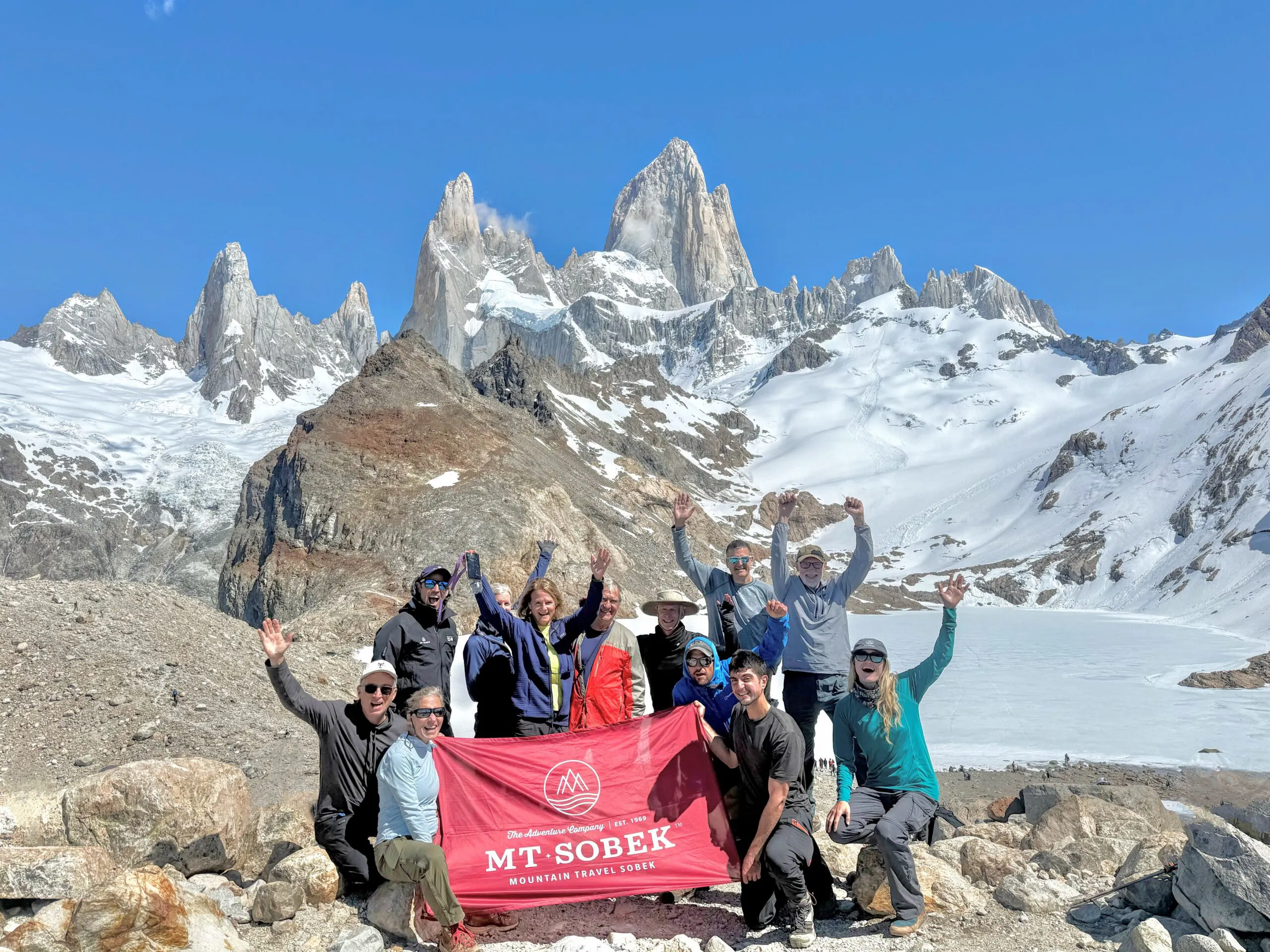
Patagonia Month by Month
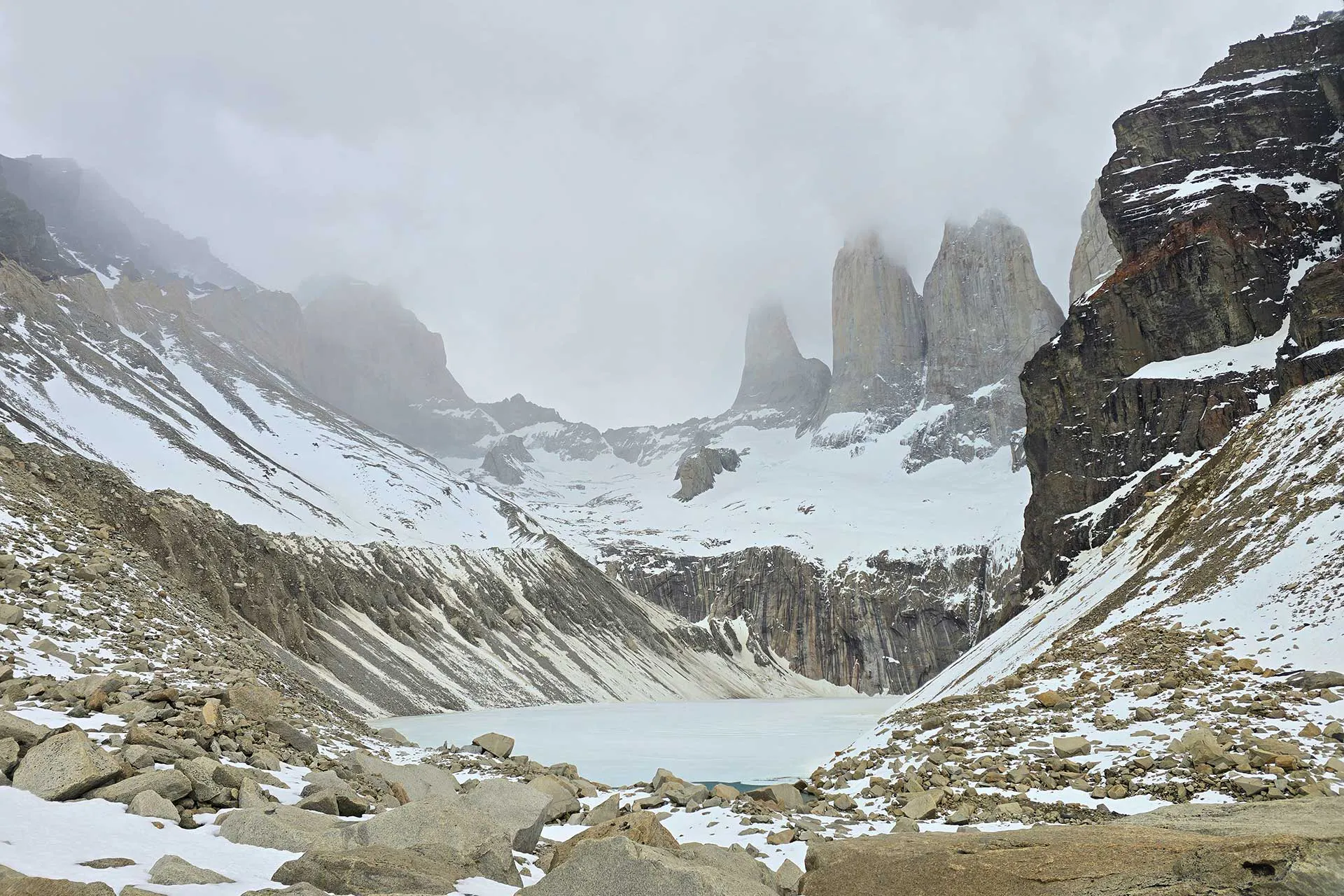
September: Early Spring
September marks the beginning of spring in Patagonia, but don’t expect consistently springlike conditions. Snow and cold can linger, particularly at elevation, while daylight gradually increases. Still, it’s a good month for seeing Patagonia wake up after winter. Wildflowers begin appearing, although the timing varies from year to year. Also, crowds are generally much lighter than during the summer peak, making September attractive to travelers who value solitude.
October: Wildflowers and Longer Days
October brings more daylight and increasing signs of spring. Wildflowers start appearing across the landscape, with native orchids, fuchsia, and fire bush among the possibilities.
Conditions can still change rapidly, so always be prepared. For photographers and travelers who prefer quieter trails, October can offer an alluring alternative to summer.
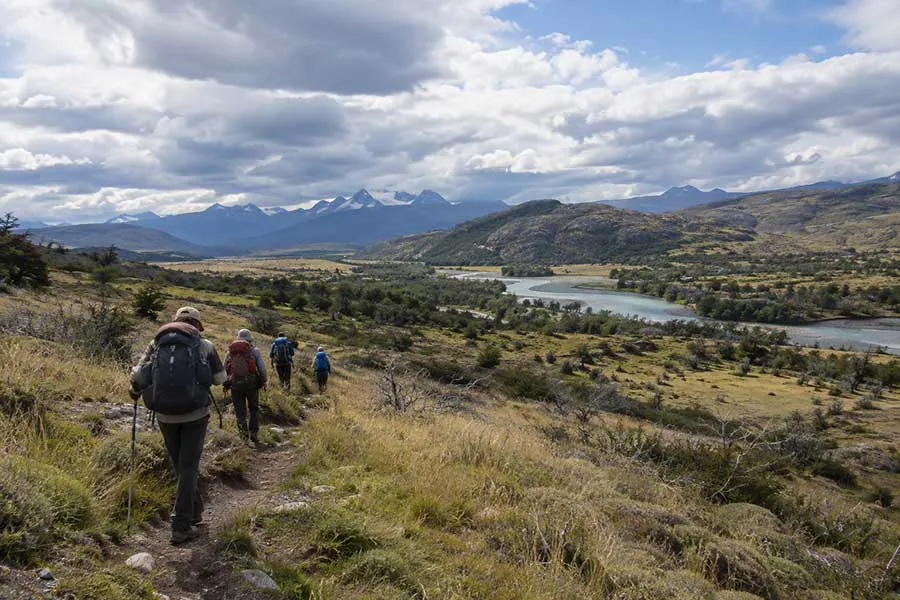

November: The Start of Trekking Season
By November, Patagonia begins feeling more like the destination most hikers picture. Days are considerably longer, classic trekking becomes increasingly practical, and spring scenery remains prominent. It’s also a perfect choice for travelers who want good access to Patagonia’s hiking without visiting during the busiest holiday period.
The weather, however, remains on par for Patagonia: changeable. Early-season storms can still bring heavy snow and violent winds to high passes, so November trekkers should come prepared for winter conditions. (More on that in Plan Ahead below.)
December: Maximum Daylight
December is the beginning of peak summer travel and offers some of Patagonia’s longest days. This extra daylight is a major advantage for trekkers. It allows time for longer outings and more flexibility when planning each day. It’s also one of the busiest times to visit. Those planning popular routes should arrange permits, lodging, transportation, and guided trips well beforehand.
And remember Ro’s warning: summer doesn’t guarantee good weather.

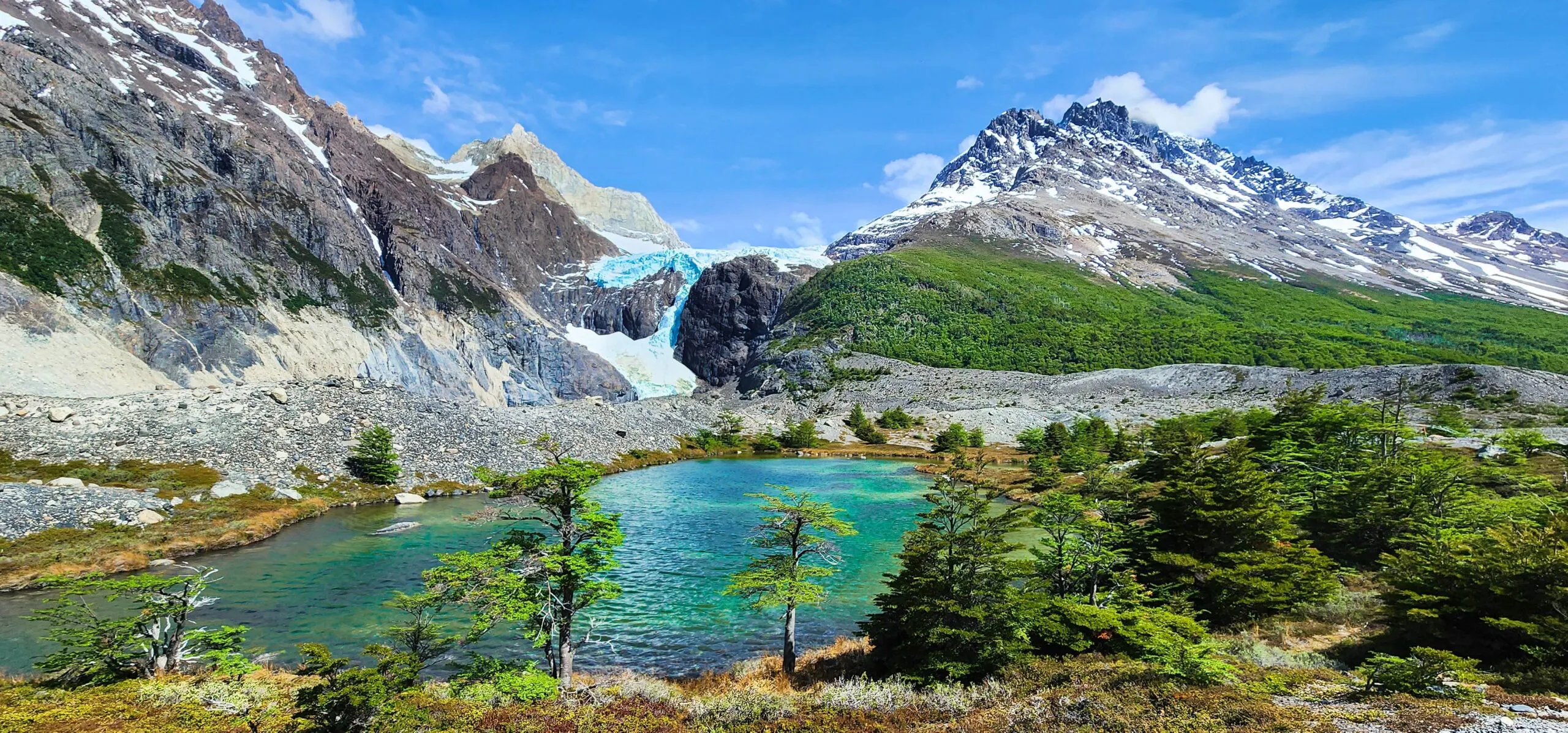
January: Peak Patagonia
January is firmly in Patagonia’s high season. Days are long, classic trekking routes are in full swing, and the region is alive with hikers. It’s an excellent month if your priority is maximizing daylight and completing a major trek. It’s less ideal if solitude is high on your wish list.
February: Late Summer
February remains a prime trekking month, with long daylight hours and generally good access to Patagonia’s classic hiking experiences. The crowds are still substantial, but February can be a good choice for travelers who want summer conditions without necessarily traveling during the heart of the December holiday period.
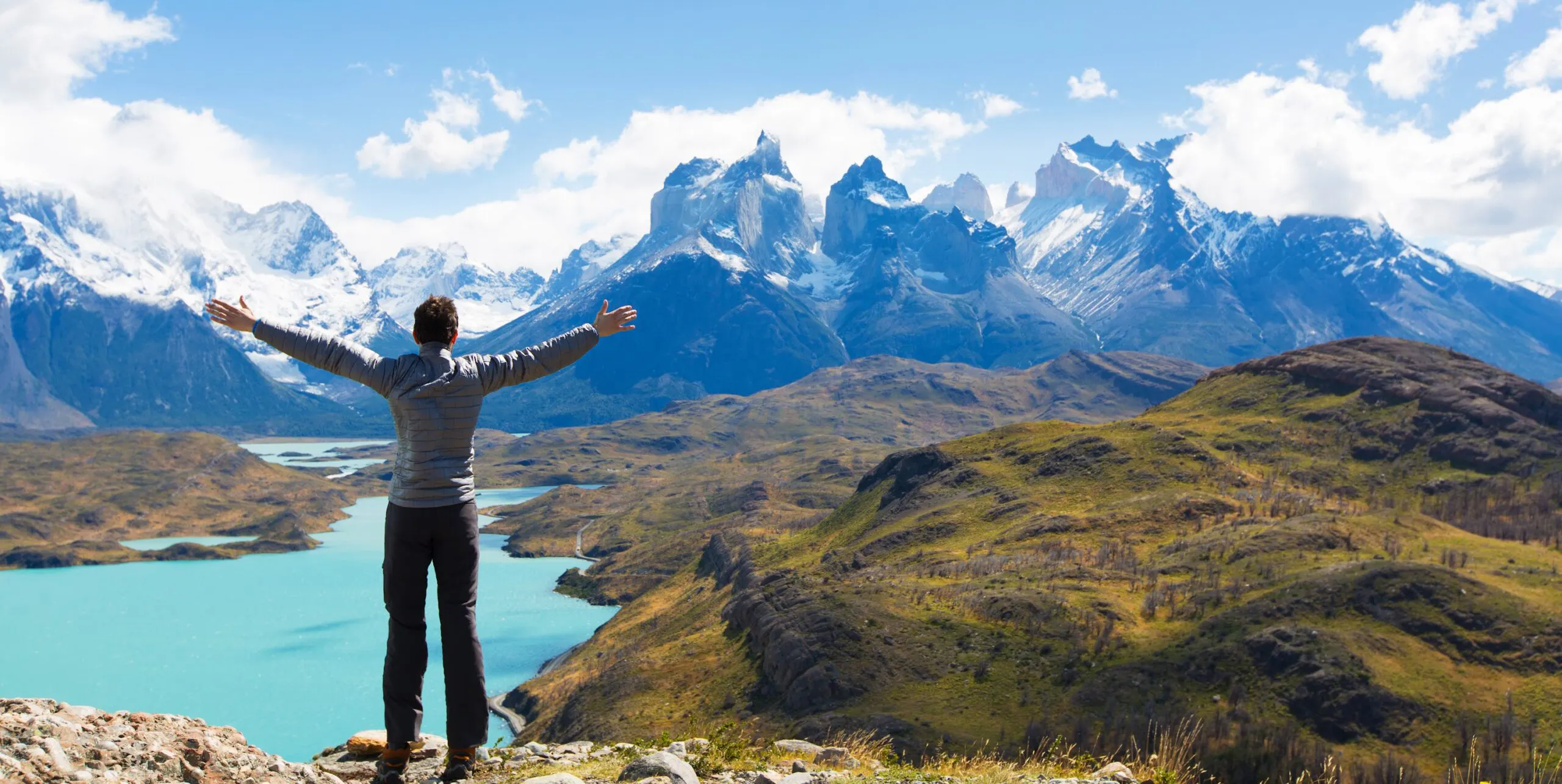

March: The Beginning of Fall
March is when Patagonia begins its transition toward fall. Days shorten, temperatures become cooler, and crowds begin to thin. For hikers, this can be an excellent shoulder-season month. You lose some of summer’s daylight, but you gain a quieter experience. Later in the month, autumn colors may begin appearing, particularly toward the end of March. In El Chaltén, Argentina’s self-proclaimed trekking capital, March also brings the Fiesta Nacional del Trekking, a local celebration with trail races, regional food and live music.
April: Autumn in Patagonia
Late March through mid-April is often one of the most visually stunning times to visit. According to Ro, this is when “all the leaves turn red and yellow.” Combined with Patagonia’s mountains, lakes, forests, and glaciers, the result is an entirely different landscape from summer’s green-and-blue palette. April also brings substantially shorter days and conditions that are increasingly challenging. For Ro, though, the atmosphere is worth it. “For me, one of my favorites is the fall.”
May: Transitioning to Winter
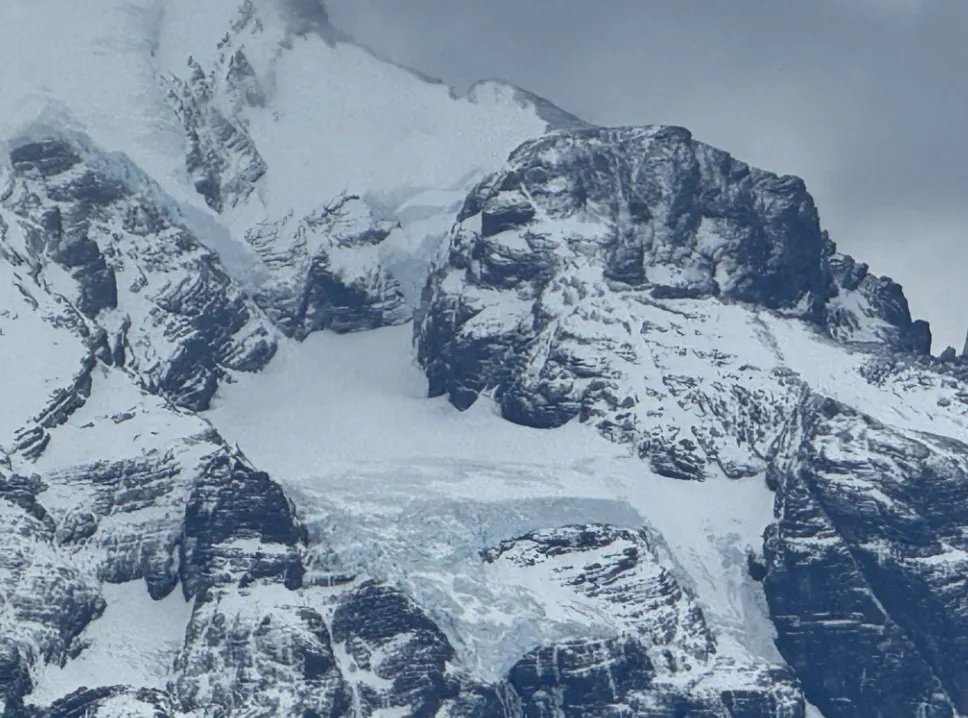
May is increasingly quiet. The days are shorter, temperatures drop, and winter begins taking hold. For travelers seeking the classic long-distance trekking experience, this isn’t your best month. However, travelers who prioritize solitude and don’t mind adapting their plans to seasonal conditions may find a special kind of beauty.
TC’s philosophy applies particularly well here: Patagonia doesn’t stop being spectacular simply because it’s no longer summer.
June: Solitude
June brings some of Patagonia’s shortest days and coldest conditions. Glacier travel also requires particular care. Snow and ice conditions can make crevasses and crossings more complicated, so travelers should rely on experienced local operators and current conditions rather than assuming a summer route is equally accessible in winter.


July: Skiing Up North
July is deep winter, making it better suited to travelers specifically seeking snow and cold-weather adventures. Rather than trying to recreate a summer Patagonia itinerary, consider regions and activities designed for winter. The Lake District offers skiing, snowshoeing, volcano climbing, hiking, and hot springs, and our Custom Team can build a winter itinerary around them.
For the right type of traveler, winter can provide a completely different Patagonia experience—with far fewer people.
August: Winter’s End
August remains firmly in winter, but there’s a slow transition toward spring. This is another month when choosing an activity suited to the season is more important than trying to force a summer trekking itinerary into a winter landscape.
Wind: Patagonia’s Constant Companion
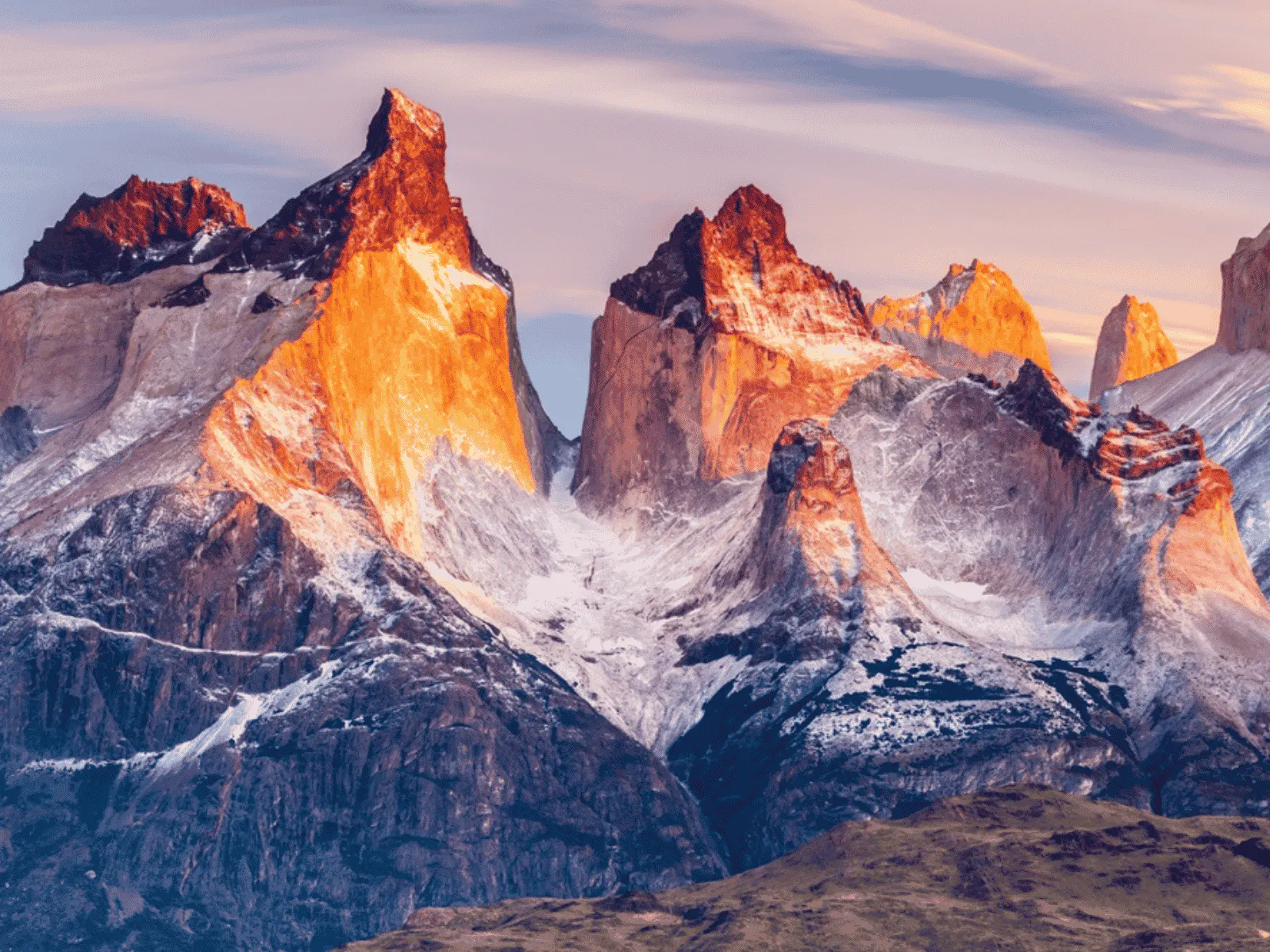
If one condition defines Patagonia more than rain or temperature, it’s wind. Westerly winds sweep in off the Pacific and the Southern Patagonian Ice Field, and on exposed passes and lakeshores, gusts can be strong enough to knock hikers off balance.
Winds tend to be strongest in spring and summer, roughly October through February, so the months with the most daylight are also the windiest. Fall usually brings calmer days, which is one more reason April is a guide favorite. Still, a calm morning can turn blustery by afternoon in any month.
Plan for it with a windproof shell, a hat or buff that stays put, and trekking poles for stability. Build flexibility into your days, too. On a guided trip, your guides watch conditions closely and adjust timing when the wind picks up.
Patagonia Wildlife by Month
Patagonia’s wildlife calendar is another reason to look beyond summer:
- Pumas (April–October): Torres del Paine is one of the best places in the world to see wild pumas, and sightings tend to be best in fall and winter, when there are far fewer visitors in the park.
- Magellanic penguins (roughly September or October–March): Coastal colonies such as Isla Magdalena near Punta Arenas fill with nesting penguins. Our Patagonia to the Sea Hiking & Cruise visits the Magdalena Island colony.
- Southern right whales (June–mid-December): Whales gather to breed and calve off Península Valdés on Argentina’s Atlantic coast, with peak sightings from September through November.
- Orcas (February–April): Orcas hunt sea lion pups along the beaches at Punta Norte on Península Valdés.
- Guanacos, Andean condors and rheas (year-round): Look for them on the open steppe around Torres del Paine and El Calafate.
Sightings are never guaranteed, and timing shifts from year to year. For more inspiration, see 10 Bucket-List Adventures in Patagonia.
Northern vs. Southern Patagonia
Patagonia stretches more than 1,000 miles from the Lake District to Tierra del Fuego, so the best time to go depends on where you’re headed.
In southern Patagonia, home to Torres del Paine in Chile and Los Glaciares, El Chaltén and the Perito Moreno Glacier in Argentina, the seasons are more extreme. Summer days are very long, winter days are very short, and many lodges, refugios and services close in the off-season.
Northern Patagonia, including Chile’s Lake District and the Cochamó Valley, is greener and milder, with temperate rainforest, volcanoes and more rain. It’s also where Patagonia’s ski resorts and hot springs come alive in winter. Our Cochamó Valley Hiking trip runs from October through April.
Deciding between Chile and Argentina? Torres del Paine and El Chaltén follow similar seasons, so timing rarely tips the balance. For a full comparison, read Chilean or Argentine Patagonia: Which Is Right for You?
The Best Time to Visit Patagonia for Different Activities
For the W Trek and O Circuit: November through March is generally the most practical period, with December through February offering the most daylight. These are also the busiest months.
For fewer crowds: Consider spring or fall. TC particularly values the solitude of the shoulder seasons.
For fall foliage: Late March through mid-April is a standout period.
For wildflowers: September and October can offer beautiful spring blooms, although flowering happens sporadically and varies annually.
For wildlife: April through October is prime time for tracking pumas in Torres del Paine, while Magellanic penguins nest along the coast from roughly September or October through March.
For a local festival: El Chaltén’s Fiesta Nacional del Trekking takes place each March.
For the longest days: December and January, when the sun rises around 5:30 a.m. and sets after 10 p.m. in Torres del Paine, and twilight lingers until nearly 11 p.m.
For winter sports: June through August are better suited to dedicated winter activities, particularly in Patagonia’s Lake District. Ask our Custom Team about a winter itinerary.
For the best overall balance: November and March are great choices for travelers who want a combination of trekking access, longer days, and fewer crowds than the height of summer.
Learn More:
Plan Ahead: Booking, Permits and Safety
Book early for summer. December through February coincides with summer holidays in Chile and Argentina, and lodges and refugios in Torres del Paine and El Calafate can sell out months ahead, especially around Christmas and New Year’s. Lodging prices are typically highest in peak season and around Easter, while the shoulder seasons often bring better availability.
Know the park rules. Torres del Paine requires advance campsite or refugio reservations for multi-day treks such as the W and O. Since May 2026, park entry passes are sold online in advance as single-day or multi-day passes, and in winter, CONAF requires an authorized guide for high-difficulty activities. Rules change often, so check CONAF’s official site before you go, or travel with an outfitter that handles permits and reservations for you.
Respect early-season weather. Spring storms can be severe. In November 2025, a sudden blizzard with hurricane-force gusts struck the O Circuit near John Gardner Pass, and five hikers lost their lives. CONAF temporarily closed the circuit and has since tightened the rules for hiking it. It’s a sobering reminder that Patagonia’s high passes demand preparation, good judgment and flexibility, and it’s one reason many trekkers choose to hike with a guide.
Learn More:
What to Pack for Patagonia—No Matter When You Go

If there’s one lesson that applies to every month in Patagonia, it’s to pack for all kinds of weather.
“I think that in terms of any mountain area, it is to have good gear,” says MT Sobek guide Andre Labarca. That means a quality rain jacket and rain pants—not simply a lightweight jacket or quick-drying hiking pants.
“A good idea is to keep a plastic bag inside your day pack,” Andre says. “Don’t just rely on the rain cover to keep your things dry.” This is especially important in southern Patagonia, where conditions can become so challenging that stopping for lunch isn’t always an option.
Andre also recommends a midweight layer rather than relying exclusively on ultralight clothing. Being comfortable at the start of a hike matters, but so does being prepared if conditions deteriorate.
And don’t overlook trekking poles. Patagonia’s trails can be rocky, uneven, slippery, and filled with boulders and tree roots. Poles provide stability, help protect your knees on long descents, and can reduce the likelihood of a fall.
Learn More:
- What to Pack for Hiking in Patagonia (including a downloadable packing list)
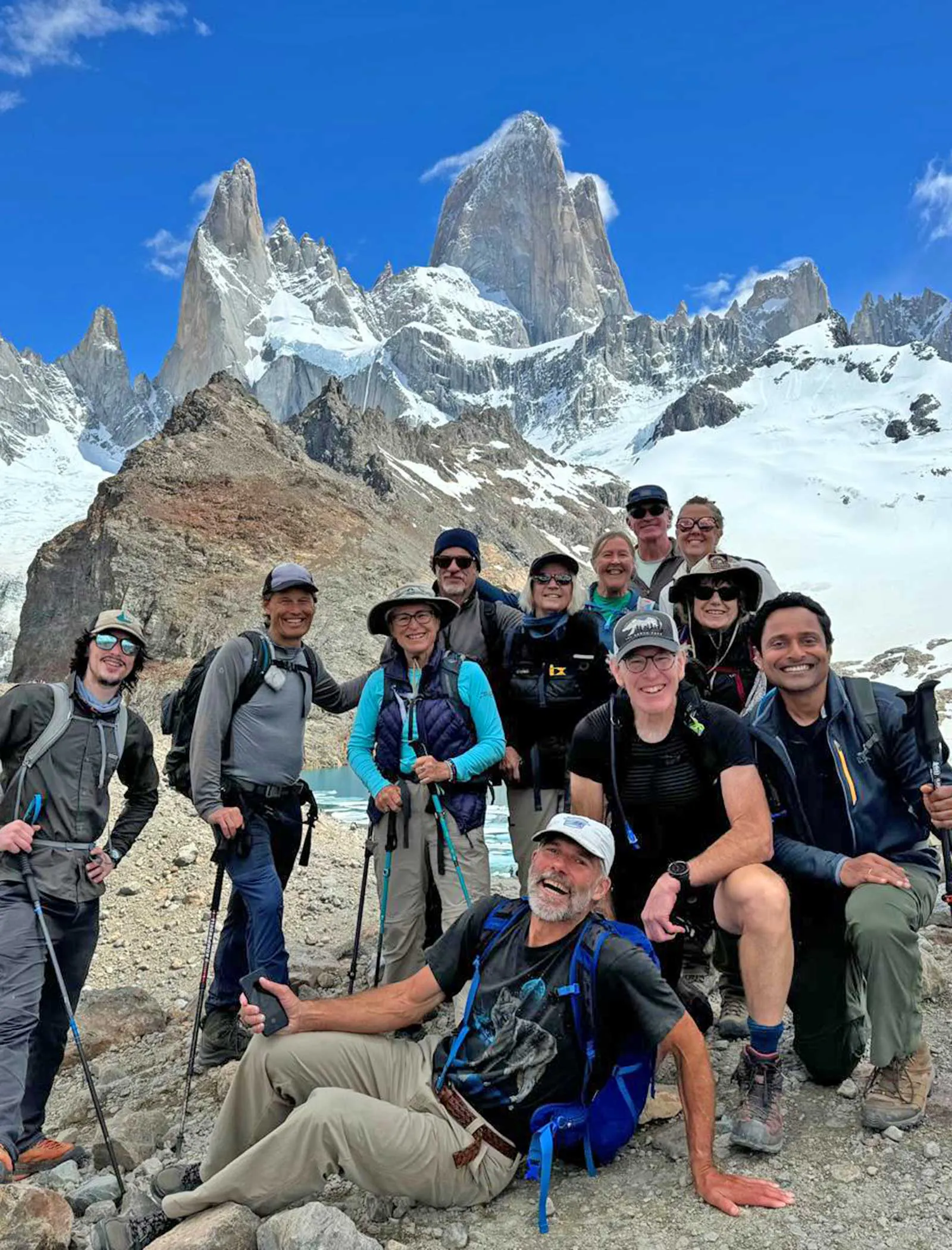
Why Explore Patagonia with MT Sobek
MT Sobek has been operating adventure trips since 1969, and Patagonia is one of our most popular destinations. Here’s what that experience means for you, whatever month you travel:
- Seasoned Patagonia guides: Guides like TC, Ro and Andre bring years of experience on these trails, and they know how to read Patagonia’s fast-changing weather.
- Small groups: All MT Sobek South America trips are limited to no more than 16 guests, while some are capped at 12.
- Permits and logistics handled: We arrange park passes, lodging, refugio reservations and transfers, the pieces that sell out first in peak season.
- Comfortable lodging: Many of our Patagonia trips stay in hotels and mountain lodges, so you can trek without camping.
- Shoulder-season options: Our W Trek and Cochamó Valley trips also run in October and April, for quieter trails and spring or fall scenery.
Browse all our Patagonia adventures and find the season that fits your trip.
Looking for more inspiration? Get your free catalog!
Check out all of MT Sobek’s Patagonia adventures and get your free MT Sobek catalog!

Enjoying our content? Add MT Sobek as a Google Preferred Source.
Ready to go? See 3 featured Patagonia trips
Whenever you go, an expert guide makes Patagonia easier. These small-group trips handle the permits, lodging and logistics so you can focus on the trail.
Chile Patagonia Torres del Paine W Trek Hiking Tour
7 Days · Runs October–April · Hike Torres del Paine’s famous W route to the towers, the French Valley and Grey Glacier with expert MT Sobek guides.

Chile Patagonia Cochamó Valley Hiking Tour
11 Days · Runs October–April · Hike among granite domes and old-growth Valdivian rainforest in the wild northern Patagonian Andes.

Chile & Argentina Ultimate Patagonia Hiking Tour
12 Days · Runs November–March · Combine 40 miles on the W in Torres del Paine with the trails around Fitz Roy in Argentina’s Los Glaciares.
FAQs
There isn’t one universally best month. December through February offers the longest daylight and is the traditional peak trekking season, while November and March can offer a better balance of access, daylight, and fewer crowds. Fall, particularly late March and early April, is especially beautiful for autumn colors.
November through March offers the most reliable access and the longest days, with December and January the busiest months on the trail. For fewer people, consider October or April, when our W Trek Hiking trip also runs. Expect cooler temperatures, shorter days, and either spring wildflowers or fall color.
Both offer long days and prime summer trekking conditions. They’re also among the busiest months. If your priority is maximum daylight and classic trekking, either can work well. If avoiding crowds is important, consider the shoulder seasons.
Yes, but winter Patagonia is a very different experience. Days are extremely short, and some classic trekking and glacier activities are largely off-limits. Winter is better suited to travelers specifically interested in snow-based activities or solitude. MT Sobek doesn’t run scheduled Patagonia departures in winter, but our Custom Team can design a winter itinerary.
The shoulder seasons (September–November and March–May) and winter see far fewer visitors than the December–February peak. October and April are especially quiet months that still offer good hiking, and both have MT Sobek departures on the W Trek and in the Cochamó Valley.
Puma sightings in Torres del Paine tend to be best from April through October, in fall and winter. Magellanic penguins nest along the coast from roughly September or October through March; our Patagonia to the Sea Hiking & Cruise visits the large colony on Magdalena Island. Southern right whales gather off Argentina’s Península Valdés from June to mid-December.
Regardless of when you visit, prioritize quality waterproof rain gear, warm layers, sturdy hiking footwear, trekking poles, and a way to keep important items dry inside your backpack. The exact insulation and traction equipment you need will depend on the month and your itinerary.
Not in the simple sense travelers might expect from tropical destinations. Rain and strong winds can occur throughout the year, and Patagonia’s weather can change extremely quickly. As Ro points out, a December trip can be rainy while a shoulder-season trip can have days of bluebird skies.
Absolutely. Spring brings wildflowers, fall brings spectacular foliage, and the shoulder seasons bring something increasingly rare at Patagonia’s most famous viewpoints: solitude.
Learn More About Adventure Travel in Patagonia


