Everything You Need to Know to Hike Patagonia’s W Trek
The complete first-hand guide to Torres del Paine's most iconic trek
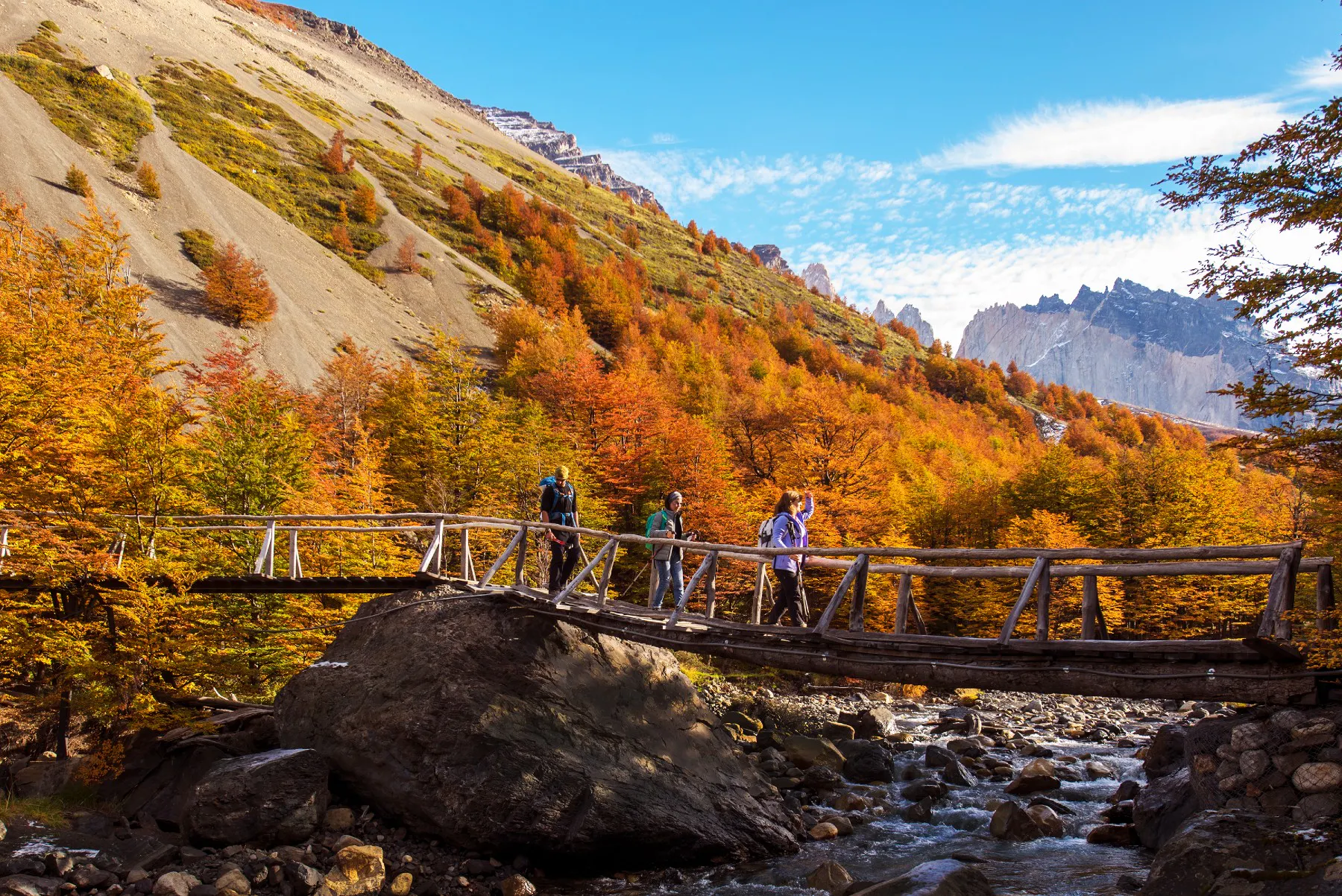
There are few places in the world where you can stand beneath 8,000-foot granite towers at sunrise, listen to the cracking of ancient ice as it calves into a turquoise lake that afternoon, and end the day sharing stories with fellow hikers in a cozy refugio. That’s the magic of Patagonia’s W Trek.
Over four to five days, this legendary trail leads deep into the heart of Chile’s Torres del Paine National Park, weaving through windswept grasslands, ancient lenga forests, glacier-fed rivers, and some of the most spectacular mountain scenery on earth.
Whether you’re considering a self-guided adventure or joining an expertly led trekking trip, planning ahead is essential. Weather can change by the hour, lodgings often book months in advance, and knowing what to expect can make all the difference between a good hike and an extraordinary one.
Drawing on decades of experience leading treks through Torres del Paine, this guide covers everything you need to know: from choosing the best season to hike, understanding the route, deciding where to stay and what to pack, and why hiking with experienced guides can make the adventure truly unforgettable.
Key Takeaways:
- You don’t have to be an elite athlete to hike the W Trek.
- The W Trek encompasses Torres del Paine’s most iconic sights: the Torres del Paine towers, the French Valley, and the Grey Glacier.
- Knowing what to pack for Patagonia’s wild weather is essential.
- Waterproof rain gear is an absolute must!
- The W Trek is well-marked and offers access to both food and lodging options.
What is the W Trek?
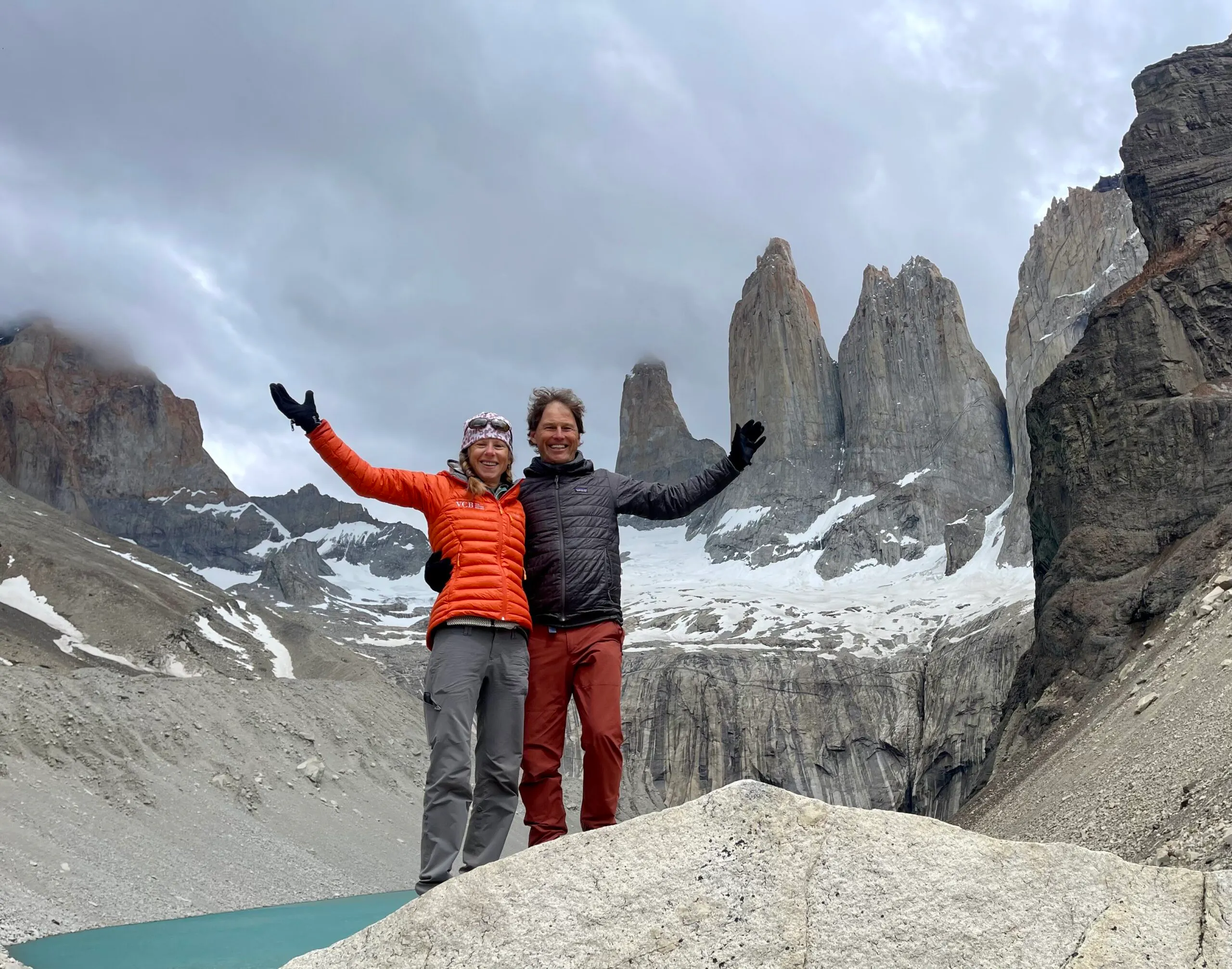
The W Trek is Torres del Paine National Park’s signature multi-day hike in the Patagonia region of South America. Named for the zigzag shape it traces across the park, the route connects three of Patagonia’s most spectacular natural landmarks: Grey Glacier, the French Valley, and the iconic granite towers that give the park its name.
Over the course of four to five days, hikers weave through ancient woodland forests, cross suspension bridges above rushing rivers, skirt brilliantly blue glacial lakes, and climb to dramatic viewpoints overlooking some of South America’s most celebrated landscapes.
Depending on your itinerary, you’ll cover roughly 37 to 50 miles, hiking between 4 and 10 hours each day. While the elevation never exceeds about 3,900 feet, don’t mistake the relatively low altitude for an easy walk. Rocky trails, uneven footing, frequent ascents and descents, and Patagonia’s famously unpredictable weather make this a rewarding—but physically demanding—trek.
Fortunately, the W Trek is accessible to hikers of all skill levels. The trail is also well-marked and supported by a network of refugios (mountain lodges) and campsites, allowing trekkers to enjoy Patagonia’s wilderness without getting too remote.
As MT Sobek guide Andre Labarca often reminds guests, the W Trek earns its Level 4 difficulty not because of altitude, but because of the combination of daily mileage, rugged terrain, and the endurance required to keep moving from valley to valley over several consecutive days.
— MT Sobek Expert Tip
Why We Love the W Trek—What Makes it Special
Many famous hikes—like Kilimanjaro and the Inca Trail to Machu Picchu—tend to build toward one spectacular finale. The W Trek is different.
Rather than achieving one famous summit or attraction, hikers experience three completely different sides of Torres del Paine over normally 5-7 days: the iconic Towers of Paine, the French Valley and Grey Glacier. Even the vegetation changes from day to day, offering a better understanding of the park’s unique geography and the dramatic landscapes that surround the Paine Massif.
Just as memorable are the quieter moments between the park’s headline attractions.
Each day introduces an entirely new landscape. Golden grasslands ripple beneath enormous skies. Icebergs drift silently across glacial lakes. Condors circle overhead on rising thermals. If you’re lucky, you might even spot wild guanacos grazing in the distance—or glimpse the elusive puma that calls the park home.
“It’s this unique mix of iconic sights and unexpected moments that make the W Trek so memorable.”
— Rodrigo “Ro” Bahamondez, MT Sobek guide

The Three Highlights of the W Trek
Hikers can complete the W Trek in either direction. Most organized trips—including MT Sobek’s Patagonia W Trek—follow a carefully designed itinerary that balances daily mileage with some of the park’s most rewarding scenery. These include the trek’s legendary trio:
1. The Towers of Paine
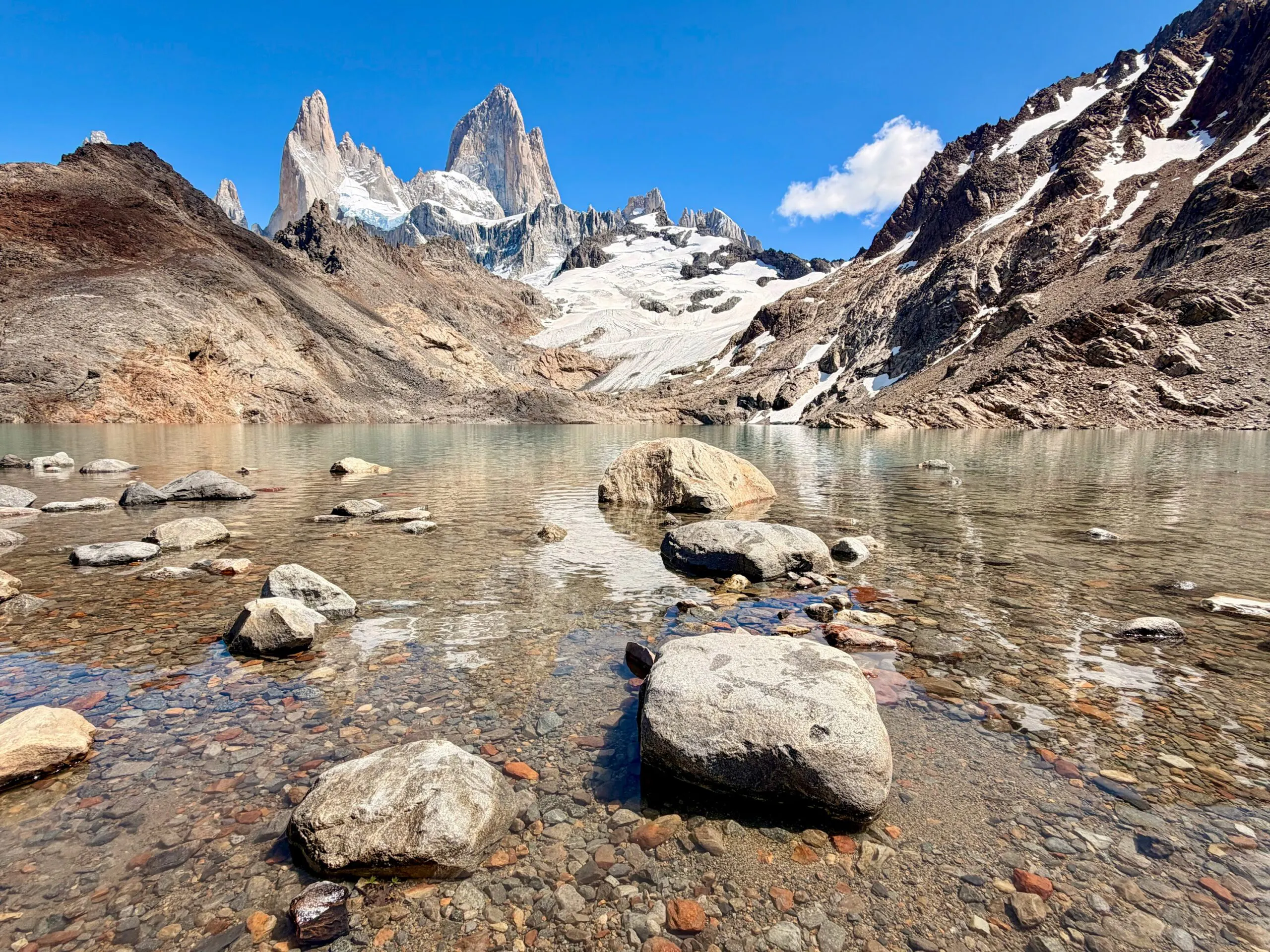
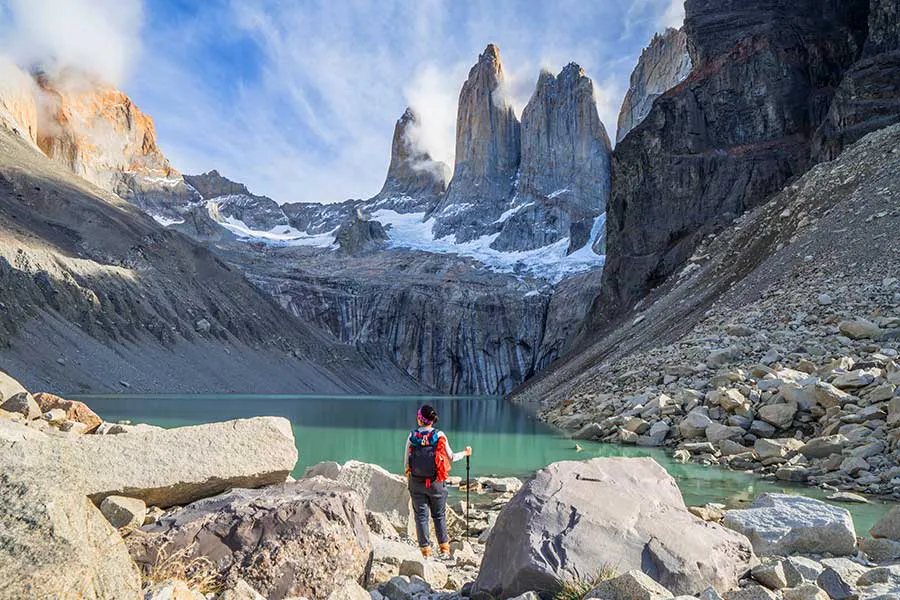
Standing beneath the three granite towers of Torres del Paine in the morning light is one of South America’s iconic hiking experiences. After scrambling across a glacial moraine, you’ll get an unforgettable view of the three granite spires reflected in a brilliant alpine lake.
2. The French Valley
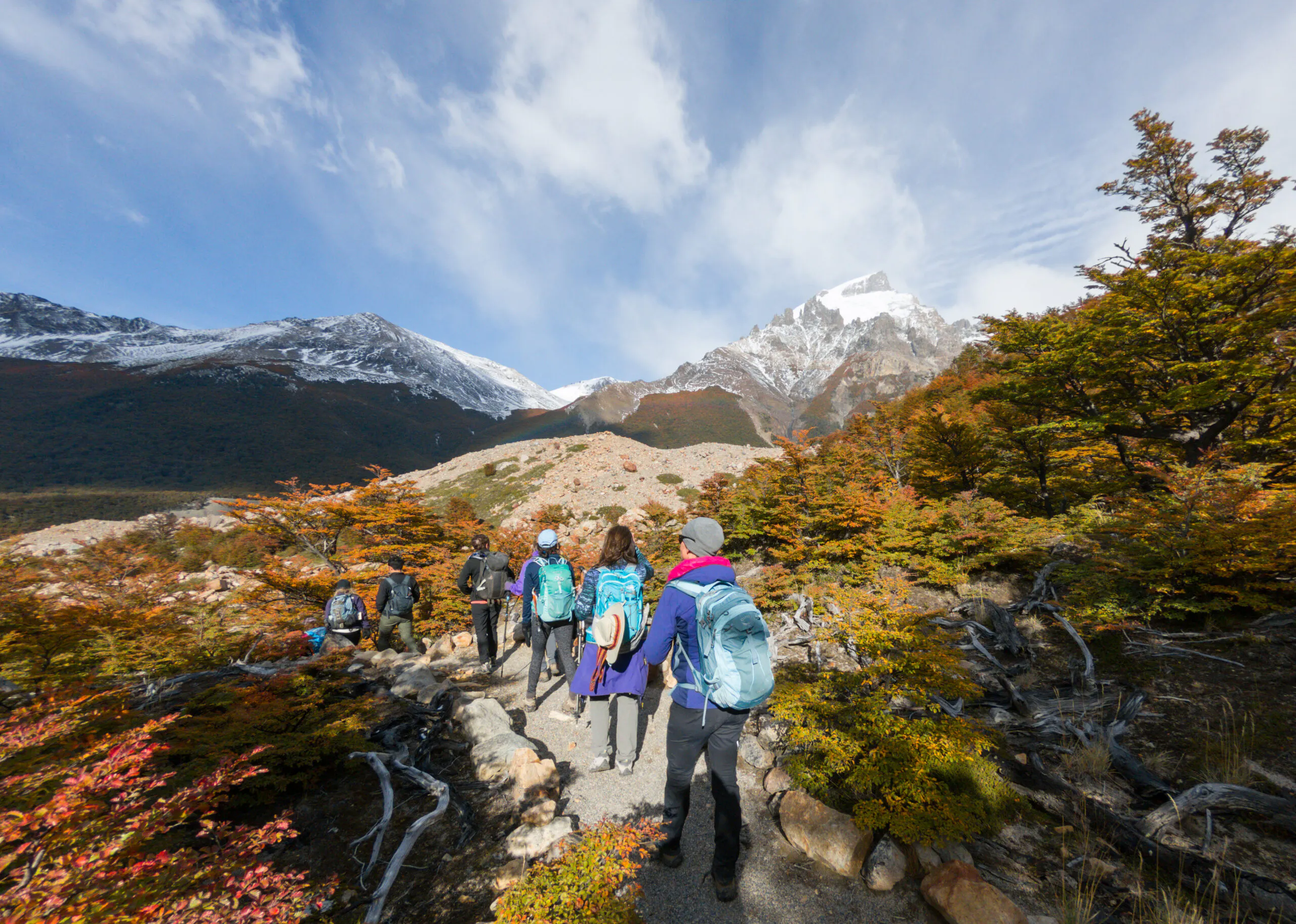
Here, the trail reveals a completely different landscape. Hanging glaciers cling to towering cliffs, avalanches rumble in the distance, and snow-covered peaks surround hikers on nearly every side.
3. Grey Glacier
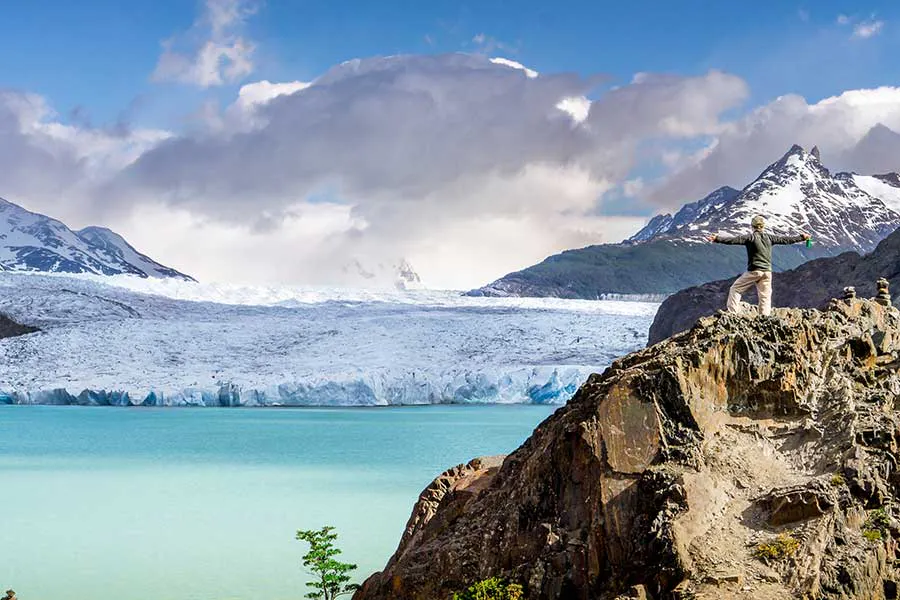
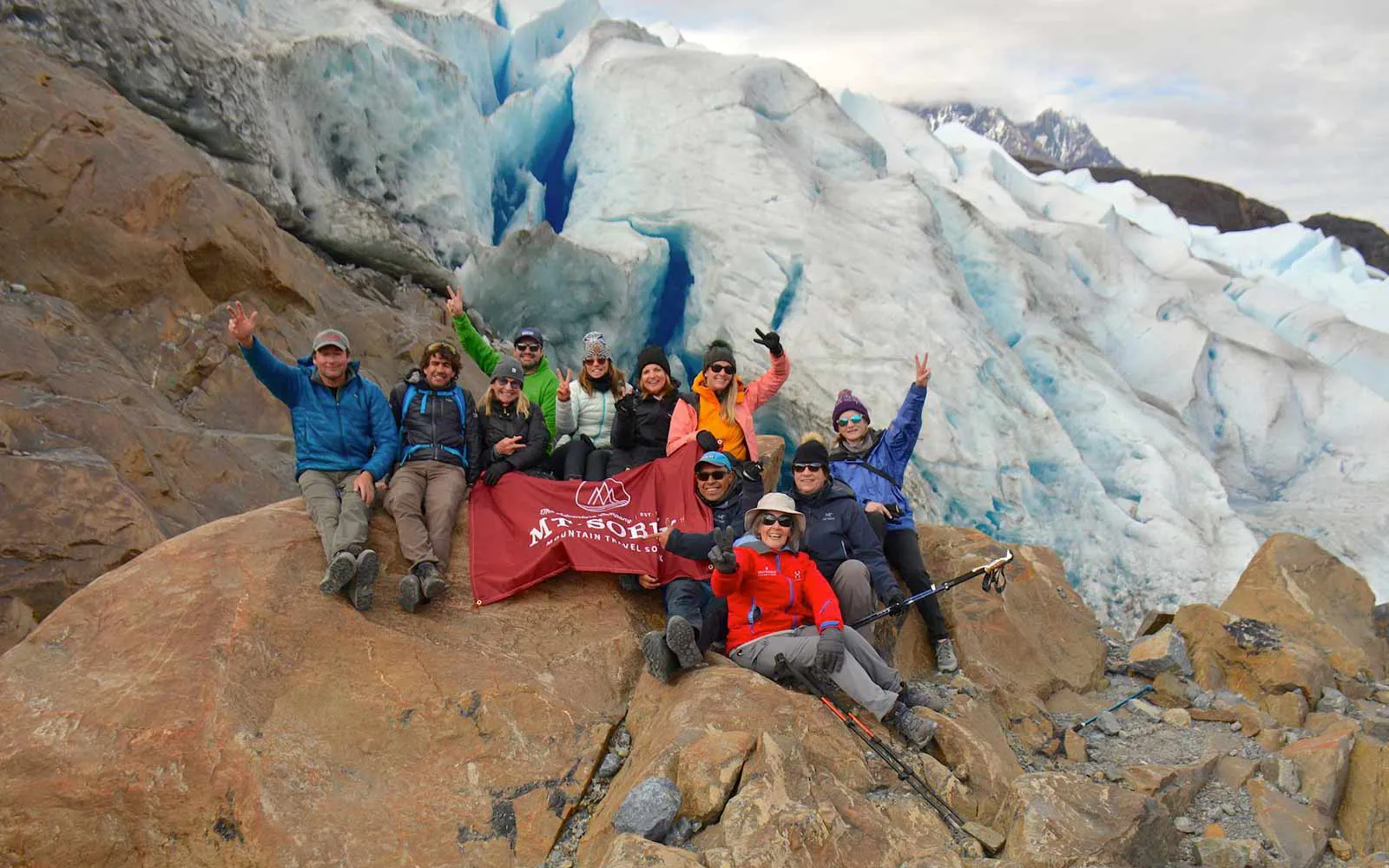
Finally comes Grey Glacier, a nearly four-mile-wide river of ancient blue ice flowing from the Southern Patagonian Ice Field. Standing at its edge, watching icebergs drift across the lake or hearing the thunder of calving ice, is the perfect reminder of Patagonia’s immense scale.
W Trek Route Options
Which Direction is Best?
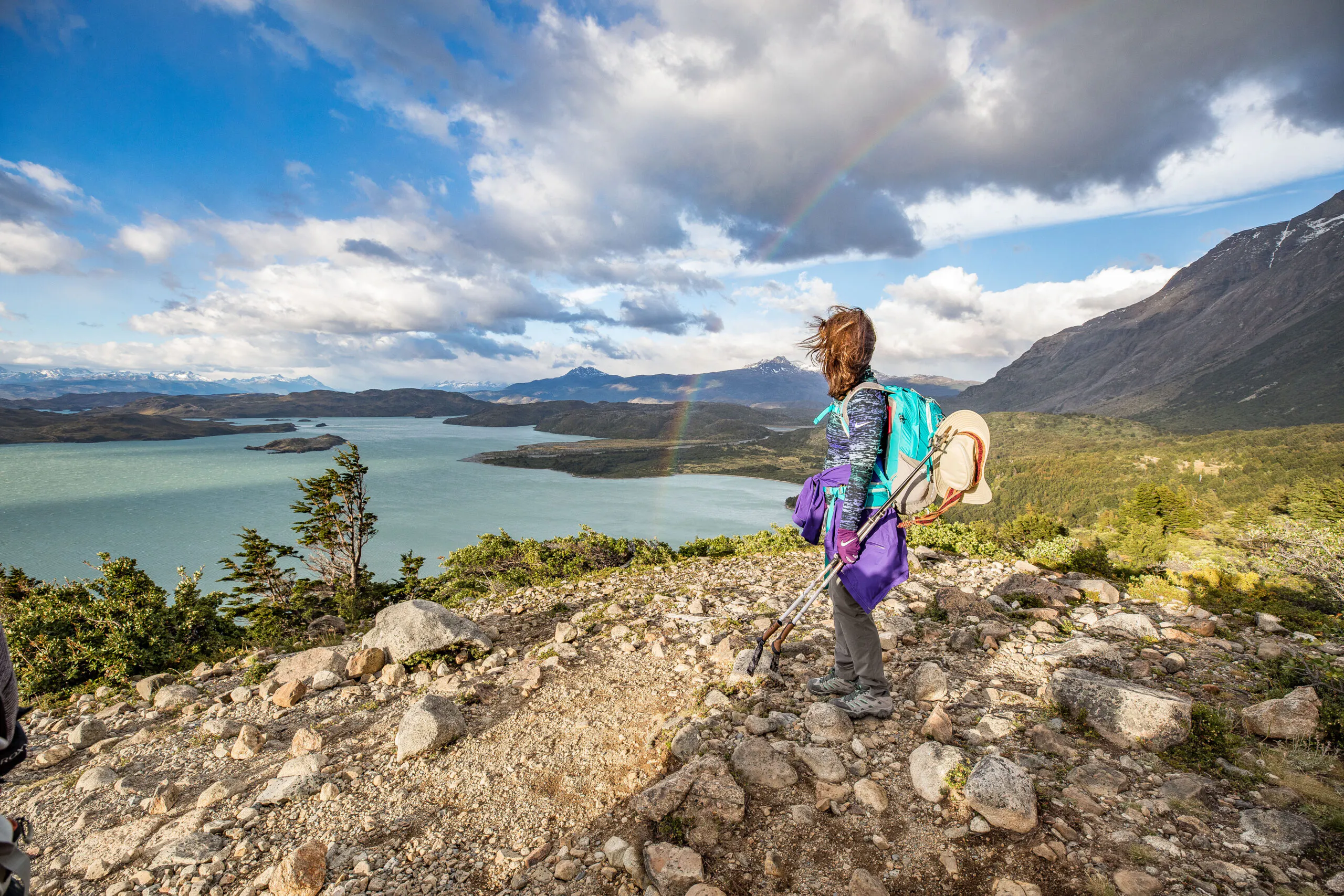
The W Trek can be hiked in two directions: west to east or east to west. There are also possible variations for where to begin, where you spend your nights, and whether you hike every section of the iconic route. In either direction, the three defining experiences are the Grey Glacier section in the west, French Valley in the center, and the hike through Ascencio Valley to the Base of the Towers in the east.
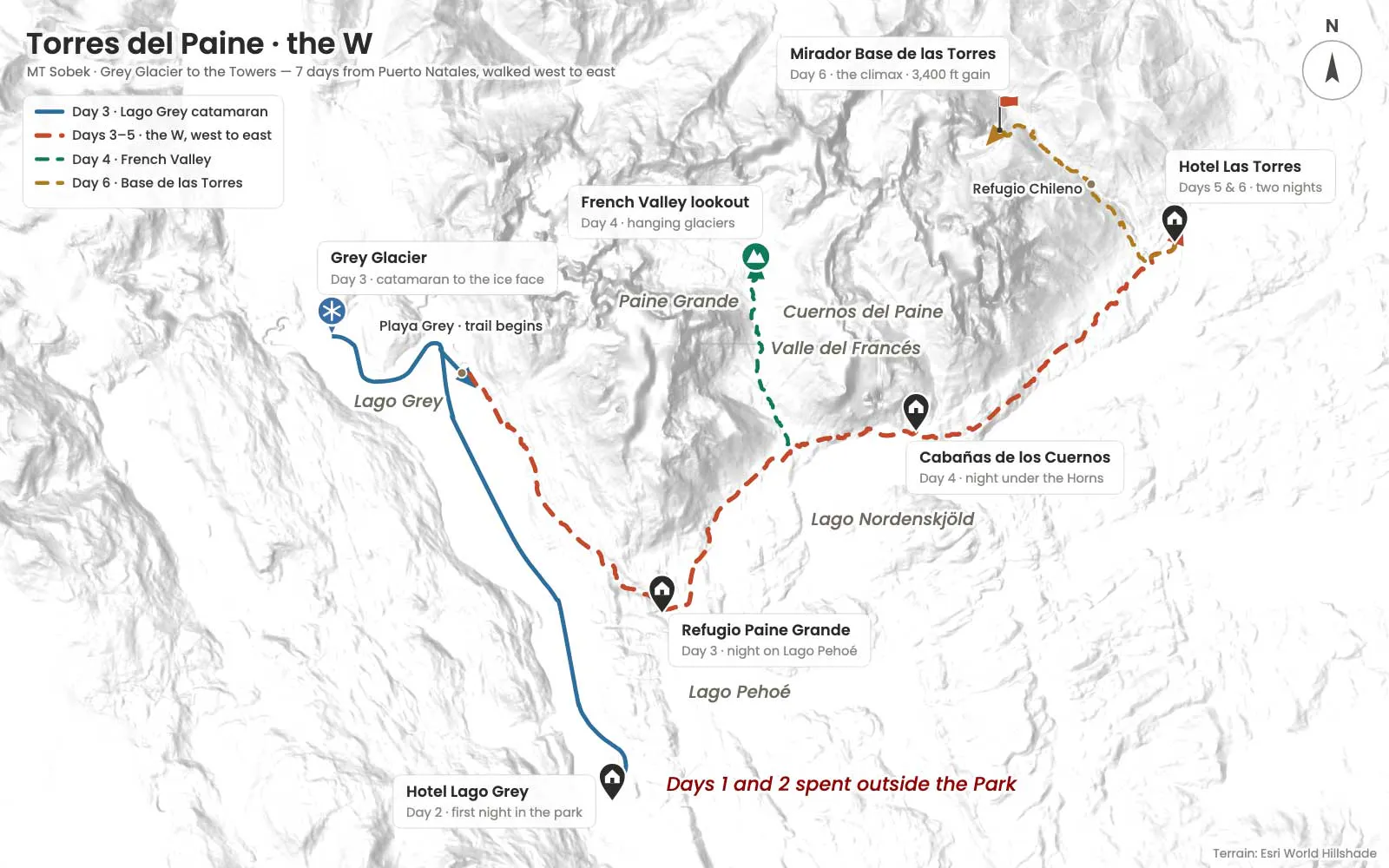
The MT Sobek Patagonia team recommends hiking the W from west to east, beginning at Grey Glacier and finishing at the Base of the Towers. The route starts with a catamaran journey across Lago Grey that approaches the face of Grey Glacier before you disembark and begin trekking east. From there, the itinerary follows Lago Grey to Paine Grande, makes the full excursion into French Valley, continues beneath the Cuernos along Lago Nordenskjöld, and saves the demanding climb to the Base of the Towers for the final day. Our route covers approximately 40 miles of the W over four consecutive trekking days, with strategically located refugios, cabins, and hotels along the way.
Why We Prefer West to East
There isn’t one definitively better direction for the W, but MT Sobek’s west-to-east itinerary creates an intentional progression. Grey Glacier provides a spectacular beginning, French Valley is the centerpiece, and the Towers of Paine provide a stunning grand finale. It also allows us to use a combination of sought-after wilderness lodging and strategically located hotels—including Paine Grande, cabins beneath the Cuernos, and Hotel Las Torres at the trailhead for the final hike—rather than requiring camping or only staying in refugios.
The pacing is another advantage. The first W day is approximately 7.5 miles, followed by the demanding 12-mile French Valley day, an approximately 8-mile day beneath the Cuernos, and finally the 11.5-mile, 3,400-foot climb to the Base of the Towers. That makes turns the Towers into more than another stop along the route—they are the culmination of the entire trek.
MT Sobek W Trek Route Map
How Difficult Is the W Trek?
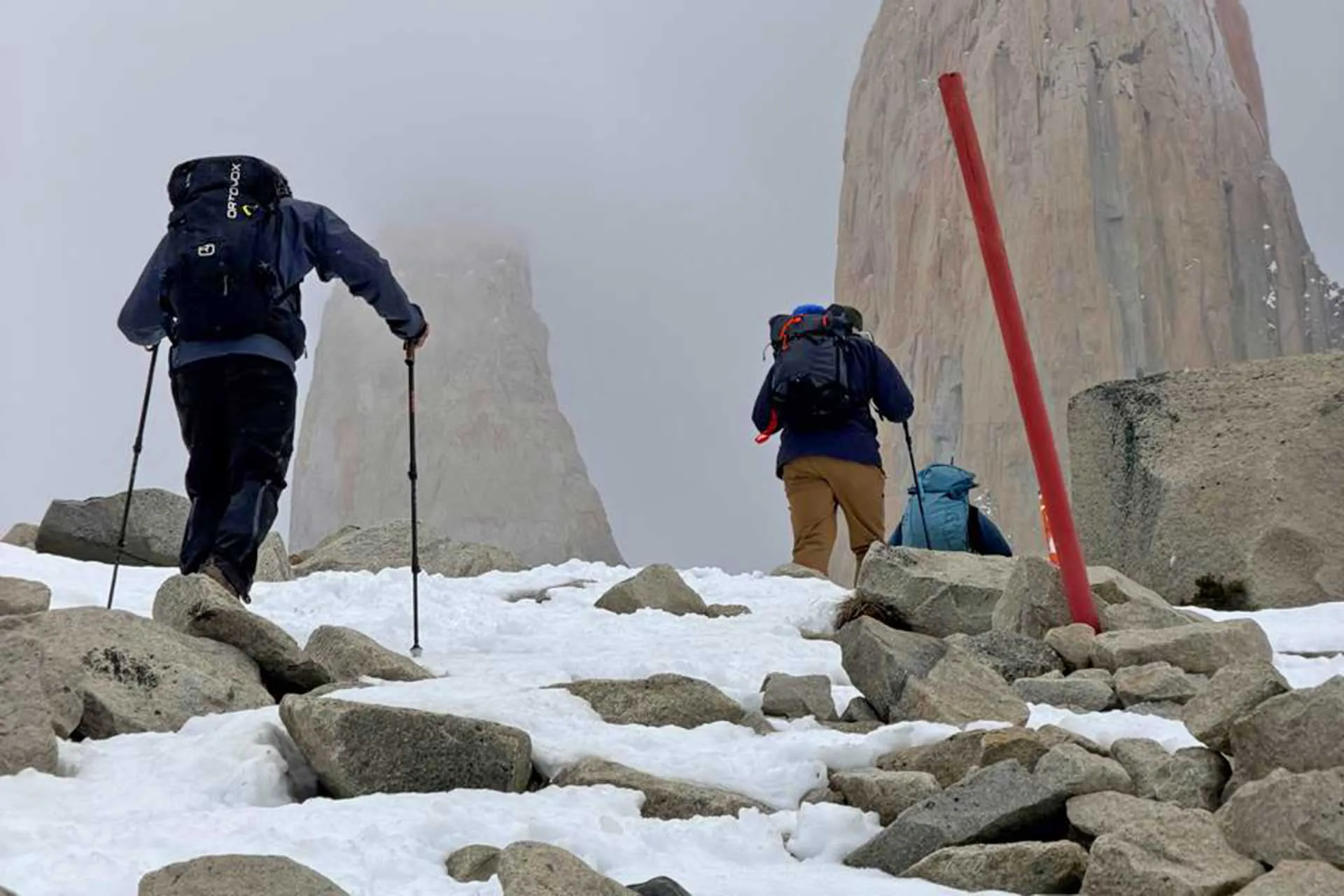
Despite its global reputation, the W Trek isn’t just for elite athletes.
Most reasonably active travelers who prepare with regular hiking, walking, and cardio exercise can complete the route comfortably. The biggest challenge isn’t altitude—it’s consistency. You’ll hike consecutive days across rocky terrain, often in strong winds, carrying a daypack while climbing and descending uneven trails.
Labarca encourages guests to think about endurance rather than speed.
“You don’t have to be the fastest hiker,” he explains. “You need the stamina to keep moving day after day. If you finish feeling strong, you’ve prepared well.”
— MT Sobek guide Andre Labarca
When Is the Best Time to Hike the W Trek?
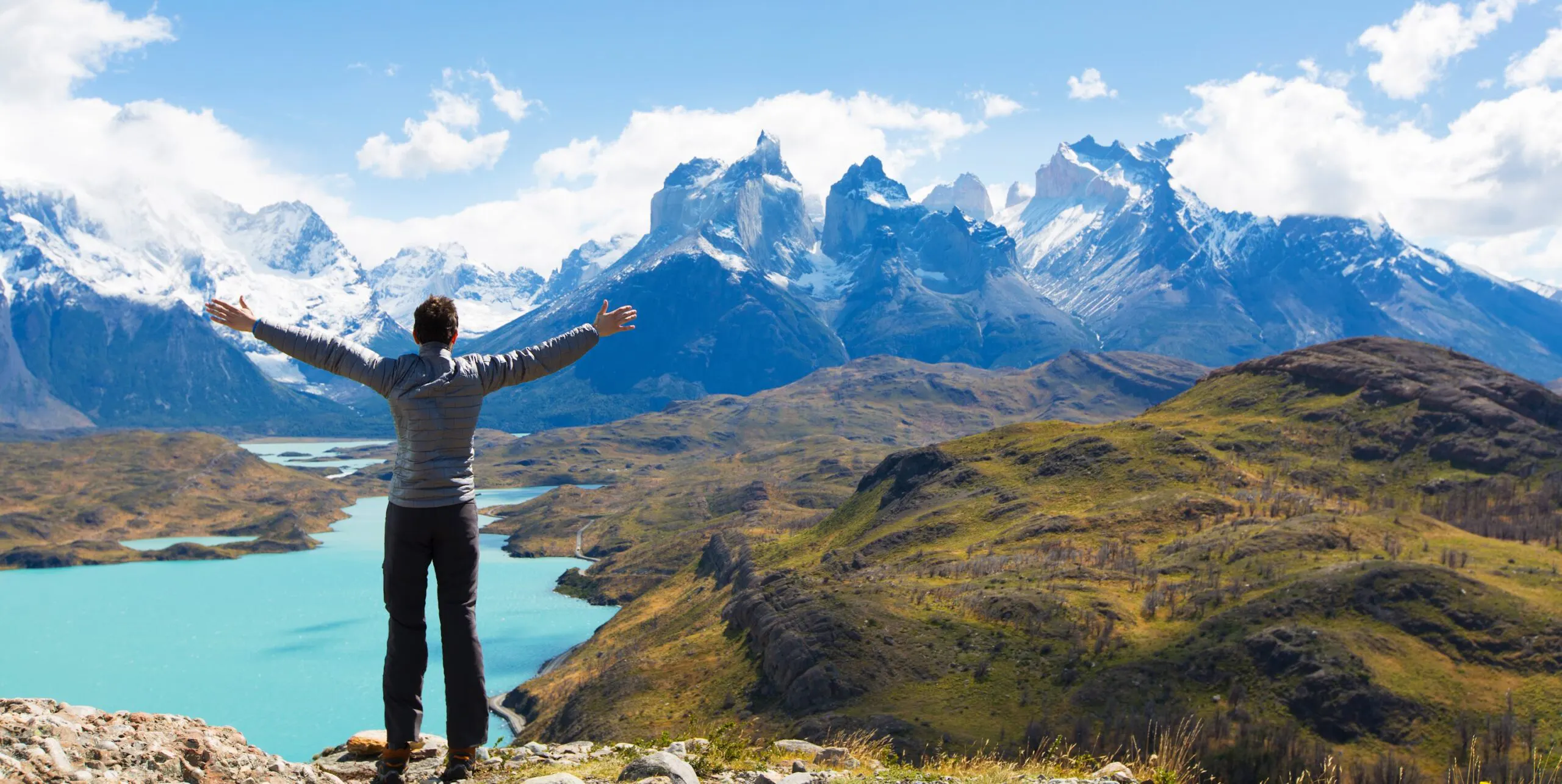
The W Trek is open year-round, but for most travelers, the ideal hiking season falls between October and April, when Torres del Paine experiences its spring, summer, and early autumn months.
While you’ll often hear that Patagonia has “good” and “bad” weather, the reality is more nuanced. Sunshine can quickly give way to rain, and calm mornings often become incredibly windy by afternoon. Packing for all four seasons—regardless of when you visit—is simply part of the Patagonia experience.
October to November: Spring
Spring brings blooming wildflowers, rushing waterfalls fed by snowmelt, and fewer crowds than the peak summer months. Days grow longer, wildlife is active, and temperatures are generally cool, making it an excellent time for hiking.
December to February: Summer
Summer is the most popular time to visit Torres del Paine—and trails can get quite busy. Long daylight hours provide ample time on the trail, temperatures typically range between 40°F and 60°F, and virtually all park services are operating. It’s also the season when lodgings book the fastest, often months in advance.
March to April: Early Fall
As autumn arrives, the forests begin turning shades of gold and orange. Visitor numbers decline, making refugios and viewpoints noticeably quieter, while crisp mornings often reward with beautifully clear mountain views.
Winter (May through September)
The W Trek doesn’t close during winter, but conditions become significantly more challenging. Snow and ice cover portions of the trail, daylight hours are much shorter, and several refugios close for the season.
Independent hiking is also restricted during the winter months. Visitors are required to hike with a certified guide, making organized trips the only option for most travelers.
“To avoid the busiest season in Torres del Paine, hike in the shoulder season months of October, November, March and April. If you don’t mind being around other hikers, then the southern hemisphere summer months of December, January and February typically offer the best weather.”
— Sharman Fox, MT Sobek Program Director for Latin America
Should You Hike the W Trek with a Guide?
One of the biggest decisions you’ll make is whether to tackle the W Trek independently or join a guided hiking adventure.
Both options offer rewarding experiences, but they provide very different kinds of trips.
Hiking Independently
Independent trekkers enjoy maximum flexibility. You can set your own pace, choose where to stop for photos, and customize your itinerary—as long as you’ve secured reservations at each overnight stop.
However, planning the W Trek is more complicated than simply showing up at the trailhead. Accommodations are managed by multiple companies, reservations often need to be made months in advance, ferry schedules must be coordinated, and park entry logistics require careful planning. During peak season, a single missed reservation can derail an entire itinerary.
Hiking with a Guide
A guided trek removes nearly all of those logistical concerns.
MT Sobek’s guides arrange transportation, ferry connections, park entrance logistics, lodging, and meals before you arrive, allowing you to focus on the experience rather than the planning.
Just as importantly, guides bring Torres del Paine to life.
As Bahamondez explains, experienced guides know far more than the trail itself. They share insights into Patagonia’s geology, wildlife, plants, weather, and history, while helping groups find quieter moments away from the busiest viewpoints whenever possible.
Safety is a Team Effort
One advantage of traveling with experienced guides is that every decision is made with the group in mind.
Unlike many popular hiking destinations around the world, Torres del Paine has limited search-and-rescue resources. Guides constantly evaluate trail conditions, weather, and group energy levels to make safe decisions throughout the trek.
Before setting out, MT Sobek guides emphasize that everyone hikes as a team. This approach not only improves safety, but also creates opportunities for shared discoveries along the trail—from spotting nesting birds to learning about glaciers, wildflowers, and the unique ecosystems that make Patagonia so remarkable.
Where Will You Sleep?
One of the things that makes the W Trek so accessible is its network of refugios (mountain lodges) and well-equipped campsites.
Rather than carrying tents, cooking gear, and several days’ worth of food, many hikers choose to spend each night in comfortable lodgings along the trail.
Staying in a Refugio
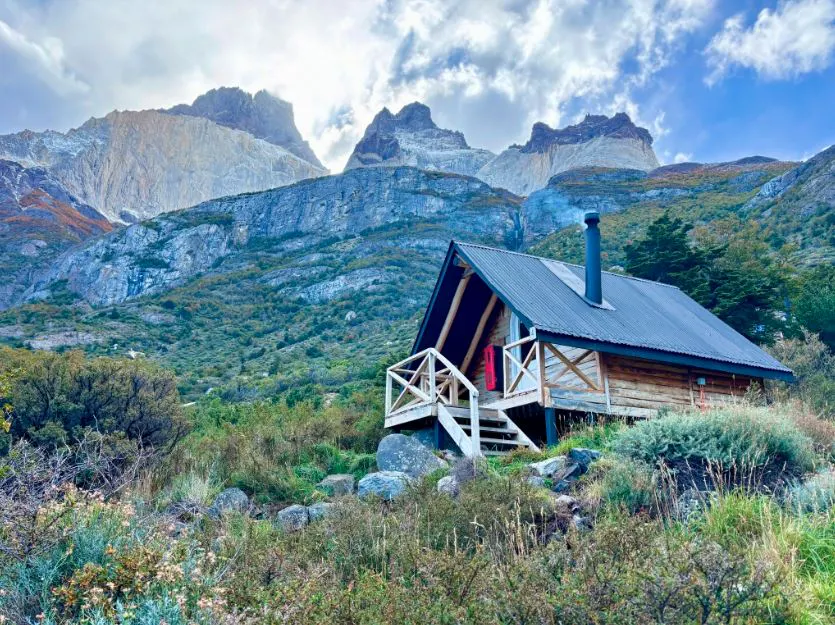
Staying in a refugio or in its adjoining campsite is a wonderful part of the W Trek experience.
Most of these rustic huts feature shared bunk rooms and communal bathrooms with hot showers. They also have dining rooms serving hearty meals, and gathering spaces for hikers to swap stories from the day’s adventures. Many also have charging stations for phones and cameras, as well as small convenience stores and bars serving local beer and Chilean wine.
Some refugios are larger and more social, while others feel quieter and more intimate.
One of MT Sobek’s favorite overnight stops is Refugio Paine Grande.
“It has a fireplace, a mini-market, and ‘it’s just very, very convenient.'”
ANDRE LABARCA, MT Sobek guide
Premium Camping
If you enjoy sleeping outdoors without hauling your own equipment, premium camping offers an excellent middle ground.
Many campsites feature pre-pitched tents set on raised platforms, complete with sleeping pads and bedding. Campers still have access to shared bathrooms, dining facilities, and many of the same services available to refugio guests.
Whether you choose a lodge or a tent, reservations are essential. Accommodations along the W Trek routinely sell out months in advance, particularly during Patagonia’s busy summer season.
What Are Meals Like on the W Trek?
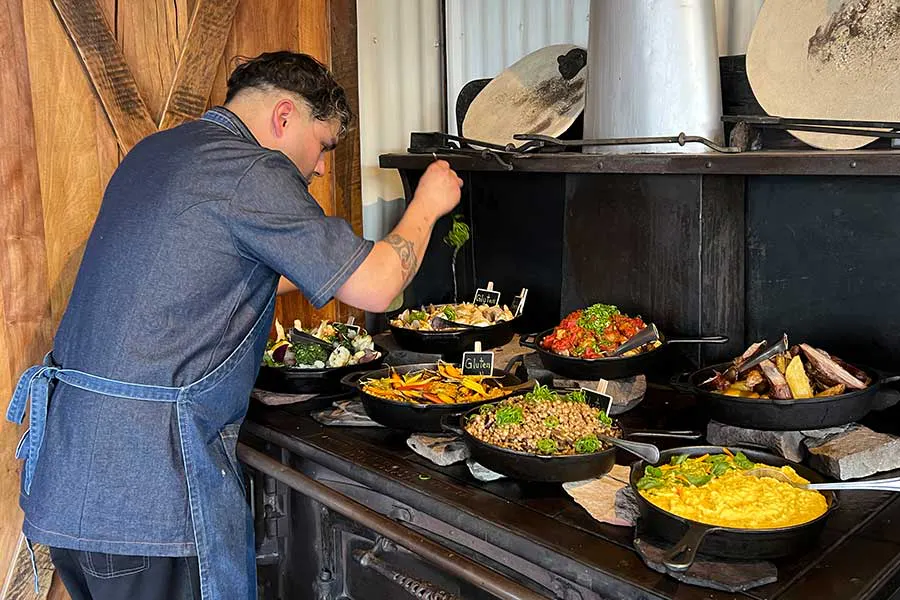
Most refugios offer meal packages that include breakfast, a packed lunch for the trail, and a hot dinner served each evening (campers can book these as well). Dinners often feature soups, fresh bread, entrees, and dessert—ideal filling meals after a full day of hiking.
Many of these lodges also sell snacks, beer, wine, coffee, and basic supplies, although it’s still a good idea to pack a few favorite trail snacks of your own.
Do You Need to Filter Water?
One of the perks of hiking in Patagonia is access to excellent drinking water. Throughout Chilean Patagonia, tap water is safe to drink, and along the W Trek, many hikers refill their bottles from the park’s cold, fast-flowing streams.
That said, carrying a lightweight water filter is a smart precaution.
Labarca recommends bringing along a collapsible squeeze bottle with a built-in filter. These soft flasks are lightweight, take up very little space in your pack, and eliminate the guesswork when refilling from streams along the trail.
“If you use a water filter, you don’t have to think about whether the water is OK to drink. We’ve never had problems, but we user filters on MT Sobek trips.”
— andre labarca, mt sobek guide
A Few Refugio Etiquette Tips
Refugios are comfy, but they’re also different from staying in a traditional hotel.
Electricity is limited, with many refugios relying on generators or solar power. Many people might be vying for the same charging outlets (it’s a good idea to bring along an extra battery pack), and high-powered appliances like hair dryers aren’t practical—or permitted in many locations—because they can overload the electrical system. Embracing the simplicity of trail life is all part of the experience.
What to Pack for the W Trek
Packing for Patagonia is less about preparing for one season than preparing for several—all in the same day.
A clear morning can quickly turn windy, rainy, or surprisingly cold before the sun returns an hour later. The key is wearing versatile layers that allow you to adapt as conditions change rather than carrying bulky clothing you may never use.
Clothing Essentials
Start with moisture-wicking base layers that keep you comfortable during long climbs, followed by an insulating mid-layer such as a fleece or lightweight down jacket. A waterproof, windproof shell is perhaps the single most important piece of gear you’ll bring. Patagonia’s legendary winds are often stronger than visitors expect, and a quality shell can make the difference between a comfortable hike and a miserable one.
Convertible hiking pants or quick-drying trekking pants work well in changing temperatures, while a warm hat, lightweight gloves, and a neck gaiter are useful even during the height of summer.
Above all, avoid cotton. Once wet, it dries slowly and can leave you cold for the rest of the day.
Footwear
Well-broken-in hiking boots or sturdy trail shoes with excellent traction are essential. The W Trek includes muddy sections, loose rock, stream crossings, and steep climbs over glacial moraine, particularly on the final ascent to the Base Torres viewpoint.
Equally important are quality hiking socks. Bringing two or three pairs of merino wool socks can help prevent blisters and keep your feet comfortable over several consecutive hiking days.
Daypack Essentials
Your daypack doesn’t need to be overloaded, especially on an MT Sobek trip where porters transport your overnight gear between accommodations. Instead, focus on carrying only what you’ll need during the day’s hike:
- Rain jacket
- Extra insulating layer
- Water bottles or hydration reservoir
- Packed lunch
- Trail snacks
- Sunglasses
- Sunscreen
- Lip balm with SPF
- Camera or smartphone
- Portable battery pack
- Personal medications
- Small first-aid kit
Because your larger duffel is transferred separately, you’ll spend your days hiking with a lighter, more comfortable pack.
Don’t Forget Trekking Poles
Many experienced Patagonia hikers consider trekking poles one of the most valuable pieces of equipment on the W Trek. They reduce strain on knees during long descents, improve stability on rocky terrain, and provide extra balance when Patagonia’s powerful winds suddenly pick up.
Staying Safe on the Trail
The W Trek is well maintained and clearly marked, but Patagonia commands respect.
Strong winds can arrive with little warning, temperatures fluctuate throughout the day, and rain showers often appear unexpectedly. Rather than focusing on hiking as quickly as possible, experienced guides encourage trekkers to pace themselves, take regular breaks, and stay hydrated.
“Safety starts long before the first hike. Have the appropriate equipment and clothing, understand the local conditions and join a guided trip to increase safety.”
— RODRIGO “RO” BAHAMONDEZ, MT SOBEK GUIDE
During the trip’s opening briefing, guides explain that everyone shares responsibility for the experience. Hiking as a group allows guides to monitor changing weather, evaluate trail conditions, and ensure that everyone reaches each destination safely while still enjoying the journey.
Respect Patagonia’s Wild Places
Torres del Paine is more than a spectacular hiking destination—it’s one of South America’s most treasured national parks.
Stay on designated trails to protect fragile vegetation, pack out everything you bring with you, and observe wildlife from a respectful distance. Guanacos, foxes, and countless bird species are common throughout the park, while lucky hikers may even glimpse the elusive puma that roams the valleys.
As Bahamondez reminds guests, some of the most memorable moments in Patagonia happen between its famous viewpoints.
Explore MT Sobek’s Patagonia adventure travel tours.
Enjoying our content? Add MT Sobek as a Google Preferred Source.
FAQs
The W Trek is considered moderately strenuous. Most hikers spend four to ten hours on the trail each day over rocky, uneven terrain. You don’t need mountaineering experience, but good cardiovascular fitness and endurance will make the trek far more enjoyable.
Not during the primary hiking season (October through April). However, many travelers choose guided trips because they eliminate the complexities of planning accommodations, transportation, ferry schedules, and meals while adding valuable local expertise. During winter, independent hiking is generally not permitted.
Most hikers complete the route in four to five days, depending on their itinerary and overnight accommodations.
Yes—provided they’re reasonably fit and have prepared for several consecutive days of hiking. Training with day hikes, stair climbing, or long walks before your trip will help build the endurance needed for the trail.
In many places, yes. Streams flowing from glaciers and snowfields are famously clean, although conditions can vary. Your guide can advise you on the best refill points during your hike.
It depends on the experience you’re looking for. Refugios offer warm beds, hot showers, and hearty meals, while premium campsites provide a more immersive outdoor experience without requiring you to carry your own tent.
Yes. Most refugios include communal bathrooms with hot showers, although amenities vary slightly between locations.
Yes, but it’s limited. Most refugios have charging outlets for phones and cameras, though power is generated off-grid and should be used thoughtfully.
As early as possible. Refugios and campsites often sell out months in advance—especially between December and February.
The W Trek visits Torres del Paine’s three signature highlights over four to five days. The O Circuit continues around the back side of the Paine Massif, typically taking 7 to 10 days and requiring greater endurance, more remote hiking, and a crossing of the challenging John Gardner Pass.
Learn More: W Trek or Circuit: Which is Right For You?
Learn More About Adventure Travel in Patagonia


